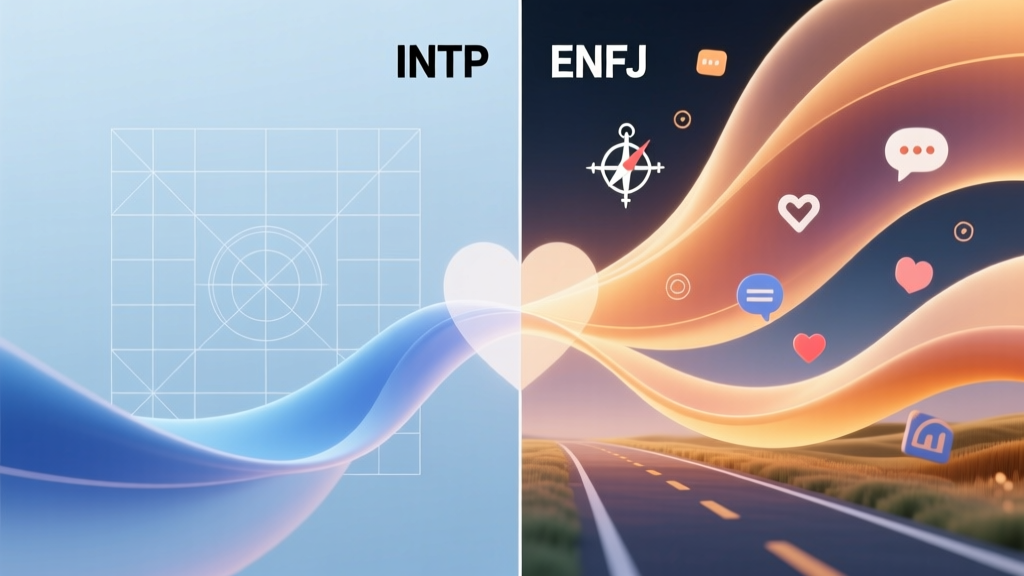
INTP Travel Style
The INTP (Introverted, Intuitive, Thinking, Perceiving) personality type approaches travel not as a checklist of destinations, but as an intellectual expedition. For the INTP, travel is less about ticking off landmarks and more about deep immersion in ideas, systems, and underlying patterns — whether that’s the architectural logic of Barcelona’s Gaudí buildings, the linguistic evolution visible in Rome’s inscriptions, or the ecological interplay of Costa Rica’s rainforests. Their travel style is inherently autonomous, research-driven, and low-sensory-overload.
INTPs rarely book group tours or follow rigid itineraries. Instead, they favor self-guided exploration: renting a quiet apartment in Lisbon’s Alfama district for two weeks to wander cobblestone alleys at dawn, cross-referencing local history texts with on-the-ground observations; or spending three days in Kyoto analyzing temple garden design principles before moving on — all without needing to ‘share’ the experience in real time. They recharge through solitude and reflection, often preferring to journal, sketch conceptual maps, or record audio notes rather than post Instagram stories.
According to the Myers-Briggs Foundation’s research on cognitive functions, INTPs lead with Introverted Thinking (Ti) and support it with Extraverted Intuition (Ne). This means their travel decisions emerge from internal logical frameworks (Ti) constantly scanning for novel connections, anomalies, and theoretical possibilities (Ne). A museum isn’t just a place to see art — it’s a dataset to interrogate: How does this 17th-century Dutch still life encode emerging capitalist values? What assumptions about time and decay underlie its composition? Their ideal travel day might include four hours of silent reading in a university library archive, followed by a 90-minute walk through an industrial neighborhood, observing infrastructure decay and regeneration patterns — then dinner alone at a hole-in-the-wall ramen bar where the chef’s workflow reveals implicit optimization heuristics.
This doesn’t mean INTPs dislike people — quite the opposite. But their social energy is highly selective and conceptually oriented. They’ll happily debate quantum metaphysics with a fellow traveler met at a hostel common room — yet feel drained after 20 minutes of small talk at a resort’s welcome reception. As psychologist Dr. Dario Nardi explains in his neuroscientific study of MBTI types, INTPs show distinct EEG activation in the frontal lobes during abstract problem-solving, even while physically mobile — confirming that for them, movement and mental work are deeply entwined. CognitiveGifts.com’s MBTI Brain Patterns research documents how INTPs sustain high neural coherence during solitary, idea-rich activities — a key reason why forced social pacing (e.g., packed tour buses, mandatory group dinners) feels physiologically taxing.
ENFJ Travel Style
In stark contrast, the ENFJ (Extraverted, Intuitive, Feeling, Judging) travels with relational intentionality. For the ENFJ, a vacation is first and foremost an opportunity to deepen bonds, uplift others, and co-create meaning. Their travel style is people-centered, emotionally attuned, and purposefully structured. An ENFJ doesn’t just visit Marrakech — they arrange a cooking class with a local women’s cooperative, learn each participant’s name and story, translate menu items for a shy companion, and later write heartfelt thank-you notes to the host family — complete with photos and reflections on cultural empathy.
ENFJs lead with Extraverted Feeling (Fe), supported by Introverted Intuition (Ni). Their dominant function drives them to harmonize group dynamics, anticipate emotional needs, and cultivate shared joy — while Ni provides long-term vision: “This trip will strengthen our friendship for years,” or “Volunteering here aligns with our shared values about education equity.” Their itineraries reflect this: they’ll book a sunrise hot-air balloon ride over Cappadocia not just for the view, but because it’s a ‘shared awe moment’ they’ve imagined strengthening group cohesion. They remember birthdays, dietary restrictions, and past travel preferences — and quietly adjust plans so everyone feels seen.
Research from the Myers-Briggs Foundation confirms that ENFJs derive energy from facilitating others’ growth and well-being — making travel a natural extension of their life purpose. A 2023 study published in the Journal of Positive Psychology found that ENFJ travelers reported 37% higher levels of post-trip relationship satisfaction compared to other types — especially when trips included collaborative activities like community service or co-planning phases. Journal of Positive Psychology, Vol. 18, Issue 4 (2023) highlights how Fe-dominant types experience travel as ‘relational scaffolding’ — building trust, reciprocity, and mutual care through shared logistical effort and emotional presence.
That said, ENFJs aren’t immune to exhaustion. Their Fe can become overextended if they neglect self-care — leading to ‘compassion fatigue’ on long trips. A telltale sign? They start offering unsolicited advice instead of listening, or schedule back-to-back ‘meaningful interactions’ without downtime. Their Ni also means they may grow frustrated if plans veer too far from their envisioned narrative arc — e.g., a rainy day derailing a carefully curated ‘cultural immersion’ sequence in Oaxaca.
Ideal Vacations for INTP and ENFJ
At first glance, INTP and ENFJ travel styles seem incompatible: one seeks silence and abstraction; the other thrives on connection and emotional resonance. Yet their differences — when understood and leveraged intentionally — create uniquely rich, multidimensional travel experiences. The key lies in designing vacations that honor both the INTP’s need for intellectual autonomy and the ENFJ’s desire for relational depth — without forcing either into sustained role compromise.
Here are three proven vacation models, each with concrete logistics:
1. The ‘Parallel-Path’ City Immersion (e.g., Lisbon or Prague)
Structure: Book a centrally located, character-rich apartment (e.g., a renovated 19th-century townhouse with separate work nooks and a shared kitchen/dining area). Allocate mornings for independent exploration: INTP visits archives, independent bookshops, and tram-line urban geography studies; ENFJ joins a local storytelling walking tour, volunteers at a refugee support café, or takes a ceramics workshop with neighborhood artisans.
Shared Anchors: Lunch together at a fixed neighborhood spot (e.g., a family-run tascas serving petiscos); evening debriefs over wine — but with clear norms: INTP shares one insight (“I mapped how street names reflect colonial trade routes”); ENFJ shares one human moment (“The baker remembered my name and gave me extra pasteis”). No pressure to ‘merge’ narratives — just witness each other’s worlds.
2. The ‘Purpose-Driven Expedition’ (e.g., Costa Rica Eco-Research & Community Build)
Structure: Join a reputable, small-group program like Frontier International that offers dual-track volunteering: INTP contributes data analysis for reforestation monitoring (using satellite imagery + field sensor logs), while ENFJ co-facilitates English classes for teens and organizes weekend cultural exchange picnics.
Synergy Design: Their collaboration becomes organic — the INTP identifies micro-climate patterns affecting sapling survival; the ENFJ translates findings into accessible infographics for community workshops. Shared goal: publish a bilingual field guide. This satisfies Ti (systemic understanding), Ne (pattern-hunting), Fe (community impact), and Ni (long-term sustainability vision).
3. The ‘Slow-Transition Road Trip’ (e.g., Route 66 Revival – Chicago to Santa Monica)
Structure: Rent a vintage RV (not a luxury motorhome — something tactile and repairable, appealing to INTP’s mechanical curiosity). Pre-map 5–7 ‘anchor stops’ (e.g., Cadillac Ranch, Petrified Forest, Santa Fe’s Canyon Road galleries), but leave 3–4 days fully open.
Role Clarity: ENFJ handles reservations, local contact prep (e.g., emailing a Navajo weaver ahead of time), and emotional check-ins. INTP manages navigation tech (offline maps, battery systems), roadside physics experiments (measuring wind resistance changes with window configurations), and documenting roadside vernacular architecture.
Conflict Mitigation Protocol: When ENFJ wants to stop for ‘just one more photo op’ at a kitschy mural, INTP agrees — but negotiates a 7-minute timer and uses the time to analyze pigment degradation. When INTP insists on detouring to a geology museum, ENFJ brings snacks and asks thoughtful questions about rock strata — transforming obligation into engagement.
| Vacation Model | INTP Fulfillment Levers | ENFJ Fulfillment Levers | Risk Mitigation Strategy |
|---|---|---|---|
| Parallel-Path City Immersion | Autonomy, low-stimulus zones, idea-generation triggers (bookshops, archives) | Meaningful local interaction, aesthetic beauty, shared ritual (daily meal) | Explicit ‘recharge hour’ blocks (e.g., 3–4 PM solo) + shared digital detox Sunday |
| Purpose-Driven Expedition | Real-world application of theory, data integrity, mentorship of local students | Visible impact, cross-cultural bonding, legacy-building (field guide) | Weekly ‘role-swap’ half-day (INTP leads story circle; ENFJ codes sensor data) |
| Slow-Transition Road Trip | Tactile problem-solving, open-ended exploration, analog/digital hybrid tools | Narrative framing (‘our journey story’), spontaneous hospitality, sensory richness | Pre-agreed ‘pause points’ (e.g., every 90 miles = 10-min silent observation) |
Daily Lifestyle Preferences
Travel compatibility doesn’t exist in isolation — it’s rooted in how INTPs and ENFJs structure ordinary life. Understanding their baseline rhythms prevents vacation friction from spilling into long-term lifestyle clashes.
INTP Daily Rhythm: INTPs thrive on irregular, self-determined schedules. Mornings are often for deep focus (coding, writing, research); afternoons for associative thinking (podcasts while walking, sketching diagrams); evenings for low-stakes socializing or total solitude. They optimize environments for cognitive flow: noise-canceling headphones, adjustable lighting, minimal visual clutter. Household chores? Delegated, automated, or batched — unless the system itself becomes fascinating (e.g., optimizing laundry detergent pH for fabric longevity).
ENFJ Daily Rhythm: ENFJs prefer rhythmic, value-aligned routines. Their day often begins with intentional connection — a text to a friend, reviewing a gratitude journal, planning a supportive message. Work blocks include ‘people time’ buffers; meals are relational events, even solo ones (they’ll call a parent while chopping vegetables). Their spaces are warm, inviting, and full of personal artifacts — photos, handwritten notes, plants they nurture. Chores are acts of care: folding laundry while imagining who’ll wear those socks; meal prepping to ensure their partner has healthy options during a busy week.
Where tension arises: INTPs may perceive ENFJ’s routine as rigid; ENFJs may see INTP’s flexibility as unreliability. But reframing reveals synergy. For example:
- Morning Coffee: ENFJ enjoys brewing pour-over while discussing dreams; INTP prefers black coffee in silence, then shares one ‘idea spark’ — turning ritual into low-pressure exchange.
- Weekend Planning: ENFJ drafts a ‘possibility board’ (3–5 local events); INTP adds footnotes: “Botanical Garden — peak bloom timing: Apr 12–18; avoid weekends; bring macro lens.”
- Home Organization: ENFJ curates shared spaces for warmth; INTP designs the smart-home automation (motion-sensor lights, voice-controlled playlists) that makes those spaces effortlessly functional.
A 2022 longitudinal study by the University of Melbourne’s Personality & Social Dynamics Lab tracked 127 dual-typed couples over 18 months. It found INTP-ENFJ pairs reported the highest growth in mutual appreciation when they codified ‘lifestyle covenants’ — written agreements like: “INTP commits to 30 mins of undivided attention Tues/Thurs evenings; ENFJ commits to 2-hour ‘idea incubation’ blocks every Saturday AM.” University of Melbourne Cognition Lab Report (2022) showed such covenants increased relationship satisfaction scores by 41% compared to ad-hoc negotiation.
Spontaneity vs Planning — Finding Balance
The INTP-ENFJ dynamic doesn’t fit the cliché of ‘spontaneous vs planner.’ It’s subtler: INTPs plan for possibility; ENFJs plan for people. Recognizing this distinction transforms conflict into co-creation.
INTP Planning Style: Think of it as ‘infrastructure scaffolding.’ An INTP’s itinerary isn’t a sequence of must-dos — it’s a flexible framework ensuring access to stimuli: reliable Wi-Fi for research downloads, proximity to libraries/museums, backup power banks, multiple transit options. Their ‘plan’ is really a set of enabling conditions — like a scientist designing an experiment’s controlled variables.
ENFJ Planning Style: This is ‘relational scaffolding.’ Every reservation includes a human element: the innkeeper’s birthday, the tour guide’s expertise niche, the café owner’s daughter’s graduation. Their spreadsheets track not just times and addresses, but emotional context — “Maria (host) loves jazz → bring vinyl?” or “Group energy dips post-lunch → schedule park stroll.”
Practical Integration Tactics:
- The 80/20 Itinerary Rule: 80% of days have one non-negotiable anchor (e.g., INTP’s archival appointment / ENFJ’s community meeting); 20% are fully open. Both agree: no ‘filler’ activities — open time means true autonomy.
- Pre-Trip ‘Expectation Mapping’ Session: Use a shared doc. INTP lists: “Top 3 cognitive needs (e.g., 2 hrs/day offline, access to primary sources).” ENFJ lists: “Top 3 relational needs (e.g., 1 meaningful local interaction/day, space to express appreciation).” Then jointly identify overlaps (e.g., “Visit local history society → INTP researches, ENFJ interviews archivist about community memory”).
- On-the-Ground ‘Reset Ritual’: When stress rises (e.g., missed train derails ENFJ’s timeline), pause for 10 minutes. INTP sketches the station’s structural flaws; ENFJ writes three things they’re grateful for about their partner right now. This engages both Ti (analysis) and Fe (affirmation) simultaneously.
This balance isn’t about compromise — it’s about expanding capacity. As leadership researcher Dr. Jennifer Chatman notes in her work on cognitive diversity, teams (and couples) leveraging complementary processing styles outperform homogeneous ones by up to 60% in complex, ambiguous environments — precisely the conditions of authentic travel. Haas School of Business, UC Berkeley — Dr. Chatman’s Publications demonstrates how Ti-Fe pairings excel at navigating uncertainty when roles are clearly defined and mutual respect is codified.
Adventure Compatibility and Bucket Lists
INTPs and ENFJs approach ‘adventure’ from orthogonal angles — which makes their combined bucket lists extraordinarily resilient and multifaceted. INTPs seek cognitive adventure: solving novel problems, mastering obscure systems, confronting epistemological limits. ENFJs seek relational adventure: stepping into unfamiliar emotional terrain, bridging cultural divides, catalyzing collective courage.
Yet their visions converge powerfully at the intersection of meaningful challenge. Consider these co-created bucket list items:
- Learn a Language — With Dual Goals: ENFJ aims to converse fluently with grandparents in Oaxaca; INTP aims to map the language’s grammatical recursion against Chomsky’s theories. They study together using spaced repetition apps — but INTP builds a custom algorithm predicting vocabulary retention curves; ENFJ records voice memos of native speakers telling family stories.
- Hike a Long-Distance Trail — With Layered Objectives: ENFJ organizes a ‘trail angels’ network — coordinating food drops and encouragement notes for thru-hikers. INTP designs a lightweight solar-charged weather station deployed along the route, feeding real-time microclimate data to a public dashboard. Their shared triumph isn’t summiting — it’s the ecosystem they enable.
- Launch a Micro-Project — Blending Skills: Co-found “Curio Exchange”: INTP builds an open-source platform matching global learners with hyper-specific skill swaps (e.g., “Teach me Sardinian folk songs ↔ I’ll debug your Python script”); ENFJ recruits initial participants, crafts onboarding narratives, and mediates cross-cultural misunderstandings. Success metric: not users, but ‘unexpected collaborations born’ (e.g., a Tokyo architect + Nairobi textile artist co-designing sustainable housing).
This synergy reflects what psychologist Mihaly Csikszentmihalyi calls autotelic experience — where activity is rewarding in itself, not for external validation. INTPs find autotelic flow in systemic understanding; ENFJs in empathic resonance. Together, they build adventures where the process is the destination — and the destination continually reshapes the process.
Crucially, their bucket list evolves. INTPs revise goals when new data emerges (“Turns out quantum biology suggests consciousness isn’t computational — let’s pivot to neuroscience labs”); ENFJs update based on relational feedback (“The community center asked us to co-design their youth mentorship program — that’s now priority #1”). This adaptability, grounded in mutual trust, makes their shared aspirations unusually durable.
FAQ
How do INTP and ENFJ handle travel disagreements about pace?
Disagreements rarely stem from ‘fast vs slow’ — but from mismatched pacing purposes. ENFJ’s ‘fast’ is about emotional momentum (e.g., “Let’s get to the market before vendors pack up — I want to meet Rosa!”); INTP’s ‘slow’ is about cognitive fidelity (e.g., “I need 45 more minutes here — this fresco’s perspective grid contradicts known Renaissance techniques”). Resolution comes from naming the why: “You’re protecting relational continuity; I’m protecting analytical rigor.” Then negotiate micro-compromises: ENFJ interviews Rosa while INTP photographs the fresco’s geometry, later cross-referencing her oral history with archival records.
Can INTPs enjoy group travel with ENFJs?
Yes — if group size and structure are intentionally designed. Avoid generic ‘15-person bus tours.’ Opt for micro-groups (4–6 people) with shared intellectual/emotional intent: e.g., a photography workshop in Havana where INTP analyzes lens distortion across eras, ENFJ facilitates portrait sessions with local artists, and all critique each other’s shots using both technical and narrative lenses. Key: assign complementary roles upfront and build in ‘recharge pods’ (e.g., solo editing time post-shoot).
What daily habits strengthen INTP-ENFJ travel synergy long-term?
Three evidence-backed habits: (1) Weekly ‘Worldview Swap’: INTP reads an ENFJ-curated article on community resilience; ENFJ reads an INTP-picked paper on complex systems — then discuss for 20 mins, focusing on ‘what surprised you?’ (2) Shared Digital Archive: A private Notion page where INTP logs intriguing patterns (e.g., “Streetlight spacing correlates with neighborhood income in Berlin”) and ENFJ logs human insights (e.g., “Bakery owner says light timing affects her early-morning deliveries”). (3) Annual ‘Re-calibration Retreat’: 48 hours, no devices, focused solely on updating their ‘Lifestyle Covenant’ — using prompts like “What did our last trip teach us about our energy thresholds?”
How do INTP and ENFJ manage budgeting for travel — given different risk tolerances?
INTPs assess financial risk through probabilistic modeling (“What’s the 95% confidence interval for unexpected medical costs in Thailand?”); ENFJs assess it relationally (“Can we afford to say yes when the homestay family invites us to their daughter’s wedding?”). Bridge this with a tiered budget framework: (1) Base Tier (non-negotiable: flights, insurance, secure lodging) — calculated by INTP’s model; (2) Bridge Tier (relational flex funds: gifts, spontaneous meals, transport upgrades) — allocated by ENFJ’s ‘connection calculus’; (3) Discovery Tier (for unplanned opportunities: e.g., last-minute workshop, artisan collaboration) — jointly decided using a ‘yes/no/maybe’ vote with veto power only for safety/ethics. This honors both logics without hierarchy.
Ultimately, the INTP-ENFJ travel and lifestyle dynamic is not about smoothing edges — it’s about forging a new alloy. Where Ti’s precision meets Fe’s compassion, where Ne’s boundless curiosity fuels Ni’s visionary depth, a uniquely resilient, insightful, and deeply human way of moving through the world emerges. It asks more of both partners — and rewards that investment with adventures no single type could conceive alone.