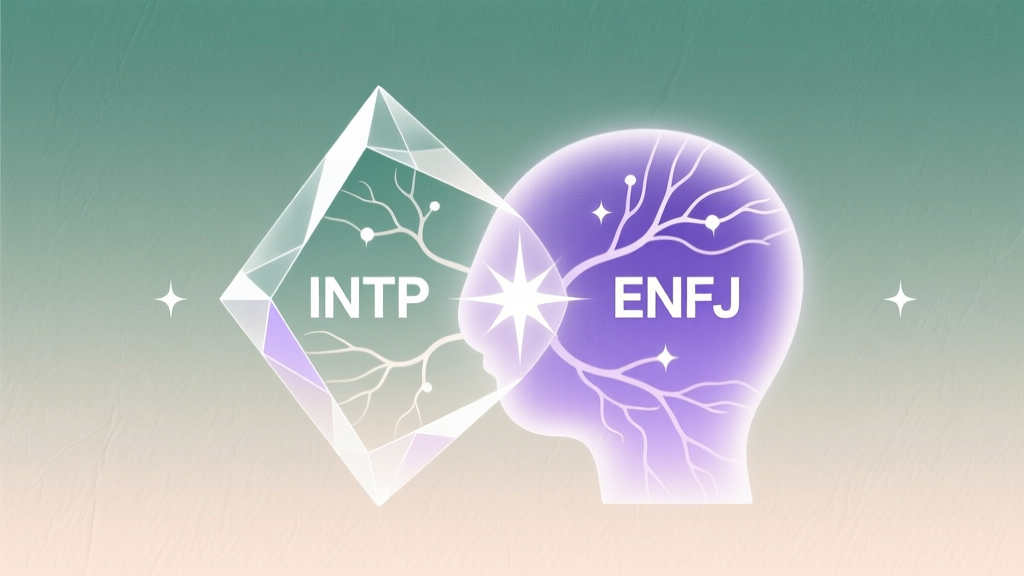
Core Values of INTP
The INTP (Introverted, Intuitive, Thinking, Perceiving) personality type, often dubbed the Logician, is fundamentally guided by a deep-seated commitment to intellectual integrity, autonomy, and truth-seeking. Their value system isn’t built on tradition, social consensus, or emotional resonance—but on internal consistency, logical coherence, and epistemic rigor. For the INTP, a belief is only worthy of adoption if it withstands sustained scrutiny, resists contradiction, and integrates cleanly into an evolving mental model of reality.
According to the Myers & Briggs Foundation, INTPs prioritize truth over harmony, precision over persuasion, and understanding over action. They hold skepticism as a virtue—not cynicism, but disciplined doubt that serves as a cognitive immune system against dogma, bias, and unexamined assumptions. This makes them natural philosophers, scientists, and systems thinkers: their highest moral imperative is to think well, not to think like others.
INTPs value intellectual freedom above nearly all else. They resist external authority unless it’s demonstrably grounded in evidence and reason. A religious doctrine, political ideology, or even a beloved family tradition carries no inherent weight unless it survives rigorous analysis. As cognitive psychologist Keith Stanovich explains in Rationality and the Reflective Mind, INTPs exemplify what he calls ‘reflective rationality’—the capacity to override intuitive judgments with deliberate, rule-based reasoning. This orientation shapes their entire moral architecture: right and wrong are not decreed; they are derived from principles such as non-contradiction, parsimony (Occam’s Razor), and empirical fidelity.
INTPs also prize authenticity—not in the emotional sense of ‘being real,’ but in the philosophical sense of conceptual fidelity. To be authentic is to maintain alignment between one’s stated beliefs and one’s actual inferential commitments. An INTP may remain silent in a group conversation not out of disengagement, but because speaking would require endorsing a claim they haven’t yet validated. Their moral discomfort arises less from hurting feelings and more from violating their own epistemic standards.
Importantly, INTPs do not lack compassion—they simply express care through intellectual service: clarifying confusion, dismantling false dichotomies, or designing fairer systems. Their empathy is often cognitive rather than affective; they understand suffering structurally (e.g., “This policy creates incentive misalignment leading to systemic inequity”) before feeling it viscerally. This doesn’t diminish their ethical concern—it redirects it toward root causes rather than surface symptoms.
Core Values of ENFJ
The ENFJ (Extraverted, Intuitive, Feeling, Judging), known as the Protagonist, operates from a value system anchored in human potential, relational harmony, and moral intentionality. Where the INTP asks, “Is this logically sound?”, the ENFJ asks, “Does this uplift people? Does it honor our shared humanity?” Their moral compass is calibrated by empathy, responsibility, and a profound belief in growth—not just personal, but collective.
As described by the Center for Applications of Psychological Type (CAPT), ENFJs are driven by a desire to inspire, nurture, and actualize the best in others. Their core values include authenticity of heart, ethical consistency in relationships, and the cultivation of environments where people feel seen, affirmed, and empowered. Unlike the INTP’s focus on conceptual accuracy, the ENFJ prioritizes moral resonance: a belief feels true when it aligns with compassion, fairness, and hopeful possibility.
ENFJs hold strong convictions about justice, dignity, and interdependence. They often embrace frameworks—spiritual, humanistic, or ideological—that affirm inherent human worth and the possibility of redemption. Their moral reasoning tends to follow Kohlberg’s post-conventional stage: ethics are based on universal principles (e.g., “All people deserve respect”), not social rules or personal gain. Yet unlike the INTP’s abstract universals, the ENFJ’s universals are inherently relational—grounded in lived experience, narrative, and emotional truth.
This manifests practically in how ENFJs lead, parent, and love. They invest deeply in others’ development—not to mold, but to mirror potential back to people who’ve forgotten it. They’ll spend hours helping a friend reframe a failure as growth, or redesign a workplace culture to reduce burnout—not because it’s efficient, but because it’s right. Their spirituality, whether theistic or secular, almost always centers on connection: to community, to nature, to a transcendent ideal of love-in-action.
Crucially, ENFJs are not naive idealists. Their Feeling function (Fe) is highly attuned to group dynamics, power imbalances, and unspoken needs. Their moral clarity comes from acute social perception—not wishful thinking. When an ENFJ says, “This policy harms vulnerable students,” they’re not speaking sentimentally; they’re reporting observed consequences, aggregated across dozens of student interactions, teacher interviews, and longitudinal outcomes. Their values are empirically informed—but interpreted through a lens of care.
Where Values Align for INTP and ENFJ
At first glance, the INTP’s cerebral detachment and the ENFJ’s empathic engagement seem antithetical. Yet beneath the surface, their value systems converge in three profound, underappreciated ways: a shared reverence for authenticity, a mutual commitment to growth-oriented truth, and a deep respect for human dignity as a first principle.
Authenticity as Integrity
Both types reject performative conformity—but define authenticity differently. The INTP seeks intellectual authenticity: saying what they mean, meaning what they say, and revising beliefs when evidence demands it. The ENFJ seeks relational authenticity: expressing care sincerely, honoring commitments, and refusing to suppress their moral voice for convenience. When these forms intersect—when the INTP’s honest critique helps the ENFJ clarify their values, and the ENFJ’s compassionate feedback helps the INTP articulate ideas with greater human impact—they create a rare feedback loop of mutual refinement.
Growth-Oriented Truth
Neither type treats truth as static dogma. The INTP views knowledge as provisional, constantly updated via falsification and synthesis. The ENFJ views moral understanding as developmental—evolving through relationship, reflection, and expanded perspective. Both reject absolutism. As developmental psychologist Robert Kegan notes in In Over Our Heads, mature adults move from “socialized mind” (believing what authorities say) to “self-authoring mind” (generating their own ideology)—a shift both INTPs and ENFJs typically achieve early. Their shared meta-value is epistemic humility: the understanding that today’s best model is tomorrow’s stepping stone.
Human Dignity as Non-Negotiable
Despite differing pathways, both types uphold human dignity as inviolable. The INTP defends it through logic: if consciousness generates subjective experience, then all sentient beings warrant ethical consideration—a conclusion drawn from philosophy of mind and evolutionary biology. The ENFJ defends it through empathy: having felt the sting of being unseen, they instinctively protect others’ right to be witnessed. This convergence becomes especially powerful in activism, education, or caregiving roles where structural analysis (INTP strength) and relational advocacy (ENFJ strength) combine to drive systemic change.
To illustrate how these alignments manifest concretely, consider the following comparison of shared value expressions:
| Value Domain | INTP Expression | ENFJ Expression | Shared Manifestation |
|---|---|---|---|
| Learning | Self-directed research; questioning assumptions; building mental models | Mentoring others; facilitating workshops; curating growth experiences | Co-designing a community learning lab where theory (INTP) meets practice (ENFJ) |
| Justice | Analyzing systemic biases in algorithms, laws, or economic models | Organizing support networks for marginalized groups; advocating for inclusive policies | Partnering on policy reform: INTP drafts equity impact assessments; ENFJ leads stakeholder engagement and narrative framing |
| Relationships | Valuing depth over frequency; respecting autonomy; communicating with precision | Investing time in meaningful connection; offering unwavering support; nurturing mutual growth | Creating a ‘values covenant’: e.g., “We commit to honest dialogue—even when uncomfortable—and to repairing ruptures with curiosity, not defensiveness” |
| Creativity | Designing novel systems, theories, or frameworks | Curating experiences, storytelling, or symbolic rituals that evoke meaning | Co-creating a podcast exploring big questions—INTP structures arguments and sources; ENFJ crafts narrative arcs and interviews guests with emotional intelligence |
This table reveals a pattern: their synergy isn’t about compromise, but complementarity. Each amplifies the other’s strengths while tempering potential blind spots—e.g., the INTP prevents the ENFJ’s vision from becoming vague; the ENFJ ensures the INTP’s insights translate into human-centered impact.
Navigating Value Differences
Differences aren’t flaws—they’re friction points where growth occurs. The INTP–ENFJ dynamic faces three primary value tensions: truth-telling style, decision-making pace, and conflict resolution paradigms. Addressing these requires intentionality—not suppression.
1. Truth-Telling Style: Precision vs. Compassion
The INTP’s commitment to factual accuracy can land as blunt or dismissive to the ENFJ, who hears tone and implication as much as content. Conversely, the ENFJ’s diplomatic phrasing may strike the INTP as evasive or illogical. Actionable strategy: Co-create a ‘truth protocol.’ Example: Before delivering critical feedback, the INTP writes a bullet-point summary of facts, then adds one sentence on intended impact (“I share this to help us refine the model, not to question your competence”). The ENFJ, in turn, practices ‘precision framing’: naming the emotional subtext explicitly (“I’m sharing this gently because I value our collaboration and want you to hear the idea, not the worry behind it”).
2. Decision-Making Pace: Deliberation vs. Momentum
INTPs need time to weigh variables, anticipate second-order effects, and test hypotheses mentally. ENFJs often sense urgency—especially when people are waiting or suffering—and push for timely action. Actionable strategy: Implement ‘staged commitment.’ Agree on a timeline with clear phases: e.g., “We’ll spend 48 hours gathering data (INTP-led), then 1 hour co-interpreting implications (joint), then decide on next steps by Friday noon (ENFJ holds deadline).” This honors both the need for rigor and the call to act.
3. Conflict Resolution: Analysis vs. Reconnection
When tension arises, INTPs retreat to analyze causes and systemic patterns. ENFJs prioritize emotional repair and relational continuity. Left unaddressed, this creates a cycle: INTP withdraws to ‘solve,’ ENFJ interprets withdrawal as rejection, escalating distress. Actionable strategy: Adopt a ‘two-phase resolution model.’ Phase 1 (within 24 hours): ENFJ initiates with a brief, low-stakes reconnection (“I miss our ease—can we share coffee tomorrow?”). Phase 2 (scheduled 48+ hours later): INTP leads a structured debrief using a shared document with columns: ‘What happened,’ ‘What I assumed,’ ‘What I need,’ ‘What I offer.’ This satisfies both the need for safety and the need for clarity.
Research from the Gottman Institute confirms that successful long-term partnerships aren’t defined by the absence of conflict, but by how couples repair after disagreement. For INTP–ENFJ pairs, repair isn’t about ‘agreeing’—it’s about co-constructing a shared language of respect that honors both cognitive honesty and emotional presence.
Spiritual and Philosophical Compatibility
Spirituality, for INTPs and ENFJs, rarely means adherence to doctrine—it means orientation toward meaning. Their compatibility here is unusually high, precisely because neither type confuses ritual with reverence or dogma with devotion.
INTPs often gravitate toward naturalistic or pantheistic worldviews: Spinoza’s God-as-Nature, Buddhist non-theistic mindfulness, or secular humanism grounded in cosmology and complexity science. Their ‘prayer’ is inquiry; their ‘sacred text’ is peer-reviewed literature; their ‘ritual’ is deep work—sustained focus on a problem that expands understanding. As philosopher Thomas Nagel observes in Mind and Cosmos, INTPs intuitively resonate with the idea that “reality is more intelligible than it is comprehensible”—a stance that invites wonder without requiring worship.
ENFJs, meanwhile, find spirituality in connection: communal singing, service projects, nature immersion, or contemplative dialogue. Their faith—whether Christian, Unitarian, or earth-centered—is less about metaphysical claims and more about praxis: how beliefs shape behavior toward others. They’re drawn to traditions emphasizing agape love, restorative justice, or incarnational theology—the divine made tangible in human action.
Where these paths converge is in awe-infused ethics. Both types experience awe—not as passive wonder, but as a catalyst for responsibility. The INTP gazes at the Hubble Deep Field and concludes, “Given the rarity of conscious observation in the universe, we must steward cognition wisely.” The ENFJ holds a newborn and thinks, “This fragile life deserves every protection and possibility we can design.” These are different vectors pointing to the same north star: significance rooted in interdependence.
A powerful practical expression of this compatibility is co-creating personalized spiritual practices. Examples include:
- ‘Cosmic Journaling’: Weekly entries alternating between INTP-mode (e.g., “How does quantum entanglement challenge classical notions of separateness?”) and ENFJ-mode (e.g., “When did I feel most connected this week—and how can I widen that circle?”).
- Service Design Sprints: Quarterly half-day sessions where INTP maps systemic barriers to well-being (e.g., housing policy gaps), and ENFJ designs accessible interventions (e.g., tenant advocacy toolkit), then they implement one together.
- Philosophy Walks: Monthly hikes discussing one text—e.g., Marcus Aurelius’ Meditations (INTP analyzes Stoic logic; ENFJ explores how ‘loving fate’ translates to modern resilience).
Building a Shared Life Vision
A shared life vision emerges not from merging dreams, but from aligning architectural principles. INTPs and ENFJs thrive when they co-author a ‘Constitution of Us’—a living document articulating non-negotiables, growth thresholds, and renewal rituals.
Step 1: Draft Foundational Principles
Collaboratively write 3–5 principles that reflect your deepest convergences. Examples:
- “We prioritize understanding over agreement.”
- “Our home is a laboratory for humane innovation.”
- “We measure success by the depth of our questions, not the speed of our answers.”
Step 2: Define Growth Thresholds
Identify specific, observable milestones where your values become visible in action. Avoid vagueness (“be more present”). Instead:
- Communication: “If either of us uses the phrase ‘You always…’ or ‘You never…’ in conflict, we pause and reframe using ‘I’ statements + observable behavior.”
- Decision-Making: “For any commitment requiring >10 hours/week, we jointly complete a ‘Values Alignment Checklist’ assessing impact on autonomy (INTP), relational impact (ENFJ), and growth potential (both).”
- Rest & Renewal: “We protect one weekly ‘unplugged zone’ (e.g., Sunday mornings) where devices are off, agendas are absent, and presence is the only task.”
Step 3: Establish Renewal Rituals
Values erode without maintenance. Schedule quarterly ‘Vision Renewals’: 90-minute sessions with this structure:
- Reflect (20 min): Each shares one moment this quarter when they felt most aligned with your shared principles.
- Revise (30 min): Review your Constitution and Growth Thresholds. What’s working? What needs updating? (e.g., “Threshold #2 now includes ‘environmental impact’ after our solar panel research.”)
- Recommit (20 min): Write one concrete action each will take in the next 30 days to embody a revised principle.
- Reconnect (20 min): Share gratitude—specific, recent, behavior-based (“I appreciated how you paused our debate last Tuesday to ask if I’d eaten. That honored our ‘care-first’ principle.”).
FAQ
Can INTP and ENFJ share religious beliefs?
Yes—but not necessarily the same religion. Their compatibility lies in how they relate to belief, not what they believe. An atheist INTP and a progressive Christian ENFJ can share deep spiritual resonance if both treat faith as a quest for meaning, not a set of answers. Research from Pew Research Center shows that 72% of U.S. adults describe themselves as ‘spiritual but not religious’, reflecting a growing cultural shift toward experiential, values-driven spirituality that suits this pairing well.
How do INTP and ENFJ handle moral disagreements about politics or ethics?
They handle them exceptionally well—if they frame disagreement as collaborative inquiry. Instead of debating positions (“Universal healthcare is necessary”), they explore premises (“What underlying value makes healthcare access non-negotiable for you?” / “What systemic risks concern you most about implementation?”). This transforms polarization into joint problem-solving. The INTP maps causal chains; the ENFJ maps human impacts. Together, they build richer models than either could alone.
Do INTP and ENFJ have compatible life purposes?
Profoundly so. The INTP’s purpose is often to clarify—to reduce noise, expose hidden assumptions, and map complexity. The ENFJ’s purpose is to cultivate—to nurture potential, heal fractures, and grow goodness. These are complementary verbs in the same sentence: “We clarify systems to cultivate flourishing.” Their life purpose becomes symbiotic: the INTP’s insights give the ENFJ clearer levers for change; the ENFJ’s vision gives the INTP’s analysis urgent, human-scale relevance.
What’s the biggest risk to INTP–ENFJ value alignment?
The biggest risk is unexamined role rigidity: the INTP defaulting to ‘observer’ and the ENFJ defaulting to ‘caretaker.’ This creates imbalance—e.g., the INTP never advocates for their own needs, assuming the ENFJ will intuit them; the ENFJ exhausts themselves ‘holding space’ while the INTP disengages from emotional labor. Prevention requires explicit role negotiation: “What do we each need to feel ethically whole in this relationship?” and regular check-ins on reciprocity—not just in chores, but in vulnerability, initiation, and boundary-setting.
In sum, the INTP–ENFJ bond, when rooted in shared values, is among the most philosophically fertile pairings in the MBTI spectrum. It asks both partners to stretch: the INTP toward embodied compassion, the ENFJ toward fearless inquiry. But the reward is rare—a life where logic and love don’t compete, but co-author a more truthful, more humane world.