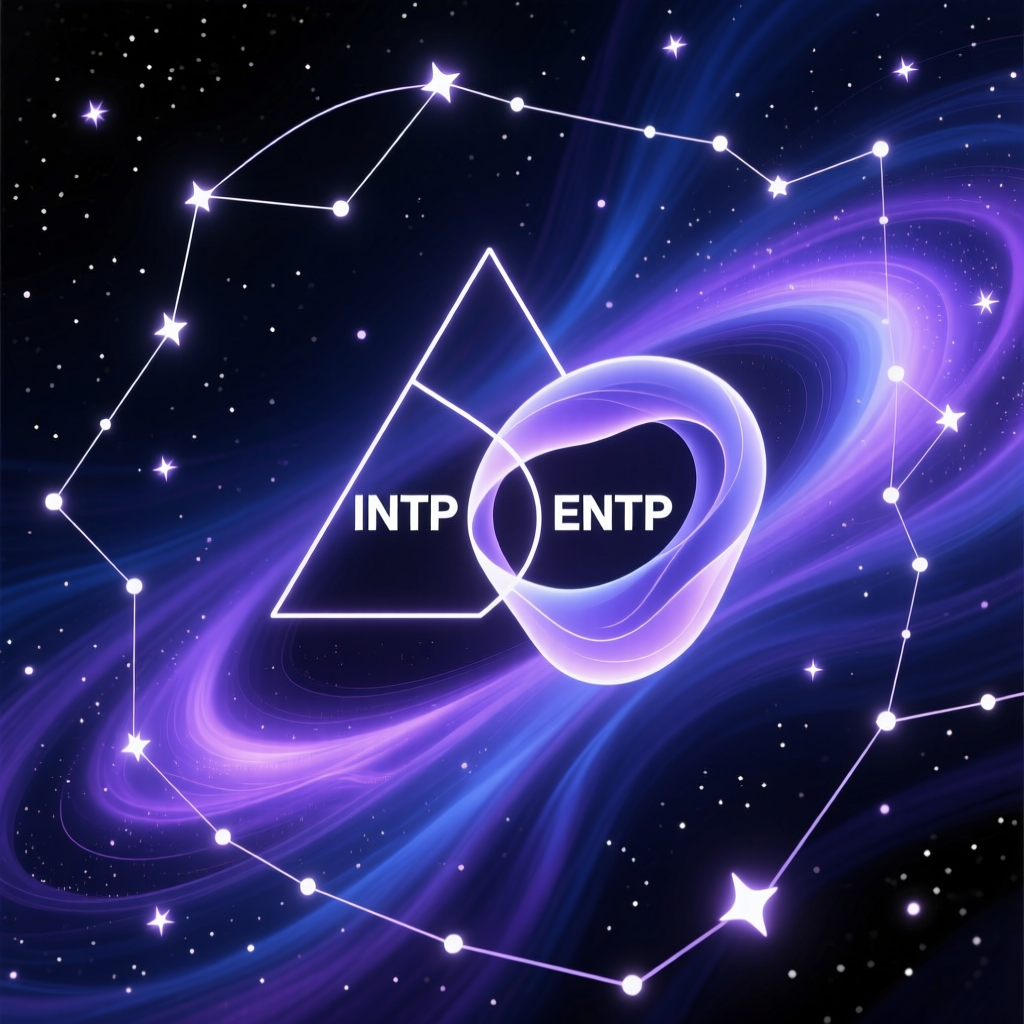
INTP & ENTP: The Intellectual Match That Sparks Endless Curiosity
When two minds wired for abstract thinking, relentless questioning, and theoretical exploration come together, the result is nothing short of electric. The INTP and ENTP pairing is often described as one of the most intellectually stimulating matches in the Myers-Briggs Type Indicator system. Both types share a deep love for ideas, a disdain for rigid convention, and an almost insatiable appetite for understanding how the world works at a fundamental level.
But what happens when these two intuitive thinkers move beyond the honeymoon phase of mutual fascination? How does their shared cognitive architecture shape the way they love, work, fight, and grow together? This comprehensive guide explores every dimension of the INTP and ENTP intellectual match, from romantic dynamics to workplace synergy, giving you the insights you need to navigate this fascinating relationship.
Before we dive in, it helps to understand the foundation. The INTP personality type (Introverted, Intuitive, Thinking, Perceiving) is the quiet architect of ideas — methodical, deeply analytical, and happiest when left alone to tinker with complex systems. The ENTP personality type (Extraverted, Intuitive, Thinking, Perceiving) is the charismatic debater — bold, quick-witted, and energized by bouncing ideas off others. Together, they form a pair that can spend hours lost in conversation, completely oblivious to the passage of time.
Cognitive Function Interplay: The Engine Behind the Connection
To truly understand why INTPs and ENTPs click so powerfully, we need to look beneath the surface letters and examine their cognitive function stacks. This is where the real magic — and the real friction — lives.
The INTP's function stack is:
- Dominant: Introverted Thinking (Ti)
- Auxiliary: Extraverted Intuition (Ne)
- Tertiary: Introverted Sensing (Si)
- Inferior: Extraverted Feeling (Fe)
The ENTP's function stack is:
- Dominant: Extraverted Intuition (Ne)
- Auxiliary: Introverted Thinking (Ti)
- Tertiary: Extraverted Feeling (Fe)
- Inferior: Introverted Sensing (Si)
Notice something remarkable? These two types share the exact same four cognitive functions, just arranged in a different order. This creates what personality theorists often call a "mirror" or "pedagogue" relationship. The INTP leads with Ti and supports it with Ne, while the ENTP leads with Ne and supports it with Ti. They are essentially two sides of the same cognitive coin.
This shared function stack means they process the world in fundamentally similar ways. Both prioritize logical consistency (Ti) and pattern recognition (Ne). Both struggle with emotional expression (Fe) and routine maintenance (Si). When an INTP says, "I've been thinking about this theory," the ENTP instinctively responds with, "And here are five more possibilities you haven't considered." Neither has to explain their thought process — the other already speaks the same mental language.
The difference in function order, however, creates a complementary dynamic. The INTP goes deeper, drilling into a single idea with laser-focused precision. The ENTP goes wider, generating an explosion of possibilities and connections. Together, they cover the full spectrum of intuitive thinking — depth and breadth, focus and expansion, analysis and synthesis. This is why their intellectual connection feels so complete.
Romantic Dynamics: When Two Thinkers Fall in Love
Romance between an INTP and an ENTP is rarely conventional — and that's exactly how both partners prefer it. This is not a couple that thrives on grand romantic gestures, meticulously planned date nights, or constant verbal affirmations of love. Instead, their romance is built on a foundation of mutual intellectual respect, shared curiosity, and the quiet comfort of being fully understood.
The Early Stages: Intellectual Seduction
The attraction between an INTP and an ENTP almost always begins in the mind. The ENTP is drawn to the INTP's depth of analysis and quiet brilliance. The INTP is captivated by the ENTP's mental agility, confidence, and ability to make connections at lightning speed. Their early conversations can last for hours, jumping from philosophy to physics to the nature of consciousness, with neither person running out of things to say.
The ENTP typically takes the lead in pursuing the relationship, using their extraverted energy to initiate contact, suggest activities, and keep the momentum going. The INTP, while more reserved, signals interest through engagement — asking follow-up questions, sharing personal theories, and gradually opening up their rich inner world. For the INTP, this level of vulnerability is a significant sign of affection.
Long-Term Relationship Patterns
As the relationship matures, the INTP-ENTP couple develops a rhythm that works for their shared preferences. They tend to create a partnership that values autonomy within togetherness. Neither partner is clingy or demanding of constant attention, which allows both to maintain their independence while still feeling deeply connected.
However, this same independence can become a double-edged sword. Without conscious effort, the relationship can drift into a comfortable but emotionally distant coexistence. Both types have inferior or tertiary Extraverted Feeling (Fe), which means expressing emotions, checking in on each other's feelings, and providing emotional support does not come naturally to either partner. The ENTP may assume everything is fine because there hasn't been a conflict, while the INTP may withdraw further into their internal world without realizing their partner feels neglected.
Physical intimacy can also be an area that requires attention. Both types live primarily in their heads, and it's easy for them to forget that physical connection and affection are important components of a romantic relationship. Making a deliberate effort to express love physically — not just intellectually — can significantly strengthen the bond.
For more insights on how thinking types navigate romance, explore our guide on thinking types in relationships.
Friendship Patterns: The Ultimate Brainstorming Buddies
If the INTP-ENTP romantic relationship is a slow-burning flame, their friendship is a wildfire. As friends, these two types are virtually unstoppable. They form the kind of bond where a single text message containing a half-formed idea can spiral into a three-hour phone call exploring every possible implication.
Why their friendship works so well:
- No judgment zone: Both types are naturally open-minded and non-judgmental about unconventional ideas. Neither will dismiss the other's theories as "too weird" or "impractical."
- Debate as bonding: ENTPs love to argue for the sake of exploration, and INTPs love to dissect arguments for logical consistency. Their friendly debates are a form of intellectual play that strengthens their bond.
- Low maintenance: Neither type requires constant contact or emotional validation to maintain the friendship. They can go weeks without talking and pick up right where they left off.
- Shared humor: Both types tend toward dry, absurdist, and intellectually layered humor. They get each other's jokes — even the obscure ones that require knowledge of quantum mechanics or medieval philosophy.
The ENTP often serves as the social bridge, pulling the INTP into group settings and introducing them to new people and experiences. The INTP, in turn, provides the ENTP with a trusted sounding board — someone who will honestly evaluate their ideas rather than simply cheerleading. This reciprocal exchange of strengths makes their friendship deeply satisfying for both parties.
One potential challenge in their friendship is the ENTP's tendency to start many projects and the INTP's tendency to overthink before starting any. Together, they can become trapped in a perpetual cycle of planning and theorizing without ever executing their brilliant ideas. Having a third friend who is more action-oriented can help balance this dynamic.
Workplace Synergy: Building Ideas That Matter
In a professional setting, the INTP and ENTP pairing can be extraordinarily productive — provided they are in roles that leverage their natural strengths and allow them the freedom to think creatively. This is not a team that thrives under micromanagement, rigid procedures, or repetitive tasks.
Ideal Professional Roles
The INTP excels in roles that require deep analysis, system design, and independent problem-solving. Think software architecture, data science, academic research, engineering, or strategic consulting. The ENTP thrives in roles that involve brainstorming, persuasion, adaptability, and big-picture vision. Think entrepreneurship, marketing strategy, product innovation, or venture capital.
When paired together on a project, the ENTP generates the vision and the INTP builds the framework to make it real. The ENTP asks, "What if we disrupted this entire industry?" and the INTP responds with, "Here's the logical architecture that would make that possible — and here are the three critical flaws we need to solve first."
Strengths as a Professional Team
- Innovation: Their combined Ne firepower means they can generate more creative solutions than almost any other pairing.
- Quality control: The INTP's Ti ensures that ideas are logically sound before they move forward.
- Adaptability: Both Perceiving types are comfortable with change, pivoting quickly when new information emerges.
- Complementary communication: The ENTP can sell the idea to stakeholders while the INTP ensures the technical details are bulletproof.
Potential Workplace Challenges
The biggest risk for an INTP-ENTP professional team is execution. Both types are far more interested in generating ideas than in the mundane work of implementing them. Deadlines may be missed, details may be overlooked, and follow-through can suffer. Partnering with a Judging type — such as an ENTJ or ISTJ — can help ensure that their brilliant concepts actually see the light of day.
Additionally, the ENTP's tendency to challenge authority and the INTP's tendency to disengage from office politics can create friction in hierarchical organizations. Both types perform best in environments that value merit over seniority and innovation over tradition.
Communication Styles: Speaking the Same Language (Mostly)
One of the greatest advantages of the INTP-ENTP match is their remarkably compatible communication style. Both types communicate in a direct, logical, and idea-focused manner. They don't require emotional preamble, they don't take intellectual disagreement personally, and they both value truth over tact.
How They Communicate
The ENTP communicates with enthusiasm, rapid-fire associations, and a tendency to think out loud. They process ideas by talking, which means their conversations can be sprawling, tangential, and full of sudden pivots. The INTP communicates more deliberately, choosing words carefully and presenting ideas that have already been internally vetted for logical consistency.
This difference in communication tempo can occasionally cause friction. The ENTP may feel the INTP is too slow to respond or too reluctant to share half-formed thoughts. The INTP may feel the ENTP talks too much without sufficient depth. However, because both types value intellectual honesty, they are usually able to address these differences directly and find a middle ground.
The Art of the Productive Argument
For most personality types, frequent arguing is a sign of relationship trouble. For INTPs and ENTPs, it's a sign of engagement. Both types genuinely enjoy intellectual sparring — it's how they explore ideas, test theories, and sharpen their thinking. A heated debate about free will, the ethics of artificial intelligence, or the best approach to urban planning is not a conflict; it's a form of quality time.
The key is ensuring that both partners understand this about each other. An INTP who is new to the relationship might initially be taken aback by the ENTP's confrontational debating style. An ENTP might misinterpret the INTP's quiet withdrawal during an argument as disinterest rather than internal processing. Learning each other's argument style is one of the most important steps in building lasting compatibility.
For a broader look at how intuitive types communicate, check out our article on communication styles of intuitive types.
Conflict Resolution: Navigating the Rough Patches
Despite their many similarities, INTPs and ENTPs are not immune to conflict. In fact, their shared weaknesses can sometimes amplify problems rather than mitigate them. Understanding these potential flashpoints — and developing strategies to address them — is essential for long-term harmony.
Common Sources of Conflict
Emotional neglect: Both types struggle with Extraverted Feeling (Fe). This means neither partner is naturally skilled at recognizing emotional needs, providing comfort, or navigating sensitive conversations with empathy. Conflicts that have an emotional undercurrent — feeling unappreciated, feeling unheard, feeling unloved — can fester because neither partner addresses them directly.
Decision paralysis: As Perceiving types, both INTPs and ENTPs prefer to keep options open rather than commit to a final decision. This can lead to frustrating stalemates when practical decisions need to be made — where to live, whether to accept a job offer, how to manage finances. The ENTP keeps generating new possibilities, and the INTP keeps finding reasons why none of them are quite right.
Social energy mismatch: The ENTP gains energy from social interaction and may want to attend events, host gatherings, or maintain an active social calendar. The INTP needs solitude to recharge and may feel drained by the ENTP's social ambitions. If not negotiated, this difference can lead to the ENTP feeling held back and the INTP feeling pressured.
Follow-through failures: The ENTP makes enthusiastic promises they don't keep. The INTP agrees to tasks they never complete. Both types are guilty of this, and while they may initially forgive each other easily, repeated patterns of broken commitments can erode trust over time.
Effective Resolution Strategies
- Schedule emotional check-ins: Since neither partner will naturally initiate conversations about feelings, building a regular practice of checking in can prevent small issues from becoming large ones.
- Use logic to solve emotional problems: Both types respond well to logical frameworks. Treating relationship issues as problems to be solved — with clear data, root cause analysis, and actionable solutions — plays to their strengths.
- Establish decision deadlines: Agree in advance on a timeline for important decisions. When the deadline arrives, commit to the best available option rather than continuing to deliberate indefinitely.
- Respect energy differences: The ENTP should honor the INTP's need for solitude without taking it personally. The INTP should make a conscious effort to join social activities occasionally, recognizing that this matters to their partner.
- Create accountability systems: Since both types struggle with follow-through, external structures — shared calendars, task management apps, or weekly planning sessions — can help them stay on track without relying solely on willpower.
Practical Tips for Strengthening the INTP-ENTP Bond
Whether you're an INTP paired with an ENTP or vice versa, these actionable strategies can help you build a stronger, more fulfilling relationship across all contexts:
- Cultivate emotional vocabulary together. Both types benefit from expanding their ability to identify and articulate feelings. Reading books on emotional intelligence together or discussing the emotional dimensions of movies and stories can build this skill in a way that feels natural and engaging.
- Create shared projects. The INTP-ENTP relationship thrives when both partners are building something together — whether it's a business, a creative work, a research project, or even a garden. Shared projects give their intellectual energy a constructive outlet and create a sense of shared purpose.
- Protect quality conversation time. In the busyness of daily life, it's easy for even the most compatible partners to stop having deep conversations. Set aside dedicated time — a weekly walk, a monthly weekend retreat, or even a nightly 20-minute debrief — for the kind of wide-ranging dialogue that feeds both partners' minds.
- Balance novelty with routine. Both types crave novelty and resist routine, but some structure is necessary for a stable relationship. Find the minimum viable routine — the smallest amount of structure that keeps your lives functional — and leave everything else flexible.
- Learn each other's love language. While neither type may naturally gravitate toward traditional expressions of love, understanding what makes your partner feel valued is crucial. For many INTPs, having their ideas respected and their need for space honored is love. For many ENTPs, enthusiastic engagement with their latest idea is love.
- Bring in complementary types. Don't try to be everything to each other. Cultivate friendships with Feeling types who can provide emotional support, and Judging types who can help with planning and execution. A well-rounded social ecosystem takes pressure off the primary relationship.
- Practice active appreciation. Both types tend to assume their partner knows they're valued. Make appreciation explicit. The INTP should verbalize admiration for the ENTP's creativity and social skills. The ENTP should acknowledge the INTP's depth, loyalty, and analytical brilliance.
Understanding your type more deeply can further enhance this relationship. Explore our complete guides to the INTP personality and the ENTP personality for more insights.
Frequently Asked Questions
Are INTPs and ENTPs considered a good match?
Yes, INTPs and ENTPs are widely considered one of the most intellectually compatible pairings in the MBTI system. They share all four cognitive functions (Ti, Ne, Si, and Fe), which gives them a remarkably similar way of processing the world. Their shared love of ideas, logical analysis, and open-ended exploration creates a deep and lasting bond. However, their shared weaknesses — particularly around emotional expression and practical follow-through — require conscious attention to ensure long-term relationship satisfaction. When both partners are committed to growth, this pairing has extraordinary potential.
How do INTPs and ENTPs handle emotional intimacy?
Emotional intimacy is often the most challenging area for the INTP-ENTP pairing. Both types have Extraverted Feeling (Fe) in their lower function stack — it's the INTP's inferior function and the ENTP's tertiary function. This means that identifying, processing, and expressing emotions does not come naturally to either partner. They tend to intellectualize feelings rather than experience them directly, and they may struggle to provide the kind of empathetic, emotionally validating support that many people need in close relationships. Building emotional intimacy requires deliberate effort: creating safe spaces for vulnerability, practicing active listening without immediately offering solutions, and learning to sit with discomfort rather than retreating into analysis. Over time, both types can develop their Fe and become more emotionally attuned partners.
What are the biggest challenges in an INTP-ENTP relationship?
The most significant challenges include emotional neglect (neither partner naturally prioritizes emotional maintenance), decision paralysis (both prefer keeping options open over committing), social energy differences (the ENTP needs more social stimulation than the INTP), and follow-through failures (both types are better at generating ideas than executing them). Additionally, the ENTP's love of debate can sometimes overwhelm the INTP, who prefers to process internally before responding. Financial management can also be a flashpoint, as neither type is naturally drawn to budgeting or long-term financial planning. Addressing these challenges requires self-awareness, open communication, and a willingness to develop skills outside their natural comfort zones.
Can an INTP-ENTP friendship evolve into a romantic relationship?
Absolutely. In fact, many INTP-ENTP romantic relationships begin as friendships. The intellectual connection that draws them together as friends often deepens over time into romantic attraction, especially as they discover how well they understand each other's thought processes and value systems. The transition from friendship to romance can be gradual and almost imperceptible, as both types tend to approach relationships analytically rather than impulsively. The ENTP is more likely to initiate the shift, while the INTP may take longer to recognize and acknowledge their romantic feelings. The strong foundation of friendship and intellectual respect that precedes the romantic relationship often makes these partnerships particularly resilient and long-lasting.
For more compatibility insights, explore our other MBTI pairing analyses, including INTP and INTJ compatibility and ENTP and ENFP relationships.