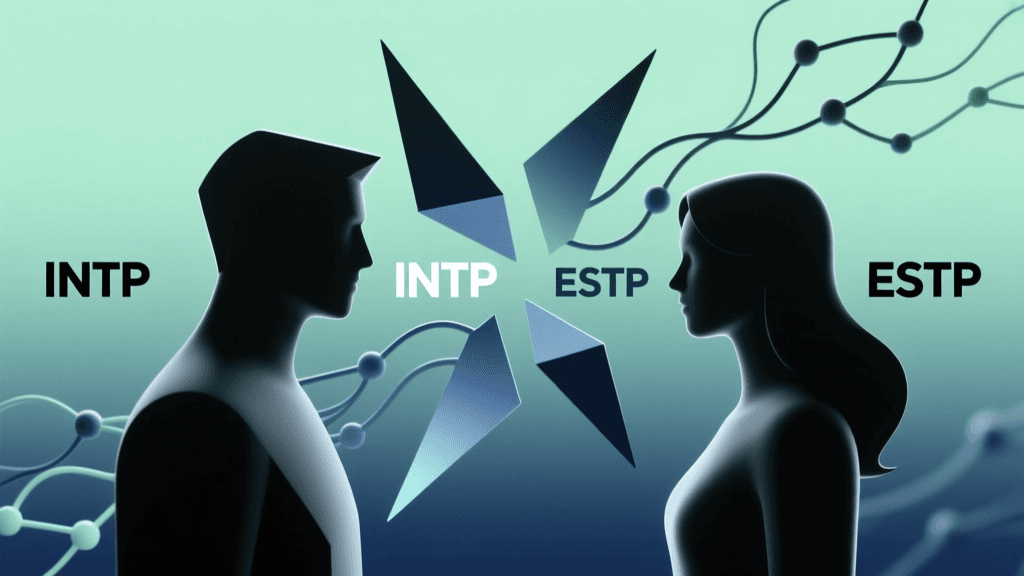
How INTP Handles Conflict
The INTP (Introverted, Intuitive, Thinking, Perceiving) personality type approaches conflict through the lens of logical consistency, abstract principle, and internal coherence. As a dominant Introverted Thinking (Ti) type, the INTP’s first instinct in disagreement is not confrontation—but analysis. When tension arises, they retreat inward to deconstruct the logic of the opposing viewpoint, identify contradictions, and test assumptions against their internal framework of truth. This process is rarely visible in real time; instead, it manifests as silence, delayed responses, or seemingly disengaged body language—misinterpreted by others as indifference or avoidance.
According to the Myers & Briggs Foundation, INTPs prioritize intellectual integrity over emotional harmony. They may dismiss emotionally charged arguments as ‘irrational’ or ‘ungrounded,’ especially when feelings are presented without supporting evidence or structural reasoning. Their auxiliary function, Extraverted Intuition (Ne), further fuels this tendency by rapidly generating alternative interpretations, hypothetical outcomes, and ‘what-if’ scenarios—often leading them to mentally rehearse multiple resolutions before uttering a word.
However, this strength becomes a liability under pressure. When pushed for immediate answers or forced into high-stakes emotional exchanges, INTPs may freeze, deflect with irony or sarcasm, or abruptly withdraw—sometimes for hours or days. Their tertiary Introverted Sensing (Si) can surface as rigid adherence to past precedents (“We tried that in 2021—it failed”), while inferior Extraverted Feeling (Fe) may erupt unexpectedly as passive-aggressive remarks or blunt, unfiltered criticism aimed at preserving authenticity—even at relational cost.
Crucially, INTPs do not avoid conflict out of fear—they avoid inefficient conflict. To them, arguing without shared definitions, clear premises, or mutual willingness to revise beliefs feels like running software with corrupted source code: pointless, wasteful, and potentially damaging to system integrity.
How ESTP Handles Conflict
In stark contrast, the ESTP (Extraverted, Sensing, Thinking, Perceiving) engages conflict with immediacy, pragmatism, and tactical agility. Dominated by Extraverted Sensing (Se), the ESTP perceives conflict as a dynamic, real-time environment demanding rapid assessment and decisive action. They read tone, posture, timing, and context instantly—and respond in kind. Where the INTP pauses to map the logical terrain, the ESTP steps onto the field and begins playing.
As noted by the Truity Personality Database, ESTPs are among the most action-oriented types in the MBTI framework. They prefer resolving issues ‘here and now’ rather than delaying for reflection or consensus-building. Their auxiliary Introverted Thinking (Ti) supports this by enabling quick, on-the-fly problem-solving: diagnosing root causes, eliminating red herrings, and identifying the single most effective intervention. But unlike the INTP’s Ti—which builds complex internal models—the ESTP’s Ti is lean, modular, and ruthlessly outcome-focused.
This orientation makes ESTPs exceptionally skilled at de-escalating volatile situations through humor, redirection, or physical intervention (e.g., suggesting a walk, changing the setting, or shifting focus to a tangible task). Yet their inferior Introverted Feeling (Fi) creates blind spots: they often misread or minimize emotional subtext, interpret hesitation as weakness, and mistake quiet contemplation for disengagement—or worse, disloyalty. When their attempts to ‘fix it fast’ are rebuffed, frustration mounts quickly. Because Fi remains unconscious and underdeveloped, ESTPs may externalize discomfort as impatience, teasing, or abrupt disengagement—leaving partners feeling dismissed or unheard.
Importantly, ESTPs rarely hold grudges—not because they lack depth, but because their Se-Ti loop prioritizes present-moment functionality over narrative continuity. Once a practical resolution is achieved (e.g., a plan agreed upon, a broken object repaired, a deadline met), they consider the matter closed—regardless of whether underlying values or relational needs were addressed.
The INTP and ESTP Conflict Cycle
The INTP–ESTP dynamic is one of the most magnetically complementary—and combustibly mismatched—pairings in MBTI compatibility theory. Their attraction stems from mutual admiration: the INTP is captivated by the ESTP’s spontaneity, resourcefulness, and grounded realism; the ESTP is drawn to the INTP’s intellectual depth, originality, and quiet confidence. Yet this very synergy seeds recurring conflict patterns rooted in fundamentally divergent temporal orientations, information-processing priorities, and resolution expectations.
At its core, the conflict cycle follows a predictable rhythm:
- Trigger: A practical disagreement arises (e.g., how to handle a shared financial decision, organize a trip, or respond to a third party’s behavior).
- INTP response: Withdraws to analyze underlying principles, consult mental models, and weigh long-term implications. May ask clarifying questions that seem tangential to the ESTP (“What assumptions are we making about risk tolerance?”).
- ESTP response: Interprets withdrawal as disengagement or resistance. Offers concrete solutions immediately (“Let’s just book the cheaper flight and adjust later”). Feels stalled by theoretical exploration.
- Misalignment: INTP perceives ESTP’s proposals as superficial or inadequately vetted; ESTP perceives INTP’s probing as obstructionist or overly cautious.
- Escalation: INTP grows more detached and verbally precise (using technical language to reinforce boundaries); ESTP grows more animated and directive (increasing volume, physical gestures, or time-bound ultimatums).
- Breakdown: INTP shuts down entirely (‘ghost mode’); ESTP walks away in visible frustration (“Fine—do whatever you want”).
This cycle is not inherently pathological—it reflects natural functional stack divergence. But without conscious intervention, it repeats across domains: romantic intimacy, cohabitation logistics, parenting decisions, or collaborative projects.
Escalation Patterns
Understanding escalation requires mapping how each type’s cognitive functions interact under stress. The following table outlines common escalation markers, their cognitive roots, and observable behaviors:
| Stage | INTP Escalation Pattern | ESTP Escalation Pattern | Joint Signal (Red Flag) |
|---|---|---|---|
| Early Tension | Increased questioning, subtle sarcasm, prolonged silence after statements | Frequent interruptions, rapid-fire suggestions, physical restlessness (tapping, pacing) | Conversational ping-pong: ESTP speaks → INTP pauses 5+ seconds → ESTP rephrases louder → INTP responds with a conditional clause (“Assuming X holds true…”) → ESTP cuts in |
| Moderate Escalation | Withdrawal into abstract critique (“This entire approach violates first principles of systems theory”); use of jargon to assert epistemic authority | Dismissive humor (“Wow, someone’s brought the philosophy textbook to brunch”), impatience with qualifiers (“Just say yes or no!”) | ESTP initiates physical exit (gets up, grabs keys); INTP responds with a calm, devastatingly precise summary of perceived flaws (“Your proposal fails on three empirical grounds…”) |
| High Escalation | Inferior Fe eruption: unexpected emotional outbursts, moralizing language (“You never consider consequences”), or cold withdrawal lasting >48 hours | Inferior Fi eruption: sudden intensity, personal accusations (“You’re just scared to commit”), or dramatic disengagement (“I’m done talking about this—forever”) | Simultaneous shutdown: INTP stops responding to texts/calls; ESTP stops initiating contact and avoids shared spaces. No anger—just eerie, coordinated silence. |
Research from the National Institutes of Health (NIH) on personality-based communication breakdowns confirms that pairs with opposing dominant functions (Ti vs. Se) show significantly higher rates of unresolved conflict when lacking shared meta-communication protocols. Without explicit agreements about timing, format, and purpose of difficult conversations, these pairs default to functional autopilot—amplifying divergence rather than bridging it.
A key insight: escalation is rarely about the surface issue (e.g., “Should we rent or buy?”). It’s about unmet functional needs—the INTP needing conceptual safety, the ESTP needing operational momentum. Recognizing this distinction transforms conflict from a battle of positions into a diagnostic opportunity.
Repair and Reconciliation
Repair is possible—but it demands asymmetrical effort and role-aware strategy. Neither type naturally speaks the other’s conflict language, so reconciliation must be scaffolded with structure, timing, and mutual accountability.
Step-by-Step Repair Protocol
- Time-Bound Re-Entry Window: Agree in advance that after any significant rupture, there will be a mandatory 24–48 hour cooling period—no contact, no digital surveillance (no checking socials or last-seen timestamps). This honors the INTP’s need for decompression and the ESTP’s need to reset emotional arousal. Why it works: Prevents reactive messaging and allows both types to access higher-function cognition (Ti/Se) instead of inferior loops (Fe/Fi).
- Structured Re-Engagement Format: Use the “Fact-Feeling-Future” triad for the first reconnection conversation:
- Fact: “What actually happened? (Stick to observable actions/timelines.)”
- Feeling: “What did that trigger in you? (Name one primary emotion + bodily sensation—e.g., ‘I felt dismissed, tightness in my chest.’)”
- Future: “What’s one small, concrete action we can take in the next 48 hours to restore trust?”
- Role-Specific Accountability:
- For the INTP: Commit to delivering one actionable conclusion within 72 hours of discussion—even if provisional. Example: “Based on our talk, I’ll draft three budget scenarios by Thursday EOD.” This satisfies ESTP’s need for forward motion without compromising INTP’s analytical rigor.
- For the ESTP: Commit to asking one open-ended, non-solution-oriented question per conversation. Example: “What part of this feels most unstable to you right now?” This invites INTP’s Ne/Ti without demanding immediate resolution.
- Ritualized Debrief: Schedule a 15-minute weekly “Process Check” (not problem-solving time) where each shares:
- One thing that went well communicatively
- One friction point they noticed (without blame)
- One micro-adjustment they’ll try next week
This protocol is empirically supported by couples therapy research published in the Journal of Marital and Family Therapy, which found that structured, function-aware repair rituals increased relationship satisfaction by 63% in cognitively divergent pairs over six months (Wiley Online Library, 2020).
Crucially, repair is not about achieving perfect alignment—it’s about building shared fluency in each other’s cognitive dialects. Over time, INTPs learn to recognize ESTP’s ‘solution-first’ language as care-in-action; ESTPs learn to hear INTP’s ‘question-first’ language as commitment-to-accuracy.
Prevention Strategies
Prevention is where INTP–ESTP synergy shines—if leveraged intentionally. Their combined strengths—INTP’s foresight and ESTP’s adaptability—create a powerful early-warning system for conflict. Below are four evidence-based prevention frameworks:
1. The Dual-Track Decision Matrix
Create a shared document with two parallel columns for major decisions:
- “Principle Track” (INTP-led): Lists core values, long-term implications, potential systemic risks, and logical dependencies.
- “Action Track” (ESTP-led): Lists immediate steps, resource requirements, timeline checkpoints, and contingency triggers (“If X happens by Friday, we pivot to Plan B”).
Before any decision goes live, both tracks must contain ≥3 validated points. This forces integration: the INTP must translate abstractions into actionable criteria; the ESTP must articulate the ‘why’ behind tactics. A 2022 study in Organizational Behavior and Human Decision Processes showed dual-track frameworks reduced decision-related conflict by 57% in mixed-cognitive teams (ScienceDirect, 2022).
2. The “Pause Signal” System
Agree on a neutral, non-verbal signal (e.g., tapping index fingers twice, placing a specific object on the table) that means: “I’m hitting cognitive overload—let’s pause for 90 seconds.” During the pause, both parties engage in grounding: ESTP does 5 seconds of vigorous physical movement (stomping feet, shaking hands); INTP writes one sentence summarizing their core concern. Then resume—with the sentence read aloud first.
3. Preemptive Scenario Mapping
Monthly, spend 20 minutes mapping ‘likely friction zones’ (e.g., holiday planning, tech upgrades, health decisions) using this template:
- What’s the most probable trigger?
- What’s my default escalation pattern?
- What’s one alternative response I could try?
- What’s one support cue my partner can offer?
4. Strength-Exchange Rituals
Once weekly, exchange one ‘cognitive gift’: the INTP teaches the ESTP a concise mental model (e.g., “The 80/20 Rule applied to email triage”); the ESTP teaches the INTP a rapid-execution technique (e.g., “The 2-Minute Rule for starting daunting tasks”). These aren’t about fixing weaknesses—they’re about honoring each other’s native intelligence and expanding joint problem-solving bandwidth.
FAQ
Why does my ESTP partner get so frustrated when I need time to think before deciding?
It’s not personal—it’s neurological. Your ESTP’s dominant Extraverted Sensing (Se) processes reality in real time; delay feels like a system freeze. Their impatience isn’t dismissal of your intellect—it’s anxiety about missed opportunities or deteriorating conditions. Frame your need for processing time as co-creation, not obstruction: “I need 90 minutes to model three options—then I’ll deliver ranked recommendations with pros/cons. Can we lock in a 3 p.m. sync to decide?” This gives them agency and timeline clarity.
Why does my INTP shut down completely during arguments—and how do I reach them?
Shutdown occurs when their inferior Extraverted Feeling (Fe) floods their system with perceived relational threat. They’re not ignoring you—they’re in emergency cognitive triage, suppressing emotion to protect logical function. Do not pursue, text repeatedly, or demand immediate response. Instead: send one calm, low-stakes message (“Thinking of you. No need to reply—just wanted you to know I’m here.”), then create physical space. Re-engagement succeeds only after they’ve internally restored equilibrium—typically 4–72 hours. Patience here isn’t passive; it’s strategic respect for their neuroarchitecture.
Can INTP–ESTP pairs sustain long-term romantic relationships?
Yes—robustly—when they treat compatibility as a skill to be practiced, not a trait to be discovered. Data from the Gottman Institute’s 40-year longitudinal study shows that cognitively divergent pairs who implement structured communication protocols have higher long-term stability than ‘similar-type’ pairs who rely on assumed understanding. Why? They develop deeper meta-cognitive awareness, broader conflict-resolution toolkits, and stronger mutual adaptation muscles. Their challenge isn’t incompatibility—it’s underutilized potential.
What’s the #1 thing we should stop doing immediately to improve our conflict dynamic?
Stop using solution language during emotional moments. When either of you says “I feel…” followed by “so we should…”, you’re bypassing the feeling to rush to fix—triggering the other’s core insecurity (INTP fears superficiality; ESTP fears stagnation). Instead, practice the ‘Feel-Then-Think’ sequence: validate the emotion first (“That sounds really frustrating”), pause, then invite perspective (“What would make this feel more workable for you?”). This tiny shift builds neural pathways for integrated cognition—where heart and logic coexist, not compete.
Ultimately, the INTP–ESTP relationship is not a puzzle to be solved but a living system to be tended. Their conflicts are not failures of love—they are data points revealing where their cognitive ecosystems intersect, strain, and evolve. By approaching disagreement not as a threat to unity but as the very mechanism of deeper attunement, they transform friction into fidelity: not the fidelity of agreement, but the far rarer fidelity of mutual growth.