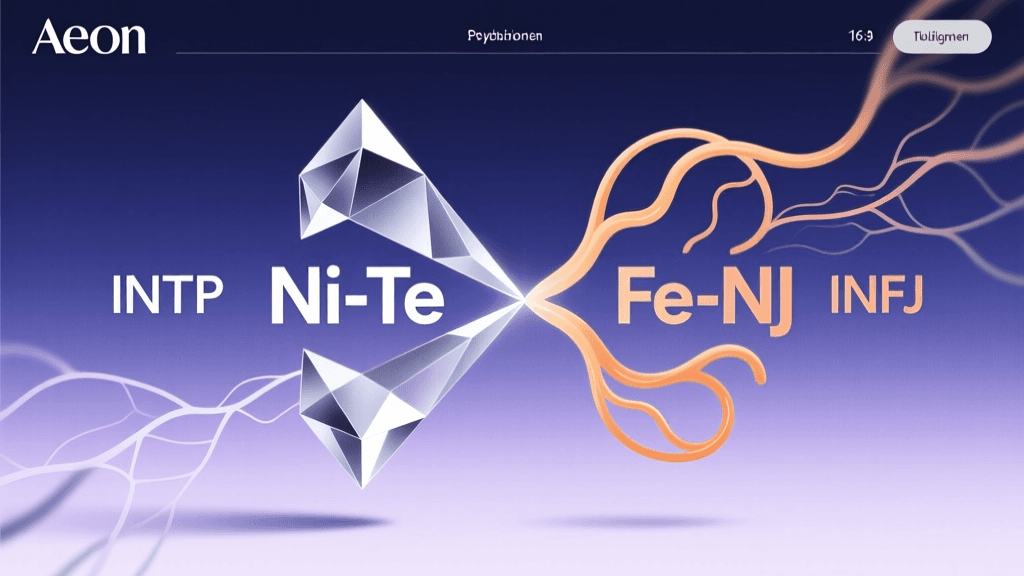
How INTP Handles Conflict
The INTP (Introverted, Intuitive, Thinking, Perceiving) personality type approaches conflict through the lens of logical analysis and intellectual integrity. Dominated by Introverted Thinking (Ti), INTPs prioritize internal consistency, precision of reasoning, and conceptual accuracy above emotional harmony or social expectations. When conflict arises, their first instinct is not to confront but to withdraw and analyze. They retreat into their inner world to map out the underlying principles, inconsistencies, or flawed assumptions driving the disagreement.
This Ti-driven response means INTPs rarely initiate conflict—but when they do, it’s often after prolonged rumination and a mounting sense of intellectual dissonance. Their communication during tension tends to be detached, precise, and densely conceptual. They may quote philosophical frameworks, cite logical fallacies, or dissect semantic ambiguities—not to wound, but to clarify. However, this hyper-rational stance can unintentionally invalidate the emotional stakes for others. As psychologist Dario Nardi notes in Neuroscience of Personality, INTPs show heightened activity in brain regions associated with abstract pattern recognition and hypothesis testing—even during interpersonal stress—making them prone to treating relational friction as a problem to be solved rather than a bond to be tended.
Crucially, INTPs experience emotional overwhelm not as anger or tears, but as cognitive shutdown: mental fog, indecision, or an inability to formulate coherent thoughts. This is often misread as indifference or stonewalling—when in fact, it reflects neural overload. Their auxiliary function, Extraverted Intuition (Ne), further complicates matters: under stress, Ne can generate endless hypothetical scenarios (“What if I said X? What if they meant Y? What if this reveals a deeper incompatibility?”), paralyzing action and delaying resolution.
Because INTPs distrust unexamined emotion, they may dismiss expressions of hurt as “irrational” or “subjective noise”—not out of malice, but because Ti demands evidence, coherence, and reproducibility. Without conscious effort, they fail to recognize that emotional truth operates on different epistemological grounds than logical truth. This gap becomes especially consequential with types like the INFJ, whose values and feelings are deeply integrated with their worldview.
How INFJ Handles Conflict
The INFJ (Introverted, Intuitive, Feeling, Judging) navigates conflict through the interplay of Introverted Intuition (Ni) and Extraverted Feeling (Fe). Ni provides INFJs with uncanny foresight about relational trajectories—often sensing brewing tension long before it surfaces—and Fe compels them to prioritize group harmony, empathy, and moral alignment. Unlike the INTP’s analytical retreat, the INFJ’s initial response is often containment: smoothing over friction, anticipating others’ needs, and absorbing emotional energy to preserve stability.
However, this Fe-driven diplomacy has limits. When core values—such as authenticity, integrity, or compassion—are perceived as violated, INFJs experience conflict not as intellectual disagreement but as moral injury. Their tertiary function, Introverted Thinking (Ti), then activates—not as a tool for debate, but as a private audit of fairness, consistency, and ethical coherence. As Isabel Briggs Myers wrote in Introduction to Type®, INFJs use Ti to “test the logic of their values,” making contradictions between words and actions especially intolerable.
INFJs rarely raise their voice or engage in direct confrontation—unless they’ve reached what Jungian analyst John Beebe calls the “shadow eruption”: a sudden, intense outburst triggered by accumulated unspoken resentment. In such moments, their inferior Extraverted Sensing (Se) may manifest as hyper-focus on physical details (“You slammed the door *again*”), impulsive gestures, or sensory overwhelm (e.g., covering ears, leaving the room abruptly). More commonly, though, INFJs withdraw—not to analyze, but to grieve. Their silence is often protective: shielding others from their pain while they internally rehearse how to articulate non-blaming truths.
A key distinction lies in how each type expresses hurt. The INTP says: “That argument didn’t make sense.” The INFJ says: “I felt unseen when you dismissed my concern.” One critiques structure; the other names impact. Without translation, these languages remain mutually unintelligible.
The INTP and INFJ Conflict Cycle
The INTP–INFJ dynamic is often described as “the architect and the advocate”—two idealistic, future-oriented types drawn together by shared depth, curiosity, and disdain for superficiality. Yet their compatibility hinges entirely on how well they navigate the conflict cycle: a recurring sequence of triggering, misinterpretation, escalation, rupture, and repair. Understanding this cycle—not just its parts, but its rhythm—is essential for sustainable partnership.
The cycle typically begins with a subtle mismatch in processing pace and priority:
- Trigger: An INFJ shares a vulnerable feeling (“I’ve been feeling disconnected lately”) expecting attunement and co-regulation.
- INTP Response: Processes internally, then responds with analysis (“Have you considered sleep hygiene or workload distribution?”).
- INFJ Interpretation: Reads the response as emotional avoidance or intellectual dismissal—activating Fe alarm: “They don’t care how I feel.”
- INTP Interpretation: Sees INFJ’s quiet withdrawal as passive aggression or illogical withdrawal—activating Ti alarm: “They’re refusing rational engagement.”
From here, the cycle spirals. The INFJ’s growing silence feels like rejection to the INTP, who then doubles down on logic to “fix” the perceived dysfunction. The INTP’s increasing detachment feels like abandonment to the INFJ, who then intensifies silent suffering—or, under stress, delivers a meticulously crafted, values-laden critique that lands like a verdict.
This isn’t mere incompatibility—it’s cognitive function interference. Ti (INTP’s dominant) and Fe (INFJ’s auxiliary) operate on orthogonal axes: one seeks internal truth consistency; the other seeks external value alignment. Ni (INFJ’s dominant) and Ne (INTP’s auxiliary) also diverge: Ni converges toward singular meaning (“This pattern means we’re incompatible”); Ne diverges into possibilities (“Maybe it’s timing, chemistry, stress, miscommunication…”). Without meta-awareness, these differences fuel mutual frustration—not malice.
Escalation Patterns
Escalation between INTP and INFJ rarely involves shouting matches. Instead, it manifests in three distinct, self-reinforcing patterns:
1. The Silent Spiral
Both types are introverted and value solitude—but for radically different reasons. The INTP withdraws to think; the INFJ withdraws to feel and integrate. When both retreat simultaneously, space widens into chasms. Days pass without meaningful contact. The INTP assumes “no news is good news” and resumes normal routines. The INFJ interprets the silence as confirmation of their worst fears (“They don’t love me enough to reach out”). Each person’s silence validates the other’s narrative—deepening isolation without overt confrontation.
2. The Logic–Values Collision
When conflict surfaces, INTPs lead with premises, evidence, and systemic critique. INFJs lead with impact, intention, and ethical resonance. A classic flashpoint: discussing a shared decision (e.g., moving cities). The INTP outlines cost-benefit analyses, opportunity costs, and logistical contingencies. The INFJ speaks of disrupted community ties, loss of purpose, and intuitive unease about the new environment. Neither hears the other’s language as legitimate input—so both dig in, escalating not through volume, but through density of unshared frameworks.
3. The Shadow Dump
Under chronic stress, both types access their inferior functions destructively. The INTP’s inferior Extraverted Feeling (Fe) erupts as sudden, disproportionate emotional reactivity—tears, rage, or shame spirals—accompanied by self-loathing (“I’m broken,” “I’ll never get this right”). The INFJ’s inferior Extraverted Thinking (Te) emerges as cold, hyper-efficient criticism: lists of failures, timelines of disappointments, blunt assessments of incompetence (“You consistently fail to follow through”). These shadow expressions are profoundly destabilizing because they contradict each type’s usual demeanor—making them harder to forgive or contextualize.
To illustrate how these escalation patterns differ in practice, consider the following comparison table:
| Dimension | INTP Escalation Pattern | INFJ Escalation Pattern | Shared Risk |
|---|---|---|---|
| Communication Style | Overly technical, sarcasm, rhetorical questions, “just facts” framing | Cryptic metaphors, moral absolutes (“This isn’t who we are”), loaded silence | Mutual perception of dishonesty or evasion |
| Time Orientation | Focuses on past logical errors or future hypotheticals | Fixates on past betrayals or inevitable relational demise | Loss of present-moment connection and agency |
| Emotional Expression | Shuts down, intellectualizes pain, uses humor as armor | Internalizes pain, somatic symptoms (fatigue, headaches), delayed emotional release | Chronic misattunement; neither feels safely witnessed |
| Resolution Strategy | Proposes structural fixes (new agreements, systems, boundaries) | Demands symbolic acts (apologies, rituals, renewed commitments) | Structural solutions feel hollow without emotional restitution—and vice versa |
This table underscores a central truth: INTP–INFJ conflicts aren’t resolved by choosing one approach over the other—but by integrating both. Systems need soul; symbolism needs scaffolding.
Repair and Reconciliation
Effective repair between INTP and INFJ requires deliberate, bilateral translation work—transforming raw emotional data into intelligible signals across cognitive function boundaries. It is not enough to “apologize” or “move on.” Repair must address both the logical fracture (what was inconsistent or unjustifiable?) and the relational rupture (how was dignity, safety, or belonging compromised?).
For the INTP: Begin repair by naming the impact, not just the intent. Instead of “I didn’t mean to upset you,” try: “I see now that when I responded with analysis instead of empathy, it made you feel invalidated—and that contradicts my value of honoring your experience. I want to learn how to hold space for your feelings first, even when I don’t fully understand them.” This bridges Ti (integrity check) and Fe (relational repair) by grounding logic in values.
For the INFJ: Initiate repair by offering conceptual scaffolding for emotions. Instead of “You never listen,” say: “When I share feelings and receive problem-solving, my Ni interprets it as evidence that our emotional languages aren’t aligned—and that triggers my fear of fundamental incompatibility. Can we co-create a signal—like ‘I need witnessing, not fixing’—so I can ask clearly and you can respond intentionally?” This honors Fe (harmony-seeking) while engaging Ne (possibility-building).
Research from The Gottman Institute confirms that successful repair relies on softened startup and mutual influence. In their landmark 40+ years of longitudinal studies, Drs. John and Julie Gottman found that couples who repaired within 5 minutes of conflict onset had significantly higher long-term satisfaction. For INTP–INFJ pairs, “softened startup” means replacing diagnostic statements (“You always…”) with “I”-framed observations rooted in shared values (“I care about our honesty, so I want to name something I noticed…”).
Practical reconciliation rituals include:
- The Double-Acknowledgment Pause: Before discussing a conflict, each person states one thing they appreciate about the other’s perspective—even if they disagree. INTP might say, “I respect how deeply you consider human impact.” INFJ might say, “I admire your commitment to intellectual honesty.” This activates shared Ni/Ne future vision and Ti/Fe common ground.
- The Function Swap Exercise: Once per month, each partner spends 20 minutes writing a response to a recent minor tension—first in their natural function (INTP in Ti, INFJ in Fe), then in their partner’s dominant function (INTP in Fe, INFJ in Ti). Sharing both versions builds functional fluency.
- The Values-Logic Map: Co-create a living document listing 3–5 core shared values (e.g., growth, authenticity, compassion) and beneath each, 2–3 concrete behaviors that embody it—for example, “Authenticity = naming discomfort early, asking clarifying questions, admitting knowledge gaps.” This transforms abstract ideals into interoperable behavioral code.
As clinical psychologist Dr. Susan David emphasizes in Emotional Agility, sustainable repair isn’t about eliminating discomfort—it’s about expanding our capacity to hold complexity: “The ability to be with our emotions, yet not be ruled by them, is critical to resilience.” For INTP–INFJ pairs, that means holding both logic and longing, analysis and awe, structure and surrender—without collapsing one into the other.
Prevention Strategies
Prevention is where INTP–INFJ synergy shines brightest—if leveraged intentionally. Both types excel at long-term vision (Ni/Ne) and systems thinking (Ti/Te), making them uniquely capable of designing proactive relational infrastructure. Prevention isn’t about avoiding conflict—it’s about building circuits that channel tension productively.
1. Establish Pre-Conflict Protocols
Co-design explicit, low-stakes agreements for when tension arises:
- “Time-Out Signals”: Agree on non-verbal cues (e.g., tapping the temple for INTP needing analysis time; placing a hand over heart for INFJ needing emotional containment) that pause dialogue without shame.
- “Function Check-Ins”: Weekly 15-minute conversations using prompts like: “Where did I lead with Ti/Fe this week? Where did you lead with Ni/Fe? What worked? What overloaded?”
- “Vulnerability Windows”: Designate two 20-minute slots weekly where the sole agenda is sharing one unfiltered feeling or insight—no solutions, no analysis, no fixing. Just witnessing.
2. Build Shared Cognitive Architecture
Create external tools that translate between functions:
- A shared digital journal titled “Our Meaning-Making Log,” where each records interpretations of key events—INTP entries focus on causal models and assumptions; INFJ entries focus on emotional resonance and symbolic meaning. Reviewing side-by-side reveals blind spots.
- A “Values-Aligned Decision Matrix” for major choices: rate options not just on pros/cons (Ti), but on alignment with shared values (Fe), long-term vision (Ni), and adaptability (Ne).
3. Normalize Functional Friction
Reframe conflict as evidence of cognitive diversity—not dysfunction. Research published in the Journal of Personality and Social Psychology shows that teams leveraging complementary cognitive styles outperform homogeneous ones on complex problem-solving by up to 37%. Apply this to relationships: your INTP–INFJ dynamic isn’t a bug—it’s a feature. Every “misunderstanding” is data pointing to an integration opportunity.
Prevention also means tending to individual baselines. INTPs must safeguard time for Ti-Ne regeneration (solitary ideation, theoretical exploration); INFJs must protect space for Ni-Fe restoration (creative expression, nature immersion, compassionate service). Exhaustion collapses function access—making Ti rigid and Fe brittle. Schedule replenishment as non-negotiable as meetings.
FAQ
Why do INTPs and INFJs often feel like soulmates—then suddenly like strangers?
This whiplash stems from the dual activation of their dominant functions. Ni (INFJ) and Ne (INTP) both perceive profound interconnectedness and future potential—creating intense initial resonance. But Ni seeks convergence on one true meaning, while Ne thrives in multiple possible meanings. Early on, both mistake shared curiosity for shared conclusions. Over time, Ni’s drive for singularity clashes with Ne’s love of multiplicity—revealing not incompatibility, but a need for new integration practices. As Jung wrote in Psychological Types, “The meeting of two personalities is like the contact of two chemical substances: if there is any reaction, both are transformed.”
Can INTP–INFJ conflict ever be productive—or is it always damaging?
It is inherently productive—when consciously engaged. The INTP’s Ti challenges the INFJ’s assumptions, preventing ideological rigidity. The INFJ’s Fe challenges the INTP’s abstractions, grounding ideas in human consequence. Their friction generates what organizational theorist Chris Argyris called “double-loop learning”: not just solving surface problems (single-loop), but questioning the governing values and frameworks behind them (double-loop). The damage occurs only when conflict remains unconscious, unarticulated, or weaponized.
What’s the #1 thing INTPs misunderstand about INFJ conflict behavior?
That INFJ silence is passive. In reality, it’s active synthesis. While the INTP is analyzing premises, the INFJ is weaving narratives, weighing consequences, and aligning actions with identity. Their quiet isn’t emptiness—it’s incubation. Interrupting it with logic or urgency doesn’t accelerate resolution; it disrupts meaning-making. Patience isn’t tolerance—it’s participation in their process.
What’s the #1 thing INFJs misunderstand about INTP conflict behavior?
That INTP analysis is avoidance. It’s actually deep engagement—just on a different plane. When an INTP dissects a disagreement, they’re not dodging emotion; they’re trying to build a mental model robust enough to prevent future pain. Their “coldness” is often the heat of intense cognitive labor. Recognizing Ti as a form of care—not its absence—transforms interpretation.
In closing, the INTP–INFJ relationship is not a puzzle to be solved, but a language to be co-authored. Their conflict patterns reveal not flaws, but frontiers—where logic meets longing, where systems meet spirit, where the mind’s architecture and the heart’s cartography learn to draw the same map. With awareness, humility, and consistent practice, their most painful collisions become the crucibles where mutual understanding is forged—not despite their differences, but because of them.