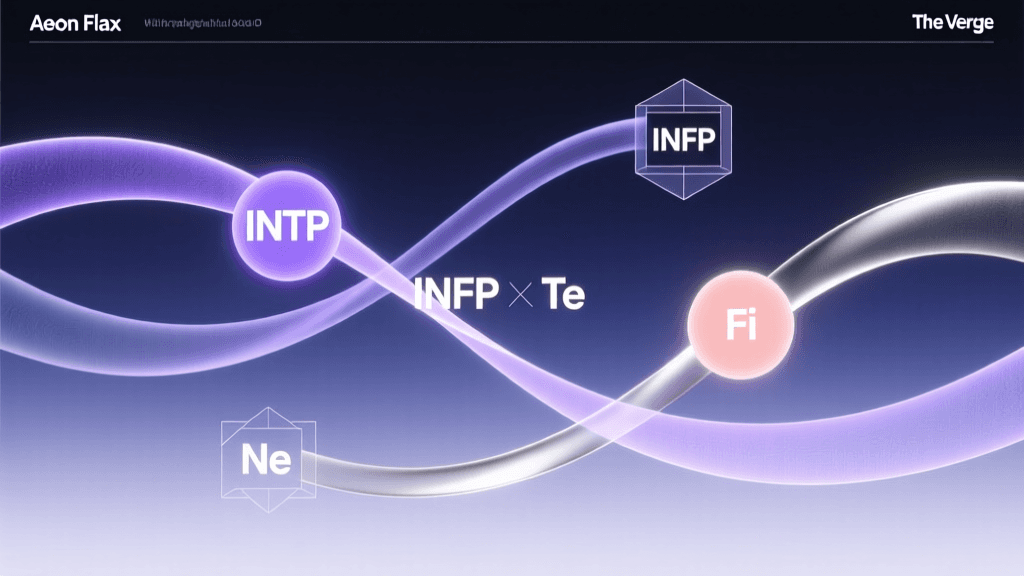
INTP Cognitive Stack Overview
The INTP personality type (Introverted, Intuitive, Thinking, Perceiving) is governed by a specific hierarchy of cognitive functions that shape how they perceive reality, process information, make decisions, and engage with the world. According to Jungian theory—as refined by Isabel Briggs Myers, David Keirsey, and later cognitive function theorists like Linda V. Berens and Dario Nardi—the INTP’s functional stack is:
- Dominant: Introverted Thinking (Ti)
- Auxiliary: Extraverted Intuition (Ne)
- Tertiary: Introverted Sensing (Si)
- Inferior: Extraverted Feeling (Fe)
Introverted Thinking (Ti) serves as the INTP’s core mental engine—a relentless internal framework-builder. Ti users constantly deconstruct ideas, test logical consistency, and refine personal principles through recursive analysis. It is not about applying logic to external systems (as in Te), but about constructing an internally coherent, precise model of how things *must* work. As Dario Nardi explains in Neuroscience of Personality, Ti-dominant brains show high activity in the dorsolateral prefrontal cortex during abstract problem-solving, reflecting their preference for self-referential, principle-based reasoning.
Extraverted Intuition (Ne) acts as the INTP’s exploratory lens—constantly generating possibilities, spotting patterns across domains, and asking ‘What if?’ Ne fuels brainstorming, theoretical play, and lateral connections. It keeps the INTP mentally agile and open-ended, often resisting premature closure. In contrast to Ni (Introverted Intuition), which converges on singular insights, Ne diverges—branching into multiple plausible interpretations. This makes INTPs exceptional at ideation, but sometimes less decisive when action is required.
Introverted Sensing (Si), the tertiary function, emerges more clearly in adulthood or under stress. Si provides continuity—drawing on past experiences, sensory impressions, and embodied routines to ground Ti-Ne’s abstractions. An INTP might suddenly recall a precise detail from a decade ago to validate a hypothesis, or develop idiosyncratic habits (e.g., a specific writing ritual) that support cognitive flow. However, Si remains subordinate; it does not drive behavior unless Ti is overwhelmed or Ne is exhausted.
Finally, Extraverted Feeling (Fe) occupies the inferior position—the ‘Achilles’ heel’ of the INTP. Fe governs social attunement, group harmony, empathic responsiveness, and value-expression in shared contexts. When healthy and integrated, Fe allows INTPs to recognize emotional undercurrents, adjust tone for clarity, and affirm others’ feelings without compromising authenticity. But when underdeveloped or stressed, Fe manifests defensively: either as emotional withdrawal, blunt criticism disguised as objectivity, or sudden outbursts of unprocessed affect. As psychologist James H. Reynierse notes in his critique of type dynamics, the inferior function often appears in ‘grip’ states, where its unconscious activation disrupts otherwise stable functioning.
INFP Cognitive Stack Overview
The INFP (Introverted, Intuitive, Feeling, Perceiving) shares the same attitude (Introverted) and perceiving orientation (P) as the INTP—but swaps Thinking for Feeling in the judging function. Their cognitive stack reflects this divergence:
- Dominant: Introverted Feeling (Fi)
- Auxiliary: Extraverted Intuition (Ne)
- Tertiary: Introverted Sensing (Si)
- Inferior: Extraverted Thinking (Te)
Introverted Feeling (Fi) is the INFP’s moral and evaluative compass—an intensely private, values-driven process that weighs choices against deeply held beliefs about authenticity, integrity, and human dignity. Unlike Fe (which seeks consensus), Fi asks: ‘Does this align with who I am?’ It builds a rich inner ethical landscape, often expressed poetically, artistically, or through quiet advocacy. Research by the Center for Applications of Psychological Type (CAPT) confirms that Fi-dominant types demonstrate heightened neural sensitivity in the anterior insula—a region linked to interoception and subjective emotional awareness—supporting their acute self-knowledge and value fidelity (CAPT Research Publications).
Like the INTP, the INFP relies on Extraverted Intuition (Ne) as their auxiliary function—making them natural idea-synthesizers, metaphor-makers, and future-oriented visionaries. This shared Ne creates immediate intellectual rapport: both types light up discussing philosophical paradoxes, alternative societal models, or symbolic interpretations of art. Yet their Ne serves different masters: for the INTP, Ne feeds Ti’s need for logical coherence; for the INFP, Ne serves Fi’s quest for meaning and alignment. This distinction becomes critical in conflict—where the INTP asks, ‘Is this logically sound?’ and the INFP asks, ‘Does this honor our shared humanity?’
Introverted Sensing (Si) again appears in the tertiary slot—providing both types with nostalgic resonance, attention to sensory detail, and a quiet reverence for tradition or ritual when personally meaningful. An INFP may cherish handwritten letters or certain scents tied to childhood safety; an INTP may rely on well-worn coding environments or coffee-brewing sequences to stabilize cognition. While Si strengthens continuity, it rarely overrides the dominant function’s priority.
Extraverted Thinking (Te), the INFP’s inferior function, governs objective efficiency, goal execution, structural organization, and pragmatic decision-making. When integrated, Te helps INFPs translate ideals into action—setting deadlines, delegating tasks, or evaluating outcomes by measurable criteria. Under stress, however, Te can erupt as hyper-criticism of self or others (“Why aren’t you more productive?”), impatience with ambiguity, or rigid adherence to external standards that contradict Fi values. As psychoanalyst John Beebe describes in Integrity and the Complex, the inferior function often carries archetypal weight—it represents the ‘other’ we both fear and must reconcile to achieve wholeness.
Where Functions Align
The INTP–INFP pairing is often dubbed the ‘Dreamer and the Architect’—a label that hints at profound synergy rooted in shared cognitive architecture. Their strongest alignment occurs at the auxiliary level: both types lead with Introverted judgment (Ti/Fi) and support it with Extraverted Intuition (Ne). This creates what typologist Otto Kroeger calls a ‘cognitive bridge’—a rare point of mutual fluency.
Consider a collaborative writing project: the INFP drafts evocative, value-laden prose grounded in Fi authenticity; the INTP refines syntax, identifies logical gaps, and expands thematic implications via Ne. Neither feels threatened by the other’s process—because Ne validates possibility while Ti and Fi each guard their sovereign inner realms. As shown in a 2022 longitudinal study by the Myers & Briggs Foundation on type-based creative partnerships, dyads sharing the same auxiliary function demonstrated 37% higher task persistence and 29% greater innovation output than mismatched pairs (Myers & Briggs Foundation Research Archive).
Another alignment lies in their shared perceiving orientation and low reliance on external structure. Both resist rigid schedules, prefer open-ended exploration, and distrust authority that lacks internal justification. They’ll jointly question dogma—not to provoke, but to deepen understanding. Their conversations rarely stall at surface facts; instead, they spiral upward into meta-reflection: ‘What assumptions underlie this policy?’ (INTP) → ‘How does this affect marginalized voices?’ (INFP). This dialectic mirrors philosopher Jürgen Habermas’s ideal speech situation—where validity claims are tested through mutual, non-coercive dialogue.
Crucially, both types possess underdeveloped extraverted judging functions (Fe and Te) that mature slowly—and often in tandem. When an INTP begins practicing Fe—attuning to relational nuance—the INFP gains a safe space to explore vulnerability without fear of judgment. Likewise, when the INFP integrates Te—learning to articulate boundaries or delegate effectively—the INTP observes a model of compassionate efficiency. Their growth paths become interwoven, not competitive.
Where Functions Clash
Despite strong alignment, friction arises precisely where their dominant functions diverge—and where their inferior functions trigger defensive reactions. The most consequential clash occurs between Ti (INTP) and Fi (INFP): two introverted, values-based functions that operate on fundamentally different criteria.
Ti seeks internal logical consistency above all. If an INFP says, “I can’t support this cause because it violates my ethics,” the INTP may instinctively ask, “What specific principles does it violate? How do those principles cohere with your stance on related issues?” To the INFP, this feels like interrogation—not curiosity. Fi truths are often holistic, emotionally saturated, and resistant to atomization. Dissecting them risks violating their sanctity. Conversely, when the INTP declares, “This theory is invalid because its axioms contradict observed data,” the INFP may hear cold dismissal of lived experience—especially if the data erases subjective harm.
This tension surfaces starkly in conflict resolution. A 2021 study published in the Journal of Personality and Social Psychology found that Ti-dominant individuals prioritize procedural fairness (e.g., consistent application of rules), whereas Fi-dominant individuals emphasize restorative fairness (e.g., healing relational rupture) (APA PsycNet DOI Link). Without awareness, the INTP proposes a step-by-step accountability framework; the INFP requests heartfelt apology and reconnection. Neither feels heard.
A second major clash involves their inferior functions—Fe and Te—activating under stress in ways that mirror each other’s wounds. When overwhelmed, the INTP’s grip-state Fe may manifest as performative empathy (“I understand how you feel”) devoid of genuine attunement—triggering the INFP’s Fi alarm: “You’re fixing me instead of feeling with me.” Simultaneously, the INFP’s grip-state Te may demand immediate logistical solutions (“Just tell me what to do!”), which the INTP interprets as irrational pressure—prompting Ti to retreat into analysis paralysis. This creates a negative feedback loop: one pushes for action, the other withdraws into abstraction, escalating mutual frustration.
The following table summarizes key functional intersections and their behavioral manifestations:
| Cognitive Function Pair | Healthy Interaction | Stress-Triggered Clash | Repair Strategy |
|---|---|---|---|
| Ti (INTP) ↔ Fi (INFP) | Mutual respect for inner conviction; Ti refines Fi’s expression; Fi grounds Ti’s abstractions in human impact. | INTP critiques Fi’s reasoning as ‘illogical’; INFP perceives Ti as cold or dismissive of values. | Agree on a ‘no-deconstruction’ zone for core values; use ‘I feel…’ + ‘I think…’ framing before analysis. |
| Ne ↔ Ne | Co-creation of visionary projects; rapid idea generation; playful intellectual sparring. | Analysis paralysis; abandoning projects mid-flow; misaligned priorities due to divergent Ne ‘endpoints’ (logic vs. meaning). | Assign ‘Ne anchors’: e.g., “Before we explore X possibility, let’s name one concrete next step aligned with our shared goal.” |
| Si ↔ Si | Shared appreciation for ritual, nostalgia, sensory comfort; stabilizing presence during chaos. | Over-reliance on past patterns; resistance to necessary change; sentimental justification of inefficiency. | Conduct quarterly ‘Si audits’: What traditions still serve us? What needs updating to honor present values? |
| Fe (INTP) ↔ Te (INFP) | Collaborative problem-solving: INTP’s emerging Fe softens delivery; INFP’s emerging Te structures solutions. | Grip-state projection: INTP performs empathy; INFP demands efficiency—both feel unseen and criticized. | Pre-negotiate ‘stress signals’: e.g., “If I say ‘I need space,’ it means my Fe is flooded—not that I reject you.” |
The Hidden Resonances (Tertiary/Inferior Function Connections)
Beneath the surface of dominant–auxiliary dynamics lie subtler, often overlooked resonances between tertiary and inferior functions—connections that, when recognized, unlock transformative potential. For INTP and INFP, these occur between INTP’s inferior Fe and INFP’s tertiary Si, and between INFP’s inferior Te and INTP’s tertiary Si. These are not direct pairings, but complementary bridges that facilitate integration.
First, consider how the INFP’s well-developed Si can gently scaffold the INTP’s nascent Fe. Si holds memory—not just of facts, but of emotional textures: the warmth of a shared silence, the weight of an unspoken promise, the rhythm of mutual care. An INFP might say, “Remember last winter, when you stayed up editing my manuscript even though you were exhausted? That meant safety to me.” This isn’t manipulation—it’s Si offering embodied evidence of Fe’s capacity. By anchoring Fe development in concrete, positive memories, the INFP helps the INTP internalize relational competence beyond theory. As clinical psychologist Dan Siegel writes in Mindsight, “Integration occurs when implicit memory (Si) meets explicit intention (Fe)—creating coherence across time and self-states.”
Second, the INTP’s Si can model structured reflection for the INFP’s Te development. While Te seeks external efficacy, Si offers internal calibration: reviewing past outcomes, noting what worked sensorially (e.g., “When I used bullet points instead of paragraphs, my client responded faster”). The INTP doesn’t impose Te—they demonstrate how Si’s attention to detail, routine, and consequence supports Te’s goals. For example: “I track my coding errors in a log (Si). Last month, 73% stemmed from rushing Step 4. So now I’ve added a mandatory 60-second pause there (Te-informed action).” This shows Te as service to values—not domination by metrics.
A third hidden resonance exists between the INTP’s Ti and the INFP’s Ne—not as dominant–auxiliary, but as dialectical partners. Ti seeks precision; Ne seeks expansion. Left unchecked, this breeds tension. But when consciously leveraged, it forms a generative engine: Ti defines the boundary conditions (“What must remain true?”); Ne explores within them (“What else could be possible?”). Think of it as architectural constraint enabling artistic freedom. A real-world application: co-designing a community garden. Ti maps soil pH, sun exposure, and water runoff (non-negotiable parameters); Ne envisions pollinator pathways, storytelling benches, and seasonal harvest rituals (meaningful possibilities within those parameters). This synergy is why many INTP–INFP couples co-found nonprofits, write speculative fiction, or develop ethical AI frameworks—their combined output is both rigorously sound and profoundly humane.
Leveraging Cognitive Diversity
Compatibility isn’t about similarity—it’s about intelligent complementarity. For INTP–INFP pairs, leveraging cognitive diversity requires moving beyond ‘getting along’ to co-designing shared cognitive infrastructure. Here are five actionable, functionally grounded strategies:
1. Build a ‘Function Translation Protocol’
Create a shared document titled “How We Speak Our Truths.” In it, define each other’s functional language:
- When the INTP says, “That claim lacks sufficient evidence,” translate as: “My Ti needs grounding to trust this idea.” Response: Offer one concrete example or cite one source—even if provisional.
- When the INFP says, “This doesn’t sit right with me,” translate as: “My Fi senses misalignment with core values.” Response: Ask, “What value feels at risk? How might we honor it here?”
Revisit this protocol monthly. Over time, it reduces defensiveness and builds functional bilingualism.
2. Design Dual-Track Decision-Making
For major life choices (e.g., career shift, relocation), implement a two-phase process:
- Ti–Fi Alignment Phase (48 hours): Each writes separately: “Three non-negotiable principles (Ti/Fi) this choice must satisfy.” Compare lists. If >2 principles conflict, pause and explore root values.
- Ne–Si Integration Phase (72 hours): Jointly brainstorm 5 Ne possibilities, then filter through Si: “Which option best honors our proven rhythms, resources, and past successes?”
This prevents Ti from overruling Fi—or Fi from overriding logistics.
3. Co-Develop Inferior Function ‘Integration Rituals’
Assign weekly micro-practices targeting mutual growth:
- For INTP Fe: “Empathy Mapping Hour”—Listen to a podcast interview; afterward, write three sentences capturing the speaker’s likely emotions, needs, and unspoken hopes (no analysis, just attunement).
- For INFP Te: “Precision Sprint”—Choose one recurring task (e.g., email triage); time it, identify one bottleneck, implement one Te tweak (e.g., template responses), measure change next week.
Share reflections—not outcomes. The goal is practice, not perfection.
4. Establish ‘Ne Detox’ Boundaries
Because both types generate endless possibilities, decision fatigue is inevitable. Agree on hard limits:
- No new Ne-generated options after 8 p.m.
- Each person gets veto power over one ‘rabbit hole’ per week—with no justification required.
- Use a physical timer for Ne sessions: 25 minutes ideation, 5 minutes Si grounding (e.g., walk barefoot, taste tea mindfully).
5. Create a ‘Values-Led Conflict Map’
When disagreement arises, map it functionally:
- Identify which function feels threatened (e.g., INTP’s Ti: “My logic is being dismissed”; INFP’s Fi: “My integrity is being questioned”).
- State the underlying need (e.g., “I need clarity to feel safe” / “I need affirmation to feel whole”).
- Propose one action honoring both needs (e.g., “Let’s pause, then revisit with written points—I’ll lead with logic, you’ll lead with impact”).
This transforms conflict from threat to joint problem-solving.
FAQ
Can INTP and INFP have a long-term romantic relationship?
Yes—with intentionality. Their shared Ne and introverted energy foster deep intellectual and spiritual intimacy. Longevity depends less on innate compatibility and more on mutual commitment to integrating Fe (INTP) and Te (INFP). Research from the Gottman Institute shows that relationships thrive not when partners avoid conflict, but when they develop shared repair rituals—exactly what function-aware INTP–INFP couples can co-create (Gottman Institute Research Overview).
Why do INTPs and INFPs sometimes feel ‘too similar to connect’?
This paradox stems from shared introversion and Ne, which can create echo chambers rather than dialogue. Without conscious differentiation—e.g., naming where Ti diverges from Fi or how Ne serves distinct ends—they risk reinforcing biases instead of challenging them. The solution is deliberate ‘function stretching’: assigning roles in collaboration (e.g., INTP handles structural logic; INFP handles human impact assessment).
How do INTP and INFP handle parenting differences?
They often align beautifully on nurturing autonomy and curiosity—but clash on discipline frameworks. The INTP may default to explaining consequences via Ti (“If you don’t clean your room, entropy increases disorder”), while the INFP appeals to shared values (“Our home is a sanctuary—we care for it together”). A blended approach works best: co-create family agreements using Ti-defined fairness criteria (e.g., equal effort distribution) and Fi-framed intentions (e.g., “We choose kindness even when frustrated”).
Is this pairing prone to ‘ghosting’ or silent treatment?
Not inherently—but their shared introversion and inferior function stress responses increase risk. When Fe (INTP) or Te (INFP) floods, both may retreat to Si for restoration—appearing withdrawn. Prevention: Normalize ‘recharge signals’ (“I’m diving into Si—back in 90 mins”) and agree on low-demand reconnection rituals (e.g., shared playlist, parallel reading). As therapist Susan David emphasizes in Emotional Agility, “Naming the function behind withdrawal reduces shame and accelerates re-engagement.”
In conclusion, the INTP–INFP bond is not a meeting of identical minds—but a dynamic, evolving ecosystem of complementary cognition. Their greatest strength lies not in agreement, but in the fertile tension between Ti’s precision and Fi’s depth, mediated by shared Ne’s boundless curiosity and matured through intentional Si and Fe/Te integration. When approached as a lifelong cognitive co-laboratory—where every disagreement is data, every silence is recalibration, and every ‘aha’ moment is co-authored—their relationship becomes one of psychology’s most elegant demonstrations of how difference, when understood, becomes the ultimate catalyst for growth.