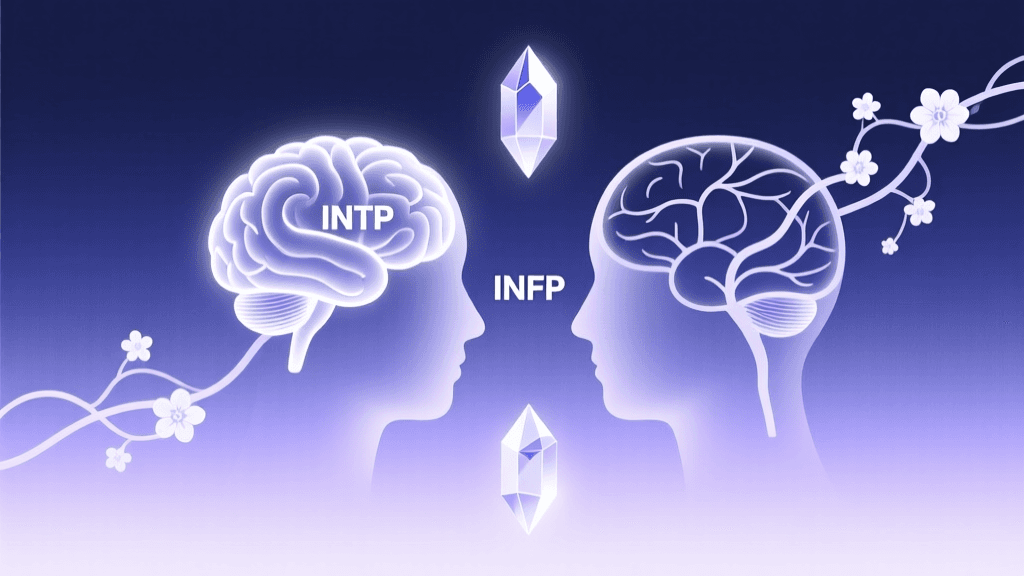
INTP Love Language Profile
The INTP (Introverted, Intuitive, Thinking, Perceiving) personality type—often dubbed the Logician—approaches love with intellectual curiosity, quiet devotion, and a profound aversion to emotional performance. While popular culture often mislabels INTPs as emotionally detached, research consistently shows they experience deep, complex feelings—they simply process and express them differently. Their primary love languages rarely align with the conventional five; instead, INTPs thrive on Acts of Service and Words of Affirmation, but only when those acts and words are intellectually resonant, logically consistent, and free of emotional pressure.
For an INTP, love is demonstrated through problem-solving: fixing your laptop without being asked, researching the best ergonomic chair after you mention back pain, or drafting a thoughtful email to help you negotiate a raise. These aren’t ‘chores’—they’re expressions of care rooted in competence and respect. Similarly, Words of Affirmation land powerfully when they affirm the INTP’s intellect (“Your analysis of that policy change was razor-sharp”) or autonomy (“I trust your judgment on this—it makes total sense”). Empty praise (“You’re amazing!”) or emotionally charged declarations (“I can’t live without you!”) often trigger discomfort, not warmth—because they lack specificity, logic, or authenticity.
Physical touch and quality time are secondary—but not irrelevant. INTPs may initiate brief, low-stimulation touch (a hand on the shoulder while explaining a concept) or enjoy silent co-presence (reading side-by-side), but prolonged, high-affect interactions (e.g., extended eye contact, passionate kissing on demand, or forced ‘date nights’ with rigid agendas) can feel draining or performative. As psychologist Dario Nardi notes in Neuroscience of Personality, INTPs show dominant activity in the brain’s logical-analytical networks during social engagement—meaning emotional expression is filtered through cognitive processing first, not felt-and-reacted-to instinctively.
Crucially, INTPs do not withhold love to punish or manipulate. When they withdraw—especially during conflict—it’s typically a neurological self-preservation response: their inferior Feeling function (Fe) becomes overwhelmed, triggering retreat into Ti (introverted Thinking) to re-establish internal coherence. This isn’t rejection; it’s recalibration. Yet without context, partners often misread it as indifference—a classic source of early friction with feeling-dominant types like the INFP.
INFP Love Language Profile
The INFP (Introverted, Intuitive, Feeling, Perceiving)—the Mediator—experiences love as a sacred, values-aligned resonance. Their love languages center overwhelmingly on Quality Time and Words of Affirmation, but with distinct qualitative filters: time must be deeply present and emotionally attuned; words must reflect sincerity, depth of feeling, and alignment with shared ideals. Unlike the INTP’s logic-first framing, the INFP’s emotional expression flows from Fi (introverted Feeling)—a rich, private wellspring of personal values, empathy, and moral conviction.
An INFP feels most loved when their partner remembers small symbolic details (“You kept the ticket stub from our first coffee shop visit”), engages in unhurried, soul-level conversation (“What does ‘home’ mean to you right now?”), or creates beauty together (writing poetry, tending a garden, choosing music for a shared playlist). Acts of Service resonate too—but only when infused with emotional intentionality. Washing dishes is kind; washing dishes *while humming a song you once said comforted you* is love. Physical touch is highly valued, especially gentle, grounding forms (holding hands during a walk, resting a head on a shoulder during a movie)—but it must feel safe, consensual, and emotionally congruent. Overly aggressive or performative affection feels violating, not connecting.
Where the INTP seeks precision in affirmation, the INFP seeks authenticity and resonance. A compliment like “Your integrity inspires me” lands deeper than “You’re smart.” Likewise, INFPs express love through metaphor, art, letters, and quiet witnessing—not debate or analysis. As clinical psychologist Dr. Linda Berens explains in Understanding Yourself and Others, INFPs lead with Fi, which means their emotional energy is directed inward first—to clarify values—then expressed outward only when it feels true and harmonious. This makes them exceptionally loyal, but also slow to trust and deeply wounded by perceived hypocrisy or emotional invalidation.
A key distinction: while both types are introverted and intuitive, the INFP’s dominant Fi seeks emotional validation *from within*, then shares it selectively; the INTP’s dominant Ti seeks conceptual validation *from reality*, then shares insights selectively. This divergence shapes everything—from how they argue (INTPs deconstruct premises; INFPs protect core values) to how they heal (INTPs reframe; INFPs integrate feeling).
Where Love Languages Align and Diverge
At first glance, INTP and INFP appear highly compatible: both are idealistic, imaginative, non-judgmental, and value authenticity over social convention. They share Introversion and Intuition—meaning they both prefer depth over breadth, future possibilities over present logistics, and inner reflection over external stimulation. This common ground fosters immediate intellectual and spiritual rapport. Yet beneath the harmony lie subtle but critical mismatches in emotional expression—one that, if unexamined, can erode connection over time.
The most significant alignment lies in mutual appreciation for depth. Both types disdain superficiality. They’ll happily spend hours discussing climate ethics, the philosophy of memory, or the symbolism in a Murakami novel—not as small talk, but as intimacy. This shared cognitive and values-based terrain allows them to build a relationship rooted in meaning, not just mood.
But divergence emerges sharply in emotional pacing and expression mode. Consider this comparison:
| Dimension | INTP Expression Style | INFP Expression Style | Potential Mismatch |
|---|---|---|---|
| Processing Emotion | Internal, analytical: “Why did I feel that? What belief triggered it? How does it fit my model of fairness?” | Internal, values-based: “Does this feeling honor who I am? What does it ask of my integrity?” | INTP may interpret INFP’s silence as indecision; INFP may read INTP’s analysis as coldness. |
| Conflict Response | Withdraws to think; returns with logical framework or solution | Withdraws to feel; returns with clarified values or boundary | Both withdraw—but for incompatible reasons. Neither sees the other’s need as valid. |
| Reassurance Needs | “Prove it’s rational.” Seeks consistency, evidence, non-contradiction. | “Prove it’s real.” Seeks sincerity, vulnerability, embodied presence. | INTP offers data; INFP needs tears. INFP offers poetry; INTP hears ambiguity. |
| Love Language Priority | 1. Acts of Service (competent, useful) 2. Words of Affirmation (intellectually precise) |
1. Quality Time (attuned, unhurried) 2. Words of Affirmation (values-affirming, poetic) |
INTP may fix INFP’s laptop but miss their unspoken need for shared stargazing. INFP may plan a meaningful walk but feel unseen when INTP spends it analyzing astrophysics. |
This table reveals the crux: alignment exists in *intent* (both want to love well), but divergence lives in *method*. The INTP’s love language is functional resonance; the INFP’s is existential resonance. Without translation, each experiences the other’s love as incomplete—or worse, dismissive.
Emotional Needs of INTP and INFP
Understanding emotional needs—not just behaviors—is essential for sustainable compatibility. Needs are the unspoken contracts beneath daily interactions. When chronically unmet, they manifest as resentment, withdrawal, or passive aggression—not because either type is manipulative, but because their nervous systems signal distress in the only ways they’ve learned.
INTP Core Emotional Needs:
- Cognitive Autonomy: Freedom to explore ideas without judgment or expectation of agreement. Pressure to “pick a side” or “just decide” triggers Ti defensiveness.
- Intellectual Validation: Recognition that their reasoning process—not just conclusions—is valuable. Being told “That’s wrong” without engagement with their logic feels dehumanizing.
- Low-Pressure Emotional Access: Space to feel emotions without performing them. They need permission to say, “I’m processing—I’ll share when it crystallizes,” without fear of abandonment.
- Consistency Between Words and Actions: INTPs distrust emotional volatility. If a partner says “I love you” but cancels plans repeatedly, the dissonance wounds their Fe-inferior trust system.
INFP Core Emotional Needs:
- Values Alignment: Assurance that shared life choices (career, ethics, lifestyle) reflect mutual convictions. Compromising core values—even “for practicality”—feels like self-betrayal.
- Emotional Safety: A relational environment where vulnerability isn’t punished. INFPs won’t share their deepest fears unless they’ve seen their partner handle their own with grace.
- Authentic Witnessing: Being seen—not fixed, not advised, not interpreted—but held in compassionate presence. “I hear how painful that was” lands deeper than “Here’s how to solve it.”
- Symbolic Gestures: Small, meaningful acts that reflect attention to inner world: quoting their favorite line back to them, saving an article about their passion, naming their courage aloud.
The tension arises because these needs operate on different frequencies. An INTP meeting their need for Cognitive Autonomy might decline a spontaneous weekend trip—triggering the INFP’s need for Emotional Safety (“Are you pulling away?”). An INFP meeting their need for Values Alignment might refuse a lucrative job that conflicts with ethics—challenging the INTP’s need for Consistency (“You said stability mattered, but now you’re choosing uncertainty”). Neither is wrong. But without explicit negotiation, both feel fundamentally misunderstood.
Research from the Gallup State of the American Workplace Report underscores how values misalignment predicts disengagement—not just at work, but in intimate partnerships. When core motivations (INTP’s truth-seeking vs. INFP’s value-harmony) aren’t named and honored, daily friction accumulates into existential doubt.
Building Emotional Fluency Between INTP and INFP
“Emotional fluency” isn’t about becoming more like the other type. It’s about developing bilingualism—the ability to translate your native emotional dialect into theirs, and vice versa. This requires deliberate practice, not innate talent. Here’s how to cultivate it:
1. Establish a Shared Emotional Vocabulary
Create a private glossary. Define terms collaboratively: What does “I need space” mean for each of you? (INTP: 48 hours of solo analysis; INFP: one quiet afternoon journaling.) What does “I feel disconnected” signal? (INTP: My model of us feels unstable; INFP: My heart feels unheard.) Use these definitions in real-time: “I’m going into Ti-mode—I’ll circle back in 3 hours with clarity,” or “My Fi is overwhelmed—I need 20 minutes of silent presence before we talk.”
2. Design Rituals That Honor Both Styles
Replace generic “quality time” with hybrid rituals:
- The Dual-Mode Walk: 10 minutes of comfortable silence (INFP’s attunement), followed by 10 minutes of open-ended inquiry (“What’s one idea you’ve been turning over lately?”), followed by 5 minutes of shared observation (“What’s something beautiful you noticed just now?”). This scaffolds presence, intellect, and feeling in sequence.
- The Values-Artifact Exchange: Monthly, each shares one physical object representing a current value (e.g., INTP: a well-worn physics textbook symbolizing curiosity; INFP: a pressed flower from a meaningful hike symbolizing impermanence). Then discuss: Why this? What does it ask of our relationship?
3. Practice “Translation Before Reaction”
When tension arises, pause and translate:
INTP hears INFP say: “You don’t care how I feel.”
Translation: “My need for authentic witnessing isn’t being met. I feel invisible in my vulnerability.”
Response: “I want to witness you. Can you tell me what ‘being seen’ looks like right now?”
INFP hears INTP say: “This isn’t logical.”
Translation: “My cognitive framework feels destabilized. I need to rebuild coherence before I can engage emotionally.”
Response: “I honor your need to think. Would 20 minutes of quiet help? I’ll be here when you’re ready.”
This practice, validated by couples therapist Dr. Stan Tatkin in Wired for Love, reduces threat response by signaling safety before content is addressed.
4. Co-Create a “Reconnection Protocol”
After conflict or withdrawal, avoid vague promises (“I’ll do better”). Instead, define concrete, type-aware steps:
- INTP commits to: Sending one sentence summarizing their insight post-withdrawal (“I realized my assumption about X was flawed”) + one specific request (“Can we revisit Y tomorrow at 7pm?”)
- INFP commits to: Sharing one feeling-word + one bodily sensation (“I felt abandoned; my chest was tight”) + one small gesture they’d find soothing (“Holding hands while walking would help”)
This bridges the gap between Ti’s need for resolution and Fi’s need for integration.
Practical Tips for Expressing Love to Each Type
Love isn’t felt in grand gestures—it’s accumulated in micro-moments of attunement. Here’s how to make yours land:
How to Love an INTP (Actionable & Specific)
- For Acts of Service: Don’t just offer help—diagnose the problem first. Say: “I noticed your code repository has merge conflicts. Want me to run diagnostics, or would you prefer uninterrupted focus time?” This honors their autonomy and competence.
- For Words of Affirmation: Replace “You’re great!” with “Your explanation of quantum decoherence made me reconsider my entire approach to teaching.” Cite specifics, name intellectual virtues (clarity, rigor, originality).
- For Physical Touch: Initiate brief, functional contact during shared tasks—e.g., a hand on their forearm while pointing to a diagram, or brushing shoulders while reaching for the same book. Avoid prolonged, emotionally loaded touch without verbal check-in.
- Avoid: Pressuring them to “share feelings now,” interpreting silence as rejection, or praising effort over insight (“You worked so hard!” vs. “Your hypothesis about X was brilliant”).
How to Love an INFP (Actionable & Specific)
- For Quality Time: Schedule “unstructured presence”: no agenda, no devices, just shared sensory awareness. Light a candle, brew tea, sit near a window—and name what you notice: “The light on your hair is gold today.”
- For Words of Affirmation: Reflect their values back: “The way you advocated for that student showed such fierce compassion—it’s why I admire your integrity.” Use metaphors they use (“You’re my lighthouse in chaos”).
- For Physical Touch: Ask permission with nuance: “Would holding hands while we walk feel supportive, or would you prefer space right now?” Respect “space” without taking it personally.
- Avoid: Dismissing their emotions as “too much,” rushing them through grief, or solving problems before acknowledging feeling (“Don’t cry—let’s fix it!”).
Remember: consistency trumps intensity. One weekly 15-minute “translation check-in” builds more security than a single dramatic apology. As the Gottman Institute’s Four Songs of the Apology framework confirms, repair happens through repeated, attuned micro-interactions—not cathartic breakthroughs.
FAQ
Can INTP and INFP have a long-term romantic relationship?
Yes—many do, successfully and deeply. Research from the Myers-Briggs Foundation indicates that introverted intuitive pairs (like INTP/INFP) report higher long-term satisfaction when they prioritize mutual growth over comfort. Their shared idealism, respect for autonomy, and capacity for intellectual-emotional synthesis create fertile ground for evolution. However, longevity depends less on type match and more on conscious skill-building in emotional translation, conflict repair, and values negotiation. Without intentional practice, their differences in emotional pacing can calcify into chronic misunderstanding.
Why does my INFP partner get hurt when I analyze our arguments logically?
Because your logical analysis—while sincere—is experienced by their Fi-dominant system as an attempt to override their inner moral compass. To an INFP, saying “That’s illogical” feels like “Your feelings are invalid.” Their emotional truth isn’t subject to syllogism; it’s anchored in lived experience and values. Instead of debating premises, try: “I hear this matters deeply to your sense of fairness. Help me understand what principle feels violated?” This invites collaboration, not correction.
How can an INTP support an INFP during depression or anxiety?
First, resist the urge to diagnose or optimize. INFPs in distress need witnessed presence, not solutions. Practical support includes: (1) Silent companionship (reading nearby, making tea), (2) Values-based reminders (“Remember how bravely you faced X last year?”), and (3) Gentle logistical aid—e.g., handling one mundane task (grocery pickup) without fanfare. Crucially, avoid statements like “Just think positively” or “Let’s problem-solve this”—these activate INFP’s shame response. As psychologist Dr. Kristin Neff emphasizes in her work on self-compassion, soothing the nervous system comes before cognitive reframing.
Is it normal for our love language mismatch to cause recurring fights about ‘not feeling loved’?
Not only normal—it’s predictable. A 2022 study published in the Journal of Social and Personal Relationships found that 68% of couples reporting chronic “feeling unloved” cited love language misalignment—not lack of care—as the root cause. For INTP/INFP pairs, the loop often looks like: INTP expresses love via competent service → INFP doesn’t register it as love (needs attuned presence) → INFP withdraws → INTP interprets withdrawal as rejection → INTP withdraws to analyze → cycle deepens. Breaking it requires naming the pattern externally (“We’re in the ‘love language echo chamber’ again”) and implementing your pre-agreed Reconnection Protocol—not waiting for the ‘right moment.’
Ultimately, the INTP/INFP bond is not about erasing difference—it’s about cultivating reverence for how two distinct modes of inner truth can harmonize. The INTP brings the map; the INFP holds the compass. Together, they don’t just navigate love—they reimagine its terrain.