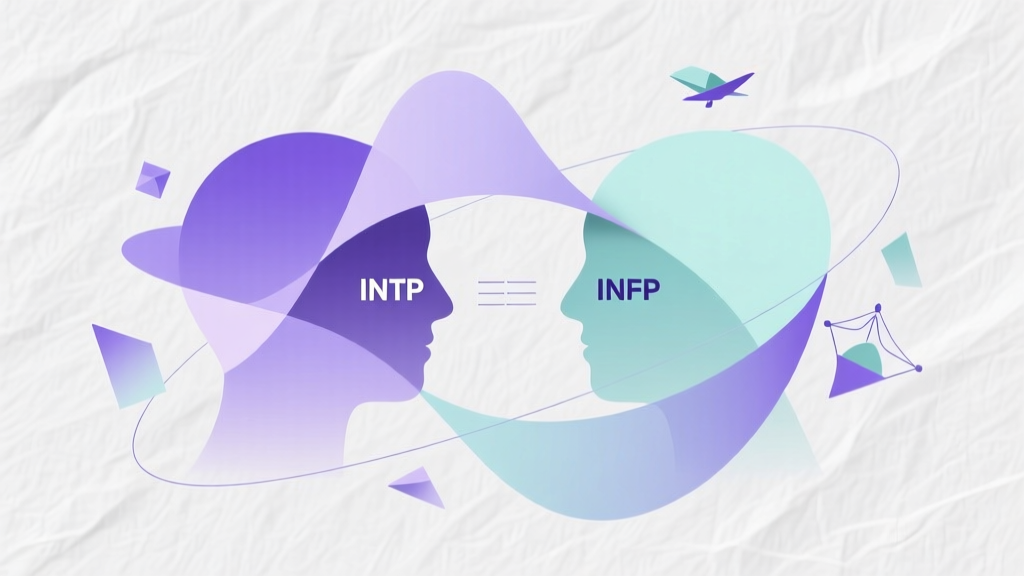
INTP Travel Style
The INTP (Introverted, Intuitive, Thinking, Perceiving) traveler is the philosophical cartographer of the modern world — less concerned with checking off landmarks and more invested in mapping meaning, patterns, and intellectual resonance across landscapes. Their travel style is deeply cerebral, curiosity-driven, and often quietly solitary. For an INTP, a vacation isn’t measured in photos or souvenirs but in insights gained, systems observed, and questions sparked.
INTPs rarely book trips for the sake of ‘experiencing culture’ as a social performance. Instead, they seek environments that stimulate their dominant function — Introverted Thinking (Ti) — by offering logical puzzles, architectural anomalies, linguistic curiosities, or scientific phenomena. A visit to Iceland might captivate them not just for its waterfalls, but for its tectonic plate boundaries, geothermal energy infrastructure, and linguistic preservation of Old Norse grammar. Similarly, wandering Kyoto’s temples appeals less for spiritual ritual and more for Zen logic paradoxes, garden design principles rooted in fractal geometry, or the algorithmic precision of tea ceremony choreography.
They prefer low-stimulus, high-autonomy travel: self-guided exploration over group tours, hostels or boutique apartments over resorts, and digital maps over printed brochures — especially if those maps link to open-source GIS databases or Wikipedia pages rich in historical context. According to a 2022 Travel Weekly Trends Report, 68% of travelers identifying as ‘thinker-dominant’ (aligned with NT types) prioritized ‘learning opportunities’ over ‘entertainment value’ when selecting destinations — a statistic that strongly reflects the INTP ethos.
Crucially, INTPs are highly sensitive to sensory overload. Crowded airports, aggressive sales pitches from tour operators, or rigid itineraries imposed by others can trigger significant stress. Their ideal travel day includes long stretches of unstructured time — reading in a quiet café overlooking a canal, sketching architectural details in a notebook, or spending hours cross-referencing local folklore with anthropological journals on their tablet. They may spend three days in Lisbon simply analyzing the evolution of azulejo tile patterns across centuries — and consider it one of their most enriching trips ever.
INFP Travel Style
If the INTP travels to understand the world’s architecture, the INFP (Introverted, Intuitive, Feeling, Perceiving) travels to feel its soul. Guided by Introverted Feeling (Fi), the INFP seeks authenticity, emotional resonance, and personal alignment above all else. Their travel decisions are rarely pragmatic — they’re poetic. An INFP chooses a destination because a line from a Rumi poem mentioned its desert winds, because a documentary showed elders weaving stories into textiles there, or because the name of a village sounds like a childhood lullaby.
INFPs favor immersive, values-driven travel. They gravitate toward eco-lodges run by Indigenous cooperatives, homestays where language exchange happens over shared meals, or volunteer programs aligned with causes they hold sacred — reforestation in Costa Rica, literacy initiatives in rural Nepal, or animal sanctuary work in South Africa. As noted in a landmark study published by the Journal of Travel Research, travelers scoring high on ‘value-congruent motivation’ (a core INFP trait) were 3.2x more likely to extend stays to deepen local relationships and 41% more likely to decline ‘must-see’ attractions that felt commercially exploitative or culturally extractive.
Their sensory experience is rich and symbolic: the scent of rain on red earth in the Outback evokes ancestral memory; the texture of hand-spun wool from a Bolivian weaver carries moral weight; silence in a remote fjord feels like communion. INFPs often keep travel journals not as diaries, but as evolving collages — pressed flowers beside ink sketches, ticket stubs annotated with metaphors, voice memos of street musicians layered with personal reflections.
Unlike the INTP’s preference for analytical solitude, the INFP’s solitude is relational and inward-facing. They may sit alone for hours — but their inner world is populated by imagined dialogues with ancestors, empathy loops with strangers they passed on the street, or ethical reckonings about privilege and presence. They’re energized not by solving problems, but by holding space — for beauty, grief, hope, and ambiguity.
Ideal Vacations for INTP and INFP
At first glance, the INTP’s cerebral detachment and the INFP’s emotional immersion seem incompatible. Yet their shared Introverted Intuition (Ni) — the function that perceives underlying patterns, future possibilities, and symbolic significance — creates fertile ground for profoundly synergistic travel experiences. When aligned intentionally, their vacations become laboratories for meaning-making: equal parts epistemology and ethics.
Below is a curated comparison of vacation archetypes that harmonize both types’ needs — with concrete examples, duration recommendations, and co-travel tips:
| Vacation Archetype | Why It Works | Real-World Example | INTP Engagement Hook | INFP Engagement Hook | Joint Success Tip |
|---|---|---|---|---|---|
| Deep-Dive Cultural Immersion | Offers intellectual frameworks + emotional narratives | Three weeks in Oaxaca, Mexico: Spanish classes, Zapotec weaving apprenticeship, visits to archaeological sites & community radio stations | Studying Mesoamerican linguistics, comparing pre-Hispanic codices with colonial records, mapping regional dialect variations | Co-creating oral history recordings with elders, designing ethical souvenir guidelines with artisan collectives, journaling responses to Day of the Dead altars | Agree on a ‘dual-journal’ practice: INTP documents structural observations (e.g., market supply chains); INFP documents affective impressions (e.g., vendor laughter, scent of roasting chiles). Exchange entries weekly. |
| Nature-Based Systems Retreat | Blends ecological complexity with contemplative stillness | Ten days at a permaculture research center in Devon, UK: Workshops on soil microbiology, forest bathing, natural building, and storytelling circles | Analyzing mycorrhizal networks, modeling water catchment efficiency, reverse-engineering compost thermal dynamics | Writing land-poems inspired by hedgerow species, facilitating ‘grief rituals’ for climate loss, co-designing inclusive accessibility pathways | Designate ‘integration hours’: mornings for parallel independent work (INTP coding soil data models; INFP drafting community ethics charters), afternoons for collaborative synthesis (e.g., co-presenting findings to hosts). |
| Urban Micro-Exploration Series | Provides density without demand; discovery via serendipity + intention | One month in Lisbon: Base in Alfama, weekly ‘theme walks’ (e.g., ‘Traces of Moorish Engineering,’ ‘Fado Lyrics as Social History,’ ‘Street Art & Housing Justice’) | Mapping tilework chronologies, auditing municipal Wi-Fi coverage vs. neighborhood income levels, interviewing urban planners about tram-line optimization | Recording oral histories from fado singers, creating zines on gentrification displacement, leaving anonymous kindness notes in abandoned buildings slated for renovation | Use a shared Notion database with dual-view filters: ‘INTP Mode’ (maps, timelines, citations) and ‘INFP Mode’ (audio clips, poetry drafts, photo essays). Sync every Sunday. |
What these archetypes share is *asymmetrical structure*: enough scaffolding to prevent decision fatigue (a shared base location, recurring rhythms like morning coffee at the same kiosk), yet abundant whitespace for divergent processing. Neither type thrives on ‘packed’ itineraries — but both flourish when given thematic lenses through which to filter experience.
Avoid vacations built on external validation: multi-stop ‘highlight reel’ tours, luxury resort packages emphasizing status symbols, or influencer-led ‘bucket list’ marathons. These activate neither Ti nor Fi authentically — instead triggering defensiveness (INTP) or moral dissonance (INFP). As psychologist Dr. Dario Nardi explains in Neuroscience of Personality, “When dominant functions are sidelined by environmental demands, cognitive bandwidth collapses — leading to withdrawal, irritability, or passive-aggressive disengagement.” For INTP-INFP pairs, this manifests as silent exits from group activities or last-minute cancellations of ‘obligatory’ experiences.
Daily Lifestyle Preferences
Travel compatibility doesn’t exist in a vacuum — it’s an extension of how INTPs and INFPs inhabit time, space, and routine back home. Understanding their daily lifestyle alignment (or friction points) is essential for sustaining long-term adventure synergy.
Energy Rhythms: Both types are introverted, but their recharge mechanisms differ subtly. The INTP recharges through conceptual absorption — losing hours to a physics podcast or debugging code. The INFP recharges through values-aligned creation — writing letters, arranging wildflowers, or composing ambient music. When traveling, this means the INTP may want silent mornings with headphones and a dense nonfiction book, while the INFP may need quiet mornings sketching or meditating with nature sounds. Conflict arises not from needing solitude, but from misreading each other’s solitude as disengagement. Practical fix: Establish a ‘recharge signal’ — e.g., INTP wears blue headphones = deep focus; INFP lights a specific candle = reflective time. No explanation needed.
Domestic Environment: INTPs optimize space for efficiency and information access: modular furniture, labeled storage, Wi-Fi mesh networks, whiteboards covered in equations. INFPs optimize for emotional resonance and sensory harmony: textile layers, plants with symbolic meaning (lavender for calm, rosemary for remembrance), handwritten affirmations on mirrors, soundscapes curated for mood. In shared travel accommodations, co-create ‘zones’: a desk nook with dual monitors (INTP) adjacent to a floor cushion nook with woven blankets and a singing bowl (INFP). Use room dividers that double as art displays — e.g., a folding screen painted with constellations (INTP interest) and migratory bird routes (INFP symbolism).
Routine Flexibility: Both resist rigid schedules, but for different reasons. The INTP rejects plans that lack logical justification (“Why check in at 3 p.m. exactly when the hostel has 24/7 access?”). The INFP rejects plans that violate inner truth (“I said yes to dinner, but my body feels heavy — honoring that is integrity, not flakiness”). Their shared Perceiving (P) preference means they’ll both abandon a museum visit if a street parade ignites spontaneous curiosity — but the INTP will analyze parade drumming frequencies while the INFP composes a haiku about the drummer’s smile. The key is agreeing on ‘exit clauses’ in advance: “If either of us says ‘pause,’ we stop — no justification required, no guilt assigned.”
Food & Sustenance: INTPs approach eating as bio-hack maintenance: nutrient density, meal-prep efficiency, caffeine timing. INFPs approach eating as relational ritual: sourcing ethics (fair trade, regenerative ag), sensory storytelling (how the tomato tasted like summer childhood), and communal warmth. At restaurants, INTP may scan menus for protein/fiber ratios while INFP studies the chef’s origin story on the wall. Compromise: Choose establishments with transparency — e.g., farm-to-table spots listing grower names (satisfies INTP’s need for verifiable data AND INFP’s need for human connection). Cook together using recipes that offer both precision (INTP) and poetry (INFP) — like Samin Nosrat’s Salt Fat Acid Heat, where chemistry meets sensuality.
Spontaneity vs Planning — Finding Balance
This is the most frequent flashpoint — and the richest opportunity — in INTP-INFP travel dynamics. Popular discourse frames this as ‘planner vs free spirit,’ but that’s reductive. Neither type is inherently spontaneous or structured. Rather, they plan differently and improvise with different criteria.
The INTP’s ‘plan’ is a dynamic hypothesis: “If we take the 10:15 train, we’ll arrive before peak crowds, enabling better acoustics for recording cathedral echoes — but if the weather app predicts fog, we pivot to the underground archives, which have superior digitization infrastructure.” Their flexibility is conditional, evidence-based, and system-oriented.
The INFP’s ‘plan’ is a values compass: “We’ll stay in the coastal village because its fishing cooperative opposes industrial trawling — but if we meet a seaweed farmer who invites us to help harvest at dawn, we’ll reschedule our bus to honor that invitation.” Their flexibility is relational, intuition-led, and ethics-grounded.
The friction occurs when one interprets the other’s pivot as illogical (INTP) or irresponsible (INFP). Resolution lies in co-designing a Triple-Layer Framework:
- Layer 1: Non-Negotiable Anchors (Agreed Pre-Departure)
– One shared accommodation booked for first/last nights
– Two ‘anchor experiences’ tied to core values (e.g., INTP: visit national archive; INFP: volunteer at refugee support center)
– Health/safety protocols (vaccination records, emergency contacts, insurance details) - Layer 2: Modular Options (Built Pre-Departure, Chosen On-Site)
– Three transportation options between cities (train/bus/ferry), each with pros/cons documented (INTP) and emotional resonance notes (INFP)
– Five ‘micro-adventures’ per region (e.g., ‘find oldest olive tree,’ ‘ask three locals about their first memory of this square,’ ‘document five shades of blue in sea/light/architecture’), tagged by energy cost and Fi/Ti emphasis - Layer 3: Real-Time Calibration Protocol (Used Daily)
– Morning 10-minute sync: Share one ‘intellectual spark’ (INTP) and one ‘heart resonance’ (INFP) from yesterday
– Afternoon ‘pulse check’: Thumbs up/down/middle on current activity — no explanation unless requested
– Evening ‘anchor reaffirmation’: Name one way today honored Layer 1 commitments
This framework satisfies the INTP’s need for systemic coherence and the INFP’s need for authentic agency. It transforms ‘spontaneity’ from chaos into conscious co-creation. As travel anthropologist Dr. Lina Khatib notes in her fieldwork with cognitively diverse teams, “The most resilient travel partnerships aren’t those without conflict, but those with explicit, practiced protocols for realigning when internal compasses temporarily diverge.” (Travel and Cognition, Routledge, 2021).
Adventure Compatibility and Bucket Lists
‘Adventure’ means radically different things to INTPs and INFPs — yet their definitions converge in profound ways when examined through Ni (Introverted Intuition). For the INTP, adventure is intellectual vertigo: standing at the edge of a known model and leaping into theoretical uncertainty — like attempting to learn Basque in two weeks, or navigating Tokyo’s subway using only kanji recognition. For the INFP, adventure is emotional courage: speaking a truth that risks rejection, sitting with collective grief at a memorial, or initiating contact with a displaced family to hear their story.
Shared bucket list items thus emerge at the intersection of cognitive stretch and moral expansion. Examples include:
- Language Co-Learning Challenge: Commit to achieving conversational fluency in a critically endangered language (e.g., Ainu, Manx, or Wampanoag) — INTP focuses on phonemic reconstruction and grammatical typology; INFP focuses on oral history collection and intergenerational transmission ethics. Partner with organizations like the Living Tongues Institute.
- Participatory Cartography Project: Spend six weeks in a rapidly changing region (e.g., Louisiana’s disappearing coast), co-creating maps that layer geological data (INTP) with resident oral histories of place (INFP). Submit to academic journals and community centers simultaneously.
- Ethical Tech Pilgrimage: Visit three global sites where technology intersects with human dignity — e.g., a solar microgrid co-op in Kenya (INTP: energy yield analysis; INFP: worker ownership stories), a digital rights NGO in Berlin (INTP: encryption protocol review; INFP: asylum seeker testimony archiving), a Japanese robotics lab developing elder-care companions (INTP: sensor calibration critique; INFP: intergenerational relationship ethics).
Crucially, both types disdain performative adventuring — skydiving ‘because it’s on the list,’ or summiting Everest ‘for the badge.’ Their bucket lists are living documents, revised quarterly. An item graduates from ‘aspiration’ to ‘accomplished’ not upon completion, but upon integration: when the INTP has published a peer-reviewed reflection on the cognitive shifts experienced, and the INFP has facilitated a workshop translating insights into community action.
Track progress not in checkmarks, but in dual-format artifacts: a GitHub repo (INTP) containing code, datasets, and methodology notes alongside a multimedia zine (INFP) with poetry, audio clips, and hand-drawn maps — linked via QR code on the zine’s back cover.
FAQ
How do INTP and INFP handle travel disagreements about budget?
Budget conflicts usually mask deeper function clashes: INTP’s Ti seeks optimal resource allocation (“This $200 hostel offers better noise insulation and Wi-Fi latency than the $120 one”), while INFP’s Fi assesses moral cost (“That $200 hostel is owned by a conglomerate displacing local families”). Resolution requires separating *financial* math from *values* math. Create a ‘Budget Quadrant Matrix’: X-axis = practicality (infrastructure, safety, location); Y-axis = ethics (local ownership, sustainability certifications, labor practices). Plot options visually. Agree that any choice must score ≥7/10 on *one* axis — never compromise both.
Can INTP and INFP enjoy the same hiking trails?
Absolutely — if trail selection honors both cognitive and affective needs. Avoid ‘Instagram-famous’ peaks with crowded switchbacks (overstimulating for both). Instead, choose trails with layered significance: the Camino de Santiago (historical systems + pilgrimage resonance), Japan’s Kumano Kodo (Shinto/Buddhist cosmology + forest therapy), or New Zealand’s Te Araroa (Māori oral geography + geological drama). INTP maps elevation gradients and endemic species ranges; INFP collects fallen leaves for pressed-art journals and leaves ‘gratitude stones’ at viewpoints. Bring a shared field guide that merges taxonomy (INTP) and legend (INFP) — like Robin Wall Kimmerer’s Braiding Sweetgrass.
What if the INTP wants to skip a ‘cultural experience’ the INFP cherishes?
This tests mutual respect for function sovereignty. Never force attendance — but co-create alternatives. If the INFP longs for a traditional dance performance the INTP finds aesthetically chaotic, negotiate: INTP attends the first 20 minutes with a ‘pattern-hunting’ lens (rhythm cycles, costume symmetry, audience response metrics), then steps out to transcribe interviews with stagehands about rigging mechanics — while INFP stays, then shares recorded emotional impressions and symbolic motifs afterward. The goal isn’t shared experience, but shared meaning-making.
How can INTP and INFP maintain connection during solo travel days?
Solo days are vital — but must feel generative, not isolating. Co-design ‘parallel resonance rituals’: Same time, different locations, same symbolic act. Examples: Both sip matcha at 8 a.m. while reading chapters from the same philosophy book (INTP analyzes arguments; INFP highlights lines that vibrate emotionally); Both photograph ‘thresholds’ (doorways, bridges, shorelines) at sunset, then exchange images with one-word captions (INTP: ‘fractal’; INFP: ‘threshold’). Use encrypted messaging apps like Signal for asynchronous voice notes — not logistics, but reflections. As relationship researcher Dr. Helen Fisher affirms, “Depth in partnership grows not from constant proximity, but from the trust that distance will be bridged with intention.” (Helen Fisher Research, 2023).
Ultimately, the INTP-INFP travel bond is alchemical: where logic meets longing, analysis meets awe, and the map becomes not just a tool for navigation, but a living testament to how two minds — one built to decode the universe’s syntax, the other to feel its heartbeat — can journey together without losing themselves. Their greatest shared adventure isn’t crossing borders, but co-authoring a new grammar of presence — one where every detour holds data, every silence sings, and every ‘why’ is answered with both proof and poetry.