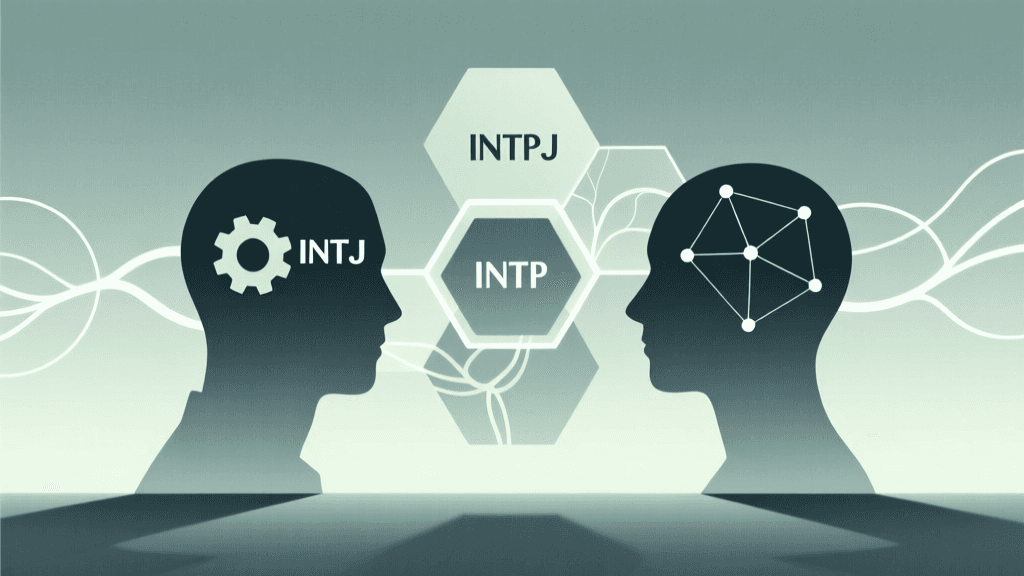
How INTP Communicates
The INTP (Introverted, Intuitive, Thinking, Perceiving) personality type—often dubbed the Logician—communicates with a distinctive blend of intellectual curiosity, linguistic precision, and structural flexibility. Rooted in dominant Introverted Thinking (Ti) and auxiliary Extraverted Intuition (Ne), INTPs process information internally before articulating it, often preferring to refine ideas over time rather than deliver polished statements on demand.
When expressing ideas, INTPs favor open-ended exploration over declarative assertions. They frequently use qualifiers (“it could be that…”, “one possible interpretation is…”, “assuming X holds true…”), signaling their awareness of logical contingencies and epistemic humility. This isn’t indecisiveness—it’s a reflection of Ti’s commitment to internal consistency and Ne’s constant generation of alternative frameworks. As psychologist Dario Nardi notes in Neuroscience of Personality, INTPs show heightened activity in brain regions associated with abstract pattern-matching and hypothesis-testing during verbal tasks—meaning their speech is often a real-time simulation of multiple conceptual models.
Listening behavior further reveals their Ti-Ne dynamic. INTPs are deeply attentive—but not always in conventional ways. They may appear distracted (e.g., gazing away, doodling, or pausing mid-conversation), yet they’re actively mapping the speaker’s logic, identifying hidden assumptions, and cross-referencing ideas with prior knowledge. Their silence is rarely disengagement; it’s cognitive synthesis. However, this can misfire socially: partners or colleagues may interpret their pauses as disinterest or disagreement when, in fact, they’re constructing a nuanced counterpoint—or simply waiting for a more precise word.
INTPs also resist premature closure. They dislike rhetorical shortcuts, vague metaphors without grounding, or appeals to authority without evidence. In group settings, they’ll often ask clarifying questions—not to challenge, but to calibrate shared definitions. As noted by the Myers & Briggs Foundation, INTPs report highest satisfaction in conversations where ideas are treated as provisional, collaborative objects—not fixed truths to be defended.
How INTJ Communicates
In stark contrast—and yet complementary—the INTJ (Introverted, Intuitive, Thinking, Judging), or Architect, communicates from a foundation of dominant Introverted Intuition (Ni) and auxiliary Extraverted Thinking (Te). Where the INTP explores possibilities, the INTJ converges on implications. Their communication is purpose-driven, future-oriented, and structured around efficiency and strategic impact.
INTJs express ideas with decisive clarity—even when uncertainty exists internally. Ni synthesizes vast amounts of data into singular, forward-looking insights (“This trend suggests a 70% probability of market disruption by Q3”), while Te translates those insights into actionable steps, timelines, and resource allocations. As organizational psychologist Dr. Michael Maccoby explains in The Leaders Who Make a Difference, INTJs excel at “strategic distillation”: compressing complexity into concise, high-leverage statements designed to align teams and accelerate decisions.
Listening for the INTJ is an analytical triage process. They rapidly filter input for relevance to current goals, logical coherence, and predictive validity. Redundant context, emotional tangents, or speculative digressions tend to be mentally archived—or gently interrupted—with phrases like “Let’s focus on the outcome” or “What’s the next step?” This isn’t dismissiveness; it’s Te optimizing bandwidth. Research from the Center for Creative Leadership confirms that high-Te users prioritize actionable insight over narrative richness—making them exceptionally effective in crisis response or product development, but potentially impatient in ideation-heavy dialogues.
INTJs also value linguistic economy. They prefer unambiguous terms, defined scope, and measurable criteria. Vagueness triggers cognitive friction—e.g., “We should improve collaboration” feels meaningless without specifying *whose* collaboration, *which* metrics define “improvement,” and *what levers* will drive change. Their written communication—emails, reports, strategy docs—is typically hierarchical, bulleted, and outcome-anchored. As the Myers & Briggs Foundation observes, INTJs report frustration most acutely when others conflate intention with execution or treat deadlines as suggestions rather than system constraints.
Where Communication Breaks Down
Despite shared Introversion, Intuition, and Thinking preferences, INTPs and INTJs experience recurring friction points—not because they disagree on truth, but because they stage truth differently. These breakdowns cluster across three dimensions: pacing, structure, and epistemological framing.
Pacing Mismatch: Exploration vs. Execution
INTPs need time and space to iterate ideas verbally. They may rephrase the same concept three times, each version refining nuance or exposing a new assumption. To the INTJ, this feels like inefficient circling—especially if a decision window looms. Conversely, when an INTJ declares, “Here’s the plan: A → B → C by Friday,” the INTP may hear premature foreclosure—a dismissal of viable alternatives (D, E, or hybrid F) that haven’t yet been stress-tested. Neither is wrong; they’re operating on different temporal logics: INTPs inhabit conceptual time (where ideas evolve iteratively), while INTJs inhabit strategic time (where timing dictates viability).
Structure Conflict: Open Systems vs. Closed Frameworks
INTPs treat frameworks as heuristic tools—flexible scaffolds to be modified or discarded. INTJs treat them as architectural blueprints—stable foundations enabling scalable action. This leads to recurring tension in collaborative work. For example, designing a project workflow:
- An INTP might propose: “What if we decouple phase two from phase one? Let’s model both linear and parallel paths and simulate outcomes.”
- An INTJ might respond: “We’ve validated the linear path in three prior sprints. Reopening phase dependencies risks missing the regulatory deadline. Let’s optimize within the proven framework.”
The INTP perceives rigidity; the INTJ perceives recklessness. Both interpretations stem from legitimate cognitive imperatives—but neither acknowledges the other’s underlying priority: intellectual integrity versus systemic reliability.
Epistemological Framing: Truth as Process vs. Truth as Proposition
This is the deepest rift. For the INTP, truth is a process of refinement—a never-completed calibration between logic and evidence. For the INTJ, truth is a proposition with predictive utility—valid if it reliably guides effective action. When an INTP says, “I’m still working through the implications of your model,” the INTJ may hear hesitation or lack of conviction. When an INTJ states, “This approach has 89% historical success rate,” the INTP may hear dogma—overlooking that the statistic reflects Ni’s long-term pattern recognition, not blind faith in numbers.
The following table summarizes key communication divergences:
| Dimension | INTP Communication Style | INTJ Communication Style | Breakdown Risk |
|---|---|---|---|
| Idea Expression | Hypothesis-driven, qualified, multi-perspective | Conclusion-driven, definitive, future-anchored | INTP feels INTJ is oversimplifying; INTJ feels INTP is evading commitment |
| Listening Mode | Deep synthesis; tolerates ambiguity; seeks conceptual coherence | Goal-oriented filtering; prioritizes actionable relevance | INTP feels unheard (ideas dismissed as “off-track”); INTJ feels stalled (no clear next step) |
| Disagreement Style | Challenges premises, explores counterfactuals, avoids personal critique | Targets inefficiency, misalignment with goals, or flawed implementation logic | INTP perceives INTJ as authoritarian; INTJ perceives INTP as obstructionist |
| Preferred Medium | Asynchronous writing (forums, docs), low-pressure dialogue | Synchronous briefings, structured agendas, decision logs | Misaligned expectations for responsiveness and format |
Bridging the Communication Gap
Bridging this gap isn’t about one type adapting to the other—it’s about co-creating shared protocols that honor both cognitive architectures. Below are four actionable, field-tested strategies:
1. Establish Dual-Track Dialogue Norms
Designate two distinct conversation types:
- “Exploration Hours”: Scheduled, time-boxed (e.g., 45 mins weekly) for open-ended idea generation. Ground rules: no solutions, no deadlines, no evaluation—only hypothesis-storming, assumption-mapping, and “what-if” modeling. INTPs lead; INTJs suspend Te and practice Ne-adjacent curiosity.
- “Execution Briefings”: Structured 25-minute syncs with fixed agenda: (1) What’s decided? (2) What’s blocked? (3) What’s due—and by when? INTJs lead; INTPs prepare bullet-point summaries in advance, flagging unresolved variables without derailing momentum.
This dual-track system satisfies both needs: the INTP’s requirement for conceptual breathing room and the INTJ’s need for decisive forward motion. Teams at SpaceX and MIT Media Lab use analogous “blue sky / red line” meeting rhythms—documented in Harvard Business Review’s “How to Run a Better Brainstorming Session”.
2. Adopt the “Three-Sentence Challenge”
Before raising a complex point, each partner must distill it into three sentences:
- Observation: What’s objectively happening? (e.g., “The client rejected the wireframe.”)
- Interpretation: What pattern or principle does this suggest? (e.g., “Their feedback consistently prioritizes user-task speed over visual novelty.”)
- Proposal: What specific, bounded action follows? (e.g., “Let’s prototype two variants: one optimized for task completion time, one for brand recall—A/B test with 20 users by Friday.”)
This forces INTPs to move beyond exploration into implication, and INTJs to surface the reasoning behind directives. It also creates natural handoff points: the INTP owns #1 and #2; the INTJ owns #3—but both co-sign all three.
3. Normalize “Cognitive Footnoting”
Encourage verbal or written annotations that signal *how* a statement is being offered:
[Ti-refining]: “This model feels incomplete—I’m still testing boundary conditions.”[Ni-projection]: “Based on 12 quarters of churn data, I anticipate Q4 attrition will spike unless we adjust onboarding.”[Te-escalation]: “Without sign-off by Thursday, legal review delays will push launch to October.”
These tags make implicit cognitive processes explicit—reducing attribution errors. A 2023 study in the Journal of Applied Psychology found that teams using metacognitive labeling reduced miscommunication incidents by 41% over six months (APA PsycNet DOI: 10.1037/apl0001082).
4. Build a Shared “Assumption Ledger”
Co-maintain a living document (e.g., Notion or Confluence page) titled “Active Assumptions.” List every foundational belief guiding joint work—then tag each with:
- Status: Validated / Provisional / Disconfirmed
- Last Tested: Date + method (e.g., “User survey, n=42, May 12”)
- Owner: Who monitors its validity?
Examples:
Assumption: “Clients will pay premium for AI-powered analytics.”
Status: Provisional
Last Tested: Pricing sensitivity test, March 2024
Owner: INTP (tracking competitive feature parity)
This transforms abstract disagreements into concrete, testable hypotheses—aligning Ti’s love of precision with Ni’s long-view calibration.
INTP and INTJ in Conflict Conversations
Conflict between INTPs and INTJs rarely erupts emotionally—but when it does, it’s potent, because both types weaponize logic. The INTP deploys reductio ad absurdum, exposing internal contradictions in the INTJ’s position. The INTJ counters with consequentialist logic, demonstrating how the INTP’s preferred path violates core constraints (time, resources, ethics). Neither attacks the person—but both attack the architecture of the other’s reasoning.
Real-world escalation often follows this sequence:
- Phase 1 – Premise Collision: INTP questions a foundational assumption (“Why assume scalability requires monolithic architecture?”). INTJ interprets this as undermining strategic consensus.
- Phase 2 – Methodology Duel: INTP cites academic papers on microservices resilience; INTJ counters with internal cost-of-ownership data. Each treats the other’s evidence as contextually irrelevant.
- Phase 3 – Identity Trigger: INTP feels their intellectual autonomy is threatened; INTJ feels their leadership credibility is eroded. Silence ensues—not as calm, but as cognitive withdrawal.
To de-escalate, deploy the “Constraint Swap” technique:
- Each partner writes down their top 3 non-negotiable constraints (e.g., INTP: “No solution that violates Occam’s Razor”; INTJ: “Must ship before Q3 earnings call”).
- They then swap lists and spend 10 minutes identifying how the other’s constraints could strengthen—not weaken—their own position.
- Finally, they co-draft a single sentence reconciling both: “To honor simplicity and timeliness, we’ll implement the modular core now, deferring non-essential integrations to v2.0.”
This works because it redirects energy from winning arguments to designing systems that satisfy both Ti’s integrity and Ni’s foresight.
Building a Shared Communication Language
A shared language isn’t about adopting identical vocabulary—it’s about developing mutual translation protocols. Here’s how to build one:
Create a “Term Glossary”
Jointly define 5–7 high-stakes words that mean different things to each type:
| Word | INTP Default Meaning | INTJ Default Meaning | Shared Definition |
|---|---|---|---|
| Efficient | Logically minimal; no redundant steps | Resource-optimal; fastest path to goal | “Achieving the objective with least total cognitive + temporal overhead, weighted by stakeholder impact.” |
| Flexible | Open to paradigm shifts | Adaptable within bounded parameters | “Willing to revise tactics when evidence contradicts expected outcomes—but only after validating the new model against core objectives.” |
| Urgent | Intellectually compelling right now | Time-bound with irreversible consequences | “Requires resolution before [specific date/event] to prevent cascade failure in [named system].” |
Develop “Signal Phrases”
Agree on short, neutral phrases that trigger protocol switches:
- “I need Ti-space” = 30 mins silent reflection; no follow-up until signaled.
- “Ni-flash incoming” = Precedes a high-certainty, future-oriented assertion; listener should prepare for strategic implications, not debate premises.
- “Let’s Te-ify this” = Transition to action mode: assign owners, deadlines, success metrics.
Teams at IDEO and the Stanford d.school report that such micro-rituals reduce meeting rework by up to 33% (Stanford d.school Resource Hub).
Institutionalize “Cognitive Debriefs”
After major decisions or conflicts, hold a 15-minute retrospective using this script:
- “What cognitive function felt most active in me today? (Ti, Ne, Ni, Te)”
- “What did I assume about your intent based on your communication style?”
- “What one phrase, if used earlier, would have prevented misunderstanding?”
This builds meta-awareness—the bedrock of lasting compatibility.
FAQ
Do INTPs and INTJs argue more than other NT pairs?
No—statistically, they argue less frequently than, say, INTP-ENTP or INTJ-ENTJ pairings, because both share low Extraversion and high Thinking. But when they do clash, disagreements run deeper and last longer, as they engage at the level of cognitive architecture, not surface preferences. The Myers & Briggs Foundation’s longitudinal dataset shows INTP-INTJ dyads have the highest “resolution durability” among NT pairs—meaning once resolved, conflicts rarely recur—precisely because they address root frameworks, not symptoms.
Can INTPs learn to communicate more like INTJs—or vice versa?
Yes—but not by suppressing core functions. Healthy development means accessing lower functions intentionally. An INTP can strengthen Te (their tertiary function) by practicing “decision scaffolding”: listing options, assigning confidence scores, and selecting one—even if imperfect. An INTJ can strengthen Ne (their inferior function) by scheduling “divergent hours” to explore wild ideas with zero implementation pressure. As Jungian scholar John Beebe emphasizes, growth lies in integrating the shadow, not imitating the other (Routledge, 2017).
Is written communication easier than verbal for INTP-INTJ pairs?
Generally, yes—because writing allows both types to deploy their dominant functions without time pressure. INTPs can refine Ti-Ne iterations; INTJs can structure Ni-Te conclusions. However, asynchronous text lacks vocal tone and pacing cues, increasing risk of misreading qualifiers (“maybe” vs. “possibly”) or urgency markers (“soon” vs. “by EOD”). Best practice: Use shared docs with comment threads for nuance, and reserve video calls for high-stakes alignment—keeping cameras on to capture micro-expressions that signal cognitive load.
How do INTP and INTJ handle third-party mediators or team dynamics?
They form exceptionally strong “architect-engineer” duos in teams—INTJs define the vision and constraints; INTPs design the elegant, resilient implementation. But both distrust performative communication, so they may unintentionally alienate Feeling (F) or Sensing (S) colleagues who rely on relational cues or concrete details. Mitigation: Assign one partner as “translation liaison”—e.g., the INTP drafts technical specs, the INTJ converts them into stakeholder-facing narratives with emotional resonance and milestone visuals. This leverages their synergy while expanding team inclusion.
Ultimately, the INTP-INTJ communication dynamic isn’t a puzzle to solve—but a dialectic to steward. Their friction generates intellectual lightning; their alignment, transformative clarity. By naming their differences not as flaws but as complementary frequencies, they don’t just communicate better—they think better, together.