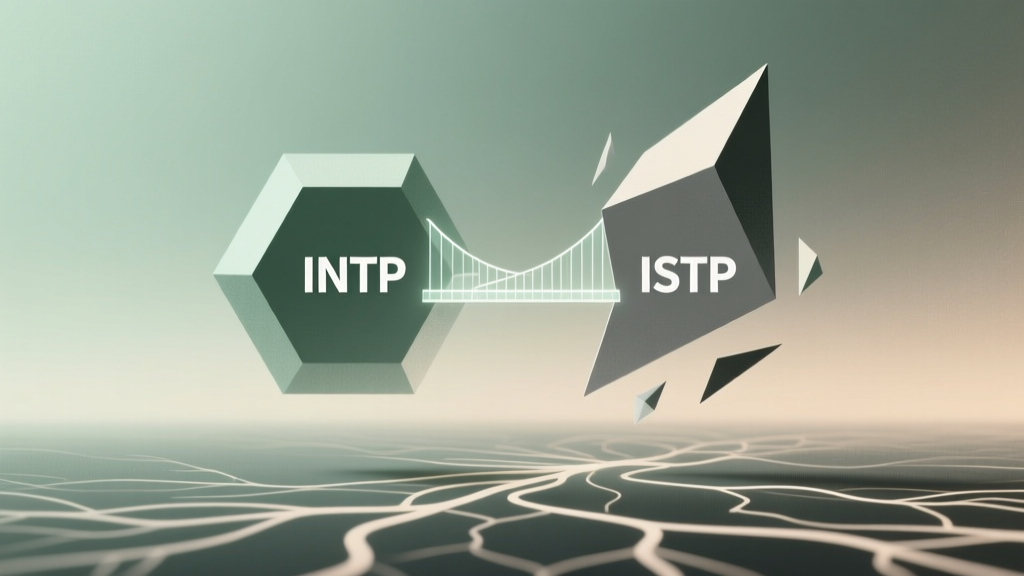
INTP Love Language Profile
The INTP (Introverted, Intuitive, Thinking, Perceiving) personality type—often dubbed the Logician—approaches love with intellectual curiosity, quiet devotion, and a strong preference for authenticity over performative romance. While popular culture sometimes mislabels INTPs as emotionally detached, research shows they experience deep feelings—but express them selectively, thoughtfully, and often nonverbally. Their primary love languages tend to cluster around Acts of Service and Words of Affirmation, though rarely in conventional or effusive ways.
For an INTP, love is demonstrated through problem-solving, thoughtful gestures rooted in understanding, and verbal recognition of a partner’s intellect or integrity. They may spend hours researching the perfect ergonomic keyboard for your home office—not because it’s ‘romantic’ in the traditional sense, but because it signals: “I see your values, I respect your work, and I want you to thrive.” Similarly, a well-crafted, sincere compliment about your reasoning process (“The way you deconstructed that argument was brilliant”) lands more deeply than generic praise like “You’re so pretty.”
INTPs are highly sensitive to insincerity. Empty flattery, scripted declarations, or pressure to perform affection (e.g., daily ‘I love yous’ regardless of context) can trigger withdrawal. According to the Myers & Briggs Foundation, INTPs prioritize internal consistency and truthfulness above social expectations—so their love expressions are calibrated to match their inner convictions, not external scripts.
They rarely initiate physical touch unless it feels intrinsically meaningful (e.g., holding hands while walking in silence, a reassuring hand on the shoulder during stress). When overwhelmed, INTPs retreat inward—not out of rejection, but to process emotions cognitively. This pause is essential to their emotional regulation, yet it’s frequently misread by partners as coldness or disengagement.
ISTP Love Language Profile
The ISTP (Introverted, Sensing, Thinking, Perceiving)—the Virtuoso—expresses love through tangible presence, skilled action, and unspoken reliability. Like the INTP, the ISTP is introverted and thinking-dominant, but grounded in Sensing rather than Intuition. This shapes a love language centered on Physical Touch and Acts of Service, delivered with pragmatism, competence, and understated warmth.
An ISTP might show love by fixing your leaky faucet at midnight, teaching you how to change a car tire, or silently handing you a warm mug of coffee just as you sit down to study—no fanfare, no commentary. Their affection is embedded in doing, not declaring. As noted by psychologist Dario Nardi in his neuroscientific MBTI research, ISTPs exhibit heightened activity in sensorimotor brain regions during engagement—meaning their emotional connection is often physically enacted before it’s verbally articulated (Nardi, 2011). This makes them exceptionally attuned to body language, spatial comfort, and tactile cues—yet less instinctively fluent in abstract emotional vocabulary.
ISTPs value autonomy and authenticity above all. Grand romantic gestures feel inauthentic if disconnected from real-world utility; similarly, excessive verbal affirmation can feel like noise unless it’s specific, earned, and tied to observable action (“You handled that client call with such calm precision”). They dislike emotional pressure—especially demands for constant reassurance or scheduled vulnerability—and interpret forced emotional sharing as a violation of trust, not intimacy.
Physical touch is often their most natural conduit for safety and connection—holding hands while hiking, playful shoulder nudges, or resting a hand on your back while navigating a crowded space. But crucially, this touch is functional and contextual: it communicates presence, not performance. An ISTP may recoil from prolonged hugging in public or unsolicited cuddling without shared context—because for them, touch must align with mutual comfort and situational appropriateness.
Where Love Languages Align and Diverge
At first glance, INTPs and ISTPs share significant compatibility advantages: both are introverted, thinking-dominant, perceiving types who prize independence, intellectual honesty, and low-drama communication. Yet their divergent perceiving functions—Intuition (Ni/Ne) for INTPs vs. Sensing (Si/Se) for ISTPs—create subtle but consequential rifts in how they encode and decode emotional signals.
The table below outlines key alignment points and friction zones in their love language dynamics:
| Dimension | INTP Expression | ISTP Expression | Alignment? | Risk of Misinterpretation |
|---|---|---|---|---|
| Acts of Service | Research-driven, future-oriented support (e.g., building a custom budgeting spreadsheet, drafting a career pivot strategy) | Immediate, hands-on solutions (e.g., repairing your laptop, assembling furniture, driving you to an urgent appointment) | ✅ Strong alignment — both value utility and competence | INTP may overlook urgency; ISTP may dismiss long-term planning as overcomplication |
| Words of Affirmation | Conceptual, principle-based praise (“Your ethical framework is remarkably coherent”) | Concrete, skill-based acknowledgment (“That weld you did was flawless”) | ⚠️ Partial alignment — both prefer substance over fluff, but differ on abstraction level | INTP’s theoretical praise may feel vague to ISTP; ISTP’s technical praise may feel too narrow to INTP |
| Physical Touch | Low baseline frequency; initiated only after deep cognitive/emotional processing; often gentle, still, or protective (e.g., hand-holding during anxiety) | Higher baseline; spontaneous, functional, and context-anchored (e.g., guiding your elbow through a doorway, arm-around-shoulder during shared focus) | ❌ Moderate divergence — mismatched timing and meaning | ISTP may perceive INTP’s reserve as rejection; INTP may interpret ISTP’s touch as intrusive if uncontextualized |
| Quality Time | Deep, idea-rich conversations; parallel activity with intermittent intellectual exchange (e.g., reading side-by-side, then debating a footnote) | Shared activity with mutual engagement (e.g., trail running, restoring a motorcycle, cooking a complex recipe together) | ✅ High potential — when activity bridges theory + practice | INTP may withdraw mid-activity to reflect; ISTP may misread this as disinterest rather than processing |
| Gifts | Curated, symbolic, knowledge-adjacent (e.g., rare first edition, obscure documentary DVD, custom algorithm-generated art) | Functional, high-quality, tool-oriented (e.g., precision multitool, noise-canceling earbuds, durable backpack) | ⚠️ Context-dependent — both avoid cliché, but diverge on purpose | INTP may see ISTP’s gift as ‘impersonal’; ISTP may view INTP’s gift as ‘impractical’ |
This divergence isn’t pathological—it’s functional. As Dr. Linda V. Berens explains in Understanding Yourself and Others: An Introduction to the Personality Type Code, type differences in perceiving functions shape *how* people gather data about relationships: INTPs scan for underlying patterns and implications (“What does this gesture mean about our long-term compatibility?”), while ISTPs absorb concrete sensory data (“Is their posture relaxed? Did their voice soften just now?”). Neither is ‘more accurate’—they’re simply different observational lenses.
Emotional Needs of INTP and ISTP
Understanding love languages is only half the equation. The deeper layer lies in recognizing each type’s core emotional needs—the non-negotiable conditions under which they feel safe, seen, and sustained in love.
INTP Emotional Needs
- Cognitive Autonomy: Freedom to explore ideas without judgment or demand for immediate application. An INTP feels emotionally secure when their partner respects their need to ‘think aloud’—even if conclusions shift—or to sit with uncertainty for weeks before deciding on a shared plan.
- Intellectual Validation: Not agreement—but genuine engagement with their reasoning. Asking follow-up questions (“What assumptions underlie that conclusion?”), remembering nuanced points they raised months ago, or citing their insights in later discussions signals deep attunement.
- Low-Pressure Emotional Access: INTPs need invitation, not expectation. Phrases like “I’m here if you want to talk—no pressure either way” are far more effective than “We need to talk about your feelings right now.” Pushing for emotional disclosure before they’ve cognitively organized it risks shutdown.
- Respect for Processing Time: After conflict or stress, INTPs require solitude to reconstruct narratives, weigh variables, and reestablish internal coherence. This isn’t avoidance—it’s integration. Partners who honor this space (and return with curiosity, not accusation) foster profound loyalty.
ISTP Emotional Needs
- Operational Trust: Confidence that their partner won’t undermine their competence or override their decisions in real-time domains (e.g., navigation, repairs, crisis response). ISTPs bond through shared capability—not shared sentiment.
- Physical Safety & Spatial Respect: Clear boundaries around personal space, touch, and environmental control (e.g., lighting, noise, clutter). An ISTP may feel emotionally exposed in chaotic, unpredictable environments—even with loved ones—because their nervous system registers safety through sensory stability.
- Authentic Action Over Rhetoric: They distrust declarations unsupported by behavior. Saying “I’ll always support you” means little unless demonstrated through consistent, competent follow-through—especially during logistical stress (illness, relocation, technical failure).
- Freedom to Disengage: ISTPs recharge through unstructured, sensory-rich solitude (e.g., solo hiking, tinkering, driving with no destination). Partners who interpret this as distance—rather than renewal—erode security. As highlighted in the Truity ISTP Profile, their need for autonomy is not relational rejection, but neurological self-regulation.
Crucially, both types share a foundational need: to be perceived as fundamentally capable. For INTPs, capability is intellectual and systemic; for ISTPs, it’s mechanical and immediate. When either feels infantilized—told how to think, how to fix something, or how to ‘just relax’—defensiveness rises, connection drops.
Building Emotional Fluency Between INTP and ISTP
“Emotional fluency” doesn’t mean becoming more expressive—it means developing shared dialects for translating inner states across type boundaries. For INTP–ISTP couples, this requires co-creating new emotional syntax rooted in mutual respect for cognition and sensation.
Step 1: Map Your Mutual ‘Silent Languages’
Both types communicate volumes through nonverbal channels—yet interpret them differently. Begin by documenting what specific behaviors signal safety, stress, or affection for each of you. Example:
- INTP: “When I make direct eye contact + ask a precise question, I’m seeking connection—not debate.”
- ISTP: “When I stand slightly behind you while we cook, it’s my version of leaning in—not hovering.”
Write these down and review them monthly. This builds shared reference points beyond words.
Step 2: Design ‘Bridge Rituals’
Create low-pressure, activity-based rituals that harmonize INTP’s conceptual depth with ISTP’s sensory engagement. Examples:
- The ‘Why + How’ Walk: Walk together (ISTP’s sensory grounding) while discussing one idea the INTP is exploring—then collaboratively brainstorm one tangible step to test it (ISTP’s action orientation). No pressure to resolve; just cross-pollinate.
- Toolbox Dialogue: Once a month, each selects one physical object they use regularly (e.g., INTP: favorite notebook; ISTP: go-to wrench). Explain its significance—not just function, but what it represents about your values, history, or approach to life. This grounds abstract identity in shared material reality.
Step 3: Normalize ‘Processing Pauses’ with Codes
Agree on simple, non-shaming signals for when either needs cognitive or sensory reset:
- INTP says: “I need 90 minutes to map this out—can we reconnect at 8 p.m.?” → ISTP responds: “Got it. I’ll be in the garage—text me when you’re ready.”
- ISTP places headphones on the counter + leaves a note: “Recharging. Back by dinner.” → INTP replies: “Noted. Left tea in the blue mug.”
These codes prevent misattribution of absence as abandonment.
Step 4: Co-Develop a ‘Conflict De-escalation Protocol’
Since both types avoid emotional escalation, conflicts can fester or explode unexpectedly. Implement a two-phase system:
- Phase 1 (Cool-Down): 24-hour moratorium on the topic. Each writes 3 bullet points: (a) What happened factually, (b) What I felt physically/emotionally, (c) One small request for repair.
- Phase 2 (Bridge-Building): Meet with notebooks. Read points aloud—no rebuttals. Then ask: “What’s one thing we can do *this week*—concrete, observable, ≤15 minutes—to make the request feel real?” (e.g., “You’ll text me ‘safe home’ after late shifts” / “I’ll set a 10-minute timer before diving into theory during our calls”).
This structure honors INTP’s need for clarity and ISTP’s need for action—transforming tension into co-created solutions.
Practical Tips for Expressing Love to Each Type
Love isn’t intuitive across type lines—it’s a practiced skill. Below are field-tested, behavior-specific strategies.
How to Love an INTP (Actionable Guide)
- Replace ‘How are you?’ with ‘What’s occupying your mind lately?’ — This invites depth, not performance. Follow up by remembering details and referencing them later (“That paradox you mentioned last Tuesday—I found a paper on it…”).
- Offer ‘Thinking Space’ as a Gift: Cancel plans to give them uninterrupted time for reflection—and explicitly name it: “I know you’ve been wrestling with X. Take tonight. I’ll handle dinner.”
- Use Precision Praise: Instead of “You’re smart,” try: “The way you connected quantum decoherence to urban planning ethics—that interdisciplinary leap was masterful.” Cite specifics; avoid adjectives without anchors.
- Touch Strategically: Initiate gentle, stationary touch (hand on forearm, palm-to-palm) during calm, focused moments—not during high-stimulus environments. Pair it with a quiet observation: “This silence feels good.”
How to Love an ISTP (Actionable Guide)
- Ask for Their Expertise—Then Step Back: “I’m struggling with [specific task]. Can you show me how you’d approach it?” Then observe quietly. Don’t interrupt, don’t offer alternatives—just absorb their method. Later, apply one technique and report results.
- Give Space Without Silence: When they withdraw, send a low-bandwidth check-in: “Fuel topped off. Water left on counter. Ping me when you’re back in orbit.” This affirms care without demanding response.
- Affirm Through Utility: Notice and name functional excellence: “The way you adjusted that hinge so it’s silent now—that’s next-level craftsmanship.” Link praise to observable impact.
- Initiate Shared Sensory Focus: Plan activities where attention flows naturally: stargazing (no talking required), assembling IKEA furniture (collaborative problem-solving), or tasting craft coffee (sensory comparison). Presence > performance.
Remember: Consistency trumps intensity. An ISTP trusts the person who reliably shows up with competence; an INTP trusts the person who consistently engages their mind with integrity. Neither requires grand gestures—just unwavering fidelity to their respective definitions of authenticity.
FAQ
Can INTP and ISTP have a lasting romantic relationship?
Yes—when both partners understand that longevity hinges not on similarity, but on mutual translation. Research from the Gottman Institute confirms that relationship success correlates strongly with partners’ ability to create shared meaning and repair ruptures—not with personality matching. INTP–ISTP pairs excel at collaborative problem-solving and low-drama conflict resolution, provided they invest in decoding each other’s emotional dialects. Long-term viability increases significantly when both commit to ‘bridge-building’ practices—not assimilation.
Why do INTPs and ISTPs often misunderstand each other’s silence?
INTP silence is typically cognitive synthesis: integrating data, testing hypotheses, constructing frameworks. ISTP silence is often sensory recalibration: resetting nervous system arousal, observing environmental cues, restoring physical equilibrium. Without explicit naming, INTPs may interpret ISTP’s quiet as disengagement (“They’re not thinking about us”), while ISTPs may read INTP’s silence as emotional withdrawal (“They’re shutting me out”). Explicitly framing silence as *active processing*, not passive absence, transforms it from a threat into a shared resource.
What’s the biggest love language trap for INTP–ISTP couples?
The ‘Competence Conflation Trap’: assuming that because both value capability, they’ll automatically recognize each other’s expressions of love as valid. In reality, INTPs may dismiss ISTP’s hands-on fixes as ‘superficial,’ while ISTPs may overlook INTP’s theoretical support as ‘detached.’ The trap is equating *intent* with *impact*. Solution: Regularly audit actions using the question: “Did this gesture land as care—or as noise?” Then adjust based on feedback, not assumption.
How can we navigate family or social expectations that clash with our quiet love style?
Create a unified ‘external script’—a brief, repeatable phrase you both use with others to protect your dynamic: “We connect deeply in our own way—low-key, high-trust. We appreciate your patience while we keep it real.” Then model boundary-setting: decline events that drain your bandwidth, host small gatherings with structured activities (e.g., board games, DIY projects), and publicly affirm each other’s strengths in concrete terms (“Alex rebuilt my entire network—saved me 20 hours”). External validation matters less than internal coherence; your relationship thrives in the space you intentionally guard.
In closing: INTP and ISTP love isn’t loud—but it’s resilient. It’s not effusive—but it’s exact. When both partners commit to translating thought into touch, theory into tool, and silence into sanctuary, they don’t just coexist—they co-create a rare kind of intimacy: one built on mutual respect for the mind’s depth and the body’s truth. That’s not compatibility. That’s collaboration.