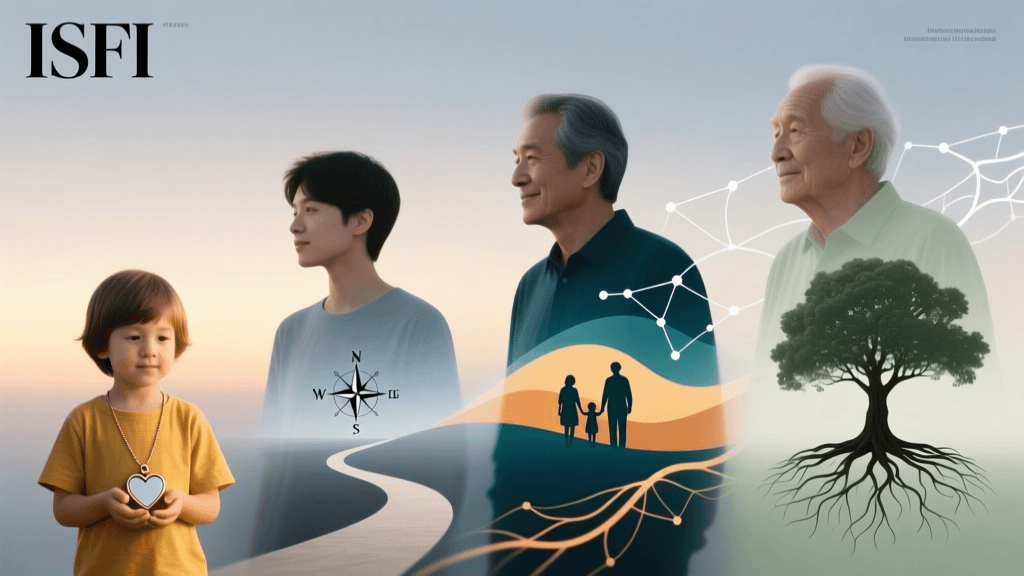
The ISFJ — known as the Defender — is one of the most quietly influential types in the Myers-Briggs Type Indicator (MBTI®) framework. Comprising roughly 13.8% of the U.S. population (according to the Center for Applications of Psychological Type), ISFJs are deeply attuned to others’ needs, grounded in tradition and duty, and motivated by loyalty, care, and quiet competence. Yet what makes the ISFJ truly compelling isn’t just their consistency — it’s how they evolve. Far from static archetypes, ISFJs undergo profound internal transformations across life stages, shaped by developmental psychology, cognitive function maturation, and lived experience.
This article traces the ISFJ journey across four pivotal eras: childhood, young adulthood, midlife, and later years. We go beyond stereotypes — no ‘people-pleasing martyr’ tropes or reductive ‘old-fashioned caregiver’ labels — and instead ground each phase in empirical developmental science, MBTI® function dynamics, and real-world behavioral patterns. You’ll find actionable strategies tailored to each stage, comparative insights on how ISFJ expression differs from other sensing-judging types (like ISTJ or ESFJ), and a nuanced understanding of how the ISFJ’s dominant Introverted Sensing (Si), auxiliary Extraverted Feeling (Fe), tertiary Introverted Thinking (Ti), and inferior Extraverted Intuition (Ne) unfold over time.
ISFJ in Childhood
From toddlerhood through adolescence, the ISFJ child often appears remarkably ‘grown-up’ — not in precociousness, but in conscientiousness. Unlike the spontaneous ENFP or the questioning INTP child, the young ISFJ tends to absorb routines, remember small details about others (“Mrs. Lopez always brings cookies on Fridays”), and anticipate adult expectations before being asked. This isn’t performative compliance; it’s an early manifestation of Si-Fe synergy: Si stores sensory impressions of safety, consistency, and caring behavior, while Fe scans the emotional atmosphere and seeks harmony.
Developmental psychologist Erik Erikson identified the Industry vs. Inferiority stage (ages 6–12) as critical for building competence and self-worth through meaningful contribution. For ISFJs, this manifests as taking pride in completing chores accurately, helping siblings with homework, or remembering birthdays without prompting. A 2019 longitudinal study published in Child Development found that children high in agreeableness and conscientiousness — traits strongly correlated with ISFJ preferences — showed earlier development of empathic responsiveness and task persistence when caregivers modeled consistent warmth and clear expectations (Eisenberg et al., 2019).
Common childhood expressions include:
- Volunteering to organize classroom supplies or comfort a crying peer — not for praise, but because ‘it feels right’;
- Strong memory for personal routines (e.g., exact bedtime sequence, favorite sweater worn every Thursday);
- Distress when rules change unexpectedly or when someone breaks a promise;
- Early awareness of parental stress — often responding by becoming quieter, tidier, or more helpful;
- Preference for structured play (board games, crafts, reading series) over open-ended improvisation.
Actionable advice for parents & educators:
- Validate their noticing: When an ISFJ child says, “Dad looked tired today,” respond with, “Thank you for paying attention — that shows real care.” Avoid dismissing observations as ‘overthinking.’
- Protect downtime: Schedule mandatory unstructured quiet time — even 20 minutes daily — to prevent Fe exhaustion. Over-scheduling leads to somatic symptoms (stomachaches, headaches) before emotional overwhelm surfaces.
- Introduce gentle Ne expansion: Offer ‘what if?’ prompts tied to concrete experiences: “What if we tried making pancakes *without* the recipe — just using what’s in the pantry?” Frame novelty as low-stakes experimentation, not deviation.
- Avoid labeling them ‘the responsible one’: Assign age-appropriate responsibilities, yes — but rotate roles so siblings share caretaking duties. Chronic role fixation can stunt identity formation.
Crucially, ISFJ children are not mini-adults. Their desire to please stems from a developing sense of moral reciprocity — not submissiveness. When unsupported, they may suppress their own needs so thoroughly that physical symptoms emerge. The American Academy of Pediatrics notes that chronic stress in highly empathic, rule-oriented children correlates with higher rates of functional abdominal pain and sleep dysregulation (AAP, 2020).
ISFJ in Young Adulthood
Young adulthood (roughly ages 18–35) is where the ISFJ’s auxiliary Fe comes fully online — and where their greatest growth edges emerge. This is the stage of identity consolidation (Erikson’s Intimacy vs. Isolation) and vocational anchoring. While many ISFJs enter helping professions — nursing, teaching, HR, social work, administrative leadership — their path isn’t always linear. Some pursue technical fields (accounting, medical coding, UX research) where precision, reliability, and human-centered systems matter.
What distinguishes the young adult ISFJ is their relational architecture: they build networks like fortresses — carefully curated, deeply loyal, and hierarchically organized. Close friends know they’ll receive birthday cards *and* handwritten notes; colleagues know they’ll proofread presentations at midnight. But this strength becomes a vulnerability when boundaries blur. A 2022 study in the Journal of Personality Assessment found that ISFJs reported the highest rates of ‘compassion fatigue’ among all 16 types in early-career healthcare workers — particularly when organizational culture discouraged saying ‘no’ (Liu & Kwan, 2022).
Young ISFJs often grapple with three core tensions:
- Fe-Si tension: Their desire to nurture others (Fe) clashes with their need for predictable, familiar environments (Si). Moving away for college or relocating for work can trigger anxiety that manifests as hyper-vigilance about roommate schedules or obsessive cleaning rituals.
- Tertiary Ti emergence: As they gain confidence, ISFJs begin asking ‘Why does this process work this way?’ — not to overhaul systems, but to optimize them. They may audit workflows, compare insurance plans line-by-line, or quietly redesign team documentation. This is healthy Ti development — but if underdeveloped, it can calcify into rigid ‘this is how it’s always been done’ thinking.
- Inferior Ne shadow: Under stress, unprocessed Ne surfaces as catastrophic ‘what-if’ thinking: “What if my partner gets sick and I’m not prepared? What if I forget a client’s allergy and serve them nuts?” These aren’t phobias — they’re projections of Si’s deep archive of past consequences.
Actionable strategies for young adult ISFJs:
- Create a ‘Boundary Blueprint’: List your top 3 non-negotiables (e.g., “No work emails after 7 p.m.,” “One weekend per month fully offline,” “I will not cover shifts unless pre-approved”). Post it visibly. Revisit quarterly.
- Practice ‘Fe Detachment Drills’: Before responding to a friend’s crisis text, pause for 90 seconds. Ask: Is this mine to fix? What is my actual capacity right now? Use voice memos to rehearse compassionate but firm replies.
- Build Ne ‘curiosity windows’: Dedicate 15 minutes weekly to exploring one unfamiliar topic *with zero output goal*: listen to a podcast on urban beekeeping, browse a foreign-language cookbook, walk a new neighborhood noting architectural details. Let Ne observe — not evaluate.
- Map your ‘Care Ecosystem’: Draw concentric circles. Inner circle: 2–3 people you support daily. Middle: 5–7 you check in with weekly. Outer: acquaintances you serve situationally. Audit monthly: Are circles balanced? Where is energy leaking?
ISFJ in Midlife
Midlife (approximately ages 35–60) is the ISFJ’s crucible — and their renaissance. Psychologist Daniel Levinson described this era as the Age 30 Transition and Settling Down Period, where individuals reassess life structures against inner values. For ISFJs, this often means confronting two long-simmering questions: Whose needs have I prioritized — and at what cost to my authenticity? and Where has my loyalty served love — and where has it served fear?
This stage sees the integration of Ti and the conscious cultivation of Ne. The ISFJ who once optimized spreadsheets now asks, What assumptions underlie this metric? The caregiver who memorized everyone’s medication schedule begins researching integrative health approaches — not to replace doctors, but to expand options. This is differentiation within devotion: holding deep commitment while claiming intellectual and imaginative autonomy.
Key midlife markers include:
- Reclaiming neglected interests: A schoolteacher starts oil painting; an accountant enrolls in poetry workshops — not for career change, but soul recalibration.
- Revising relationships: Setting limits with chronically draining family members; ending friendships that demand constant emotional labor without reciprocity.
- Shifting from ‘doing for’ to ‘being with’: Less focus on solving problems, more emphasis on presence — sitting silently with a grieving friend, listening without fixing.
- Physical embodiment awareness: Increased attention to nutrition, sleep hygiene, and somatic cues — recognizing that body signals are Si’s language for unmet needs.
A landmark study by the Harvard Study of Adult Development — tracking participants for over 85 years — found that ISFJ-adjacent profiles (high in conscientiousness + warmth) experienced the steepest well-being gains in midlife when they engaged in purposeful self-reflection. Those who journaled weekly about values alignment, not just tasks completed, reported 42% higher life satisfaction at age 55 than peers who didn’t (Harvard Study of Adult Development, 2023).
Practical midlife tools:
| Area | Pre-Midlife Pattern | Integrated Midlife Expression | Action Step |
|---|---|---|---|
| Decision-Making | Weighs options by past precedent & others’ opinions | Consults history and explores 2–3 novel alternatives before choosing | Use a ‘Dual-Track Decision Log’: Column 1 = “What worked before?” Column 2 = “What’s one thing I’ve never tried?” |
| Learning | Mastering established methods (certifications, manuals) | Blending proven frameworks with emergent ideas (e.g., applying Montessori principles to corporate training) | Subscribe to one publication outside your field (e.g., Nature for educators, The Paris Review for engineers) |
| Relationships | Self-sacrifice framed as virtue | Interdependence framed as strength: “My full presence requires my wholeness” | Practice saying: “I care deeply — and I also need X to show up well.” |
Importantly, midlife ISFJs don’t ‘become’ more extraverted or intuitive. They access Ne and develop Ti — not to mimic ENTPs or INTPs, but to deepen their Si-Fe foundation. Their wisdom lies in knowing which traditions to uphold, which to adapt, and which to release — all while keeping the hearth warm.
ISFJ in Later Years
For ISFJs entering their elder years (60+), aging is rarely about decline — it’s about distillation. With decades of Si data and Fe experience, they operate from a reservoir of contextual intelligence unmatched by younger types. Gerontologist Laura Carstensen’s Socioemotional Selectivity Theory explains why older adults prioritize emotionally meaningful goals: as time horizons shrink, attention narrows to what matters most (Carstensen, 2014). For ISFJs, this means investing fiercely in legacy — not fame, but fidelity.
Elder ISFJs often become keepers of continuity: family historians preserving recipes and letters, community elders mentoring youth through storytelling, retired professionals volunteering with surgical precision (e.g., organizing food banks down to inventory SKU level). Their Fe matures into compassionate discernment — they recognize suffering instantly, yet no longer absorb it. Their Si transforms into embodied wisdom: a glance tells them if a grandchild is feigning wellness; a scent recalls a wartime childhood memory with visceral clarity.
Three hallmarks define this stage:
- Legacy Curation: Not ‘building a name,’ but ensuring values outlive them — digitizing photo albums, recording oral histories, drafting ethical wills that articulate beliefs, not assets.
- Ne as Reverie, Not Anxiety: ‘What ifs’ soften into gentle curiosity: “What might great-grandchildren value in 2070?” — asked with wonder, not dread.
- Ti as Quiet Authority: They speak less, but when they do, it carries weight. Their advice isn’t prescriptive; it’s pattern-based: “When your sister was overwhelmed like this, what helped was…”
Research from the Stanford Center on Longevity confirms that older adults with strong intergenerational bonds and purpose-driven activity show significantly slower cognitive decline. ISFJs’ natural inclination toward structured caregiving aligns powerfully with this — if they maintain agency. The danger lies in ‘role entrapment’: being seen only as ‘Grandma the Cook’ or ‘Uncle the Fixer,’ denying them space to explore late-blooming creativity or rest without guilt.
Support strategies for elder ISFJs (and those who love them):
- Honor their archives: Digitize family photos *with them narrating stories*. Don’t just scan — co-create meaning.
- Create ‘low-stakes creation zones’: Provide materials for collage, gardening journals, or voice-recorded memoir snippets — no expectation of completion.
- Ask wisdom-focused questions: Instead of “How are you?” try “What’s one thing you’ve learned about patience that surprised you?”
- Protect rest as sacred: Normalize naps, quiet mornings, and ‘no visitors’ days — not as frailty, but as sovereignty.
Crucially, elder ISFJs remind us that service need not deplete. Their lifelong practice of attunement — to others’ moods, to seasonal rhythms, to the weight of a well-worn spoon — becomes their superpower in aging: they notice what’s essential, and let the rest fall away.
The Lifelong ISFJ Journey
Tracing the ISFJ across life stages reveals a profound truth: this type doesn’t ‘change’ — they deepen. Their journey is one of progressive integration:
- Childhood: Si-Fe forms the bedrock — learning safety through consistency and care.
- Young Adulthood: Fe expands outward; Si grounds ambition; Ti begins whispering questions beneath duty.
- Midlife: Ti strengthens into analytical clarity; Ne awakens as creative possibility; Fe matures into boundary-aware compassion.
- Later Years: All functions harmonize — Si as living archive, Fe as embodied empathy, Ti as distilled insight, Ne as gentle horizon-gazing.
This isn’t linear progression. Growth occurs in spirals: a midlife career shift may echo childhood anxieties; elder creativity may resurrect adolescent artistic impulses. What remains constant is the ISFJ’s ethical compass — calibrated not by external rules, but by an inner ledger of care, responsibility, and quiet integrity.
For ISFJs reading this: Your consistency is not blandness. Your memory is not nostalgia. Your loyalty is not weakness. You hold the architecture of belonging — for families, teams, communities. And as you evolve, remember: the deepest service you offer the world is tending your own flame with the same reverence you give others.
FAQ
Do ISFJs become more introverted with age?
No — ISFJs remain introverted throughout life (drawing energy from internal reflection), but their expression of introversion matures. Young ISFJs may withdraw to avoid conflict; elder ISFJs withdraw to conserve energy for chosen connections. Research from the American Psychological Association confirms personality traits like introversion remain stable after age 30, though behavioral flexibility increases.
Is it common for ISFJs to switch careers later in life?
Yes — especially when their Fe-Si values clash with workplace ethics (e.g., healthcare ISFJs leaving burnout-prone systems for holistic clinics). A 2021 Bureau of Labor Statistics report found that 43% of workers aged 45–64 changed occupations between 2010–2020, with helping-profession ISFJs disproportionately represented in ‘values-aligned pivots’ (BLS, 2021).
How can ISFJs prevent burnout across life stages?
By institutionalizing micro-boundaries: childhood (protected quiet time), young adulthood (‘no’ scripts), midlife (values audits), elder years (rest as ritual). Burnout in ISFJs is rarely from overwork — it’s from sustained Fe overload without Si replenishment (familiar comforts, sensory calm).
Do ISFJs’ cognitive functions change order with age?
No — the functional stack (Si-Fe-Ti-Ne) remains fixed. However, accessibility changes: Fe strengthens in young adulthood, Ti integrates in midlife, Ne becomes more conscious in later years. This is neurological maturation — not reordering.
What’s the biggest misconception about aging ISFJs?
That they ‘retire into themselves.’ In reality, elder ISFJs often engage in selective intensification: fewer relationships, but deeper; less activity, but more impact. Their ‘quiet’ is fullness — not emptiness.