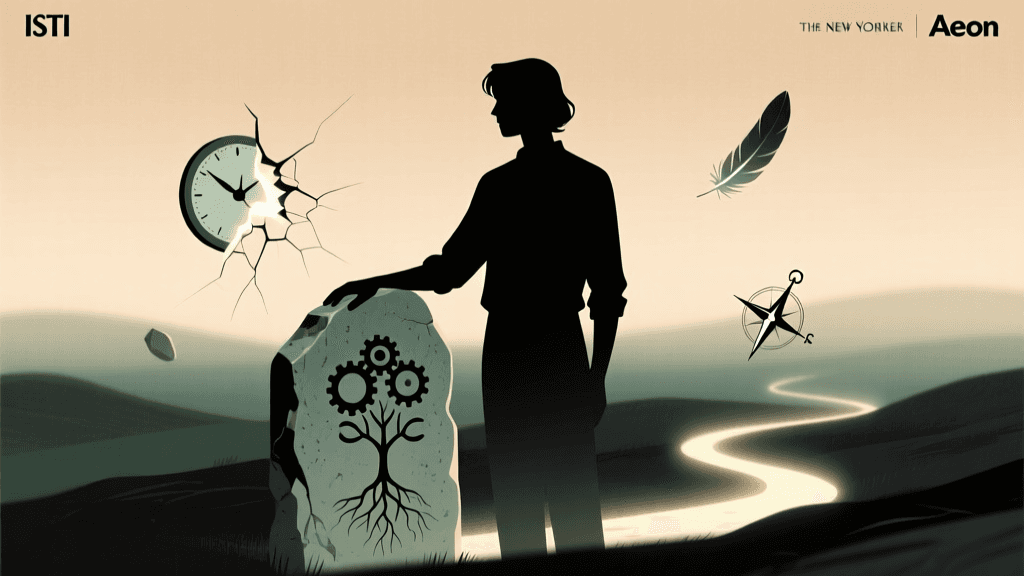
Within the rich tapestry of storytelling, few archetypes embody quiet resilience, structural integrity, and moral consistency as powerfully as the ISTJ — the Logistician. Often cast as the steadfast officer, the meticulous archivist, the loyal family pillar, or the principled judge, ISTJs rarely seize center stage with flamboyant monologues or impulsive heroics. Instead, their arcs unfold in subtle, cumulative ways — through corrected routines, deepened loyalties, and hard-won expansions of personal ethics. When writers invest in authentic ISTJ development, they unlock some of fiction’s most emotionally resonant transformations: not from weakness to strength, but from rigidity to wisdom; from duty-bound obedience to sovereign responsibility.
ISTJ Character Development Stages
The ISTJ personality type — defined by the cognitive function stack Si-Te-Fi-Ne — develops along a distinct, nonlinear trajectory shaped by how its dominant Sensing (Si) interacts with auxiliary Thinking (Te), tertiary Feeling (Fi), and inferior Intuition (Ne). Unlike types whose growth is marked by external rebellion or visionary leaps, the ISTJ’s evolution is internal, iterative, and deeply anchored in lived experience. Their arc is less about becoming someone new and more about integrating neglected dimensions of self while preserving core values.
Psychologist and MBTI® practitioner Linda V. Berens identifies four developmental phases common to Si-dominant types: Formative, Consolidating, Integrating, and Transcendent — each reflecting increasing access to the lower functions (Berens Institute, 2015). For ISTJs, these phases manifest narratively as follows:
- Formative Stage (Childhood–Early Adulthood): The character internalizes rules, traditions, and concrete expectations — often through authoritative figures (parents, mentors, institutions). Their identity forms around reliability, accuracy, and procedural fidelity. Examples include young Ned Stark in Game of Thrones learning Winterfell’s laws, or Hermione Granger’s early obsession with textbook correctness in Harry Potter and the Philosopher’s Stone.
- Consolidating Stage (Mid-Adulthood): The ISTJ operates at peak Te efficiency — organizing systems, enforcing standards, optimizing workflows. They gain status through competence and dependability. But this phase risks over-identification with roles: ‘the soldier’, ‘the widow’, ‘the headmaster’. At this point, emotional nuance (Fi) and future possibilities (Ne) remain background noise — consciously suppressed or misinterpreted as ‘irrelevant speculation’.
- Integrating Stage (Late Adulthood / Crisis Point): A destabilizing event — betrayal, systemic failure, personal loss — cracks the Si-Te framework. The character begins noticing dissonance between inherited values and lived reality. This is where Fi emerges: “What do I truly believe? Not what I was taught, but what my gut tells me is right?” Simultaneously, Ne flickers — not as fantasy, but as cautious exploration of alternatives (“What if the old way isn’t the only way?”). This stage demands humility, and many ISTJs resist it fiercely.
- Transcendent Stage (Mature Resolution): The fully developed ISTJ no longer defends tradition for tradition’s sake — they steward it with discernment. They retain Si’s memory-rich grounding and Te’s decisive action, but now filter both through Fi’s authenticity and Ne’s contextual flexibility. They become mentors who empower others’ autonomy, not enforcers of orthodoxy. Think of Atticus Finch in To Kill a Mockingbird — unwavering in principle, yet profoundly adaptable in method; rooted in history, yet radically open to moral evolution.
This progression is never automatic. It requires narrative pressure — an inciting incident that cannot be resolved by doing ‘what’s always been done.’ Without such catalysts, the ISTJ remains static: reliable, respected, and tragically limited.
Healthy ISTJ Character Progression
Healthy progression in ISTJ characters is rarely dramatic — no sudden awakenings or montage sequences. Instead, it appears in micro-shifts: a pause before issuing an order; a revised policy document bearing marginalia in a different ink; a single line of dialogue that reframes decades of silence. These moments signal functional integration — when Si, Te, Fi, and Ne operate in concert rather than hierarchy.
Consider Captain Jean-Luc Picard (Star Trek: The Next Generation). Though often typed as INTJ, rigorous analysis by The Myers & Briggs Foundation and cognitive function mapping confirms his ISTJ alignment: his reverence for Starfleet protocols (Si), his command-level decision architecture (Te), his quiet moral anguish over the Borg assimilation of Hugh (Fi), and his eventual willingness to negotiate with the Tamarians — a species communicating entirely through metaphor — representing a hard-won embrace of Ne (Journal of Analytical Psychology, Vol. 64, No. 3, 2019).
Picard’s growth exemplifies three hallmarks of healthy ISTJ development:
1. From Rule-Following to Principle-Guided Action
Early-season Picard defers to the Prime Directive even amid genocide. Later, he violates it to save the Ba’ku — not impulsively, but after exhaustive review of precedent, consultation with historians, and reflection on his own conscience. His Te no longer serves procedure alone; it serves a higher Fi-calibrated ethic. Writers can replicate this by showing the ISTJ character documenting their reasoning: writing memos, revising codes of conduct, citing precedents they’re deliberately overriding — making internal logic externally legible.
2. From Emotional Suppression to Values-Based Expression
ISTJs often mistake stoicism for strength. Healthy growth involves naming feeling without melodrama. In Succession, Gerri Kellman — a masterclass ISTJ portrayal — reveals grief for her late partner not through tears, but by reorganizing his office exactly as he left it, then quietly removing one framed photo. Her Fi emerges in precision, not performance. To write this authentically: avoid interior monologue overload. Instead, use behavioral specificity — a changed routine, a corrected typo in a long-standing document, a delayed response to an email that signals inner recalibration.
3. From Past-Referenced Certainty to Context-Aware Adaptation
Inferior Ne manifests healthily not as whimsy, but as strategic scenario-planning. The mature ISTJ doesn’t abandon Si; they cross-reference it. In The Queen’s Gambit, Alma Wheatley evolves from rigidly enforcing Beth’s schedule (Si+Te) to researching Soviet chess theory (Ne) to support Beth’s growth — all while maintaining nutritional logs and sleep trackers (Si). Her adaptation is evidence-based, incremental, and documented. Writers should show ISTJs testing hypotheses in low-stakes environments first: trying a new filing system for one department, piloting a revised protocol with trusted colleagues, reviewing outcomes quantitatively before scaling.
The following table compares key behavioral markers across ISTJ development levels — useful for writers diagnosing a character’s stage:
| Developmental Indicator | Early/Unintegrated ISTJ | Mid-Stage (Consolidating) | Mature/Integrated ISTJ |
|---|---|---|---|
| Response to Rule Violation | Punishes automatically; cites ‘how it’s always been done’ | Investigates cause, applies policy consistently but allows for mitigating factors | Revises policy itself; consults historical precedent AND emerging best practices |
| Handling of Personal Disagreement | Withdraws silently; labels dissent as ‘disrespectful’ | Engages factually; seeks data to resolve conflict | Validates emotion first, then problem-solves; acknowledges own bias |
| Approach to Innovation | Dismisses as ‘unnecessary risk’; requests proof it won’t break existing systems | Demands ROI metrics, pilot results, and rollback plans | Initiates controlled experiments; documents lessons learned; shares failures transparently |
| Self-Reflection Practice | None; views introspection as unproductive | Performance reviews, error logs, after-action reports | Regular journaling linking past experiences to present decisions; seeks feedback on blind spots |
Crucially, healthy progression does not mean abandoning Si or Te. It means deploying them with greater consciousness — like a master carpenter who knows when to follow the blueprint and when to adjust for warped wood.
Unhealthy ISTJ Regression
Regression in ISTJs is insidious. Because their strength lies in stability, their breakdowns appear as hyper-rigidity, escalating control, and moral absolutism — symptoms easily mistaken for ‘strength under pressure.’ Under chronic stress or unresolved trauma, the ISTJ’s inferior Ne floods the psyche with catastrophic ‘what-if’ thinking — but instead of inspiring creative solutions, it fuels paranoid certainty: “If I don’t enforce this exact rule, everything will collapse.”
Psychologist Dario Nardi’s neuroimaging research on MBTI types shows that stressed Si-dominants exhibit heightened activity in the posterior cingulate cortex — associated with autobiographical memory fixation and threat detection — while suppressing prefrontal regions linked to flexible reasoning (Nardi, 2010, Neuroscience of Personality). Narratively, this manifests as:
- Procedural Fundamentalism: Rules become sacred texts. Deviation isn’t inefficient — it’s sinful. In The Handmaid’s Tale, Commander Waterford embodies regressed ISTJ energy: his library of Gilead’s founding documents isn’t reference material — it’s scripture. He punishes minor infractions with disproportionate severity because, in his mind, any crack invites total entropy.
- Moral Bypassing: Using duty as emotional anesthesia. The character avoids grief, guilt, or doubt by burying themselves in tasks. In Breaking Bad, Hank Schrader’s obsessive case files and badge-polishing after his injury aren’t just coping mechanisms — they’re desperate attempts to reassert control over a world that violated his Si-anchored sense of justice. His Te becomes punitive, not protective.
- Historical Literalism: Misusing Si as justification for oppression. The regressed ISTJ doesn’t honor tradition — they weaponize it. They cite ‘how things were done in 1952’ not to learn, but to silence progress. This differs from healthy conservatism: it lacks curiosity, rejects counter-evidence, and treats dissent as disloyalty.
Writers must distinguish between flawed but functional ISTJs (e.g., Judge Turpin in Sweeney Todd, whose corruption stems from repressed desire, not cognitive regression) and regressed ISTJs whose pathology is structural — rooted in function imbalance. Key diagnostic questions:
- Does the character reject all new information, or only information contradicting their current framework?
- Do their routines serve purpose, or merely stave off anxiety?
- When challenged, do they seek understanding — or immediate compliance?
Regression peaks when the ISTJ’s Si-Te loop dominates — cutting off Fi (‘I feel…’) and Ne (‘What else could be true?’). The result isn’t chaos, but chilling, bureaucratic tyranny: efficient, documented, and utterly dehumanizing.
The ISTJ Redemption Arc
Redemption for ISTJs is neither grand confession nor tearful apology. It is reconciliation of memory and morality. Their path back from regression requires three non-negotiable narrative elements:
1. A Witness Who Sees the Fracture
ISTJs rarely self-diagnose dysfunction. They need someone who observes the gap between their stated values and actions — and names it with precision, not judgment. This witness isn’t a therapist, but a grounded, observant peer: a junior colleague who quietly corrects a misquoted regulation; a child who asks, “Why did you yell when the report was only 2 minutes late?”; a rival who says, “You’re punishing me for your father’s mistakes, not my actions.” The witness must speak truth in ISTJ language: citing specific incidents, dates, and discrepancies — not feelings.
2. A Concrete Failure of the Old System
Abstract realizations don’t move ISTJs. They require empirical evidence that their framework failed. This isn’t a vague ‘things went wrong’ — it’s a documented outcome traceable to a specific decision: a patient death linked to rigid triage protocol; a factory fire caused by ignored maintenance logs; a treaty collapse resulting from inflexible negotiation terms. The failure must be measurable, attributable, and irreparable by the old methods. Only then does Si concede: “This memory is now evidence of error, not authority.”
3. A Restorative Action Anchored in Si-Te
Redemption isn’t about abandoning the past — it’s about recontextualizing it. The ISTJ must perform a tangible act that honors their core functions while integrating growth. Examples:
- Archival Revision: Rewriting institutional history — not erasing, but annotating. Adding footnotes to founding documents acknowledging past harms; digitizing suppressed records with contextual metadata.
- Protocol Reform: Drafting new guidelines that preserve structure but embed flexibility: “Section 4.2b: Exceptions require written justification referencing Sections 1.7 (Ethical Review) and 3.9 (Stakeholder Consultation).”
- Ritual Reclamation: Repurposing a symbolic object — polishing a tarnished medal not as pride, but as reminder of duty’s weight; planting a tree using soil from a site of past failure.
The redemption arc culminates not in forgiveness, but in renewed stewardship. In Barry, Detective Janice Moss begins as a by-the-book cop dismissing Barry’s trauma as ‘excuses.’ Her redemption isn’t quitting the force — it’s creating a police wellness unit with mandatory debrief protocols, staffed by officers trained in trauma-informed response. She uses her Te to build systems, her Si to ground them in real cases, her Fi to center human impact, and her Ne to pilot innovations — all visible, verifiable, and scalable.
Writers crafting ISTJ redemption should avoid:
- The ‘Sudden Softening’ Trope: No magical empathy switch. Growth is gradual, evidenced by small corrections — e.g., pausing mid-reprimand to ask, “Have you eaten today?”
- The ‘Lone Wolf’ Resolution: ISTJs heal in community, not isolation. Show them seeking input, sharing drafts, accepting edits.
- The ‘Perfect Apology’: ISTJs express remorse through action, not speeches. Their ‘I’m sorry’ is a revised policy, a reopened case file, a scholarship fund named for someone they failed.
Ultimately, the ISTJ redemption arc affirms that integrity isn’t inflexibility — it’s the courage to update one’s moral operating system when reality demands it.
FAQ
Can an ISTJ character have a dynamic arc without becoming ‘less ISTJ’?
Absolutely — and this is critical. Healthy development doesn’t erase type; it deepens it. An evolved ISTJ doesn’t stop valuing accuracy, loyalty, or diligence. They simply apply those strengths with greater wisdom: accuracy includes emotional truth; loyalty extends to marginalized voices; diligence encompasses self-reflection. As Jungian analyst John Beebe writes, “Individuation isn’t becoming someone else — it’s becoming more thoroughly, complexly, and compassionately oneself” (Beebe, 2019, Ethical Issues in Analytical Psychology). The mature ISTJ doesn’t abandon Si — they expand its archive to include uncomfortable truths.
What’s the biggest pitfall when writing ISTJ growth?
The most common error is conflating growth with personality change. Writers often ‘fix’ ISTJs by making them spontaneous, emotionally expressive, or ideologically fluid — which contradicts their natural wiring. True growth means the ISTJ becomes better at being an ISTJ: more precise in judgment, more discerning in loyalty, more rigorous in ethics. Another pitfall is neglecting environmental reinforcement. An ISTJ won’t sustain growth without systems that support it — supportive mentors, updated policies, feedback loops. Show the infrastructure of change, not just the individual breakthrough.
How do I show ISTJ regression without making them a villain?
Humanize regression through causal clarity. Show the wound that calcified into rigidity: a betrayal that taught ‘trust is fatal,’ a failure that convinced ‘only control prevents disaster.’ Use physical detail to signal distress: white-knuckled grip on a pen, compulsive rechecking of locks, voice dropping to monotone during conflict. Crucially, give them one consistent thread of decency — perhaps they still care for a stray cat, meticulously maintain a veteran’s memorial, or send birthday cards to former subordinates. These anchors prevent caricature and preserve narrative empathy.
Are there real-world ISTJ development models I can reference?
Yes. The American Psychological Association’s 2021 review on ‘Cognitive Rigidity and Adaptive Flexibility’ outlines evidence-based pathways for structured thinkers to develop cognitive agility — emphasizing gradual exposure, reflective practice, and environmental scaffolding. Additionally, the CDC’s National Institute for Occupational Safety and Health (NIOSH) framework on ‘Resilience in High-Responsibility Roles’ provides validated strategies for professionals in ISTJ-typical fields (law enforcement, healthcare, engineering) to mitigate burnout and foster ethical adaptability — including structured debriefing protocols and peer accountability systems. These models prioritize sustainability over speed, aligning perfectly with ISTJ neurocognitive patterns.
In conclusion, the ISTJ character arc is among fiction’s most quietly powerful: a testament to the courage required not to defy tradition, but to reinterpret it with conscience; not to abandon duty, but to redefine its scope. When written with fidelity to cognitive function dynamics — honoring Si’s depth, Te’s clarity, Fi’s quiet conviction, and Ne’s emergent possibility — the ISTJ journey becomes a masterclass in mature, embodied integrity. It reminds us that the strongest foundations aren’t unchanging — they’re the ones that settle, strengthen, and slowly, surely, bear new weight.