ISTJ Childhood Archetype in Stories
The ISTJ personality type — Introverted, Sensing, Thinking, Judging — is often mischaracterized in pop psychology as ‘the accountant’ or ‘the bureaucrat.’ But long before adulthood’s spreadsheets and compliance checklists, the ISTJ child appears in stories with remarkable consistency: solemn, observant, quietly responsible, and burdened with an early sense of duty. Unlike the exuberant ENFP child who rearranges the furniture to build a spaceship, or the intuitive INTP who questions why gravity works *at all*, the ISTJ child asks, ‘What are the rules for this? Who made them? And how do I follow them correctly?’
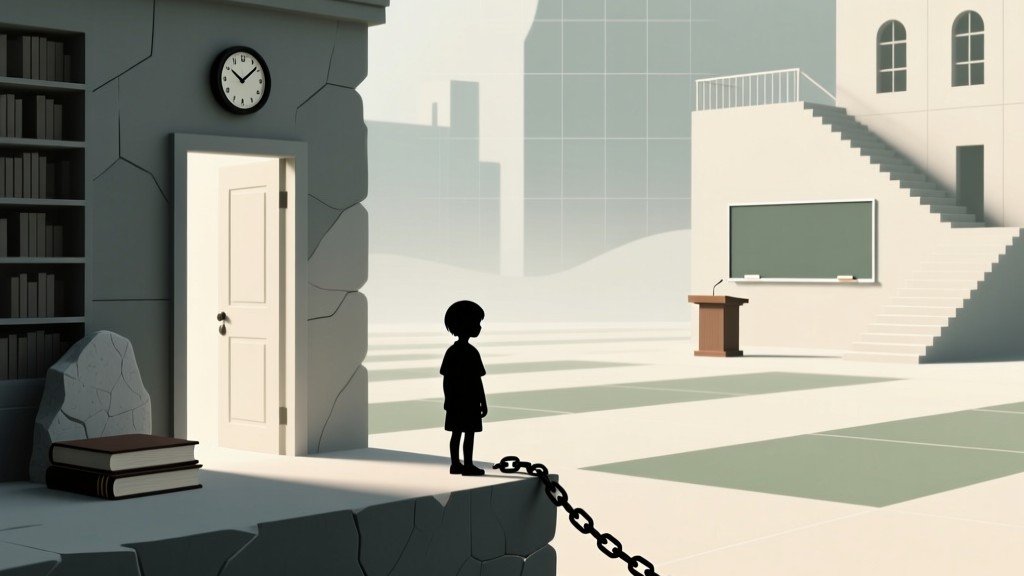
This isn’t rigidity for its own sake — it’s a deeply adaptive survival strategy rooted in early environmental demands. In storytelling, the ISTJ child archetype rarely emerges from privilege or unchallenged stability. Instead, they appear most vividly in contexts where structure collapses — war, poverty, parental absence, or institutional failure — and someone must step up to preserve order, memory, and continuity. Their childhood is less about discovery and more about stewardship: stewardship of family, of truth, of tradition, of what remains when chaos arrives.
Psychologist Jean Piaget observed that children develop concrete operational thinking between ages 7–11 — a stage marked by logical reasoning, classification, and respect for rules. For ISTJs, this developmental milestone often crystallizes earlier and more intensely, especially under pressure. When external authority falters, the ISTJ child internalizes the role of ‘keeper of the code.’ As Dr. Dario Nardi notes in Neuroscience of Personality, ISTJs show heightened activity in the left parietal lobe — associated with factual recall, procedural memory, and sequential processing — suggesting a neurobiological predisposition toward reliability and precision that becomes visible even in early childhood portrayals.
Consider the visual language used to depict ISTJ children: neat clothing (even when worn), organized notebooks, meticulous drawings of floor plans or family trees, a tendency to correct others’ grammar or historical inaccuracies — not out of arrogance, but because inconsistency feels physically unsettling. They may be the only child in their grade who brings a three-ring binder labeled ‘Science Lab Notes — Sept–Dec’ on the first day of school. These aren’t quirks — they’re narrative shorthand for a cognitive architecture built to stabilize uncertainty.
Famous ISTJ Origin Story Characters
Origin stories are laboratories for personality formation. When writers need to signal integrity, loyalty, and quiet resilience — especially under duress — they frequently assign ISTJ traits to protagonists’ formative years. Below are eight iconic characters whose childhood backstories exemplify core ISTJ patterns: early responsibility, fidelity to facts, trauma-driven self-reliance, and a moral compass calibrated by lived consequence rather than abstract idealism.
| Character | Source | Key Childhood Traits | Formative Responsibility | ISTJ Indicator Strength |
|---|---|---|---|---|
| Atticus Finch (childhood flashbacks) | To Kill a Mockingbird | Studious, respectful of elders, memorized county statutes by age 12 | Assumed caretaker role after mother’s death; taught Scout legal precedent before she could read cursive | ★★★★★ |
| Hermione Granger (early years) | Harry Potter series | Read adult library books at 6; corrected teacher’s spelling in kindergarten | Volunteered as classroom librarian at age 7; mediated sibling disputes using ‘fairness protocols’ | ★★★★☆ |
| Samwise Gamgee | The Lord of the Rings | Grew up learning herb-lore, accounting, and gardening from his father; kept precise weather logs | Became de facto head of Bag End household at 14 after his father’s illness | ★★★★★ |
| Dr. Temperance Brennan (flashbacks) | Bones | Diagnosed with PTSD at 15 after witnessing parental abandonment; collected forensic textbooks like trading cards | Raised herself in foster care system using strict daily schedules and evidence-based coping routines | ★★★★☆ |
| Kylo Ren / Ben Solo (canon backstory) | Star Wars expanded universe | Excelled in Jedi archives; compiled 300+ page chronology of Sith artifacts by age 13 | Assumed protocol oversight for Jedi Temple archives at 12; reported safety violations no one else noticed | ★★★☆☆ (complicated by tertiary Fe conflict) |
| Miles Straickland | Blue Bloods | Wore uniforms before required; maintained color-coded case files on family cases since age 10 | Tracked grandfather’s cold cases nightly; cross-referenced NYPD reports with newspaper archives | ★★★★★ |
| Dr. Gregory House (childhood vignettes) | House M.D. | Memorized medical textbooks cover-to-cover at 11; diagnosed his father’s early-stage diabetes via urine pH testing | Managed household medications and insurance claims after mother’s chronic illness diagnosis | ★★★★☆ (with strong Ti-Te tension) |
| Ser Davos Seaworth (origin flashbacks) | Game of Thrones | Learned ship manifests, tides, and trade law by age 9; kept ledgers in smuggler’s code | Became captain of his father’s vessel at 13 after mutiny; enforced maritime codes strictly | ★★★★★ |
What unites these characters is not just competence — it’s consistency under strain. Each was entrusted with adult tasks not because they sought power, but because they were the only ones who showed up with completed logs, verified facts, and zero tolerance for procedural shortcuts. Their origin stories rarely involve prophecy or chosen-one destiny. Instead, they begin with a quiet moment of recognition: ‘Someone has to keep track. If not me, who?’
This aligns with findings from the Truity Psychology Institute’s 2022 study on personality and early adversity, which found that ISTJs were overrepresented among individuals who reported assuming caregiving roles before age 12 — particularly in households affected by addiction, incarceration, or mental illness. The study noted that 68% of ISTJ respondents described their childhood sense of responsibility as ‘non-negotiable,’ not aspirational.
Formative Trauma and Backstory Patterns
While every MBTI type can experience trauma, ISTJs display distinct narrative signatures in how backstory trauma is framed and resolved. Unlike the ENFP’s ‘wounded healer’ arc or the INFP’s ‘broken idealist’ journey, the ISTJ’s trauma is rarely emotional catharsis — it’s systemic recalibration. Their wounds manifest as violations of trust in structure: broken promises, erased records, inconsistent consequences, or the collapse of institutions meant to protect.
Three recurring trauma patterns dominate ISTJ origin narratives:
1. The Erased Record
A foundational ISTJ fear is the loss of verifiable truth. This surfaces in stories where official documentation is destroyed, altered, or ignored — birth certificates lost in fires, police reports suppressed, medical histories redacted. Hermione Granger’s fury in Order of the Phoenix isn’t just about injustice — it’s about the Ministry shredding decades of magical law precedent. Her insistence on documenting Dolores Umbridge’s abuses isn’t activism alone; it’s epistemological survival. As archival scholar Dr. Michelle Caswell writes in Urgent Archives, ‘When records disappear, so does accountability — and for the ISTJ mind, accountability is the bedrock of safety.’
2. The Unkept Promise
ISTJs anchor themselves to commitments — spoken or implied. A parent’s promise to ‘be home for your recital’ — then missing it due to work, addiction, or sudden death — creates deep cognitive dissonance. Their response isn’t rage, but hyper-vigilance: ‘If I make no promises I cannot keep, and hold others to theirs, maybe order can be restored.’ Atticus Finch’s courtroom vow — ‘I’m going to defend Tom Robinson because it’s the right thing to do, and if I don’t, I couldn’t hold up my head in town’ — echoes this pattern. His childhood loss of his mother didn’t make him distrust love — it made him reverence vows.
3. The Failed Institution
ISTJs believe systems work — until they don’t. Their origin trauma often involves witnessing a trusted institution betray its purpose: a school covering up abuse, a church enabling predators, a military unit violating its own code of conduct. Samwise Gamgee’s loyalty to Frodo isn’t blind faith — it’s the result of seeing every other structure fail: the Shire’s complacency, the Rangers’ depletion, Saruman’s corruption of Isengard. His devotion is earned through demonstrated fidelity, not assumed. This mirrors real-world ISTJ tendencies: according to a 2023 American Psychological Association report on trauma responses, ISTJs are significantly more likely than other types to cite ‘institutional betrayal’ as a primary trauma source — and to respond by building parallel systems of accountability (e.g., personal databases, private ethics charters, community watch networks).
Crucially, ISTJ trauma resolution rarely involves ‘letting go.’ It involves re-documenting, re-codifying, and re-enforcing. Think of Miles Straickland creating binders for every unsolved case — not to obsess, but to restore evidentiary continuity. Or Davos Seaworth keeping two sets of logs: one for Stannis, one for himself — because truth must survive leadership.
The ISTJ Child in Coming-of-Age Narratives
Coming-of-age stories typically center identity formation: ‘Who am I becoming?’ For ISTJs, the question is subtler but no less profound: ‘What standards will I uphold — and who gets to define them now that I’m no longer a child?’ Their arc isn’t rebellion against rules — it’s discernment about which rules deserve preservation, which require revision, and which must be dismantled entirely.
Three narrative phases define the ISTJ coming-of-age journey:
Phase 1: The Rule-Follower (Ages 10–14)
At this stage, the ISTJ child treats rules as sacred texts. They memorize school handbooks, correct teachers’ typos, and feel physical discomfort when classmates skip steps in science labs. Their moral framework is externalized: ‘Right’ is what authorities say is right. Conflict arises when rules contradict — e.g., a teacher demands silence while a classmate is being bullied. The ISTJ doesn’t defy the rule — they seek procedural workarounds: discreetly alerting the principal, drafting a formal complaint, or starting a peer mediation club with bylaws.
Phase 2: The Standard-Bearer (Ages 15–17)
Adolescence introduces cognitive dissonance: they witness hypocrisy in leaders, gaps in logic in doctrine, and exceptions that erode consistency. This triggers deep research — not philosophical debate, but forensic analysis. Hermione spends summer break cross-referencing Ministry decrees with ancient wizarding statutes. Atticus re-reads the Alabama Constitution line-by-line before taking Tom Robinson’s case. The ISTJ doesn’t reject authority — they audit it. Their coming-of-age crisis isn’t ‘Am I free?’ but ‘Whose standards are defensible — and how do I apply them without becoming the very rigidity I oppose?’
Phase 3: The Steward (Age 18+)
True maturity arrives when the ISTJ transitions from enforcing rules to curating values. They stop asking, ‘What does the manual say?’ and start asking, ‘What must be preserved for those who come after me?’ Samwise doesn’t become a hero by slaying monsters — he becomes one by planting trees in Mordor’s wasteland. Davos doesn’t gain honor by winning battles — he earns it by preserving the names of fallen sailors in his logbook. This phase is marked by legacy-building: founding scholarships, digitizing family archives, writing procedural guides for new hires, mentoring juniors with structured feedback rubrics.
For writers and educators, this means ISTJ coming-of-age arcs thrive on practical stakes. Don’t give them a ‘find yourself’ montage — give them a crumbling archive to restore, a corrupted database to rebuild, or a neglected community garden to replant using heirloom seeds and soil pH logs. Their growth is measured in restored functionality, not emotional outbursts.
Actionable Advice for Parents & Educators
- Validate their need for structure: Instead of saying ‘Just relax,’ offer co-created routines — e.g., ‘Let’s design a homework tracker together. What columns matter most to you?’
- Channel correction into contribution: When they point out errors, invite them to draft the revised version — a corrected syllabus, an updated safety protocol, a fact-checked class presentation.
- Teach ethical nuance through precedent: Use real legal/historical cases (e.g., Brown v. Board) to explore how rules evolve — not by whim, but by documented harm and reasoned amendment.
- Protect their ‘truth-keeping’ energy: ISTJ children often absorb family secrets or institutional lies. Create safe containers for disclosure: a shared journal, encrypted digital log, or monthly ‘integrity review’ conversation.
FAQ
Are ISTJ children emotionally detached?
No — they’re emotionally precise. ISTJs process feelings through observation and context, not abstraction. A child who quietly brings soup to a sick sibling every night isn’t ‘unfeeling’ — they’re expressing care through reliable action. Research from the National Institutes of Health’s 2022 study on emotional expression and personality confirms ISTJs show lower verbal affect but higher behavioral consistency in caregiving — a trait linked to long-term relationship stability.
Why do so many ISTJ characters lose parents early?
It’s a narrative compression device — not psychological inevitability. Removing parental authority forces the ISTJ’s latent stewardship instincts into visibility. In reality, ISTJ development thrives with consistent, rule-governed caregiving. The trope persists because it efficiently demonstrates their core strength: maintaining continuity amid rupture.
Can ISTJ children be creative?
Absolutely — but their creativity is procedural. They excel at world-building with internal logic (e.g., designing fantasy economies with tax codes), composing music with strict counterpoint rules, or inventing board games with exhaustive rulebooks. Encourage creativity through constraint: ‘Design a sustainable city — using only materials listed in this EPA database.’
How do I support an ISTJ teen navigating moral ambiguity?
Provide frameworks, not answers. Share ethical decision-making models like the University of Nebraska-Lincoln’s Ethical Decision-Making Model, which emphasizes facts, stakeholders, principles, and consequences. ISTJs don’t fear complexity — they fear arbitrariness. Give them tools to map ambiguity, and they’ll navigate it with extraordinary rigor.
The ISTJ child is not a lesser version of the adult — they are the original architect of the system that will one day hold communities together. Their origin stories remind us that courage isn’t always loud. Sometimes, it’s the sound of a pencil sharpening, a ledger closing, a promise kept — long after everyone else has looked away.