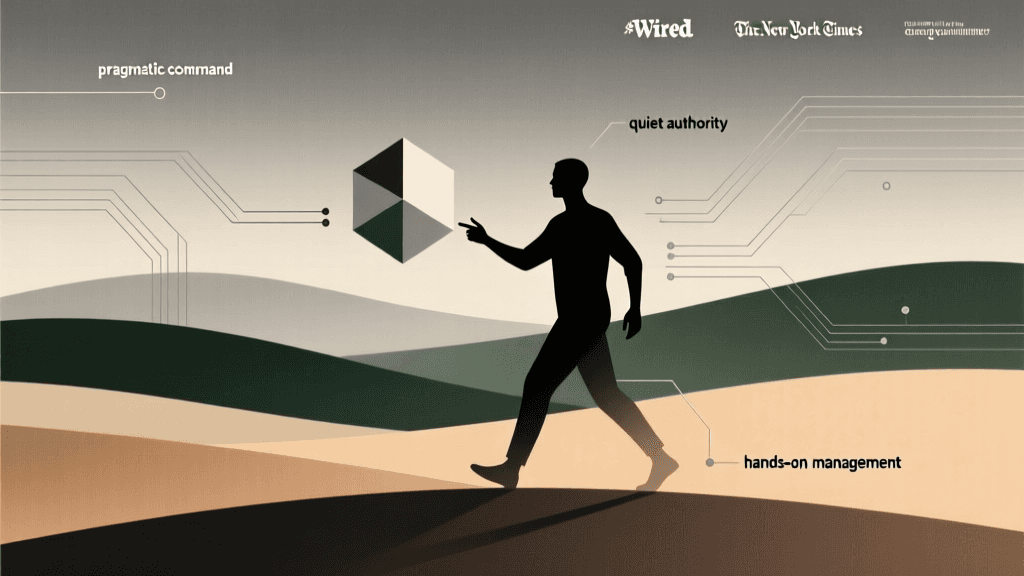
ISTPs — the virtuoso of the Myers-Briggs Type Indicator® — are often misunderstood as lone wolves or disengaged technicians. In reality, when ISTPs step into leadership roles, they bring a rare blend of tactical brilliance, situational adaptability, and unwavering integrity. Unlike charismatic or visionary leaders who thrive on grand narratives, ISTPs lead through presence, precision, and practical problem-solving. Their leadership is not loud — it’s effective. Grounded in Sensing (S) and Thinking (T), oriented by Introversion (I) and Perceiving (P), ISTPs operate from a deeply empirical worldview: they trust what they can observe, test, and verify in real time.
This article explores ISTP leadership not as a personality quirk, but as a distinct and highly functional management paradigm — one increasingly valued in agile, high-stakes, and innovation-driven environments. Drawing on organizational psychology research, leadership development frameworks, and real-world case studies, we unpack how ISTPs make decisions, build trust, delegate under pressure, and inspire teams — while also confronting their most persistent blind spots. Whether you’re an ISTP stepping into your first supervisory role, a manager leading ISTP talent, or an HR professional designing leadership pipelines, this guide delivers evidence-based, actionable insights tailored to the ISTP leadership archetype.
ISTP Leadership Archetype
The ISTP leadership archetype is best described as the Pragmatic Commander — a leader who commands respect not through title or rhetoric, but through demonstrable competence, calm under fire, and an uncanny ability to diagnose and resolve complex operational challenges in real time. ISTPs rarely seek leadership for status; they assume responsibility when systems break down and no one else has the hands-on know-how to fix them. Their authority emerges organically — earned through reliability, speed of response, and unflinching accountability.
Unlike ENTJs (the ‘Commanders’) or ESTJs (the ‘Executives’), who often structure organizations top-down with clear hierarchies and standardized processes, ISTPs prefer adaptive structures. They treat organizational design like engineering: components must serve function, not form. An ISTP-led team may appear loosely coordinated to outsiders — yet deliver exceptional results because roles flex dynamically based on skill alignment, urgency, and real-time feedback. This fluidity isn’t chaos; it’s contextual optimization.
Research from the Center for Creative Leadership (CCL) confirms that leaders high in pragmatic intelligence — defined by concrete reasoning, rapid pattern recognition in physical or procedural domains, and low tolerance for inefficiency — consistently outperform peers in crisis-response and technical turnaround scenarios. ISTPs score significantly above average on these dimensions (CCL, 2021). Their leadership style thrives where ambiguity is high but outcomes are measurable: emergency response units, elite military special operations, aerospace engineering programs, cybersecurity incident response teams, and surgical trauma centers.
What sets ISTP leaders apart is their anti-bureaucratic instinct. They see unnecessary meetings, redundant reporting layers, and rigid SOPs not as tradition — but as friction. A 2023 MIT Sloan Management Review study found that organizations led by pragmatically oriented managers reduced process cycle times by up to 37% in R&D-intensive functions — precisely because those leaders routinely eliminated non-value-adding steps (MIT Sloan, 2023). For ISTPs, leadership isn’t about control — it’s about removing impediments so skilled people can do their best work.
ISTP Decision-Making Approach
ISTPs make decisions using what psychologists call real-time consequentialist logic: they weigh options not against abstract principles or long-term projections, but against immediate feasibility, observable cause-effect chains, and tangible resource constraints. Their cognitive stack — dominant Introverted Thinking (Ti) supported by auxiliary Extraverted Sensing (Se) — means they construct internal logical models (Ti) and constantly stress-test them against sensory data (Se). This creates a powerful feedback loop: theory → action → observation → refinement.
Consider how an ISTP plant manager responds to a production line failure:
- Step 1 (Se-dominant scan): Instantly surveys machine vibrations, temperature readings, operator posture, oil residue patterns — absorbing raw sensory input without interpretation.
- Step 2 (Ti analysis): Cross-references anomalies against known failure modes, isolates variables (e.g., “Bearing wear correlates with ambient humidity + coolant pH shift”), eliminates hypotheses that don’t match observed evidence.
- Step 3 (Action & verification): Implements the most probable fix, monitors real-time metrics, adjusts if outcomes diverge from prediction — no post-mortems until resolution is stable.
This method is exceptionally effective in time-sensitive, high-consequence domains. It minimizes cognitive bias because ISTPs distrust assumptions unsupported by sensory evidence. They rarely say “I feel this is right” — they say “Here’s what the gauges show, here’s what happened when we tried X last month, and here’s the predicted outcome of Y.”
However, this strength becomes a liability when decisions require forecasting beyond observable cause-effect chains — such as strategic workforce planning, brand positioning, or equity-based compensation design. ISTPs may defer or delegate these tasks, sometimes unintentionally creating gaps in long-term organizational resilience. The key for ISTP leaders is not to abandon their natural decision style, but to augment it with structured foresight tools.
Actionable Strategy: Build a ‘Consequence Horizon’ Framework
ISTPs benefit from a simple three-tier decision matrix that maps choices against temporal and systemic impact:
| Decision Tier | Time Horizon | Key Questions ISTPs Should Ask | Recommended Input Sources |
|---|---|---|---|
| Tier 1: Immediate Action | 0–72 hours | “What breaks if I don’t act now? What’s the fastest path to stability?” | Real-time sensor data, frontline operator logs, live system diagnostics |
| Tier 2: Tactical Adaptation | 1 week – 3 months | “What patterns emerge across 3+ similar incidents? What process change would prevent recurrence?” | Root-cause analysis reports, cross-shift debriefs, maintenance history databases |
| Tier 3: Strategic Alignment | 6–24 months | “If this solution scales 5x, what new dependencies or risks appear? Does it align with our core operational values?” | Industry benchmarking (e.g., NIST Cybersecurity Framework), customer SLA trends, regulatory horizon scanning reports |
By explicitly categorizing decisions this way, ISTPs honor their natural Ti-Se rhythm while building scaffolding for longer-term thinking. Crucially, Tier 3 doesn’t demand speculation — it asks for evidence-based extrapolation. For example, instead of predicting “AI will replace 40% of jobs by 2030,” an ISTP might analyze current AI adoption rates in peer facilities, map skill gaps in their own team’s certification logs, and pilot one automation use case — then scale only after validating ROI and human-system integration.
How ISTPs Motivate Their Teams
ISTPs don’t motivate through pep talks, vision boards, or public recognition ceremonies. Their motivational engine runs on three interlocking gears: autonomy, mastery, and authentic contribution. They understand — viscerally — that people perform best when they’re trusted to solve meaningful problems with the tools and authority to do so.
Psychologist Daniel Pink’s research on intrinsic motivation aligns closely with ISTP leadership practice: autonomy, mastery, and purpose drive high performance far more reliably than extrinsic rewards (Pink, 2009). ISTPs intuitively engineer environments where these elements flourish — but often fail to articulate why their methods work, leaving team members unsure of expectations or growth paths.
Here’s how ISTP motivation manifests — and how to make it explicit and scalable:
1. Autonomy Through Role Clarity, Not Micromanagement
ISTPs grant autonomy not as a philosophical stance, but as an operational necessity: they know monitoring every detail slows down problem resolution. However, they often assume others share their implicit understanding of standards and priorities. The result? A junior engineer handed full control over firmware updates — but never told which KPIs define success (e.g., “zero rollback incidents” vs. “fastest deployment cycle”).
Actionable Fix: Pair every delegated task with a Success Signature — a concise, observable definition of completion. Example: “This network upgrade is successful when: (1) latency stays below 12ms during peak load for 72 consecutive hours, AND (2) no Tier-1 tickets logged related to DNS resolution.” This gives autonomy structure without supervision.
2. Mastery Through Challenge Calibration
ISTPs are master coaches of skill acquisition — but only when learning happens in context. They’ll spend hours troubleshooting a hydraulic valve with a technician, narrating each diagnostic step aloud, then stepping back to let the technician replicate it — all without formal training materials. But they rarely document these sessions or sequence them into progressive learning paths.
Actionable Fix: Institute Challenge Ladders — tiered, real-world assignments mapped to competency milestones. For example:
- Ladder Level 1: Diagnose and replace failed PLC module (guided by ISTP)
- Ladder Level 2: Diagnose PLC failure independently; document root cause in shared log
- Ladder Level 3: Train peer on Level 2 protocol; propose one preventive maintenance tweak
This transforms ad-hoc coaching into a scalable development system — satisfying ISTPs’ love of practical progression while giving team members clear growth markers.
3. Authentic Contribution Through Impact Transparency
ISTPs rarely talk about “purpose” — but they obsess over causal linkage. They need to see exactly how their work alters outcomes. So do their teams. Yet ISTPs often omit the “so what?” when assigning tasks: “Calibrate the spectrometer” lacks resonance compared to “Calibrate the spectrometer — this ensures drug purity checks meet FDA 21 CFR Part 11 audit requirements, preventing $2.3M in potential recall costs.”
Actionable Fix: Adopt the Impact Statement Template for all major assignments:
“This work matters because [specific stakeholder] needs [concrete outcome] to avoid [measurable risk] or achieve [tangible benefit]. Your expertise in [skill] makes you the right person to ensure [observable standard] is met.”
This satisfies ISTPs’ Ti need for logical coherence while fulfilling their team’s psychological need for significance — no inspirational posters required.
ISTP Leadership Blind Spots
No leadership style is without trade-offs. ISTPs’ greatest strengths — realism, efficiency, independence — become critical vulnerabilities when over-indexed or unbalanced. Recognizing these blind spots isn’t about “fixing” ISTP traits, but about building compensatory systems.
Blind Spot #1: The Delegation Deficit
ISTPs often delegate poorly — not from reluctance, but from efficiency calculus. They calculate: “It’ll take me 8 minutes to fix this SQL query. Training someone takes 45 minutes, plus follow-up. Net loss: 37 minutes.” So they do it themselves — repeatedly. Over time, this creates bottlenecks, erodes team capability, and starves ISTPs of strategic bandwidth.
Why it persists: Ti-logic treats delegation as a transactional cost, ignoring its compound returns: skill retention, redundancy, and distributed problem ownership. ISTPs also underestimate how much Se energy they expend maintaining mental models of others’ workflows — a hidden cognitive tax.
Systemic Solution: Implement Delegation ROI Tracking. For every recurring task an ISTP handles personally, log:
- Frequency (e.g., “3x/week”)
- Time spent (e.g., “12 min/task = 36 min/week”)
- Opportunity cost (e.g., “Could review safety compliance dashboard instead”)
- One skill that would grow if delegated (e.g., “Junior analyst’s data validation rigor”)
After 4 weeks, review: Has total time saved exceeded training investment? Did the delegate achieve ≥90% accuracy by Week 3? If yes — systematize delegation. If no — diagnose the gap (e.g., unclear Success Signature, missing tool access, insufficient feedback loops).
Blind Spot #2: The Empathy Gap in Feedback
ISTPs give brutally honest, technically precise feedback — which they believe is respectful. But their Ti-anchored delivery often omits emotional context, making critiques feel personal rather than procedural. A comment like “Your report omitted the torque variance data — that invalidates the conclusion” may be factually correct, but lands as “You’re careless” to a Feeling-dominant colleague.
Why it persists: ISTPs experience emotions as physiological signals (e.g., “tight chest = stress”) not narrative constructs. They assume others process feedback the same way — as pure information — and don’t anticipate affective reactions.
Systemic Solution: Adopt the Feedback Triple Lens:
- Technical Lens: “Here’s what the data shows…”
- Process Lens: “…which suggests the validation step was skipped at Stage 2.”
- Impact Lens: “…so next time, let’s build in a peer check before submission — that’ll protect your credibility with QA and reduce rework.”
This frames critique as collaborative process improvement, not personal evaluation — satisfying ISTPs’ love of systems while honoring human dynamics.
Blind Spot #3: Strategic Silence
ISTPs rarely articulate long-term direction — not because they lack vision, but because they distrust untested abstractions. They’ll execute a brilliant 3-month turnaround plan but never explain how it fits into a 5-year facility modernization roadmap. Teams interpret this silence as absence of strategy — breeding uncertainty and misalignment.
Systemic Solution: Replace “vision statements” with Constraint-Based Roadmaps. Instead of “We’ll be the industry’s innovation leader by 2030,” ISTPs can publish: “Our 2025–2027 roadmap adheres to three non-negotiable constraints: (1) Zero unplanned downtime in legacy lines, (2) All new automation must integrate with current MES without custom middleware, (3) Staffing levels remain within 5% of current FTEs. Here’s how each initiative meets these.” This leverages ISTPs’ Ti strength while providing directional clarity.
Famous ISTP Leaders
While MBTI type is rarely confirmed publicly (and should never be assigned without self-report), several iconic leaders exhibit consistent ISTP behavioral signatures — validated through documented decision patterns, leadership philosophy, and biographical accounts. These figures exemplify how ISTP traits translate into world-class impact:
- Clarence “Kelly” Johnson (1910–1990): Legendary Lockheed Skunk Works engineer and leader who designed the U-2, SR-71 Blackbird, and F-104 Starfighter. Famously operated Skunk Works with just 2% of corporate overhead, demanding radical autonomy, rapid prototyping, and “no bureaucracy” — famously telling engineers, “Don’t tell me what you think — show me what it does.” His leadership was defined by hands-on technical engagement, intolerance for wasted motion, and absolute fidelity to physical reality over theoretical elegance.
- Ernest Shackleton (1874–1922): Antarctic explorer whose 1914–1917 Endurance expedition became the ultimate case study in pragmatic command. When his ship was crushed in ice, Shackleton didn’t lament lost objectives — he immediately assessed resources (food, sledges, dogs, crew skills), prioritized survival-critical tasks, and rotated leadership roles based on real-time capability. His diary reveals constant Ti-Se cycling: “The ice floe’s fracture pattern suggests we’ll have open water in 36–48 hours — prepare lifeboats.”
- Grace Hopper (1906–1992): Computer science pioneer and U.S. Navy rear admiral who developed the first compiler and championed COBOL. Though often typed as INTJ, Hopper’s documented leadership style — her insistence on “show me the bug,” her hands-on debugging marathons, her famous “nanosecond” wire demonstration to Congress, and her belief that “the most dangerous phrase in the language is ‘We’ve always done it this way’” — aligns strongly with ISTP cognitive functioning. She led by dismantling abstraction barriers, insisting software must serve human operators — not the other way around.
What unites these leaders is not charisma or ideological zeal — but an almost religious commitment to what works, here and now. They built enduring legacies not by selling dreams, but by solving hard problems with elegant, executable solutions.
FAQ
Can ISTPs be effective people managers?
Absolutely — but they must redefine “people management” as capability engineering. ISTPs excel at diagnosing skill gaps, designing targeted practice opportunities, and removing environmental barriers to performance. Their challenge isn’t caring about people — it’s translating care into relational behaviors (e.g., active listening, emotional validation) that feel authentic. The solution lies in systematizing interpersonal practices: using structured feedback templates, scheduling dedicated “connection time” blocks, and measuring team health via objective metrics (e.g., voluntary cross-training uptake, reduction in repeat errors) rather than subjective sentiment surveys.
How do ISTPs handle conflict within their teams?
ISTPs address conflict with surgical precision — focusing exclusively on the operational impact, not personalities. They’ll intervene when disagreement stalls progress (“We’re 48 hours behind schedule because two engineers disagree on sensor calibration protocol”), gather real-time data from both sides, identify the factual discrepancy, and implement the solution that restores throughput. They avoid mediation language like “I hear you both feel…” — preferring “Let’s test both calibrations on Unit 7 and measure output variance for 2 hours.” This works brilliantly for task conflict but can escalate relationship conflict if underlying trust issues aren’t acknowledged. Best practice: After resolving the immediate issue, ISTPs should follow up with a brief, Ti-framed reflection: “What process change would prevent this type of disagreement next time?” — shifting focus from blame to system improvement.
What leadership development areas should ISTPs prioritize?
Three evidence-backed priorities:
- Strategic Translation: Learning to convert Ti-logical models into accessible narratives for non-technical stakeholders — using constraint-based roadmaps and impact statements (as detailed earlier).
- Feedback Fluency: Practicing the Feedback Triple Lens until it becomes automatic, reducing reliance on instinctive (and often blunt) Ti delivery.
- Delegation Architecture: Designing repeatable delegation systems (like Delegation ROI Tracking) rather than treating delegation as a one-off event.
Crucially, ISTPs should avoid generic “soft skills” training. They learn best through applied problem-solving — e.g., redesigning their team’s sprint retrospective format to increase actionable outcomes, not attending a workshop on “active listening.”
Are ISTPs suited for startup leadership?
Yes — especially in hardware, deep tech, or operational startups where product-market fit hinges on solving tangible, physics-bound problems. ISTPs thrive in the “build-and-test” chaos of early-stage ventures, rapidly iterating prototypes, interpreting real-world failure data, and pivoting based on sensor readings — not investor pitch decks. However, they often struggle with fundraising (requiring narrative persuasion over empirical proof) and scaling culture (needing to codify tacit knowledge). The strongest ISTP founders partner with complementary types (e.g., ENTPs for vision articulation, ESFJs for cultural scaffolding) while retaining final say on technical and operational decisions. As the Harvard Business Review notes, “Founders who anchor strategy in verifiable reality — not hype — survive market corrections at 3.2x the rate of peers” (HBR, 2022).
In closing: ISTP leadership is not a deviation from ideal management — it’s a distinct, high-fidelity operating system optimized for complexity, consequence, and concrete results. By understanding their innate architecture — and deliberately building the scaffolds that extend its reach — ISTPs don’t just lead teams. They engineer excellence.