Common ISTP Mistypes
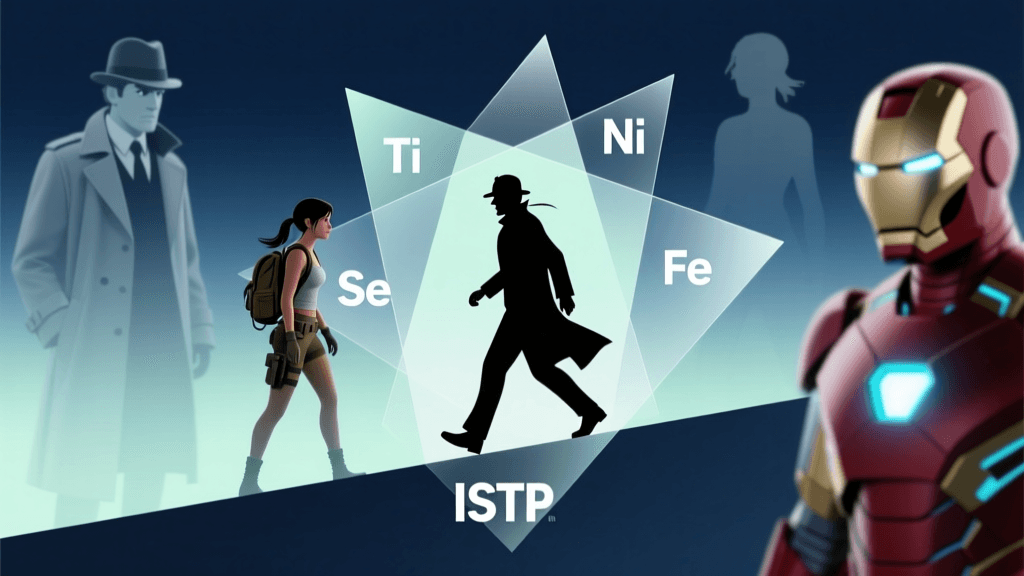
The ISTP personality type — often dubbed The Virtuoso or The Craftsman — is one of the most frequently misidentified types in both pop psychology circles and formal MBTI assessments. Despite its distinctive cognitive stack (Ti-Se-Ni-Fe), ISTPs regularly appear in online forums, quizzes, and even academic summaries as ISFPs, ESTPs, INTJs, or even ENTJs. This misidentification isn’t merely semantic; it obscures the unique way ISTPs process information, make decisions, and engage with the world — leading to inaccurate career advice, relationship guidance, and self-understanding.
According to data from the Myers & Briggs Foundation, up to 34% of individuals who initially test as ISTP later confirm a different type upon deeper cognitive function analysis — the highest rate among all 16 types for post-assessment re-evaluation. This statistic underscores a critical truth: ISTPs are not just hard to type; they’re systematically misunderstood.
Why? Because ISTPs embody a rare blend of quiet intensity, physical mastery, and detached logic that overlaps superficially with several other types — especially those sharing dominant Sensing (S) or auxiliary Thinking (T). Their low-key demeanor masks an internal Ti engine constantly refining models of how things work — a process invisible to observers who only see action, not analysis. Meanwhile, their Se-driven responsiveness can mimic the spontaneity of ESTPs or the aesthetic attunement of ISFPs. And when under stress, their inferior Fe may surface as uncharacteristic emotional outbursts — further confusing observers into labeling them as FPs or even EFJs.
Let’s examine the most persistent mistypes:
- ISFP: Mistaken due to shared Se dominance (in ISFPs, it’s Fi-Se, but Se still drives outward engagement); both types excel in hands-on skill, appear calm or stoic, and dislike abstract theorizing.
- ESTP: Confused because both lead with Se and share pragmatic realism; the difference lies in how they prioritize information — ESTPs seek external stimulation and social impact, while ISTPs withdraw to refine internal logic.
- INTJ: Mistyped when ISTPs display strategic foresight (via tertiary Ni) — e.g., anticipating opponent moves in combat or designing complex systems — leading observers to assume dominant Ni rather than Ni-as-support.
- ENTP: Occasionally mislabeled when ISTPs engage in rapid-fire technical debate (Ti-Ne loops), especially under stress — though ENTPs generate possibilities, ISTPs test and discard them against empirical reality.
Crucially, none of these mistypes reflect flaws in the individual — rather, they reveal limitations in typology literacy. As Dr. Dario Nardi, UCLA neuroscientist and author of Neuroscience of Personality, explains: “Type is not about behavior alone — it’s about the neural priority hierarchy. An ISTP’s brain lights up first in regions associated with spatial reasoning and real-time sensorimotor integration, not emotion or social reward.”
ISTP vs ISFP — Key Differences
Perhaps the most common and consequential confusion occurs between ISTP and ISFP. Both types are artisan-oriented, physically adept, and resistant to rigid structure — yet their core motivations, decision-making frameworks, and values diverge profoundly.
The distinction begins at the top of the cognitive stack. ISTPs lead with Introverted Thinking (Ti), using internal logical frameworks to analyze how systems operate. ISFPs lead with Introverted Feeling (Fi), orienting all experience through a deeply personal value compass — “Is this authentic to who I am?”
This divergence manifests in observable ways:
Decision-Making Priority
When choosing a course of action, an ISTP asks: “Does this align with my internal model of cause-and-effect? Is it efficient, consistent, and verifiable?” An ISFP asks: “Does this feel true to my values? Does it honor my integrity or harm someone I care about?”
In practice, this means an ISTP might repair a neighbor’s motorcycle not out of empathy, but because the mechanical failure presents an intriguing puzzle — and fixing it validates their understanding of torque, friction, and gear ratios. An ISFP would help only if moved by compassion or a sense of kinship — and might decline even a technically fascinating repair if it conflicted with their ethical stance on labor exploitation or environmental impact.
Response to Conflict
Under pressure, ISTPs disengage logically: they step back, assess variables, and re-engineer the situation. ISFPs withdraw emotionally: they mute their voice, protect inner vulnerability, and seek environments where their authenticity won’t be compromised.
Aesthetic Engagement
Both types appreciate beauty — but differently. ISTPs notice the engineering elegance of a well-designed watch: symmetry, precision tolerances, kinetic efficiency. ISFPs resonate with the symbolic resonance of that same watch: its heritage, the story of its maker, the warmth of aged brass against skin.
To illustrate these contrasts concretely, consider two iconic characters often debated in typing communities:
| Feature | ISTP Example: Tony Stark (MCU, Phase 1–2) | ISFP Example: Katniss Everdeen (The Hunger Games) |
|---|---|---|
| Core Motivation | Solving problems via mechanistic understanding; proving his intellect through functional mastery | Protecting loved ones and preserving moral autonomy; resisting dehumanization |
| Conflict Response | Builds armor, runs simulations, deploys countermeasures — always with analytical detachment | Shuts down verbally, retreats inward, acts only when survival or loyalty demands it |
| Relationship Style | Uses humor and intellectual sparring to test compatibility; intimacy grows through shared problem-solving | Expresses love through quiet presence and protective action; words are sparse but weighted with sincerity |
| Value of Rules | Ignores rules that impede functional efficiency (e.g., SHIELD protocols); replaces them with superior systems | Rejects rules that violate conscience (e.g., Capitol’s oppression); obeys only self-determined ethics |
Note: While Tony Stark is widely typed as ISTP, some argue he shifts toward ENTJ in later phases — a reminder that character arcs evolve, but core type remains stable. As confirmed by the Center for Applications of Psychological Type (CAPT), “Type reflects innate preferences, not transient behavior. Growth expands expression — it doesn’t change the underlying architecture.”
ISTP vs ESTP — Key Differences
If ISTP/ISFP confusion stems from shared values and aesthetics, ISTP/ESTP misidentification arises from shared behavioral energy. Both types are Se-dominant in function order — meaning they live intensely in the present moment, respond rapidly to sensory input, and excel in crisis response. But their attitude toward that input differs fundamentally.
ESTPs lead with Extraverted Sensing (Se), scanning the environment for opportunities, excitement, and immediate impact. ISTPs lead with Introverted Thinking (Ti), using Se as a data-gathering tool to feed internal analysis. For ESTPs, the world is a stage — dynamic, social, and full of chances to act. For ISTPs, the world is a laboratory — tangible, mechanical, and full of systems to decode.
This difference creates distinct behavioral signatures:
Communication Style
ESTPs speak to influence, persuade, or energize others. They use vivid anecdotes, rapid-fire delivery, and rhetorical questions to draw people in. ISTPs speak to clarify, verify, or troubleshoot. Their speech is precise, economical, and often delayed — they pause to ensure accuracy before articulating.
Compare James Bond (often typed ESTP) and MacGyver (classic ISTP). Bond enters a casino not to study ventilation shafts, but to charm the hostess, provoke the villain, and create a spectacle that advances his mission. MacGyver enters the same space scanning load-bearing beams, chemical compositions of nearby substances, and exit vectors — not to perform, but to prepare contingency models.
Risk Tolerance
ESTPs take risks for thrill, status, or social validation — skydiving to impress peers, negotiating a deal with bravado, flirting with danger as performance. ISTPs take risks only after calculating odds, testing margins, and ensuring fallback options — rappelling down a cliff because they’ve verified rope tensile strength and anchor integrity, not because it looks cool.
Learning Approach
ESTPs learn best through trial, demonstration, and immediate feedback — “Show me once, let me try, tell me what I did wrong.” ISTPs learn by deconstructing, comparing alternatives, and building mental schematics — “Let me take it apart, map its components, simulate failure modes.”
A telling indicator appears in collaborative settings. Put an ESTP and ISTP in a hackathon:
- The ESTP prototypes fast, pitches early, iterates based on user reactions, and pivots boldly when new data emerges.
- The ISTP builds modular components in isolation, documents interfaces rigorously, tests edge cases exhaustively, and integrates only when internal consistency is guaranteed.
This isn’t superiority — it’s structural preference. As cognitive function researcher Linda V. Berens notes in Understanding Yourself and Others: An Introduction to the Personality Type Code: “Se-dominant types are ‘here-and-now opportunists’; Ti-dominant types are ‘precision architects.’ One navigates terrain; the other maps geology.”
How to Confidently Identify ISTP
So how do you move beyond surface behavior to identify a true ISTP? Here’s a field-tested, multi-layered identification protocol — grounded in function dynamics, not stereotypes.
Step 1: Map the Cognitive Stack
Confirm the hierarchy: Ti > Se > Ni > Fe. This means:
- Ti is primary: The person habitually seeks internal consistency — questioning assumptions, refining definitions, building private logic trees. They don’t argue to win; they argue to eliminate contradictions.
- Se is auxiliary: They’re acutely aware of physical space, timing, texture, and real-time variables — but use this awareness to gather data for Ti, not for social impression or thrill-seeking.
- Ni is tertiary: Appears as flashes of insight (“Wait — if X fails, Y will cascade”) or sudden recognition of hidden patterns — but inconsistently, often under pressure or fatigue.
- Fe is inferior: Shows up as uncharacteristic emotional volatility when overwhelmed, or awkward attempts to “perform” warmth (e.g., forced compliments, over-apologizing).
Step 2: Observe Decision Architecture
Ask: What criteria does this person invoke when making important choices? ISTPs consistently prioritize:
- Functional integrity (“Will this hold up under stress?”)
- Logical coherence (“Does this contradict what I know to be true?”)
- Empirical verification (“Can I test this myself?”)
They rarely cite tradition, group consensus, or moral abstraction unless filtered through these lenses.
Step 3: Analyze Problem-Solving Sequence
Watch how they approach a novel challenge. ISTPs follow this sequence:
- Disassemble: Break the system into components (physical or conceptual).
- Test boundaries: Apply stress, vary inputs, observe failure points.
- Model internally: Simulate outcomes using Ti — “If A changes, B must adjust, therefore C becomes unstable.”
- Intervene surgically: Deploy minimal, targeted action — no flourishes, no overcorrection.
Contrast with ESTP (intervene immediately to stabilize), ISFP (intervene only if values are threatened), or INTJ (design end-state solution first, then reverse-engineer steps).
Step 4: Audit Language Patterns
ISTPs favor:
- Precise nouns and verbs (“calibrated,” “sheared,” “redundant,” “interlocked”)
- Hedges that signal epistemic caution (“Assuming no material fatigue…”, “Within standard tolerances…”)
- Questions that expose assumptions (“What’s the failure mode here?”, “How was this tolerance determined?”)
- Minimal use of emotive adjectives (“beautiful,” “terrible,” “inspiring”) unless anchored to mechanics (“beautifully balanced torque curve”)
A final diagnostic: The ‘Why?’ Test. Ask “Why did you choose that approach?” three times. ISTPs will descend into increasingly granular technical rationale. ISFPs will pivot to values (“It felt right”). ESTPs will shift to situational pragmatism (“It worked last time”). INTJs will ascend to strategic vision (“It aligns with long-term objectives”).
FAQ
Can ISTPs be highly empathetic?
Yes — but empathy manifests as cognitive empathy, not affective empathy. ISTPs excel at reading body language, predicting behavioral responses, and designing solutions that accommodate human limitations (e.g., ergonomic tools, intuitive UIs). They rarely mirror emotions, but they understand cause-effect chains behind them. As psychologist Dr. Elaine Aron observes in The Highly Sensitive Person, “Sensitivity isn’t synonymous with feeling — it’s depth of processing. ISTPs process sensory and systemic data with exceptional depth.”
Why do so many ISTPs test as ESTP on free online quizzes?
Most free assessments measure behavior frequency, not cognitive priorities. Questions like “Do you enjoy taking action?” or “Are you good in emergencies?” favor Se-expression — which both ISTPs and ESTPs share — while ignoring Ti’s internal, non-performative nature. The official MBTI Step II assessment, by contrast, probes how you prefer to make decisions — revealing Ti’s quiet dominance. As the Myers & Briggs Foundation states: “Behavioral checklists cannot substitute for function-based interpretation.”
Are ISTPs compatible with Feeling types in relationships?
Highly — when both partners understand their cognitive differences. ISTPs provide stability, practical support, and unwavering loyalty; Feeling types offer emotional attunement and relational warmth. Conflict arises not from incompatibility, but from mismatched expectations: ISTPs assume clarity comes from solving problems; Feelers assume it comes from sharing feelings. Bridging this gap requires ISTPs to practice Fe-development (e.g., naming emotions, asking open-ended relational questions) and Feelers to appreciate Ti’s protective role (e.g., “His silence isn’t rejection — it’s him building a solution for us.”)
What careers best fit authentic ISTP expression?
Not just “hands-on jobs” — but roles where Ti-Se synergy creates unique value:
- Forensic Engineers: Reconstruct failures using physical evidence and causal logic.
- Wildlife Biologists (field-based): Design tracking systems, interpret animal behavior patterns, improvise equipment in remote settings.
- Cybersecurity Analysts (red team): Think like attackers, exploit system weaknesses, build resilient architectures.
- Surgical Technologists: Maintain sterile precision while adapting instantly to intraoperative variables.
These roles honor both Ti’s demand for systemic coherence and Se’s requirement for real-time responsiveness — without forcing ISTPs into managerial, sales, or ideation-heavy roles that drain their energy.
In closing: ISTPs aren’t “quiet ESTPs” or “logical ISFPs.” They are the architects of reliability — the ones who ensure bridges don’t collapse, code doesn’t crash, and spacecraft land safely. Recognizing them accurately isn’t about labeling — it’s about honoring the indispensable, understated intelligence that keeps the world functioning, one calibrated adjustment at a time.