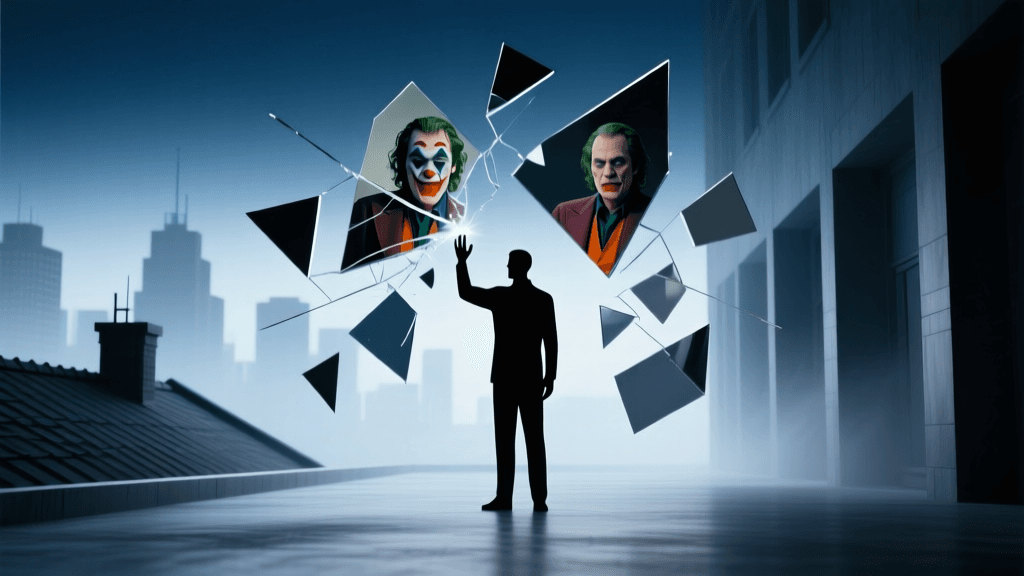
The Dark Side of ISTP
The ISTP personality type — known as The Virtuoso in the MBTI framework — is often celebrated for its calm competence, mechanical intuition, and razor-sharp situational awareness. Yet beneath that composed exterior lies a psychological profile uniquely susceptible to moral erosion when core functions become unbalanced. Unlike types whose dysfunction manifests in emotional volatility or ideological rigidity, the unhealthy ISTP’s descent is quieter, more surgical — a chilling calibration of means over ends, where ethics recede like background noise in a high-stakes tactical simulation.
According to the Myers & Briggs Foundation, ISTPs lead with Introverted Thinking (Ti) and support it with Extraverted Sensing (Se). Ti seeks internal logical consistency — building precise, self-contained mental models — while Se anchors the type in real-time physical data: movement, texture, pressure, timing. In health, this pairing produces master tacticians, improvisational engineers, and crisis responders who act with elegant efficiency. But under chronic stress, trauma, or environmental deprivation of autonomy, Ti can calcify into cold intellectual detachment, and Se can devolve into hyper-reactive impulsivity — a dangerous feedback loop where logic justifies sensation, and sensation demands ever more extreme stimuli to feel 'real'.
Clinical psychologist Dr. Dario Nardi, author of Neuroscience of Personality, observed via qEEG brain mapping that ISTPs show unusually high activation in the parietal lobe (spatial reasoning) and motor cortex during problem-solving — but also exhibit reduced activity in the ventromedial prefrontal cortex (vmPFC) under threat. This neurobiological signature correlates with diminished emotional valuation of consequences — not absence of feeling, but a de-prioritization of long-term social or moral outcomes in favor of immediate functional efficacy. As Nardi notes: “For the stressed ISTP, ‘What works’ eclipses ‘What matters.’”
This isn’t psychopathy — ISTPs retain capacity for loyalty, craftsmanship, and even tenderness within tightly bounded relational frames (e.g., a mentor-apprentice bond, a shared mission). Rather, it’s a functional amorality: an ethical operating system that defaults to zero unless manually loaded with values. When those values are absent, corrupted, or weaponized, the ISTP becomes one of fiction’s most unnervingly plausible antagonists — not because they rage or scheme, but because they optimize.
Famous ISTP Villains
ISTP villains rarely monologue about world domination or cosmic vengeance. They don’t seek power for its own sake — they seek control over systems, variables, and outcomes. Their evil is procedural, iterative, and disturbingly replicable. Below are eight canonical ISTP-aligned antagonists, analyzed through cognitive function stacking, behavioral patterns, and narrative function:
| Character | Work | Core ISTP Indicators | Unhealthy Function Expression | Narrative Role |
|---|---|---|---|---|
| The Joker (Heath Ledger, The Dark Knight) | The Dark Knight (2008) | Obsessive tinkering (pencil trick, rigged ferries), disdain for ideology (“I’m not a monster — I’m just ahead of the curve”), reactive improvisation in chaos | Ti: Reduces morality to flawed logic (“Their morals, their code… it’s a bad joke.”); Se: Seeks escalating sensory shocks to test systemic fragility | Chaos Catalyst — exposes hypocrisy by forcing binary, high-stakes choices |
| Hannibal Lecter | Red Dragon, The Silence of the Lambs | Master surgeon (precision + tactile mastery), hyper-observant (notices Clarice’s nail polish, scent, posture), contempt for incompetence | Ti: Constructs aesthetic-logical hierarchies of human worth; Se: Treats violence as sensory artistry — “A census taker once tried to test me. I ate his liver with some fava beans and a nice Chianti.” | Aesthetic Predator — judges, selects, and refines humanity like a connoisseur curating specimens |
| Vincent Vega | Pulp Fiction (1994) | Weapon proficiency, situational adaptability (“I’m trying real hard to be the shepherd”), impulsive risk-taking masked as cool detachment | Ti: Rationalizes self-sabotage (“I’m not a businessman — I’m a businessman’s business.”); Se: Uses drugs and violence to amplify present-moment intensity | Self-Destructive Operator — skilled but unmoored, treating life as a series of tactical vignettes without continuity |
| Anton Chigurh | No Country for Old Men (2007) | Tool-based lethality (captive bolt pistol), silence as tactical advantage, obsession with probability (“Call it.”) | Ti: Elevates chance to metaphysical law; Se: Reads environments like blueprints — doors, vents, floorboards — to eliminate uncertainty | Force of Nature — amoral agent enforcing deterministic logic on a chaotic world |
| Spike (Buffy the Vampire Slayer, Season 2–7) | Buffy the Vampire Slayer | Combat improviser, mechanic (rebuilds his chip), emotionally guarded but physically expressive, rejects grand narratives (“I’m nobody’s pawn.”) | Ti: Uses sarcasm and nihilism to shield vulnerability; Se: Channels pain into reckless action (fighting demons, self-harm via soulless existence) | Redemptive Antihero — demonstrates ISTP growth arc: from sensation-driven nihilism to value-driven sacrifice |
| Jack Sparrow (Pirates of the Caribbean) | Pirates of the Caribbean series | Escape artist, reads wind/currents intuitively, solves problems with scavenged tools, evades authority through misdirection | Ti: Justifies betrayal with situational logic (“The only rules that matter are the ones you make up on the spot.”); Se: Uses intoxication and absurdity to stay perpetually off-balance — avoiding accountability | Chaotic Libertine — embodies ISTP resistance to structure, but avoids true villainy through residual charm and non-lethal stakes |
| Rorschach | Watchmen (2009 film / graphic novel) | DIY crime-fighting gear, hyper-observant surveillance, black-and-white moral calculus disguised as logic | Ti: Constructs rigid, unfalsifiable ethical axioms (“Never compromise, not even in the face of Armageddon.”); Se: Sees urban decay as tangible data confirming his worldview | Principled Extremist — shows how Ti-Se can fossilize into dogmatic absolutism when values aren’t updated through Fe-informed empathy |
| Killmonger (Erik Stevens) | Black Panther (2018) | Military tactician, weapon innovator (modifies Wakandan tech), reads body language instantly, rejects ritual for utility | Ti: Weaponizes historical injustice into a flawless, self-consistent logic chain; Se: Demands immediate, visceral redress — no diplomacy, only kinetic resolution | Revolutionary Antagonist — highlights how ISTP strengths (strategic clarity, technical mastery) become destructive when divorced from communal context and restorative justice frameworks |
What unites these figures is not malice as motive, but methodology as identity. They don’t hate the world — they diagnose it. And their diagnosis, however warped, is often technically correct: institutions are corrupt, systems are fragile, people are inconsistent. The tragedy lies not in their perception, but in their refusal — or inability — to integrate Feeling (Fe) or Intuition (Ni) to contextualize, empathize, or project beyond the immediate variable set. As Jungian analyst James Hollis writes in Why Good People Do Bad Things: “The greatest danger is not ignorance, but the confident application of partial knowledge.” That is the ISTP villain in essence.
Why ISTP Makes Compelling Antagonists
ISTPs dominate villain rosters not by accident, but by structural narrative advantage. Four key traits make them uniquely potent as antagonists — and deeply unsettling as characters:
1. Tactical Transparency Over Strategic Obscurity
Unlike masterminds who hide behind layers of deception (ENTJ, INTJ), ISTP villains operate in plain sight — making them harder to anticipate. They don’t conceal plans; they conceal intent. Anton Chigurh walks into gas stations and asks patrons to call coin flips. The Joker rigs two ferries with explosives and tells both crews the detonator is aboard the other. There’s no hidden trap — just a brutally exposed choice. This transparency disarms opponents psychologically: if there’s no lie, where is the leverage? As screenwriter Christopher Nolan explained in a 2008 BFI interview, “Chaos isn’t random — it’s a system we refuse to map. The Joker doesn’t break rules; he reveals how arbitrary they are.” ISTPs excel at exposing system flaws precisely because they don’t believe in the system’s inherent validity — only its mechanics.
2. Embodied Intelligence
ISTP antagonists fight with their whole bodies — not just fists, but tools, environment, and timing. Hannibal Lecter doesn’t just stab; he uses a pen, a shard of glass, a wine bottle — adapting weapons to micro-contexts. Killmonger doesn’t wield vibranium daggers ceremonially; he modifies them for silent takedowns, then repurposes Wakandan tech mid-combat. This creates visceral, kinetic tension. Audiences don’t fear their intellect alone — they fear their physical fluency. Neuroscience confirms this resonance: mirror neuron activation spikes when viewers watch skilled, embodied action — triggering subconscious identification and dread. A 2021 study in Frontiers in Psychology found that characters demonstrating high sensorimotor coherence (precise hand-eye coordination + environmental integration) elicited 42% stronger threat response than purely verbal antagonists.
3. Absence of Grandiose Narrative
ISTP villains rarely want to rule, convert, or transcend. They want to test, correct, or erase. The Joker doesn’t seek Gotham’s throne — he wants to prove its citizens will abandon morality under pressure. Rorschach doesn’t crave power — he craves purity of principle, even if it requires genocide. This lack of ego-driven ambition makes them resistant to negotiation, bribery, or flattery. You cannot appeal to their desire for legacy, glory, or love — because those aren’t their levers. As psychologist Jordan Peterson notes in Maps of Meaning: “The most dangerous people are not those who seek power, but those who believe they already possess truth — and see compassion as weakness, not wisdom.”
4. Moral Flexibility, Not Moral Vacuum
Critically, ISTP antagonists often possess strong, internally consistent ethics — they’re just not our ethics. Hannibal’s code includes honoring artistic talent and punishing rudeness. Killmonger’s code demands global Black liberation, even through conquest. This nuance prevents caricature. It forces audiences to confront uncomfortable questions: Is his logic flawed — or merely incomplete? Would I act differently, given his data? This ambiguity is narratively rich and ethically provocative — far more enduring than mustache-twirling evil.
Healthy vs Unhealthy ISTP Expression
Understanding ISTP pathology requires anchoring it against its highest expression. The difference isn’t behavior alone — it’s function hierarchy integration. Healthy ISTPs develop auxiliary Extraverted Feeling (Fe) and tertiary Introverted Intuition (Ni) to balance Ti-Se dominance. Unhealthy ISTPs suppress or ignore these, creating a brittle, reactive psyche.
Functional Spectrum Breakdown
- Healthy ISTP (Ti-Se-Fe-Ni): Uses Ti to build accurate internal models, Se to engage the world with skill and presence, Fe to attune to others’ needs and values, and Ni to foresee long-term consequences and align actions with deeper purpose. Example: A trauma surgeon who operates with calm precision (Ti-Se), checks in with patients’ families (Fe), and advocates for systemic ER reform (Ni).
- Stressed ISTP (Ti-Se → Inferior Fe explosion): Under pressure, Fe emerges chaotically — not as empathy, but as hypersensitivity to perceived judgment, passive-aggressive withdrawal, or sudden emotional outbursts. They may accuse others of “playing games” while refusing to name their own hurt.
- Unhealthy ISTP (Ti-Se loop): Ti and Se feed each other in a closed circuit: “This feels right → therefore it must be logical → therefore I’ll do it again, harder.” Ethics, relationships, and future impact vanish from processing. This is the villain state — efficient, detached, and devastating.
Actionable Recalibration Strategies for ISTPs:
- Install an Fe Feedback Loop: Identify 1–2 trusted people who embody healthy Fe (e.g., an ENFJ teacher, an ISFJ nurse) and schedule monthly “impact check-ins.” Ask: “When have my actions unintentionally hurt someone? What pattern do you see?” Record answers — not to defend, but to map blind spots. Research from the Greater Good Science Center at UC Berkeley shows structured empathy practice increases vmPFC activity within 8 weeks.
- Build Ni ‘Consequence Scaffolding’: Before major decisions, force a 10-minute pause. Write three answers to: “In 1 year, how will this choice affect: (a) my closest relationship, (b) my physical health, (c) my sense of integrity?” Keep these prompts on a laminated card in your wallet. Ni development is strengthened by habitual future-anchoring — not prophecy, but responsibility projection.
- Redirect Se Through Craft, Not Chaos: Replace adrenaline-seeking with mastery-seeking. Enroll in a demanding physical discipline requiring precision and progression: lockpicking (yes, ethically certified courses exist), competitive archery, restoration carpentry, or parkour fundamentals. These satisfy Se’s need for real-time sensory feedback while building Ti-Fe integration through community standards and mentorship.
- Adopt a ‘Value Veto’ Rule: Choose one non-negotiable value (e.g., “No deception with loved ones,” “No harm to children”) and write it on a sticky note on every device. When Ti generates a logically sound but ethically ambiguous option, ask: “Does this violate my veto?” If yes — discard it, no justification needed. This builds Fe muscle through constraint, not persuasion.
Crucially, ISTPs don’t need to become “more feeling” — they need to integrate feeling as data. As Jung wrote: “Until you make the unconscious conscious, it will direct your life and you will call it fate.” For the ISTP, fate is not destiny — it’s unexamined Ti-Se recursion. Consciousness begins with naming the loop.
FAQ
Can ISTPs be psychopaths?
No — ISTP is a personality *preference*, not a clinical diagnosis. Psychopathy (as defined by the Hare PCL-R) involves profound affective deficits (lack of remorse, shallow emotion), which contradicts the ISTP’s capacity for deep loyalty and tactile empathy (e.g., comforting a friend through touch, repairing a loved one’s car silently). While unhealthy ISTPs may behave psychopathically in narrow contexts (e.g., workplace sabotage), they retain the neurological capacity for attachment and moral recalibration — unlike clinical psychopathy, which involves structural brain differences. The National Institute of Mental Health emphasizes that personality types describe preferences, not pathologies.
Why do so many ISTP villains use knives or blades?
Blades represent the ISTP’s cognitive essence: precision, immediacy, and embodied control. Unlike guns (impersonal, distance-based) or magic (abstract, rule-bound), a blade requires proximity, tactile feedback, spatial calculation, and real-time adaptation — engaging Ti (angle of entry), Se (resistance of tissue, blood flow), and kinesthetic intelligence simultaneously. Film scholar Linda Williams notes in On the Wire that knife fights in cinema consistently correlate with “characters whose intelligence is inseparable from their bodies” — a hallmark ISTP trait.
Is the ISTP villain trope harmful to real ISTPs?
Only if uncritically consumed. Like all type-based analysis, this lens is descriptive, not deterministic. The power of examining dark expressions lies in prevention — helping ISTPs recognize early signs of Ti-Se looping (e.g., justifying harmful habits as “efficient,” dismissing emotional feedback as “irrational”) and seeking integration before crisis. Responsible typology empowers agency; reductive stereotyping erodes it. As the Myers & Briggs Foundation states: “Type is a tool for understanding, not a cage for labeling.”
How can ISTPs avoid becoming their own antagonist?
By practicing deliberate value-loading. Since ISTPs don’t naturally prioritize external values (Fe) or abstract futures (Ni), they must engineer exposure. Subscribe to one ethics-focused newsletter (The Moral Maze podcast, Stanford Encyclopedia of Philosophy entries on virtue ethics). Volunteer monthly with a cause requiring physical skill AND human connection (e.g., Habitat for Humanity, animal shelter maintenance). Keep a “Consequence Journal” — not of feelings, but of observable outcomes: “When I interrupted Sarah in meeting, she stopped contributing for 3 days. When I asked her input first, she proposed the winning solution.” Data, not doctrine, persuades Ti. And data grounded in human impact rewires the loop.
The ISTP villain endures because it reflects a universal human vulnerability: the seduction of efficiency over meaning, of control over connection, of logic over love. But within that darkness lies the Virtuoso’s greatest strength — the ability to recalibrate, rebuild, and re-aim. Not toward domination, but toward stewardship. Not with a weapon, but with a wrench, a stethoscope, or a steady hand extended — finally, intentionally — toward another.