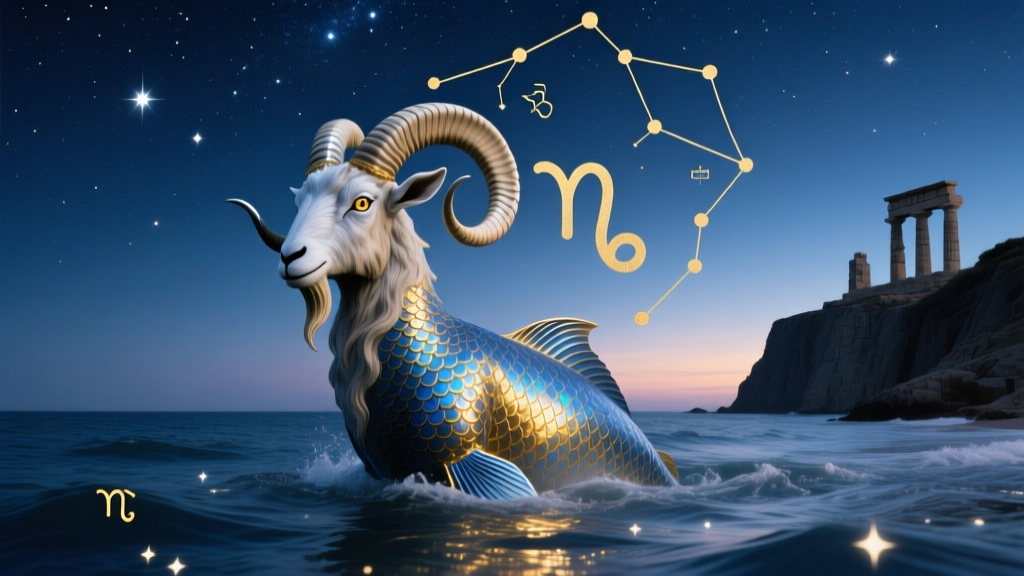
Understanding january 16th astrology requires looking past modern sun-sign columns and examining the ancient Mesopotamian and Hellenistic frameworks that defined this specific coordinate in the zodiac. Individuals born on this date fall under the 26th degree of Capricorn, a placement historically governed by the third decan. Unlike the cardinal earth initiation of early Capricorn, the late-degree energy of January 16th carries the esoteric weight of the Sea-Goat’s mythological descent into the underworld and its subsequent mastery over both material and emotional depths. This astrological coordinate bridges Sumerian mythology, Babylonian star catalogs, and traditional planetary rulerships, offering a profoundly nuanced psychological profile.
The Ancient Sumerian Roots of January 16th Astrology
The archetype of the Sea-Goat did not originate in Greece or Rome; it was first recorded in the star catalogs of ancient Mesopotamia. In the MUL.APIN compendium, a Babylonian astronomical text compiled around 1000 BCE, the constellation we now call Capricorn was identified as SUḪUR.MAŠ, the Goat-Fish. This hybrid creature was not merely a decorative myth but a profound theological symbol representing the duality of earthly ambition and subconscious depth.
Enki and the Abzu
The Goat-Fish was the celestial avatar of Enki (later known as Ea in Akkadian), the Sumerian god of water, knowledge, mischief, crafts, and creation. Enki ruled over the Abzu, the primeval freshwater abyss located deep beneath the earth. For those analyzing january 16th astrology through a historical lens, this connection to the Abzu is critical. It explains why individuals born on this degree often possess a paradoxical nature: the Capricornian drive for high-altitude material success (the goat climbing the mountain) is perpetually tethered to a need for deep, isolating psychological exploration (the fish swimming in the abyss). According to World History Encyclopedia, Enki was the patron of incantations and hidden wisdom, suggesting that late-degree Capricorns are naturally wired to uncover structural secrets and systemic vulnerabilities.
Mythological Origin Stories: Pricus and the Manipulation of Time
As the zodiac was Hellenized, the Sumerian Goat-Fish was syncretized with Greek mythology, resulting in the tragic and highly specific origin story of Pricus. Unlike the popular myth of Pan transforming into a fish to escape Typhon, the myth of Pricus provides a much more accurate allegory for the psychological burdens carried by those born on January 16th.
The Burden of Chronos
Pricus was a sea-goat created by Cronus (the Greek equivalent of Saturn, Capricorn’s traditional ruling planet). Cronus was the personification of Time. Pricus possessed the divine ability to manipulate time and reverse the flow of events. He was the father of a race of intelligent, prophetic sea-goats. However, as his children swam toward the shore and crawled onto land, they lost their divine intellect, their ability to speak, and their connection to the eternal, transforming into mundane, mortal goats.
Pricus, devastated by the loss of his children's consciousness, repeatedly used his time-manipulation powers to pull them back into the sea, only for them to inevitably crawl back onto land and forget their origins. Realizing he could not defeat the forward march of mortal time, Pricus asked Cronus to let him die. Instead, Cronus placed him in the heavens as the constellation Capricorn. This myth perfectly encapsulates the late-degree Capricorn anxiety regarding legacy, the relentless passage of time, and the fear that one's life work will be misunderstood or forgotten by future generations.
Hellenistic Decans and the 26th Degree of Capricorn
To practice precise january 16th astrology, one must apply the traditional Hellenistic techniques of planetary bounds (terms) and decans. The Sun occupies roughly 25° to 26° of Capricorn on this date. In the Egyptian bounds system, which divides the zodiac into unequal segments based on planetary dignity, the 26th degree of Capricorn falls squarely within the Bounds of Mars.
This is a highly significant technical detail. Capricorn is ruled by Saturn, a planet of restriction, delay, and structure. Mars is a planet of friction, heat, and aggressive forward momentum. When the Sun sits in the Martian bounds of a Saturnian sign, it creates an internal 'crucible' effect. The individual is not content with slow, methodical progress; they are driven by an urgent, almost combative need to conquer their environment, yet they are forced to operate within strict societal or physical limitations.
| Astrological Attribute | Traditional Value (Jan 16) | Historical & Psychological Significance |
|---|---|---|
| Sun Degree | 25° - 26° Capricorn | Late-degree maturity; focus on legacy and systemic endurance. |
| Egyptian Bounds | Mars (26° - 30°) | Creates a 'crucible' effect; ambition weaponized through discipline. |
| Chaldean Decan | 3rd Decan (Ruled by Sun) | Focus on authority, public visibility, and mastering the material realm. |
| Constellation Origin | SUḪUR.MAŠ (Goat-Fish) | Duality of high material climbing and deep subconscious navigation. |
Furthermore, in the Chaldean decan system, the third decan of Capricorn (21°-30°) is governed by the Sun. While Saturn rules the sign, the Sun's sub-rulership here demands recognition, authority, and the establishment of a personal empire. As noted by traditional astrology historians at Hellenistic Astrology, the combination of a Saturnian sign, a Solar decan, and a Martian bound produces individuals who are essentially 'architects of war'—they build systems designed to outlast and outmaneuver their competitors.
Historical Archetypes and Practical Application
The historical and technical framework of this date manifests clearly in the biographies of notable figures born on January 16th. Consider the late rapper and actor Aaliyah (born 1979) or playwright and composer Lin-Manuel Miranda (born 1980). Both exemplify the SUḪUR.MAŠ duality: navigating the intense, highly structured, and often restrictive music/theater industries (Saturn/Capricorn) while utilizing deep, emotional, and fluid artistic expression (the Fish/Abzu).
Actionable Frameworks for Late-Degree Capricorns
If you are studying your own january 16th astrology chart or advising a client born on this date, discard generic advice about 'being patient' or 'working hard.' The historical data demands a more specific operational strategy:
- Leverage the Martian Bounds: Do not avoid high-friction environments. Your chart’s architecture requires resistance to generate heat. Place yourself in roles where you must solve active crises or dismantle failing systems. Your ambition sharpens only when opposed.
- Honor the Abzu (Subconscious Integration):strong> The Goat-Fish myth warns against ignoring the 'fish' half of the archetype in favor of pure material climbing. You must schedule mandatory periods of isolation and deep-dive research. If you only climb the mountain, you will suffer from psychological burnout; you must regularly swim in the abyss to regenerate your strategic vision.
- Manipulate Time Like Pricus: You have an innate anxiety about running out of time. Counteract this by building 'timeless' assets—systems, written works, or automated frameworks that continue to operate and provide value long after your direct effort has ceased. Focus on legacy architecture rather than daily productivity hacks.
By anchoring the interpretation of this birth date in its Sumerian, mythological, and Hellenistic origins, we move beyond superficial horoscopes and unlock a rigorous, historically validated blueprint for navigating the intense ambitions and profound depths inherent to the 26th degree of Capricorn.