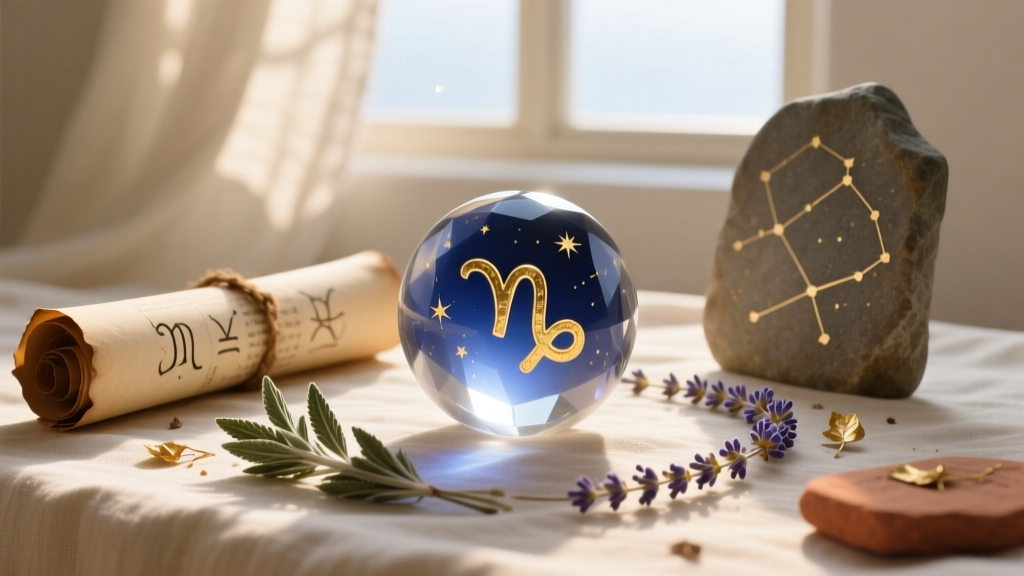
Determining the exact star sign for January 19th requires more than a casual glance at a modern horoscope column. Because this date falls precisely on the astrological boundary known as the Capricorn-Aquarius cusp, the sun’s transition between these two signs fluctuates based on the birth year, exact time, and geographic location. To understand why January 19th is a day of cosmic liminality, we must examine the historical and astronomical origins of the zodiac. Ancient Babylonian astronomers and Hellenistic scholars did not view the zodiac as a static calendar, but as a dynamic, mathematically calculated celestial sphere that dictated agricultural, political, and spiritual life.
The Astronomical Anomaly of the Capricorn-Aquarius Cusp
The tropical zodiac divides the ecliptic into twelve equal sectors of 30 degrees. January 19th typically marks the sun's occupation of the final degrees of Capricorn (28° to 29°) or its imminent ingress into the zero degree of Aquarius. Historically, the 29th degree of any sign was termed the anaretic degree, considered by Hellenistic astrologers like Vettius Valens as a point of crisis, completion, and karmic finality. When the sun crosses this threshold into Aquarius, it triggers a shift from the earth-bound, cardinal earth energy of Capricorn to the cardinal air, intellectual domain of Aquarius. This boundary was not arbitrary; it was anchored to the winter solstice and the subsequent seasonal shifts observed in antiquity, marking the slow return of light to the Northern Hemisphere.
Babylonian Origins: The Goat-Fish and The Great One
The conceptual foundation of the star sign for January 19th originates in ancient Mesopotamia. The MUL.APIN Babylonian Star Catalogue, compiled around 1000 BCE, maps the ecliptic path through specific constellations and asterisms. The region we now associate with Capricorn was known as SUḪUR.MAŠ (the Goat-Fish), while the adjacent sector was GU.LA (The Great One, later depicted as the Water Bearer). SUḪUR.MAŠ was intrinsically linked to Ea (Enki), the Sumerian god of water, knowledge, and creation, who resided in the subterranean ocean known as the Abzu.
The Goat-Fish symbolized the dual nature of Ea: the goat representing terrestrial mountain wisdom and the fish representing the depths of aquatic intuition. GU.LA governed the period of the Tigris and Euphrates spring floods. The transition between these two Babylonian sectors marked the critical shift from the dry, cold winter months to the life-giving, albeit destructive, floodwaters that fertilized the Mesopotamian plains. This agricultural reality formed the bedrock of the zodiacal archetypes we still use today.
Hellenistic Standardization and the 30-Degree Framework
The rigid 30-degree division that forces the Capricorn-Aquarius boundary into a specific mathematical framework was formalized by Hellenistic astronomers. Hypsicles of Alexandria (c. 190–120 BCE) introduced the division of the zodiac into twelve equal 30-degree signs, a system later codified by Claudius Ptolemy. In Ptolemy's Tetrabiblos, the zodiac is anchored to the equinoxes and solstices. Capricorn begins at the winter solstice, meaning the sign of Aquarius inherently begins approximately 30 days later, placing the cusp squarely in the middle of January. Ptolemy’s mathematical rigor stripped away the uneven constellation boundaries of the earlier sidereal systems, creating the tropical zodiac used by Western astrologers today. This historical shift is precisely why the boundary is determined by mathematical degrees rather than the physical, uneven constellations visible in the night sky.
Historical Ephemeris Data: The Sun's Ingress
To illustrate the historical and astronomical reality of the cusp, one must consult precise ephemeris data. The sun does not enter Aquarius at the exact same moment every year. Leap year cycles, the precession of the equinoxes, and minor orbital perturbations cause the ingress time to shift. Below is a historical data table demonstrating the exact UTC time the sun crossed the 0° Aquarius threshold across different years, sourced from the NASA JPL Horizons Ephemeris. This data proves that for the vast majority of global time zones, January 19th is solidly the anaretic degree of Capricorn.
| Birth Year | Sun Position Jan 19 (12:00 UTC) | Exact Aquarius Ingress (UTC) | Primary Sign for Jan 19th |
|---|---|---|---|
| 2019 | 28° 54' Capricorn | Jan 20, 03:59 | Capricorn |
| 2020 | 29° 04' Capricorn | Jan 20, 14:54 | Capricorn |
| 2021 | 29° 15' Capricorn | Jan 20, 08:52 | Capricorn |
| 2022 | 29° 26' Capricorn | Jan 20, 02:48 | Capricorn |
| 2023 | 29° 36' Capricorn | Jan 20, 08:29 | Capricorn |
| 2024 | 29° 47' Capricorn | Jan 20, 14:07 | Capricorn |
As the table demonstrates, the sun remains in the 29th degree of Capricorn throughout the entirety of January 19th (UTC). Individuals born on this date occupy the ultimate degree of the sign, embodying the purest, most concentrated expression of Capricornian traits before the paradigm shifts into Aquarius on January 20th.
Mythological Syncretism: From Pan to Deucalion
When the Greeks adopted the Babylonian zodiac, they overlaid their own mythological pantheon onto the Mesopotamian framework. The Goat-Fish (SUḪUR.MAŠ) was syncretized with the myth of Pan. According to Hellenistic mythographers, when the monster Typhon attacked the Olympian gods, Pan attempted to escape by transforming into a fish and diving into the Nile. In his panic, he only managed to change his lower half, resulting in the Sea-Goat. This myth encodes the psychological duality of the Capricorn archetype: the ambitious, terrestrial goat climbing the social hierarchy, and the intuitive, emotional fish navigating the unconscious depths.
Conversely, GU.LA became Aquarius, associated with Deucalion, the Greek equivalent of Noah, who survived the great deluge sent by Zeus. The transition from the Sea-Goat to the Water Bearer on the cusp represents the mythological journey from surviving personal transformation to managing collective salvation and intellectual innovation.
Core Attributes of the January 19th Anaretic Degree
Being born on the final degree of Capricorn imbues the natal chart with specific historical and astrological signatures:
- Karmic Completion: The 29th degree represents the exhaustion of the sign's earthly lessons, demanding mastery over material structures and authority.
- Hyper-Ambition: As the final expression of the cardinal earth sign, there is an intensified drive to solidify legacy and achieve tangible, enduring success.
- Structural Deconstruction: Occupying the border of Aquarius, the individual possesses an innate understanding of how to dismantle outdated systems to prepare for collective progress.
- Saturnian Finality: Ruled by Saturn, this degree demands rigorous discipline and often manifests as a profound sense of historical responsibility.
Calculating the Star Sign For January 19th in Antiquity
Determining the exact boundary of the star sign for January 19th was a monumental task for ancient astrologers. Without modern computational algorithms, Hellenistic and Islamic scholars relied on the astrolabe and the armillary sphere. The astrolabe, perfected by Islamic astronomers like Al-Battani in the 9th century, allowed astrologers to measure the altitude of the sun and stars to calculate the exact degree of the ecliptic.
To cast a horoscope for a birth occurring on the Capricorn-Aquarius cusp, an astrologer had to account for the equation of time and the obliquity of the ecliptic. A miscalculation of just a few arcminutes could place a royal nativity in the wrong sign, altering the predicted fate of a monarch. This historical necessity for mathematical precision underscores why the cusp is not a vague blending of energies, but a razor-thin astronomical boundary defined by exact celestial longitude. Understanding this rigorous history elevates the interpretation of January 19th from a modern pop-astrology trope to a profound recognition of ancient astronomical mastery.