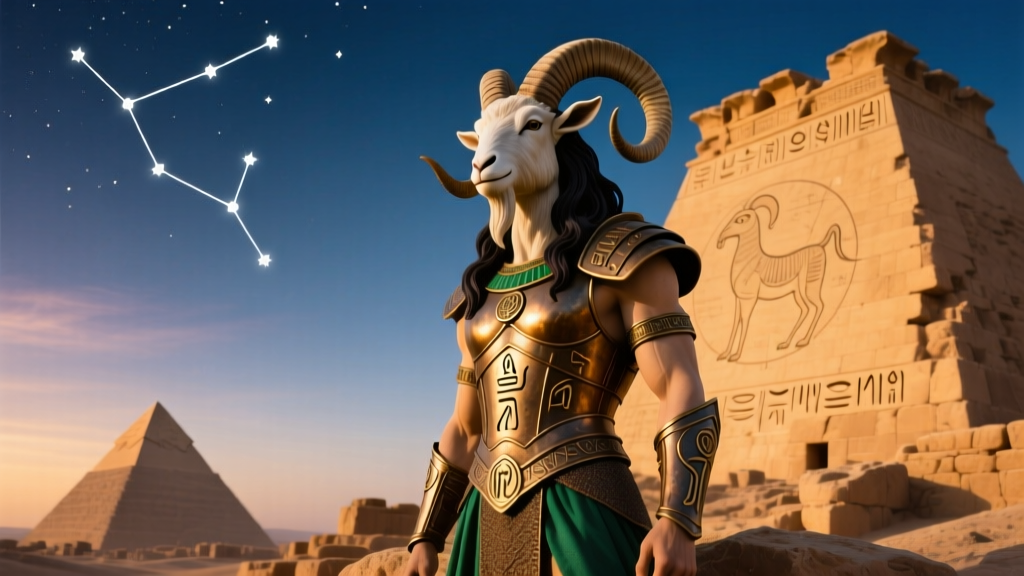
Queries surrounding the "january 3th zodiac" typically stem from a search for the astrological identity of January 3rd, a date that falls squarely within the domain of Capricorn. Specifically, this date occupies the second decan of the cardinal earth sign. To understand the psychological and spiritual architecture of a January 3rd birth, one must bypass modern, generalized newspaper horoscopes and examine the ancient Mesopotamian star catalogs and Hellenistic mythological frameworks that forged the Sea-Goat archetype. The historical lineage of this zodiac placement reveals a complex interplay between terrestrial ambition and aquatic depth.
The Ancient Babylonian Roots of the Sea-Goat
The origin of Capricorn predates Greek mythology by over a millennium, rooted deeply in the astronomical observations of ancient Sumer and Babylon. The definitive text for early Mesopotamian astronomy is the MUL.APIN, a comprehensive star catalog compiled around 1000 BCE but based on much older observations. According to the World History Encyclopedia, this catalog identifies the constellation as SUHUR.MAŠ2, which translates directly to the "Goat-Fish."
This hybrid creature was intrinsically linked to Enki (later known as Ea in Akkadian mythology), the supreme deity of water, intelligence, magic, and creation. Enki's domain was the Abzu, the subterranean aquifer that fed the Tigris and Euphrates rivers. The symbolism of the Goat-Fish was highly specific: the goat represented the sure-footed ambition required to climb the ziggurats and mountains to commune with the divine, while the fish tail symbolized the profound, hidden depths of esoteric wisdom and the life-giving waters of the earth. For individuals born on January 3rd, this ancient duality manifests as a personality split between public, structural ambition and private, emotional depth.
The Babylonians viewed the heliacal rising of this constellation as a marker for the winter solstice, a time when the sun reached its lowest point in the sky and began its climb back toward the northern hemisphere. This astronomical reality birthed the astrological association with Capricorn as the sign of "ascent," where the light begins to return and the work of building the year's foundation commences.
Hellenistic Myth and the Typhonian Flight
When Babylonian astrology was absorbed by the Greeks during the Hellenistic period (circa 300 BCE), the Goat-Fish was mapped onto existing mythological figures, most notably Aegipan and Pricus. The Theoi Greek Mythology Project details the legend of Aegipan, a rustic deity often conflated with the god Pan. The most prominent origin story for the Capricorn constellation involves the Olympian war against the monstrous Typhon.
The Transformation in the Nile
According to the myth, when the giant Typhon attacked Mount Olympus, the gods fled in terror to Egypt. To escape detection, they shapeshifted into various animals. Aegipan leaped into the Nile River, intending to transform entirely into a fish to hide underwater. However, in his panic, only his lower half submerged and transformed, leaving his upper half as a goat. Zeus, after eventually defeating Typhon, placed this hybrid image in the stars as the constellation Capricorn to honor the gods' survival and the ingenuity required to escape destruction. This myth highlights a core trait of the January 3rd native: the ability to adapt rapidly under extreme pressure, even if the resulting solution is a hybrid compromise rather than a perfect escape.
Pricus and the Burden of Chronos
A lesser-known but highly relevant origin story for the January 3rd archetype is Pricus, the immortal Sea-Goat created by Chronos (the Greek equivalent of Saturn, the ruling planet of Capricorn). Pricus was the father of the sea-goats and possessed the divine ability to manipulate time. When his children swam toward the shore, they lost their divine speech, their fish tails, and their immortality, becoming ordinary mountain goats. Pricus repeatedly begged Chronos to reverse time to save his children, but the cycle inevitably repeated. Ultimately, Pricus accepted his fate and was placed in the heavens. This myth perfectly encapsulates the Saturnian themes of time, duty, and the melancholic acceptance of natural limits—core psychological drivers for those born on this date.
Cross-Cultural Evolution of the Archetype
The symbolism of the January 3rd zodiac sign has shifted depending on the cultural and agricultural needs of the civilization observing it. The following table outlines this historical evolution:
| Era / Culture | Designation | Ruling Deity / Planet | Core Symbolism & Function |
|---|---|---|---|
| Sumerian / Babylonian | SUHUR.MAŠ2 | Enki / Ea | Wisdom, subterranean waters, civilization building |
| Hellenistic Greek | Aegipan / Pricus | Pan / Chronos | Survival, time manipulation, rustic nature, divine panic |
| Roman Astrology | Capricornus | Saturn | Agriculture, boundaries, structural authority, karma |
| Indian (Vedic) | Makara | Shani (Saturn) | Crocodile-fish hybrid, vehicle of Ganga, karmic gatekeeper |
The Chaldean Decan: Decoding the January 3rd Placement
To achieve true astrological precision, one must look beyond the 30-degree span of Capricorn and examine the specific decan of January 3rd. The Chaldean decan system, which heavily influenced later Hellenistic and Renaissance astrology, divides each sign into three 10-degree sectors, each with a sub-ruler. January 3rd falls into the second decan of Capricorn (spanning roughly January 1st to January 10th).
As outlined by traditional astrology resources like Skyscript, the second decan of Capricorn is sub-ruled by Venus, specifically through its association with the earth sign of Taurus. This planetary overlay fundamentally alters the baseline Saturnian austerity of Capricorn. While the first decan (ruled purely by Saturn) is characterized by rigid discipline and asceticism, the Venusian sub-rulership of the January 3rd decan introduces a profound desire for material security, aesthetic refinement, and tangible comforts.
This creates a unique astrological signature: an individual who applies Capricornian discipline and endurance not merely for abstract power or political status, but to build lasting, beautiful, and financially secure environments. The friction between Saturn (restriction, time, duty) and Venus (pleasure, beauty, resources) generates a highly productive internal engine. These individuals are often the architects of generational wealth, preferring to invest in land, art, or enduring institutions rather than fleeting trends.
Archetypal Manifestation in Historical Figures
The historical and psychological footprint of the January 3rd zodiac is best observed through notable figures born on this date, whose lives reflect the synthesis of Saturnian structure and Venusian world-building. J.R.R. Tolkien, born on January 3, 1892, exemplifies this exact decan placement. His creation of Middle-earth reflects the Capricornian drive to build enduring, logically consistent structures (linguistic, geographical, and narrative), while the Venusian sub-ruler manifests in his deep appreciation for mythic beauty, natural landscapes, and the preservation of ancient lore.
Similarly, the endurance required to master complex systems is a hallmark of this date. The January 3rd native does not seek immediate gratification. The mythological lessons of Pricus and the Babylonian wisdom of Enki dictate that true mastery requires descending into the depths (the Abzu, the unconscious, the foundational research) before ascending the mountain to present the finished work to the world. Understanding this historical origin story provides a far more accurate and actionable framework for navigating the strengths and challenges of the January 3rd astrological profile than any modern sun-sign summary.