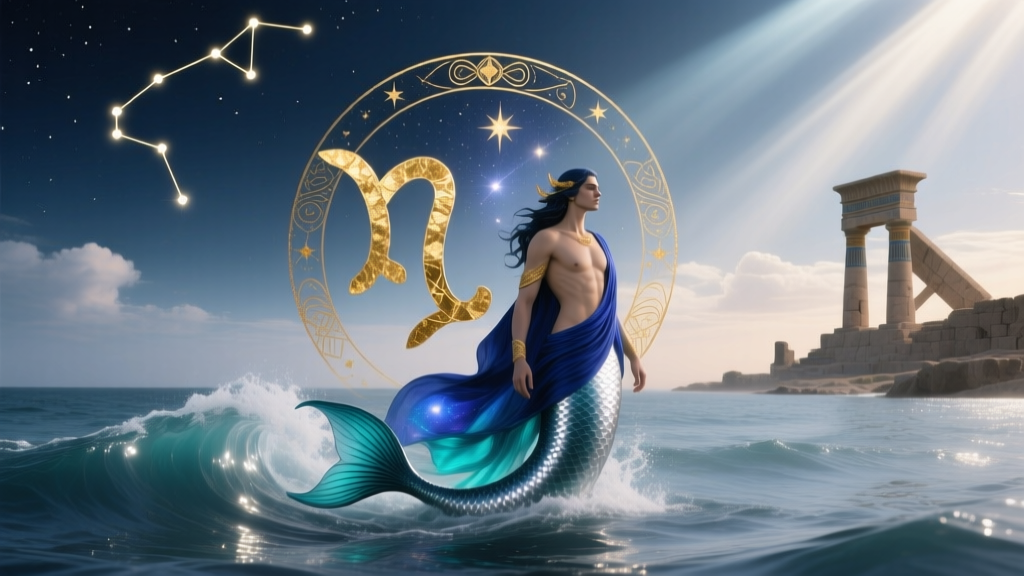
Individuals researching the star sign for March 5th are investigating the mutable water sign of Pisces. However, the astrological profile for this specific date extends far beyond modern, generalized horoscopes. To understand the true psychological and spiritual blueprint of a March 5th native, we must excavate the ancient Babylonian catalogs, Hellenistic mythologies, and Egyptian decan systems that forged this zodiac archetype. This historical analysis reveals why those born on this date possess such profound emotional resonance, dualistic adaptability, and a unique tether to the collective unconscious.
Babylonian Roots: The Swallow and the Great One
The origins of the Pisces constellation predate Hellenistic astrology by over a millennium. According to the MUL.APIN Babylonian star catalog, compiled around 1000 BCE, the region of the ecliptic we now call Pisces was originally divided into two distinct entities. The first was SIM.MAH (The Swallow), representing the cyclical return of spring and agricultural fertility. The second was LU.LIM (The Great One), a divine fish associated with the god Ea (Enki), the deity of water, knowledge, and creation.
By the time of the Neo-Babylonian period, these two figures began to merge into a dual-fish imagery. This historical synthesis is crucial for understanding the inherent duality of the star sign for March 5th. Natives born on this date often exhibit a split between the ethereal, sky-bound aspirations of the Swallow and the deep, subconscious, emotional depths of the Great Fish. This ancient dichotomy explains the internal push-and-pull between spiritual transcendence and grounded emotional reality that defines the March 5th personality.
Hellenistic Synthesis and the Myth of Typhon
When Babylonian astronomy was absorbed by Greek scholars around the 3rd century BCE, the constellation was Hellenized and tied to the myth of Aphrodite and Eros. According to Britannica's overview of the Pisces constellation, the goddess of love and her son transformed into fish to escape the monstrous, hundred-headed Typhon. To ensure they would not be separated in the turbulent waters of the Euphrates, they tied themselves together with a cord.
This mythological cord is visually represented in the V-shaped asterism that connects the two fish in the night sky. For the March 5th individual, this origin story manifests psychologically as a profound fear of relational abandonment and a deep-seated need for secure attachments. The historical tethering of the fish translates into a modern personality trait where these individuals act as the emotional anchors in their relationships, often binding themselves to the well-being of their loved ones, sometimes at the cost of their own autonomy.
The Star Sign for March 5th: Second Decan Origins
The concept of the decan originated in ancient Egypt, where the night sky was divided into 36 groups of stars that rose consecutively on the horizon. These decans were initially used for timekeeping and religious rituals. When Hellenistic astrologers merged Egyptian timekeeping with Babylonian zodiacal mathematics, they assigned planetary rulers to each 10-degree segment. This synthesis created the layered astrological framework that allows us to pinpoint the exact energetic flavor of a specific birth date, separating it from the broader 30-day sign.
To achieve precise astrological granularity, we must look at the specific degree of the Sun on this date. March 5th typically places the Sun between 14 and 15 degrees of Pisces. In the Hellenistic and Greco-Egyptian traditions, this places the Sun squarely in the Second Decan of Pisces. According to the Chaldean order of planetary rulerships, the first decan is ruled by Jupiter, the second by the Moon, and the third by Mars.
Therefore, the star sign for March 5th is heavily sub-influenced by the Moon. While Jupiter grants the overarching Piscean archetype its philosophical and expansive nature, the Moon's sub-rulership imbues the March 5th native with heightened tidal emotional sensitivity, psychic receptivity, and a strong connection to maternal or ancestral lineages.
This lunar decan placement distinguishes March 5th individuals from those born in the first week of Pisces (who are more dogmatic and truth-seeking) and the third week (who are more defensive and action-oriented). The Moon's influence demands that March 5th natives navigate life through emotional osmosis rather than rigid logic, making them unparalleled empaths but highly susceptible to environmental psychic fatigue.
The Evolution of Planetary Rulership
The historical development of Pisces in Western astrology underwent a massive paradigm shift in the 19th century. For nearly two thousand years, following Claudius Ptolemy's foundational text Tetrabiblos, Pisces was ruled exclusively by Jupiter. Jupiter provided the sign with its association to divine law, higher learning, and spiritual dogma.
However, the mathematical discovery of the planet Neptune in 1846 by Urbain Le Verrier and Johann Galle fundamentally altered the astrological framework. Neptune was assigned as the modern ruler of Pisces due to its mythological association with the Roman god of the sea. This shifted the focus of the sign from Jupiterian divine truth to Neptunian boundless illusion, mysticism, and the collective unconscious. For the modern March 5th native, this dual rulership creates a complex psychological matrix: they are constantly negotiating between Jupiter's desire for structured meaning and Neptune's urge to dissolve boundaries entirely.
Historical Timeline of Pisces Astrology
| Era | Culture | Designation | Key Astrological Attribute |
|---|---|---|---|
| 1000 BCE | Babylonian | SIM.MAH / LU.LIM | Agricultural cycles, divine water wisdom |
| 300 BCE | Hellenistic | Ichthys (The Fishes) | Mythological escapism, relational tethering |
| 150 CE | Greco-Egyptian | Decan II (Moon) | Tidal emotions, psychic receptivity |
| 1846 CE | Modern Western | Neptune Co-Rulership | Collective unconscious, dissolution of ego |
Practical Application of Historical Pisces Traits
Understanding the ancient origins of the star sign for March 5th provides actionable frameworks for personal development. Recognizing the Moon's sub-rulership in the second decan indicates that emotional regulation for these individuals is inherently tied to lunar and aquatic rhythms. Practical grounding requires proximity to large bodies of water and structuring introspective practices during the evening hours when the Moon's influence peaks.
Furthermore, acknowledging the mythological cord of Typhon allows March 5th natives to audit their relational boundaries. The historical imperative to stay tied to others often results in codependency. By consciously recognizing this archetype, individuals can practice deliberate detachment, ensuring that their profound empathetic abilities are utilized as a tool for healing rather than a mechanism for self-erasure. The synthesis of Babylonian depth, Greek relational mythology, and modern Neptunian mysticism equips the March 5th individual with a profound, historically grounded roadmap for navigating their complex inner world.