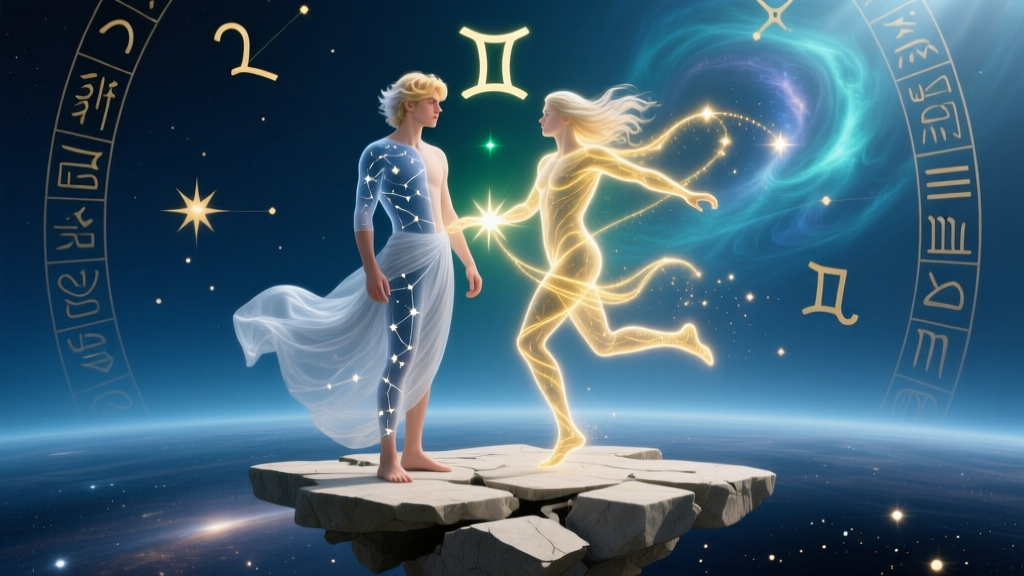
When analyzing the may31st zodiac profile through a historical lens, we uncover layers of astrological evolution that modern horoscopes often overlook. Individuals born on this date fall under the sun sign of Gemini, specifically hovering around the 9th to 10th degree of the constellation. This precise degree placement anchors the personality in the transitional space between the first and second decans of Gemini, a sector rich with ancient Mesopotamian mythology and Hellenistic esoteric traditions. To understand the true architectural blueprint of this birth date, we must bypass pop-astrology and examine the Babylonian star catalogs, the Chaldean decan system, and the mythological twins that shaped its foundational meaning.
The Babylonian Origins: MUL.APIN and the Great Twins
The roots of the Gemini constellation trace back to ancient Sumer and Babylon, documented in the MUL.APIN, an authoritative astronomical compendium compiled around 1000 BCE. In this catalog, the constellation we now recognize as Gemini was recorded as MUL.MASH.MASH, translating to 'The Great Twins.' However, these were not the playful, communicative twins of modern astrology. The Babylonian twins were Meshlamtaea and Lugalirra, deities deeply associated with the underworld god Nergal and the agricultural warrior god Ninurta.
This historical context provides a profound explanation for the underlying intensity of the May 31st zodiac personality. While modern astrology emphasizes the airy, lighthearted intellect of the sign, the Babylonian origin story reveals a foundational duality rooted in life and death, harvest and destruction. Meshlamtaea represented the fierce, unyielding aspects of the underworld, while Lugalirra was tied to the protective, structural forces of society. Individuals born on May 31st inherit this ancient esoteric blueprint: they possess an innate ability to navigate both the superficial social spheres and the deepest psychological undercurrents. They are not merely conversationalists; they are psychopomps, capable of mediating between the conscious mind and the shadow self.
Hellenistic Astrology and the Chaldean Decans
As astrology transitioned from Babylonian omen-reading to Hellenistic horoscopic analysis, the zodiac was divided into 36 decans—10-degree segments that provided granular personality insights. May 31st typically falls on the 9th or 10th degree of Gemini, placing it precisely on the cusp of the second decan. According to the Chaldean decan rulership system, the second decan of Gemini is sub-ruled by Venus, the planet associated with the sign of Libra.
This Venusian sub-rulership drastically alters the expression of the Mercury-ruled Gemini sun. The raw, unfiltered data-gathering of the first decan is refined into a desire for social harmony, aesthetic appreciation, and diplomatic negotiation. The 11th-century astrological grimoire, the Picatrix, describes the imagery of the 10th degree of Gemini as a figure seeking wisdom, holding a book, and engaging in the measurement of justice. This specific historical symbolism highlights the native's drive to intellectualize fairness. They do not just collect information; they weigh it, seeking equilibrium in their relationships and intellectual pursuits. For a deeper understanding of how traditional decans shape natal charts, resources like Skyscript's archives on traditional astrology offer extensive translations of medieval decanic texts.
Mythological Evolution: From Nergal to the Dioscuri
When the Greeks adapted the Babylonian zodiac, they superimposed their own mythology onto MUL.MASH.MASH, transforming the underworld deities into the Dioscuri: Castor and Pollux. As detailed in Britannica's historical archives on the Dioscuri, these twin brothers possessed a unique metaphysical dichotomy. Castor was mortal, born of a human king, and was renowned as a master tactician and horseman. Pollux was immortal, sired by Zeus, and was celebrated for his physical prowess in boxing and combat.
The defining myth of the Dioscuri is their pact of shared immortality. When the mortal Castor was fatally wounded, the immortal Pollux begged Zeus to let them share his divine gift. Zeus granted them the ability to alternate days between Mount Olympus and the Underworld (Hades). This mythological oscillation is the exact energetic frequency of the late May Gemini signature. These individuals frequently experience extreme shifts in their energetic states—oscillating between periods of high-altitude intellectual detachment, social brilliance, and public success (Olympus), and phases of deep introspection, isolation, and shadow-work (Hades). Recognizing this mythological cycle is crucial for natives to avoid pathologizing their need for periodic social withdrawal.
Astrological Profile: Historical Traits vs. Modern Interpretations
To bridge the gap between ancient esoteric history and contemporary psychological astrology, we must map the historical data points to modern behavioral frameworks. The following table contrasts the ancient Babylonian and Hellenistic indicators with modern psychological manifestations for the May 31st birth date.
| Historical / Esoteric Origin | Traditional Meaning | Modern Psychological Manifestation |
|---|---|---|
| MUL.MASH.MASH (Babylonian Twins) | Mediators of the Underworld and Earth | High emotional intelligence; ability to navigate trauma and shadow psychology. |
| Second Decan (Venus/Libra Sub-ruler) | Measurement of justice, aesthetics, diplomacy | Strong aversion to intellectual dishonesty; talent for mediation and design. |
| The Dioscuri Pact (Shared Immortality) | Alternating between Olympus and Hades | Cyclical social energy; requires strict boundaries to prevent burnout. |
| 10th Degree Imagery (The Picatrix) | The scholar weighing knowledge | Analytical paralysis; a tendency to over-research before making decisions. |
Actionable Guidance: Harnessing the Historical Energy
Understanding the may31st zodiac history is not merely an academic exercise; it provides a concrete framework for personal development and strategic decision-making. By leveraging the ancient archetypes associated with this birth date, individuals can optimize their natural cognitive strengths and mitigate their historical vulnerabilities.
Implement the Dioscuri Energy Audit
Because the mythological twins alternated between realms, May 31st natives must structure their lives to honor this duality. Implement a strict 'Olympus/Hades' scheduling framework. Dedicate three days a week to high-stimulation environments: networking, public speaking, and collaborative brainstorming (Olympus). Follow this with two days of low-stimulation, deep-work environments: solitary research, journaling, and digital detoxing (Hades). Attempting to sustain continuous Olympus-level output will inevitably trigger a Hades-level crash, manifesting as nervous system burnout or cynical detachment.
Leverage the Venusian Decan for Negotiation
The second decan’s Venusian influence makes these individuals exceptionally skilled at diplomatic communication. When entering salary negotiations, conflict resolution, or contract drafting, rely on the 'Book and Scale' imagery of the 10th degree. Do not enter negotiations relying solely on Mercurial speed or wit. Instead, prepare meticulously documented data (the Book) and frame your arguments around mutual equity and fairness (the Scale). This historical approach bypasses the stereotype of superficiality and establishes undeniable authority.
Shadow Work via the Babylonian Axis
The connection to Nergal and Ninurta indicates that late May natives hold immense repressed power regarding boundary enforcement. If you find yourself acting as a perpetual people-pleaser (a shadow trait of the Venus-ruled decan), you must consciously invoke the Babylonian warrior archetype. Practice direct, unapologetic boundary-setting that does not offer a diplomatic cushion. This balances the chart and prevents the accumulation of interpersonal resentment.
The Enduring Legacy of the may31st zodiac Profile
The late May Gemini profile is a complex tapestry woven from Mesopotamian star catalogs, Hellenistic geometry, and Greek tragedy. By stripping away the modern caricatures of the archetype and returning to the historical source material, we reveal a personality type defined by profound dualistic mastery. Those born on this date are not simply scattered communicators; they are the inheritors of the Dioscuri pact and the Babylonian psychopomps. Embracing this deep historical lineage allows the native to navigate their inherent contradictions not as flaws, but as the ultimate source of their psychological and intellectual power.