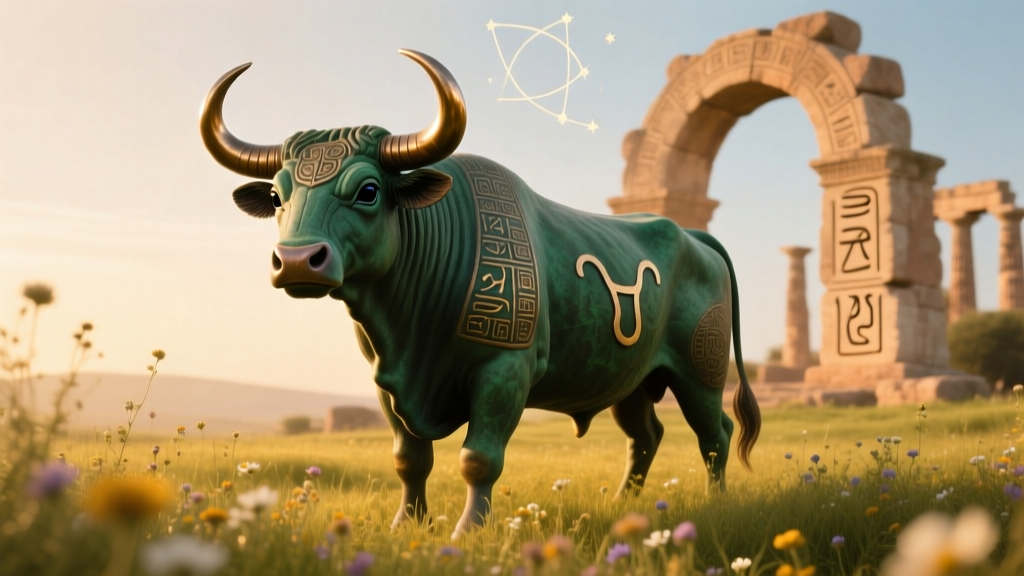
The may 8 zodiac falls under the sign of Taurus, specifically occupying the 18th degree of this fixed earth archetype. While modern pop astrology reduces this placement to basic traits of stubbornness and a love for luxury, a rigorous historical and astrological analysis reveals a far more complex lineage. To truly understand the psychological and spiritual blueprint of individuals born on this date, we must trace the origins of the Bull back to ancient Mesopotamia, examine its Hellenistic mythological adaptations, and decode the Chaldean decan system that governs the second ten-day period of May.
The Ancient Babylonian Roots of the May 8 Zodiac
The origins of the Taurus constellation predate Greek mythology by millennia. In ancient Sumer and Babylon, the constellation was known as GU4.AN.NA (The Bull of Heaven). During the Bronze Age (approximately 4000 BCE to 1700 BCE), the vernal equinox occurred in Taurus, marking the beginning of the "Age of Taurus." For the Mesopotamians, the heliacal rising of the Pleiades (located on the back of the Bull) in early May signaled a critical juncture in the agricultural calendar.
May 8 historically aligned with the maturation of the barley harvest in the Fertile Crescent. The Bull was not merely a symbol of brute strength; it represented the vital, generative force of the earth and the economic stability of the agrarian state. According to Encyclopedia Britannica's astronomical records, the Bull of Heaven was also central to the Epic of Gilgamesh, where the goddess Ishtar unleashes the beast to punish Gilgamesh. This mythological fragment establishes the early May Taurus archetype as a guardian of sacred resources and a force of nature that demands respect, propitiation, and careful management.
Hellenistic Synthesis and the Myth of Europa
When Babylonian astrology was transmitted to the Hellenistic world following the conquests of Alexander the Great, the Greeks superimposed their own mythological framework onto the existing constellations. The 18th degree of Taurus became inextricably linked to the myth of Zeus and Europa, blending Near Eastern agrarian rites with Olympian narratives.
Esoteric Symbolism of the White Bull
In the myth, Zeus transforms into a magnificent, docile white bull to entice the Phoenician princess Europa, eventually carrying her across the sea to Crete. From an esoteric and historical perspective, this narrative is an allegory for the descent of divine spirit (Zeus/Jupiter) into physical matter (Taurus/Earth). For the May 8 native, this origin story manifests as a profound psychological drive to materialize abstract concepts. They possess an innate ability to take high-minded ideals and ground them into tangible, enduring realities. The "white bull" signifies a purification of the base, animalistic instincts of the earth sign into a vehicle for divine creation and civic foundation.
The Chaldean Decan System: Virgo’s Hidden Influence
One of the most crucial, yet frequently overlooked, aspects of historical astrology is the decan system. The zodiac is divided into thirty-six 10-degree segments. May 8 falls squarely within the second decan of Taurus (10° to 20°). According to the Chaldean order and later codified by Hellenistic astrologers like Vettius Valens, this specific decan is sub-ruled by Virgo and its planetary ruler, Mercury.
This historical sub-rulership radically alters the interpretation of the May 8 personality. While the primary domicile ruler is Venus (providing aesthetic appreciation and a desire for harmony), the Mercury/Virgo sub-rulership injects a highly analytical, meticulous, and service-oriented dimension. This explains why individuals born on this date often exhibit a "scholarly" or "artisan" approach to material wealth. They do not merely accumulate resources; they categorize, refine, and optimize them. As noted in the historical texts analyzed by Skyscript's traditional astrology archives, the second decan of Taurus was historically depicted as a figure engaged in careful, methodical labor, bridging the gap between raw earthly materials and refined utility.
Lunar Mansions and the Fixed Stars of Early May
To achieve true historical depth, we must also examine the fixed stars and the Arabic Lunar Mansions (Manazil al-Qamar) that intersect with the May 8 degree. In the tropical zodiac, May 8 corresponds roughly to the 18th degree of Taurus. This degree sits in close proximity to the Hyades star cluster, which forms the face of the celestial Bull.
Historically, the brightest star in this region is Aldebaran (the Eye of the Bull), which currently sits near the 15th degree of Taurus. In medieval and Persian astrology, Aldebaran was one of the four Royal Stars, acting as the Watcher of the East. Individuals born with the Sun near this degree inherit the historical archetype of the "Royal Star"—a mandate for ethical leadership, unyielding integrity, and the courage to face immense material challenges. The historical warning associated with Aldebaran is the danger of compromising one's core values for temporal gain, a specific karmic lesson tied to the May 8 birthdate.
Medieval Astrological Magic and the Picatrix
The historical evolution of the May 8 degree continued into the Islamic Golden Age and the European Renaissance through texts like the Picatrix (Ghayat al-Hakim). In medieval astrological magic, the 18th degree of Taurus was associated with talismans crafted for the preservation of wealth, the healing of bovine afflictions, and the securing of property rights.
The specific planetary hour and lunar mansion were utilized to anchor spiritual intentions into physical objects. For modern practitioners of esoteric history, understanding this medieval application highlights the May 8 archetype's deep-seated historical association with legacy-building, property management, and the intergenerational transfer of wealth. The magic of this degree was never about quick riches; it was about establishing unbreakable foundations.
Historical Figures and Archetypal Alignment
To observe how the historical and decanic influences of the May 8 zodiac manifest in reality, we can analyze the biographical data of notable historical figures born on this date. The synthesis of Venusian Taurus and Mercurial Virgo often produces individuals who are pragmatic administrators, meticulous healers, or grounded realists.
| Historical Figure | Birth Year | Primary Domain | Alignment with May 8 Archetype |
|---|---|---|---|
| Florence Nightingale | 1820 | Healthcare / Statistics | Exemplifies the Virgo decan's analytical approach to healing, sanitation, and systemic reform. |
| Harry S. Truman | 1884 | Politics / Leadership | Demonstrates the fixed earth endurance, pragmatic decision-making, and stewardship of national resources. |
| Henri Dunant | 1828 | Humanitarian (Red Cross) | Reflects the Taurus drive to build enduring, material structures for human safety, comfort, and physical preservation. |
Applying Historical Origins to Modern Natal Delineation
For astrologers and students of personality psychology, integrating the history and origin story of the May 8 zodiac provides a robust framework for natal chart delineation. When analyzing a client or subject born on this date, move beyond basic sun-sign descriptions and apply the following historical parameters:
- Assess the Condition of Mercury: Because the 18th degree falls in the Virgo decan, the placement and dignity of Mercury in the natal chart will dictate how the individual processes information, manages material resources, and executes daily routines.
- Examine the Second House Axis: The historical Babylonian focus on agricultural yield translates to the modern second house of personal finances and movable assets. Look to the sign on the cusp of the second house and its ruler to see how the native cultivates their personal "harvest" and secures their physical environment.
- Evaluate the Royal Star Connection: If the natal Moon, Ascendant, or Midheaven is within a 2-degree orb of the 15° to 18° Taurus axis, the historical weight of Aldebaran is amplified. This indicates a life path involving the stewardship of communal resources, ethical leadership, and the burden of maintaining institutional integrity.
By anchoring our understanding of the May 8 zodiac in its rich Babylonian, Hellenistic, and medieval origins, we elevate astrological interpretation from superficial fortune-telling to a profound study of historical archetypes and human psychological evolution. The Bull of Heaven remains a potent symbol of endurance, material mastery, and the sacred duty of cultivating the earth for future generations.