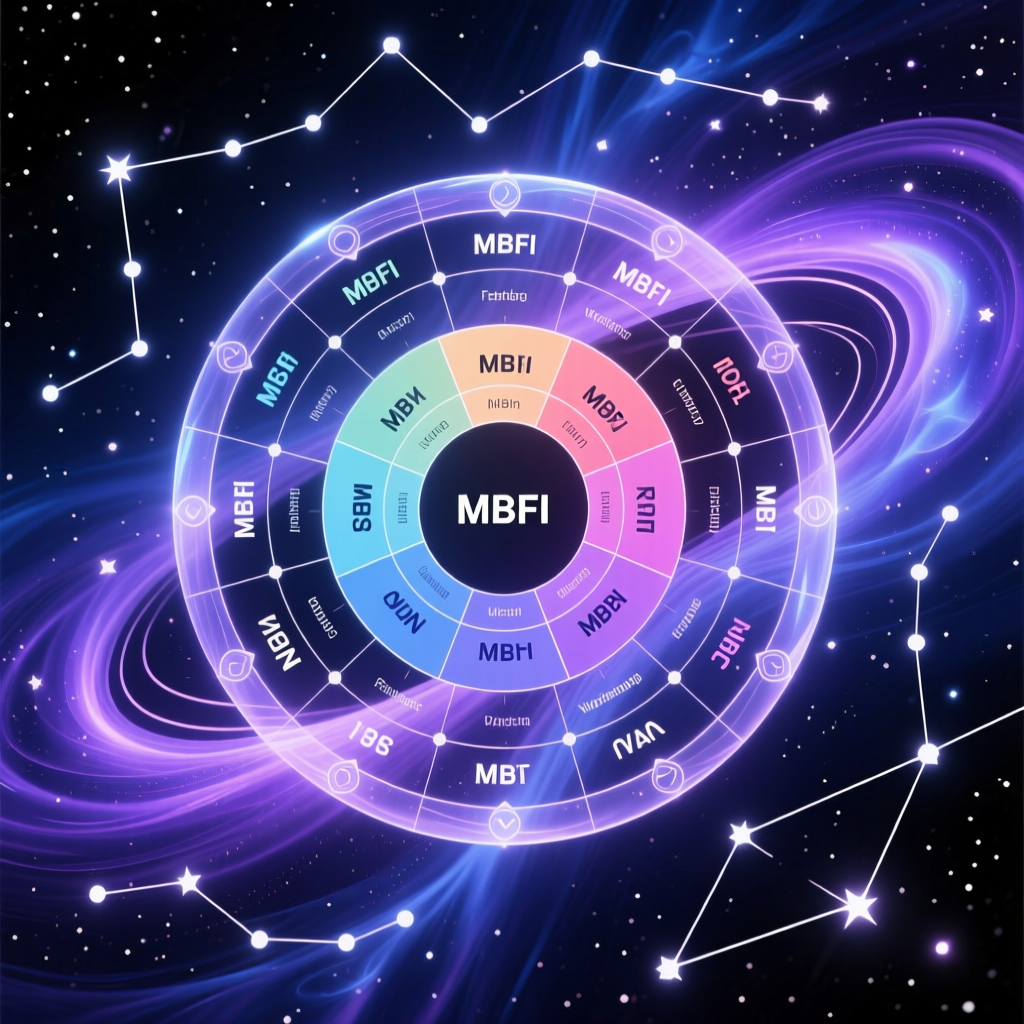
MBTI Compatibility Chart Circle: The Complete Guide to Personality Type Dynamics
Have you ever wondered why you click instantly with some people while struggling to connect with others? The MBTI compatibility chart circle offers one of the most visually intuitive and psychologically rich frameworks for understanding how the 16 Myers-Briggs personality types relate to one another. Unlike linear compatibility lists or simple type-matching grids, the circular model maps personality types around a wheel, revealing proximity-based patterns, oppositional tensions, and hidden harmonies that other formats simply cannot capture.
Whether you are exploring romantic compatibility, trying to build stronger friendships, or seeking better workplace synergy, understanding how types cluster and contrast on the compatibility circle can transform your relationships. This guide takes you on a deep-dive journey through every dimension of the MBTI compatibility chart circle, from cognitive function interplay to conflict resolution strategies, giving you actionable insights you can apply immediately.
Understanding the MBTI Compatibility Chart Circle
The MBTI compatibility chart circle arranges all 16 personality types around a circular diagram based on shared cognitive functions, temperaments, and interaction styles. Types positioned close together on the circle tend to share similar mental processes, communication preferences, and worldviews, making natural rapport more likely. Types positioned across from each other often represent complementary opposites — pairs that can either create powerful synergy or frustrating friction, depending on awareness and effort.
The circular model draws heavily on the work of personality theorists who recognized that compatibility is not a simple binary of "match" or "no match." Instead, the circle reveals gradients of connection. Adjacent types like INTJ and ENTJ share dominant or auxiliary functions, creating an almost telepathic understanding. Types separated by a quarter-turn may share one or two functions in different positions, creating a productive tension that encourages growth. And types directly opposite each other, such as INFP and ESTJ, represent the greatest potential for both transformational learning and misunderstanding.
What makes the circle particularly powerful is its ability to show clusters. The four temperaments — Analysts (NT), Diplomats (NF), Sentinels (SJ), and Explorers (SP) — naturally group together on the wheel, revealing why people within the same temperament often feel an immediate sense of kinship. The temperament clusters on the circle help explain broad compatibility patterns before you even dive into individual type dynamics.
Romantic Dynamics on the Compatibility Circle
Romance is where the MBTI compatibility chart circle becomes especially fascinating. When you map romantic pairings onto the circle, clear patterns emerge about which type positions tend to create passionate connections, steady partnerships, or growth-oriented relationships.
Adjacent Types: The Comfort Zone of Love
Couples who sit next to each other on the compatibility circle often experience a relationship that feels effortless and deeply familiar. An ENFP paired with an ENTP, for example, shares the dominant function of Extraverted Intuition, meaning both partners naturally see the world through a lens of possibilities, patterns, and creative exploration. Dates are spontaneous, conversations are electric, and boredom is rarely an issue. However, the challenge for adjacent-type couples is that their blind spots tend to overlap. If neither partner excels at practical follow-through or emotional maintenance, those areas of the relationship can quietly deteriorate.
Complementary Opposites: Magnetic Tension
Some of the most compelling romantic pairings occur between types positioned across the circle. The classic example is the INFJ and ESTP pairing — a relationship that can feel like a collision of two entirely different worlds. The INFJ brings depth, vision, and emotional intelligence, while the ESTP contributes spontaneity, pragmatism, and grounded energy. When both partners approach their differences with curiosity rather than judgment, this oppositional dynamic creates a relationship where both people grow enormously. The key is recognizing that your partner's strengths often live in the areas where you are weakest, and vice versa.
Same-Type Pairings: Mirror Relationships
Two people of the same type, such as two INTPs, share an almost uncanny understanding of each other's thought processes. They finish each other's sentences, respect each other's need for space, and approach problems with the same cognitive toolkit. The risk in mirror relationships is stagnation — without someone to challenge your default patterns, both partners can reinforce avoidance behaviors and blind spots. These relationships thrive when both individuals are committed to personal development and bring external influences into the partnership.
For a deeper exploration of specific romantic pairings, our comprehensive romantic compatibility guide breaks down the dynamics between every possible couple combination.
Friendship Patterns Revealed by the Circle
Friendship compatibility on the MBTI chart circle follows slightly different rules than romantic compatibility. In friendships, shared values and communication styles often matter more than complementary differences, which shifts which positions on the circle produce the strongest bonds.
Types within the same temperament cluster tend to form the most enduring friendships. The Analyst cluster — INTJ, INTP, ENTJ, and ENTP — often bond over intellectual pursuits, strategic thinking, and a shared appreciation for competence and logic. Their friendships are characterized by spirited debates, collaborative problem-solving, and a mutual respect for autonomy. Similarly, the Diplomat cluster — INFJ, INFP, ENFJ, and ENFP — forms friendships built on emotional depth, shared idealism, and a commitment to meaningful connection.
Cross-temperament friendships, particularly those between types positioned at 90-degree angles on the circle, often become the most growth-promoting. A Sentinel type like the ISTJ befriending an Explorer type like the ESFP creates a dynamic where each person introduces the other to new ways of experiencing life. The ISTJ helps the ESFP develop consistency and long-term planning, while the ESFP helps the ISTJ embrace spontaneity and sensory enjoyment. These friendships require more initial effort to bridge different communication styles, but they often become some of the most rewarding and longest-lasting bonds.
The circle also reveals why some friendships feel immediately comfortable while others take time to develop. Types sharing the same judging function axis (Thinking-Feeling or Feeling-Thinking) tend to make decisions in compatible ways, reducing friction in everyday interactions. Types sharing the same perceiving function axis (Sensing-Intuition or Intuition-Sensing) tend to gather information and perceive the world similarly, creating a shared reality that makes communication feel natural.
Workplace Synergy and the Compatibility Circle
In professional settings, the MBTI compatibility chart circle becomes an invaluable tool for team building, leadership development, and project management. Understanding where team members sit on the circle helps leaders assign roles that leverage natural strengths and create balanced teams.
Building Balanced Teams
The most effective teams include representatives from different sections of the circle. A project team composed entirely of intuitive types may generate brilliant ideas but struggle with implementation and detail management. By contrast, a team that includes both ENTJ strategic visionaries and ISTJ detail-oriented implementers can move from concept to execution seamlessly. The circle helps managers visualize whether their team has coverage across all four temperaments, ensuring that planning, innovation, execution, and adaptability are all represented.
Leadership and Delegation
Leaders who understand the compatibility circle can delegate more effectively by matching tasks to cognitive strengths. An ENFJ leader, whose natural strengths lie in people development and vision communication, benefits enormously from partnering with an ISTP or ESTP who can handle tactical problem-solving and hands-on execution. These complementary pairings, often found on opposite sides of the circle, create leadership duos that cover each other's blind spots.
Communication Across the Circle
Workplace conflicts frequently arise not from genuine disagreement but from communication mismatches predicted by circle positions. Types on the Thinking side of the circle tend to communicate in direct, data-driven language, while types on the Feeling side prioritize relational context and emotional impact. When an INTJ manager delivers feedback to an ENFP team member without understanding these differences, the message may be received very differently than intended. Awareness of circle positions helps professionals adapt their communication style to be more effective across type boundaries.
Explore more about how personality types interact in professional settings in our workplace dynamics guide.
Communication Styles Across the Circle
Communication is the lifeblood of every relationship, and the MBTI compatibility chart circle provides a remarkably accurate map of how different types prefer to give and receive information. Understanding these patterns can prevent countless misunderstandings and deepen every connection in your life.
The Intuitive-Sensing Divide
One of the most significant communication fault lines on the circle runs between intuitive (N) and sensing (S) types. Intuitive types like the INFJ and ENTP communicate in abstract, big-picture language, frequently jumping between ideas and exploring hypotheticals. Sensing types like the ISFJ and ESTP prefer concrete, specific communication grounded in observable facts and real-world experience. When these types communicate across the circle, the intuitive partner may feel the sensing partner is "missing the point," while the sensing partner may feel the intuitive partner is "floating in the clouds." Bridging this gap requires conscious effort from both sides — intuitives need to ground their ideas in specifics, while sensors need to engage with abstract possibilities.
The Thinking-Feeling Spectrum
The Thinking-Feeling dimension creates another major communication pattern on the circle. Thinking types prioritize logical consistency, efficiency, and objective analysis in their communication. Feeling types prioritize harmony, empathy, and the human impact of decisions. A INTP and an ENFJ, positioned across the circle from each other, may have the same goal but express it in entirely different languages. The INTP might say, "This approach is logically superior based on the data," while the ENFJ might say, "This approach will make everyone feel more included and motivated." Both are valid, but without understanding each other's communication framework, they may talk past each other entirely.
Extraversion and Introversion in Dialogue
The circle also maps the extraversion-introversion spectrum, which affects not just how much people talk but how they process information in conversation. Extraverted types tend to think out loud, using dialogue as a tool for exploration and decision-making. Introverted types prefer to process internally before sharing their conclusions. In conversations between types on opposite sides of this spectrum, the extravert may perceive the introvert as disengaged or withholding, while the introvert may perceive the extravert as overwhelming or superficial. Recognizing these processing differences, clearly visible on the compatibility circle, allows both parties to create space for each other's natural communication rhythm.
Conflict Resolution and Cognitive Function Interplay
Perhaps the most valuable application of the MBTI compatibility chart circle is in understanding and resolving conflict. Every personality type has a unique cognitive function stack — a hierarchy of mental processes that determines how they perceive information, make decisions, and respond to stress. The circle maps these function stacks spatially, revealing which type pairings are likely to experience specific kinds of conflict and how to resolve them.
Function Stack Clashes
Conflicts between types on adjacent positions of the circle often stem from subtle differences in function ordering rather than fundamentally different functions. For example, an INTJ (Ni-Te-Fi-Se) and an ISTJ (Si-Te-Fi-Ne) share three of their four functions but lead with different perceiving functions — Introverted Intuition versus Introverted Sensing. This means the INTJ approaches problems by envisioning future possibilities, while the ISTJ approaches them by referencing past experience. Their conflicts often center on whether to trust the vision or the track record, and resolution comes when both parties recognize that these approaches are complementary rather than contradictory.
Oppositional Function Conflicts
Types on opposite sides of the circle often have function stacks that are mirror images or inversions of each other. This creates conflicts that feel fundamental and deeply personal. An INFP (Fi-Ne-Si-Te) and an ESTJ (Te-Si-Ne-Fi) share the same four functions but in completely different order. The INFP leads with Introverted Feeling, prioritizing personal values and emotional authenticity, while the ESTJ leads with Extraverted Thinking, prioritizing efficiency, structure, and measurable results. Their conflicts can feel existential because each person's greatest strength is the other's weakest area. Resolution requires both parties to develop appreciation for the other's cognitive priorities and to consciously engage their lower functions to meet their partner halfway.
The Grip Stress Response
Under extreme stress, every type tends to "fall into the grip" of their inferior function, behaving in ways that are dramatically out of character. The compatibility circle helps predict how different types will respond to a partner, friend, or colleague in grip stress. An ENFJ under grip stress may become hypersensitive, withdrawn, and hypercritical as their inferior Introverted Thinking takes over. A partner or friend who understands this pattern through the circle framework can respond with patience and support rather than taking the behavior personally. Our guide to stress responses by type provides detailed strategies for supporting every type during these challenging moments.
Resolution Strategies by Circle Position
The circle suggests that conflict resolution strategies should be tailored to the specific positional relationship between types:
- Adjacent types benefit from structured check-ins that address shared blind spots before they become problems
- Quarter-turn types benefit from explicit acknowledgment of different approaches and negotiated compromises
- Opposite types benefit from developing a shared vocabulary that honors both cognitive frameworks equally
- Same types benefit from external accountability and deliberate introduction of diverse perspectives
Practical Tips for Using the MBTI Compatibility Chart Circle
Understanding the theory behind the compatibility circle is powerful, but applying it in daily life is where real transformation happens. Here are practical strategies for leveraging circle insights across every area of your life.
For Romantic Partners
Start by identifying where you and your partner sit on the circle and discuss the positional relationship openly. If you are adjacent, create systems to address your shared blind spots — perhaps hiring help for tasks neither of you enjoys naturally, or setting calendar reminders for relationship maintenance activities. If you are opposite, commit to regular "translation sessions" where you each explain your perspective in the other's preferred communication style. Celebrate your differences as complementary strengths rather than sources of frustration. For specific pairing insights, explore our romantic compatibility articles.
For Friendships
Use the circle to diversify your social circle intentionally. If you notice that all your closest friends cluster in one section of the circle, challenge yourself to build connections with types from other sections. This not only enriches your life with new perspectives but also develops your less-used cognitive functions. A INTP who befriends an ESFJ will naturally develop their Extraverted Feeling function, becoming more socially aware and emotionally expressive over time.
For Workplace Teams
Managers and team leaders can use the circle as a visual audit tool. Map your current team onto the circle and look for gaps. If your team has heavy representation from one temperament cluster and none from another, consider whether that gap is contributing to recurring challenges. A team of all Analysts might struggle with stakeholder communication and team morale — problems that adding a Diplomat type could solve naturally. Use the circle during hiring, project assignment, and team restructuring to build more balanced and effective groups.
For Personal Growth
The circle is not just about understanding others — it is also a roadmap for your own development. The types positioned across from you on the circle represent the cognitive functions and perspectives that are most foreign to your natural way of being. Studying those types, building relationships with them, and consciously practicing their strengths can accelerate your personal growth more than any other single strategy. An ENTJ who studies the ISFP approach to life will develop greater emotional intelligence, aesthetic appreciation, and presence in the moment — qualities that make them not just a better leader but a more complete human being.
Frequently Asked Questions
What is the MBTI compatibility chart circle and how does it work?
The MBTI compatibility chart circle is a visual framework that arranges all 16 personality types around a circular diagram based on their cognitive functions, temperaments, and interaction styles. Types positioned close together share more mental processes and tend to experience natural rapport, while types on opposite sides represent complementary differences that can create either powerful synergy or significant friction. The circle works by mapping the spatial relationships between type profiles, revealing patterns of similarity, complementarity, and tension that are not visible in linear compatibility lists. It is particularly useful because it shows gradients of compatibility rather than simple match-or-no-match assessments.
Which personality types are most compatible according to the circle model?
The circle model suggests that compatibility depends heavily on context. For ease of communication and shared understanding, adjacent types and same-temperament types tend to be most naturally compatible. For growth-oriented relationships that challenge both parties to develop, complementary types on opposite sides of the circle offer the greatest potential. There is no single "most compatible" pairing because different relationship goals favor different circle positions. A partnership seeking stability and comfort might thrive with adjacent types, while a partnership seeking transformation and expansion might thrive with opposite types. The key is understanding what kind of relationship you want to build and choosing strategies that support that vision.
Can opposite types on the MBTI circle have successful relationships?
Absolutely. Opposite types on the MBTI compatibility chart circle can have some of the most rewarding and transformative relationships possible, provided both partners are committed to understanding and valuing their differences. The challenge with opposite-type pairings is that each person's natural strengths tend to highlight the other's weaknesses, which can create feelings of inadequacy or frustration if not managed consciously. Successful opposite-type couples develop explicit agreements about how to leverage their complementary strengths, create safe spaces for each partner to operate in their zone of genius, and practice translating their perspectives into language the other person can receive. When these practices are in place, opposite-type relationships often report higher levels of personal growth, excitement, and long-term satisfaction than same-type or adjacent-type pairings.
How can I use the compatibility circle to improve my existing relationships?
Start by identifying your own type and the types of the key people in your life using our personality type assessments. Map these types onto the compatibility circle and observe the positional relationships. For each relationship, ask yourself: What cognitive functions do we share? Where do our differences create friction? What can I learn from this person's strengths? Then have open conversations with your loved ones about these patterns. Share what you have noticed about your communication styles, decision-making approaches, and stress responses. Use the circle as a neutral, non-judgmental framework for discussing differences — it removes the blame from interpersonal challenges by framing them as natural consequences of different cognitive wiring rather than personal failings. Over time, this awareness allows you to adapt your approach to each relationship in ways that honor both your needs and the other person's natural preferences.
The MBTI compatibility chart circle is more than a diagram — it is a living map of human cognitive diversity. By understanding where you sit on the circle and how you relate to the people around you, you unlock the ability to communicate more effectively, resolve conflicts more compassionately, and build relationships that bring out the best in everyone involved. Whether you are deepening a romantic partnership, expanding your social circle, or building a high-performing team, the circle provides the insight and framework you need to navigate personality dynamics with confidence and grace.