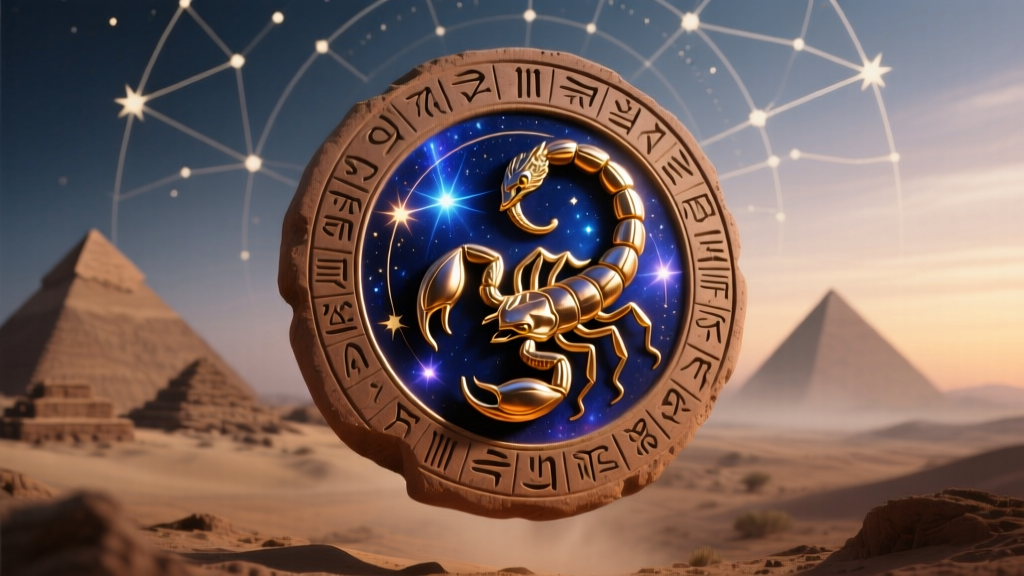
Individuals researching the nov 3rd zodiac are exploring a birthdate that falls at approximately 11 degrees of the sign of Scorpio. Unlike modern pop-astrology, which reduces this placement to generic personality traits, the historical and mythological origins of this specific zodiacal degree reveal a complex tapestry of ancient underworld deities, celestial protectors, and Hellenistic astronomical frameworks. To understand the true architecture of a November 3rd birth chart, we must bypass contemporary horoscopes and examine the astrological traditions of Babylon, Egypt, and classical Greece.
Babylonian Origins: The GIR-TAB Constellation
The foundation of the Western zodiac was laid in ancient Mesopotamia. According to the MUL.APIN, a comprehensive Babylonian astronomical compendium compiled around 1000 BCE, the constellation we now recognize as Scorpio was known as GIR-TAB (the Scorpion). For the Babylonians, the scorpion was not merely a symbol of danger; it was a sacred guardian. The Scorpion Men, or Girtablilu, were mythological beings depicted in the Epic of Gilgamesh as the fierce protectors of the sun god Shamash. They guarded the twin peaks of Mount Mashu, where the sun rose and set, representing the threshold between the mortal realm and the divine underworld.
When the Sun transits the 11th degree of Scorpio (the exact placement for the nov 3rd zodiac), it historically aligns with the Babylonian concept of the sun journeying through the most perilous, shadowed regions of the underworld. The deity most closely associated with this constellation was Ishhara, the goddess of oaths, justice, and the underworld. This historical context explains why individuals born on this date possess an innate, almost archetypal reverence for truth, loyalty, and the unearthing of hidden realities. Ishhara’s domain over binding oaths translates into the modern Scorpio’s uncompromising demand for authenticity and psychological depth.
The Catasterism of Scorpius in Greek Myth
As astrological knowledge migrated from Babylon to the Hellenistic world, the GIR-TAB was assimilated into Greek mythology through a process known as catasterism—the transformation of a mythic figure into a constellation. The most prominent origin story involves the hunter Orion. According to the poet Aratus and later mythographers, Orion boasted that he could slay any beast on Earth. This hubris angered Gaia (the Earth goddess), who sent a giant scorpion to sting him to death.
Zeus, recognizing the power of both creatures, placed them in the sky as Scorpius and Orion. However, to prevent their eternal battle from continuing in the heavens, Zeus positioned them 180 degrees apart on the ecliptic. This astronomical reality—Scorpius rising in the east just as Orion sets in the west—was woven into the mythological narrative. As noted in Britannica's astronomical records, this celestial dance was used by ancient navigators to track the changing seasons. For those born under the nov 3rd zodiac, this mythos highlights a historical archetype: the necessity of confronting hubris and the inevitable triumph of nature’s hidden, subterranean forces over overt, aggressive displays of ego.
Hellenistic Astrology and the 11th Degree of Scorpio
The specific degree of the zodiac holds immense importance in traditional astrology. November 3rd typically corresponds to the 11th degree of Scorpio. In the Hellenistic astrological tradition, which synthesized Babylonian, Egyptian, and Greek thought, the zodiac was divided into 36 decans (10-degree segments) originating from the Egyptian bakti system, which was initially used to time the night sky and track the heliacal rising of Sirius.
The 11th degree falls within the second decan of Scorpio. According to the Chaldean decan rulership system, while Scorpio as a whole is traditionally ruled by Mars, the second decan is co-ruled by the Sun. This creates a profound astrological paradox. Scorpio is a nocturnal, fixed water sign associated with secrecy, the underworld, and concealment. The Sun, however, represents illumination, the ego, and the conscious mind.
Historically, astrologers like Vettius Valens interpreted this specific decan as a place of hidden power brought to light. Individuals born on this date were thought to possess the unique ability to act as psychopomps—guides who bring repressed truths, psychological shadows, and buried secrets into the conscious light of day. This decanic rulership explains the investigative brilliance and psychological penetration often observed in November 3rd individuals, making them natural researchers, psychologists, and crisis managers.
Evolution of Nov 3rd Zodiac Interpretations
| Era | Astrological Framework | Core Archetype | Practical Application |
|---|---|---|---|
| Babylonian (1000 BCE) | GIR-TAB / Ishhara | The Oath-Keeper & Guardian | Establishing unbreakable boundaries and sacred agreements. |
| Hellenistic (1st Century CE) | 2nd Decan / Sun-ruled | The Illuminator of Shadows | Investigative work, psychology, and uncovering hidden data. |
| Renaissance (15th Century) | Fixed Water / Mars-ruled | The Strategic Alchemist | Resource management, surgical precision, and transformation. |
| Modern Psychological (20th Century) | Pluto-ruled / 11th Degree | The Trauma Healer | Shadow work, emotional resilience, and systemic reform. |
Actionable Insights: Applying Historical Archetypes Today
Understanding the historical origins of your zodiac placement provides a framework for actionable personal development. By aligning with the ancient archetypes of the nov 3rd zodiac, you can leverage these historical strengths in contemporary environments.
- Embody the Ishhara Archetype for Boundary Setting: In Babylonian tradition, Ishhara punished those who broke oaths. In your professional life, use this energy to draft ironclad contracts and establish non-negotiable personal boundaries. Do not rely on vague verbal agreements; formalize your commitments to protect your resources and maintain relational integrity.
- Leverage the Sun-ruled Decan for Research: The paradox of the Sun in the dark waters of Scorpio grants you the ability to see what others miss. When tasked with data analysis, market research, or competitive intelligence, trust your instinct to look beneath the surface metrics. The most valuable insights will be found in the anomalies and the missing data points, not the obvious trends.
- Practice the Psychopomp Role in Leadership: As a guide of the underworld, your leadership style should not focus on superficial morale-boosting. Instead, guide your team through difficult transitions, organizational deaths (like the end of a product line), and structural rebirths. Acknowledge the difficulty of the transition openly, which builds profound psychological safety and loyalty among your peers.
The architecture of the zodiac is not a static personality test, but a living historical document. The nov 3rd zodiac carries the weight of ancient guardians, the precision of Hellenistic mathematicians, and the mythological power of the earth’s subterranean forces. By studying these origins, you move beyond generic horoscopes and step into a lineage of profound psychological and historical depth, utilizing ancient frameworks to navigate modern complexities with strategic clarity.