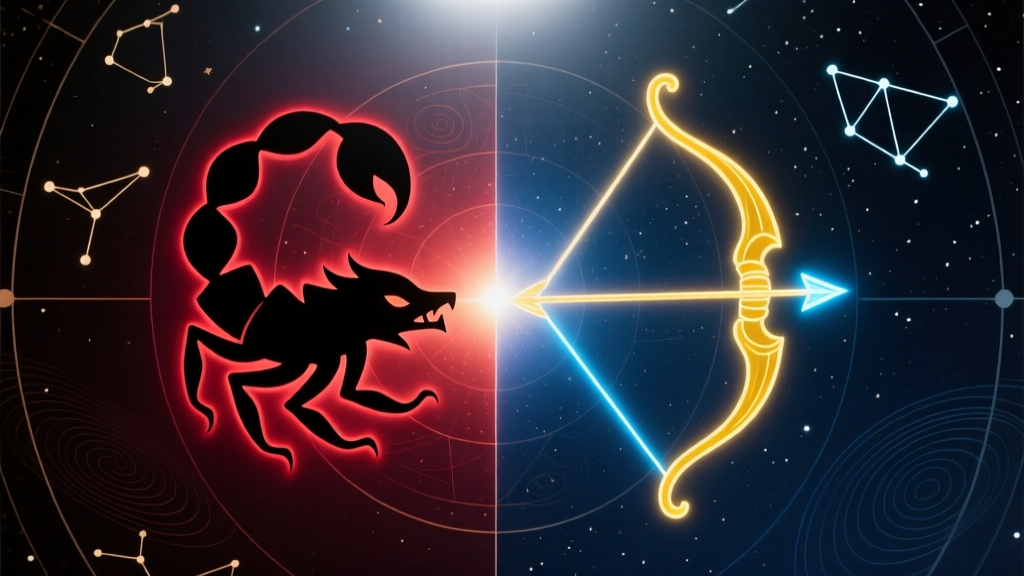
Identifying the zodiac sign November 21st requires navigating a complex intersection of tropical astrology, sidereal measurements, and ancient Babylonian astronomy. While modern pop astrology often labels this date as the 'Scorpio-Sagittarius cusp,' historical and astronomical records reveal a far more intricate origin story. In the tropical zodiac system utilized by Western astrologers, November 21st places the Sun in the final, critical degrees of Scorpio. However, when we examine the actual celestial mechanics and the ancient origins of the ecliptic path, the narrative shifts dramatically. To understand the true historical identity of this date, we must strip away modern internet horoscopes and examine the primary texts of Mesopotamian and Hellenistic astrologers.
Babylonian Origins: The MUL.APIN and the Scorpion
The foundational framework for the zodiac sign November 21st traces back to ancient Mesopotamia, specifically the MUL.APIN, an astronomical compendium compiled around 1000 BCE from earlier Sumerian observations. Unlike the standardized 12-sign zodiac used today, the Babylonians initially mapped 17 or 18 constellations along the ecliptic. The region of the sky corresponding to late November was dominated by two primary figures: GIR.TAB (The Scorpion) and PA.BIL.SAG (The Archer, later known as Sagittarius).
In Babylonian omen astrology, the Scorpion was not merely a symbol of venom and secrecy; it was intrinsically linked to the god Ishhara and the goddess of the underworld, Ereshkigal. The late degrees of this constellation, which correspond to the modern tropical placement of November 21st, were considered a liminal space. Ancient astrologers observed that as the Sun moved deeper into the Scorpion's domain, the agricultural cycle in the Levant shifted toward dormancy and decay. This historical observation birthed the archetypal association with death, transformation, and the hidden underworld that still defines the Scorpio archetype today.
Hellenistic Astrology and the Tropical Shift
The modern Western interpretation of the zodiac sign November 21st was solidified during the Hellenistic period, heavily influenced by Claudius Ptolemy’s seminal work, the Tetrabiblos (c. 150 CE). Ptolemy made a critical decision that permanently separated Western astrology from the literal constellations. Building upon Hipparchus’s discovery of the precession of the equinoxes in 127 BCE, Ptolemy anchored the zodiac to the seasons rather than the stars.
Under this tropical system, the sign of Scorpio begins exactly at the 30-degree mark following the autumnal equinox (Libra). Therefore, November 21st consistently falls near the 28th or 29th degree of tropical Scorpio. Hellenistic astrologers did not recognize the modern concept of 'cusps' blending two signs. Instead, they utilized 'bounds' or 'terms' (horion), which divided each 30-degree sign into unequal segments ruled by different planets. On November 21st, the Sun typically occupies the final bound of Scorpio, historically ruled by Mars, intensifying the martial, strategic, and deeply investigative qualities associated with this specific degree.
The Astronomical Reality Behind the Zodiac Sign November 21st
A common historical misconception involves the actual constellation the Sun occupies on this date. To achieve genuine information gain, one must differentiate between the astrological signs and the International Astronomical Union (IAU) constellations. In 1930, astronomer Eugène Delporte formalized the boundaries of the 88 modern constellations.
Because of the Earth's axial precession, the tropical signs have drifted roughly 24 degrees away from their original stellar counterparts over the last two millennia. Consequently, on November 21st, the astronomical Sun is not in the constellation of Scorpius or Sagittarius; it is actually transiting through the constellation of Libra. The Sun does not astronomically enter Scorpius until approximately November 23rd, and it only remains there for seven days before entering Ophiuchus. This stark contrast between tropical astrology and observational astronomy highlights why historical context is vital for accurate astrological analysis.
| System of Measurement | November 21st Placement | Historical/Astronomical Context |
|---|---|---|
| Tropical Zodiac (Western) | 28° - 29° Scorpio | Fixed to the autumnal equinox; ignores precession. |
| Sidereal Zodiac (Vedic/Lahiri) | 5° - 6° Scorpio | Aligned with the fixed stars; accounts for ~24° precession. |
| Astronomical Constellations | Constellation Libra | Based on IAU 1930 boundaries; Sun enters Scorpius ~Nov 23. |
| Pop Astrology Cusp | Scorpio-Sagittarius Cusp | Modern invention; rejected by traditional Hellenistic frameworks. |
The Anaretic Degree: Historical Significance of the 29th Degree
In traditional astrology, the zodiac sign November 21st frequently places the Sun in the 'anaretic degree' (the 29th degree) of Scorpio. Historically, this degree was known as the gradus fatidicus or the 'degree of fate.' Medieval and Renaissance astrologers, drawing from earlier Arabic texts like those of Albumasar, considered the final degree of any sign to be a point of extreme urgency, crisis, and culmination.
When the Sun reaches this specific degree in late November, the historical archetype demands the resolution of unresolved emotional or psychological debts. It is a degree of mastery through crisis. Unlike the early degrees of Scorpio, which are reactive and defensive, the 29th degree represents the distillation of Plutonic and Martian energies into pure strategic willpower. Individuals born on this date, or those experiencing transits to this degree, are historically noted in astrological biographies for possessing an uncompromising drive to dismantle corrupt systems and enforce profound psychological transformations.
Actionable Archetypal Frameworks for Late November Births
Understanding the historical and astronomical roots of this date provides a practical framework for personal development. Rather than relying on vague cusp descriptions, individuals connected to the late-Scorpio archetype can leverage specific historical traits:
- Strategic Dismantling: Channel the anaretic degree's urgency into identifying and removing obsolete structures in your personal or professional life.
- Underworld Integration: Embrace the Babylonian association with Ereshkigal by engaging in deep shadow work, specifically focusing on the integration of repressed ambitions.
- Martial Focus: Utilize the traditional Martian rulership of Scorpio's final bounds to execute long-term plans that require sustained, secretive effort and high resilience.
Synthesizing the Ancient and the Modern
The true identity of the zodiac sign November 21st is not a blurred cusp, but a highly concentrated point of astrological culmination. By examining the historical evolution of astrology from the MUL.APIN to Ptolemy’s Tetrabiblos, we uncover a rich tapestry of seasonal, stellar, and mythological significance. The late degrees of tropical Scorpio represent the ultimate crucible of the autumnal cycle—a historical and symbolic space dedicated to the necessary destruction that precedes winter's rebirth. Recognizing this precise historical lineage allows for a far more rigorous and empowering application of astrological principles than modern pop-astrology paradigms permit.