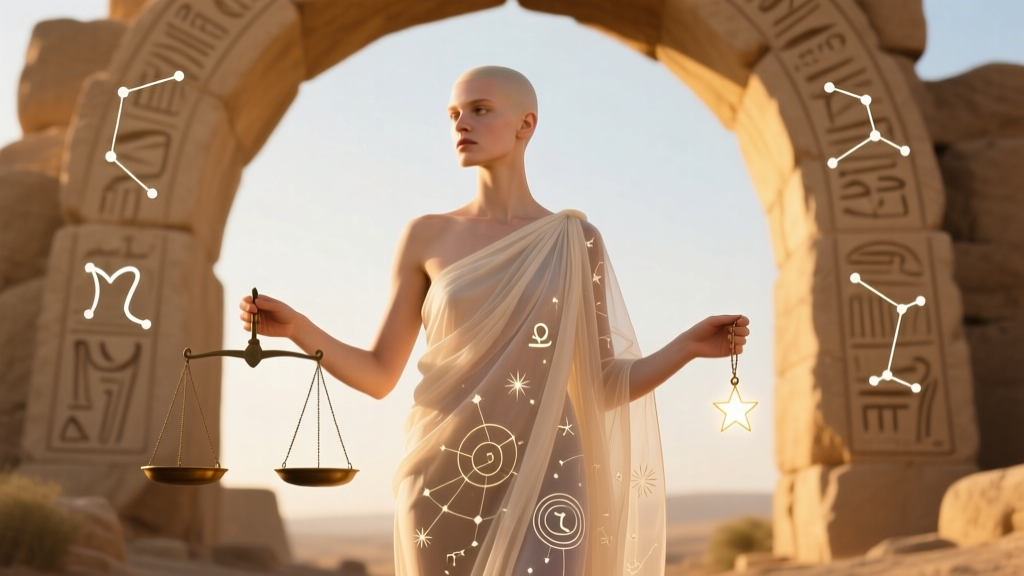
Individuals researching the october 14 horoscope sign are investigating the nuanced historical layers of Libra. Falling in the middle of the autumnal zodiac, October 14 represents a highly specific astrological coordinate: the second decan of Libra. To understand this birthdate, we must bypass modern pop-astrology and examine the Babylonian, Hellenistic, and Roman origins of the Scales. The historical evolution of this constellation reveals why those born on this date possess a unique blend of diplomatic foresight and structural rigidity, traits forged over millennia of astronomical observation and mythological adaptation.
The Babylonian Roots: MUL.APIN and the Claws of the Scorpion
Long before the Hellenistic period formalized the twelve-sign zodiac, ancient Mesopotamian astronomers mapped the ecliptic using a different framework. According to the MUL.APIN compendium, a Babylonian astronomical text compiled around 1000 BCE, the stars we now associate with Libra were originally known as Zibānītu (the scales) but were more commonly conceptualized as the claws of the Scorpion (Girtab). The stars Alpha and Beta Librae were specifically designated as the Southern and Northern Claws.
For an October 14 Libra, this dual heritage is highly significant. The historical association with Scorpius imbues the Libran archetype with an underlying intensity and investigative depth that is often missing from superficial horoscope readings. The scales were not merely instruments of passive balance; in Babylonian culture, they were tools of trade, taxation, and divine judgment, requiring rigorous precision and an unyielding adherence to objective truth.
Roman Innovation: Julius Caesar and the Scales of Justice
The formalization of Libra as an independent sign, entirely separated from Scorpius, was largely a Roman innovation. While the Greeks recognized the stars as the claws, Roman astrologers and poets—particularly during the reign of Augustus—elevated the Scales to represent justice, law, and the imperial ideal of a balanced society. The Roman poet Manilius, in his first-century work Astronomica, described Libra as the sign that holds the balance of day and night, directly referencing the autumn equinox.
This historical rebranding shifted the archetype from the visceral, defensive energy of the Scorpion's claws to the cerebral, judicial energy of the Scales. Those born on October 14 inherit this Roman emphasis on jurisprudence and systemic fairness. They are historically predisposed to evaluate human behavior through the lens of equity, often acting as mediators or institutional reformers rather than mere peacemakers.
The October 14 Horoscope Sign and the Chaldean Decans
To understand the specific psychological profile of an October 14 birthdate, we must apply the Hellenistic system of decans. The zodiac was divided into thirty-six decans, each spanning 10 degrees. October 14 typically falls around 21 degrees of Libra, placing it squarely in the second decan of the sign.
Saturn’s Influence on the Second Decan
In the traditional Chaldean rulership system, the first decan of Libra is ruled by the Moon, the second by Saturn, and the third by Jupiter. Because October 14 falls in the Saturn-ruled decan, the native's Venusian desire for harmony is heavily filtered through Saturnian discipline, structure, and occasionally, melancholy. This historical planetary layering explains the profound sense of duty, the meticulous attention to detail, and the occasional pessimism found in October 14 individuals. They do not seek balance for the sake of aesthetics; they seek balance because structural integrity demands it. According to Britannica's astronomical records, this intersection of Venus and Saturn creates a personality that excels in architecture, law, and systemic design.
Astronomical Shifts: The Precession of the Equinoxes
A critical component of Libra's origin story involves the discovery of axial precession by the Greek astronomer Hipparchus of Nicaea in 129 BCE. Historically, the autumn equinox occurred when the sun entered the constellation of Libra, a point known as the 'First Point of Libra.' This celestial event cemented Libra's mythological association with equilibrium, as day and night were of equal length.
However, due to the precession of the equinoxes—a slow wobble of the Earth's axis—the autumn equinox has since shifted backward into the constellation of Virgo. Despite this astronomical shift, the tropical zodiac used in Western astrology maintains the 'First Point of Libra' as a fixed seasonal marker. Understanding this historical divergence is crucial for October 14 Libras: it highlights the difference between sidereal reality and tropical symbolism, reinforcing the Libran ability to hold two opposing truths simultaneously without losing cognitive equilibrium.
Cross-Cultural Mythology: Ma'at and Astraea
The mythological framework surrounding the Scales extends far beyond Greco-Roman borders, providing a richer context for the October 14 personality. In ancient Egyptian cosmology, the concept of Ma'at represented truth, balance, and cosmic order. The ultimate judgment of the soul involved weighing the deceased's heart against the feather of Ma'at on a golden scale. Similarly, the Greek goddess Astraea, the virgin of justice, was said to have fled to the heavens to become the constellation Virgo, leaving her scales behind as Libra.
These myths underscore a fundamental truth about the October 14 archetype: their pursuit of justice is not a casual preference, but a deeply ingrained, almost spiritual imperative. They are historically wired to weigh the 'hearts' of those around them, assessing moral weight and ethical consistency with uncompromising accuracy.
Historical Origins Mapped to Modern Traits
By synthesizing ancient astrological history with modern psychological observation, we can map the specific origin points of Libra to the actionable traits of an October 14 native.
| Historical Origin Point | Ancient Context | Modern October 14 Trait |
|---|---|---|
| Babylonian Zibānītu | Tools of taxation and trade measurement | High financial acumen; ability to assess value and negotiate contracts |
| Roman Jurisprudence | Imperial law and civic administration | Drawn to legal professions, HR, and institutional policy-making |
| Chaldean Saturn Decan | Structural boundaries and karmic weight | Methodical planning; tendency toward perfectionism and serious demeanor |
| First Point of Libra | The exact moment of autumnal equilibrium | Exceptional crisis management; ability to remain centered in chaotic environments |
Actionable Synthesis: Applying Ancient Libran Wisdom
Understanding the historical and astronomical origins of your sign provides a distinct advantage in personal and professional development. Rather than relying on generic advice, October 14 individuals can leverage their specific astrological heritage through targeted actions:
- Leverage the Saturnian Decan: Your historical rulership by Saturn means you thrive on systems. Do not rely on spontaneous motivation. Build rigid, automated routines for your most important goals. Use time-blocking and project management frameworks like Kanban to satisfy your innate need for structural order.
- Channel the Babylonian Evaluator: In negotiations, adopt the mindset of the ancient Zibānītu. Remove emotion from the initial assessment phase. Gather empirical data, weigh the variables objectively, and only introduce Venusian diplomacy once the factual baseline is established.
- Manage Equilibrium Burnout: The historical burden of holding the 'First Point of Libra' can lead to decision fatigue. Recognize that not every situation requires your mediation. Implement a strict 'not my scales' policy for interpersonal conflicts that do not directly impact your core values or professional obligations.
- Study Systemic History: Feed your intellectual appetite by studying the history of legal systems, constitutional law, or game theory. Understanding how human beings have historically attempted to codify fairness will provide you with advanced mental models for resolving modern disputes.
The October 14 birthdate is not merely a marker of autumn; it is the culmination of thousands of years of human effort to quantify justice, measure truth, and impose order on a chaotic universe. By embracing the Babylonian precision, Roman civic duty, and Saturnian discipline inherent in your sign's origin story, you transform abstract astrological concepts into a concrete framework for lifelong impact.