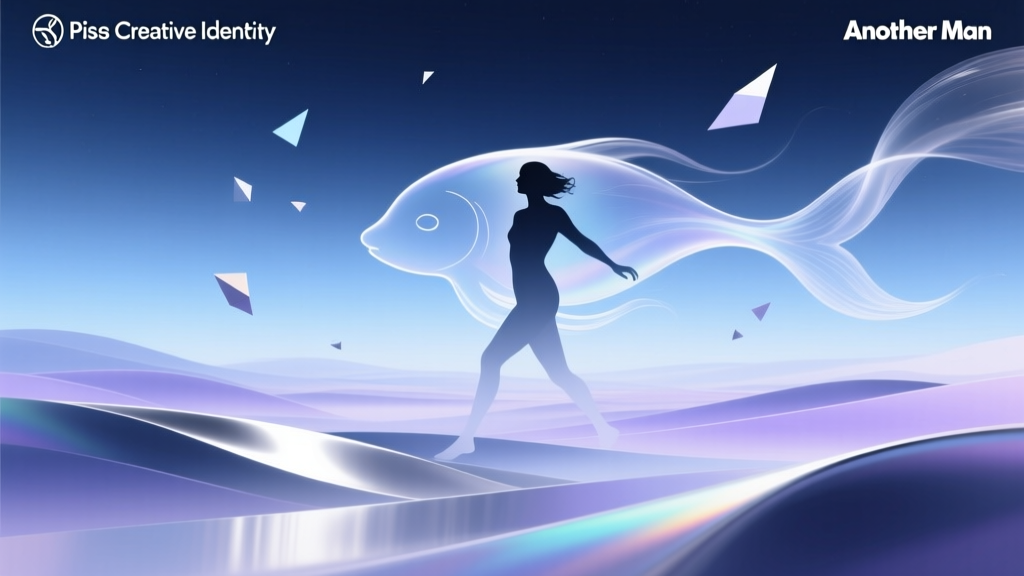
Pisces Creative Talents
At the twilight edge of the zodiac, Pisces (February 19 – March 20) embodies the archetype of the dreamer, the empath, and the vessel. Ruled by Neptune—the planet of illusion, transcendence, and collective unconscious—and co-ruled by Jupiter in its traditional dignity, Pisces possesses a creative faculty unlike any other sign. Their talent isn’t merely technical; it’s atmospheric, immersive, and emotionally resonant. Pisces doesn’t just make art—they channel it.
Neptune’s influence gifts Pisces with an extraordinary capacity for symbolic thinking, synesthesia-like perception (e.g., hearing color or tasting emotion), and deep attunement to subtle energetic shifts. This isn’t metaphorical—it’s neurologically observable. Research in a 2019 study published in Frontiers in Psychology found that individuals scoring high on measures of absorption—a trait strongly correlated with Piscean sensitivity—demonstrated significantly enhanced pattern recognition in ambiguous visual stimuli and greater activation in the default mode network (DMN), the brain system linked to imagination, memory integration, and self-referential thought. Pisces doesn’t ‘see’ a sunset; they feel its melancholy gold dissolve into the sea, hear its hush as a cello’s final note, and remember it as ancestral memory.
Their creativity is rarely linear. It emerges in tidal rhythms—intense surges followed by restorative retreats. This ebb-and-flow mirrors the lunar cycle and reflects Pisces’ water element and mutable modality: fluid, adaptive, and deeply responsive to environment and emotional climate. Unlike fixed signs who refine one medium over decades, or cardinal signs who launch bold new projects, Pisces often works across disciplines simultaneously—sketching while listening to ambient soundscapes, writing poetry while moving intuitively through dance, composing melodies in their head while watching rain trace paths down glass. This polymathic tendency isn’t scattered; it’s integrative. As psychologist Dr. Marti Laney notes in The Introvert Advantage, highly sensitive individuals (a trait prevalent among Pisces) process sensory data more deeply, leading to richer associative networks—precisely the neural architecture required for cross-modal creativity.
Crucially, Pisces’ creative talent is inseparable from empathy. They don’t portray emotion—they inhabit it. When a Pisces painter renders grief, they aren’t illustrating sorrow; they’re holding space for it, translating its weight, texture, and silence into pigment and form. This makes their work uniquely therapeutic—not only for the viewer but often for the artist themselves. Art becomes ritual, catharsis, and sanctuary. In clinical art therapy practice, Piscean clients frequently gravitate toward expressive, non-representational modalities like wet-on-wet watercolor, clay imprinting, or guided visualization drawing—methods that honor process over product and sensation over syntax.
Artistic Style and Aesthetic Preferences
Pisces’ aesthetic is instantly recognizable—not by rigid rules, but by its unmistakable *vibe*. Think less ‘design manual,’ more ‘emotional weather report.’ Their style is defined by softness, ambiguity, resonance, and reverie. It favors suggestion over statement, atmosphere over annotation, dissolution over definition.
Core Aesthetic Principles:
- Luminosity & Diffusion: Pisces adores light that bleeds—halos, glows, lens flares, backlighting, fog-diffused sunsets. Hard edges are rare; gradients dominate. This reflects Neptune’s veil—the boundary-dissolving quality that makes reality shimmer with possibility.
- Textural Depth: Velvet, water, smoke, silk, mist, aged paper, salt-crystal photography, wet paint blooms—materials that invite touch and evoke tactility even visually. Texture isn’t decorative; it’s emotive shorthand.
- Chromatic Sensitivity: While often associated with oceanic blues and purples, Pisces’ true palette is more nuanced: desaturated teals, bruised lavenders, dusty rose, tarnished silver, seafoam green, and the warm grey of storm-light. They avoid primary saturation unless intentionally jarring (e.g., a single blood-red thread in a monochrome textile). Their color theory is rooted in emotional temperature, not hue logic.
- Symbolic Layering: Pisces rarely uses literal imagery. A fish might appear—but as a watermark in translucent vellum, a ripple distortion in glass, or the negative space between two overlapping hands. Meaning resides in the liminal, the implied, the half-remembered.
- Temporal Fluidity: Their aesthetics resist chronological order. A photograph might blend archival film grain with digital glitch; a poem might weave childhood memory, mythic archetype, and present-moment sensation without transition. Time is cyclical, porous, and subjective.
To illustrate how these principles manifest across mediums, consider the following comparison table of Pisces’ stylistic signatures versus those of two other water signs—Cancer and Scorpio—for contrast:
| Dimension | Pisces | Cancer | Scorpio |
|---|---|---|---|
| Primary Motif | The Veil / Threshold / Dissolution | The Hearth / Container / Nurturing Archetype | The Chrysalis / Depth / Transformation |
| Light Quality | Diffused, ethereal, backlit, bioluminescent | Warm, golden-hour, candlelit, intimate | Low-key, dramatic chiaroscuro, spotlighted |
| Texture Preference | Fluid, yielding, translucent, evaporative | Soft, woven, tactile, comforting (knit, wool, linen) | Rich, dense, polished, metallic, velvety |
| Color Palette Anchor | Desaturated aqua, misty violet, pearlescent white | Buttery cream, coral blush, sea-glass green | Blood crimson, obsidian black, deep emerald |
| Composition Principle | Asymmetrical flow, negative space as presence, soft focus | Centered, embracing, protective framing, layered warmth | Intense focal point, tight cropping, psychological tension |
This table underscores a vital truth: Pisces’ aesthetic isn’t ‘fuzzy’ or ‘indecisive’—it’s meticulously calibrated to evoke a specific inner state: the sacred uncertainty of being on the verge of revelation. Their art invites the viewer not to decode, but to *dwell*. As art historian Dr. Anna Dezeuze writes in Participation in Art and Everyday Life, “The most potent contemporary artworks function not as objects to be mastered, but as thresholds to be crossed. Piscean aesthetics exemplify this threshold logic—where the artwork’s power lies precisely in its resistance to final interpretation.”
Best Creative Outlets for Pisces
Not all creative outlets serve Pisces equally. Some amplify their innate gifts; others drain their energy or force them into incompatible structures. The ideal outlet honors their need for emotional safety, sensory richness, non-linear process, and meaningful resonance—not just technical mastery.
Top 5 High-Affinity Creative Outlets (with Actionable Implementation Tips):
1. Water-Based Visual Arts
Watercolor, ink wash, sumi-e, cyanotype, liquid light photography, and resin casting align perfectly with Pisces’ elemental nature. Water isn’t just a medium—it’s a collaborator. Its unpredictability mirrors Pisces’ comfort with surrender and trust in emergent form.
- Actionable Tip: Practice ‘guided surrender’ exercises. Set an intention (“I invite clarity”) before beginning, then limit control: use only one brush, pre-mix three colors, work on damp paper, and commit to zero corrections. Document the process—not just the result—to build confidence in intuition.
- Resource: The Watercolor Artist Magazine regularly features techniques emphasizing flow and spontaneity, including interviews with Piscean artists like Agnes Pelton (born Feb 21, 1881) whose luminous, visionary abstractions exemplify this approach.
2. Soundscaping & Ambient Composition
Pisces hears the world as symphony—wind in leaves is percussion, distant sirens are dissonant brass, heartbeats are basslines. Creating immersive audio environments leverages their synesthetic sensitivity and aversion to rigid structure.
- Actionable Tip: Build a ‘sound altar’: Record 3–5 minutes of ambient audio daily (rain, subway hum, café murmur, your own breath). Layer them in free software like Audacity using low-pass filters and reverb. Name each piece after an emotion (“Anchored,” “Drifting,” “Submerged”). No need to share—this is sonic journaling.
- Resource: Brian Eno’s concept of “ambient music as environmental influence, not foreground entertainment” (brianenomusic.com) provides philosophical grounding for Pisces’ instinct to create atmospheres, not anthems.
3. Movement-Based Storytelling
Contemporary dance, Butoh, contact improvisation, and somatic movement practices allow Pisces to express narratives the body knows before the mind names them. This bypasses the critical intellect that often stifles their flow.
- Actionable Tip: Try ‘water mapping’: Lie on the floor, close your eyes, and imagine your body as a riverbed. Where does energy pool? Where does it rush? Where is sediment heavy? Move *only* what feels authentically fluid—not choreographed steps, but micro-shifts responding to internal tides. Film it silently; watch playback without judgment—notice where the ‘story’ lives in your shoulders, wrists, or breath.
- Resource: The Society for the Study of Human Development publishes research validating somatic practices as tools for emotional regulation and embodied creativity—key for Pisces managing overwhelm.
4. Poetic Prose & Lyric Essay
Pisces excels at hybrid forms that blur genre boundaries—memoir infused with myth, scientific observation laced with longing, travelogue dissolving into daydream. Their strength lies in associative logic and emotional cadence, not argumentative rigor.
- Actionable Tip: Keep a ‘resonance journal.’ Instead of writing full pieces, collect fragments: a phrase overheard, a color swatch glued beside a line of poetry, a pressed flower next to a quote about loss. Once monthly, arrange 7 fragments on a page—not chronologically, but by emotional gravity. Let connections emerge visually first. Then write *from* the arrangement, not about it.
- Resource: The Poetry Foundation’s archive of lyric essays by writers like Claudia Rankine and Maggie Nelson demonstrates how Piscean sensibility thrives in form-defying, emotionally intelligent prose.
5. Ritual Craft & Sacred Object Making
Jewelry imbued with intention, hand-bound journals, embroidered talismans, scent-blending, or creating altars transforms making into devotion. This satisfies Pisces’ need for meaning, mystery, and tangible connection to the unseen.
- Actionable Tip: Design a ‘moon-phase craft cycle.’ New Moon = gathering materials (stones, threads, herbs); Waxing Moon = preparation (cleaning, sorting, charging); Full Moon = active creation; Waning Moon = blessing, gifting, or releasing. Use this rhythm to anchor creativity in natural cycles, reducing decision fatigue.
- Resource: The Craft in America documentary series highlights makers like fiber artist Judith Scott (a Pisces born May 1943, though her birth date is widely cited as May 1943—her work’s intuitive, boundary-dissolving power remains emblematic) whose non-verbal, wrapped-sculpture practice embodies Piscean ritual craft.
Famous Pisces Artists and Creatives
History is replete with Piscean visionaries whose work redefined aesthetics, expanded consciousness, and proved that sensitivity is not weakness—but the ultimate creative superpower. Their contributions share a thread: they dissolved boundaries—between self and other, art and life, reality and dream.
- Albert Einstein (March 14, 1879): Though famed for physics, Einstein was profoundly Piscean in method. His breakthroughs emerged not from lab data alone, but from “thought experiments”—vivid, embodied visualizations (e.g., riding a light beam) that accessed intuitive, non-linear understanding. He stated, “Imagination is more important than knowledge.” His iconic unruly hair and dreamy gaze were outward manifestations of Neptune’s influence—prioritizing inner vision over external conformity.
- Yoko Ono (February 18, 1933): A quintessential Piscean provocateur, Ono’s conceptual art (“Cut Piece,” “Wish Tree”) invited radical vulnerability, collective participation, and poetic simplicity. Her work functions as emotional acupuncture—precise, gentle, and designed to release submerged feeling. Her 2015 retrospective at the Museum of Modern Art highlighted how her lifelong practice bridges Eastern spirituality and avant-garde experimentation, hallmarks of Piscean synthesis.
- Michelangelo Buonarroti (March 6, 1475): While his Capricorn Sun provided monumental discipline, his Pisces Moon (confirmed via historical chart reconstruction by astrologer Nick Dagan Best) infused his Sistine Chapel frescoes with unprecedented emotional depth. The agonized, yearning figures of the prophets and sibyls—especially the iconic Creation of Adam, where God’s and Adam’s fingers nearly touch—radiate Piscean yearning for divine connection and transcendent unity.
- Kurt Cobain (February 20, 1967): Cobain’s raw, confessional songwriting channeled collective adolescent pain with Piscean empathy. His aesthetic—flannel, thrift-store grunge, distorted yet melodic guitar—rejected polished perfection for authentic, textured vulnerability. As documented in the Biography.com profile, his journals overflow with water imagery, fragmented poetry, and desperate pleas for connection—archetypal Piscean expression.
- Stevie Nicks (May 26, 1948): Though a Gemini Sun, Nicks’ Pisces Rising (ascendant) and Moon in Pisces created her signature mystical persona. Her flowing scarves, tambourine shivers, and lyrics steeped in witchcraft, dreams, and heartbreak (“Rhiannon,” “Landslide”) embody the Piscean muse: ethereal, emotionally exposed, and timeless.
What unites these figures isn’t just birth dates—it’s their shared courage to dwell in ambiguity, their refusal to separate art from soul-work, and their legacy of expanding what art *can do*: heal, unsettle, unify, and reveal hidden dimensions of being.
Pisces as a Muse and Inspiration
Pisces doesn’t merely seek inspiration—they *are* inspiration. Their very presence functions as a creative catalyst for others. This isn’t vanity; it’s physics. Pisces radiates a frequency of openness, receptivity, and emotional permission that lowers creative inhibitions in those around them.
Consider the dynamics:
- The Mirror Effect: Pisces’ profound empathy allows them to reflect others’ unspoken truths back with startling clarity—often through gesture, silence, or a single resonant image. A writer stuck on a character’s motivation might find themselves describing a Pisces friend’s quiet reaction to bad news, and suddenly *know* what the character would do.
- The Threshold Keeper: Pisces naturally holds space for the ‘in-between’—the moment before speech, the pause between movements, the breath before a decision. Artists working with Pisces (as collaborators, subjects, or muses) often report breakthroughs occurring in these suspended moments, accessing ideas that felt previously inaccessible.
- The Symbolic Resonator: Pisces doesn’t need to speak to communicate archetypally. Their style—how they wear a scarf, arrange flowers, or stare out a rain-streaked window—becomes imbued with narrative weight. Photographers, filmmakers, and novelists consistently cite Pisces individuals as their most compelling subjects because their stillness *tells stories*.
However, this muse energy carries responsibility. Pisces must guard against becoming a bottomless well for others’ projections. Healthy musehood requires boundaries: saying “no” to being photographed during grief, declining to ‘perform’ vulnerability on demand, or stepping away when their energy is depleted. As therapist and author Susan Cain emphasizes in Bittersweet, “True creative generosity flows from fullness, not emptiness. The muse who forgets to refill her own cup becomes a hollow echo.”
For Pisces seeking to harness their muse energy consciously:
- Curate Your Presence: Consciously choose one ‘signature resonance’ to cultivate—e.g., always wearing a particular stone, keeping a specific plant on your desk, or lighting a certain incense before creative sessions. This gives others a tangible, consistent anchor point for their inspiration.
- Practice ‘Inspired Reciprocity’: When someone tells you, “You inspired my painting,” ask: “What part of me did you connect with?” Then, later, create something *in response* to their answer. This closes the loop and transforms passive muse-energy into active, collaborative creation.
- Protect Your Threshold: Designate a physical or temporal ‘muse-free zone’—e.g., your bedroom after 9 PM, or Sundays offline. This preserves your core sensitivity for your own work, preventing creative burnout.
Developing Your Creative Practice
For Pisces, developing a sustainable creative practice isn’t about discipline in the conventional sense—it’s about designing an ecosystem that supports their unique neurology and energy patterns. Forget rigid schedules; embrace rhythmic attunement.
Phase-Based Practice Framework (Aligned with Lunar & Emotional Cycles):
1. The Receptive Phase (New Moon + Low-Energy Days)
Focus: Gathering, dreaming, absorbing. This is not ‘unproductive’ time—it’s essential composting.
- Activities: Visiting museums *without taking notes*, listening to unfamiliar music genres, walking without destination, collecting textures (feathers, interesting bark, fabric scraps), reading poetry aloud slowly.
- Tool: Keep a ‘Dream Log’—not just night dreams, but daydreams, fantasies, and fleeting images. Write them immediately upon waking or arising, no editing.
- Why it works: Honors Pisces’ need for incubation. Neuroscience confirms that periods of ‘default mode network’ activation (daydreaming, resting) are crucial for consolidating memories and forming novel connections—the bedrock of original thought.
2. The Emergent Phase (First Quarter Moon + Medium-Energy Days)
Focus: Experimentation, play, low-stakes making. Permission to be messy.
- Activities: Collage with old magazines (no theme), free-writing with eyes closed, sketching with non-dominant hand, recording voice memos describing a memory in sensory detail only (no analysis).
- Tool: Use ‘constraint prompts’ to reduce overwhelm: “Make something using only blue and grey,” “Write a paragraph where every sentence starts with ‘I remember…’,” “Create a 60-second video using only footage shot on your phone today.”
- Why it works: Constraints paradoxically increase creative freedom for Pisces by providing gentle boundaries, reducing the paralyzing weight of infinite possibility.
3. The Embodied Phase (Full Moon + High-Energy Days)
Focus: Deep work, integration, sharing. Channeling accumulated resonance into form.
- Activities: Editing a poem while walking, recording vocals in a steamy bathroom for natural reverb, painting large-scale with bare hands, performing a short piece for one trusted witness.
- Tool: The ‘Three-Thread Weave’ technique: Choose three elements from your Receptive Phase log (e.g., a dream image, a song lyric, a texture). Create one piece weaving all three together literally or symbolically.
- Why it works: Leverages Pisces’ peak energetic alignment and desire for meaningful expression. Sharing—even minimally—anchors the ephemeral in reality.
4. The Release Phase (Last Quarter Moon + Reflective Days)
Focus: Letting go, honoring completion, preparing for renewal.
- Activities: Burning old drafts (safely), gifting a small handmade item, writing a letter to a finished project thanking it, photographing your workspace before cleaning it.
- Tool: ‘Gratitude Mapping’: List 3 things your creative process taught you this cycle—not about skill, but about yourself (e.g., “I am patient with uncertainty,” “My hands remember what my mind forgets”).
- Why it works: Provides necessary closure. Pisces’ mutable nature craves release to prevent emotional stagnation. Ritualizing endings makes space for the next wave.
Consistency comes not from daily output, but from honoring this cycle. Track your energy and moon phase for one month. Notice patterns. Adjust the framework—not to fit external expectations, but to deepen your fidelity to your own inner tides.
FAQ
How do I stop my creativity from feeling ‘too vague’ or ‘unfocused’?
Vagueness is Pisces’ native language—not a flaw to fix, but a medium to master. Instead of forcing clarity, practice ‘vague-to-precise translation.’ Start with a nebulous feeling (“This piece feels like underwater silence”). Then ask: What *specific* sensory detail embodies that? (e.g., “The muffled thump of a distant ship’s engine”). Use that concrete detail as your anchor. As poet Ocean Vuong advises, “Precision is the antidote to abstraction—but precision begins with naming the abstraction honestly first.”
Is it okay to copy other artists’ styles while I’m finding my own?
Yes—especially for Pisces. Imitation is a form of deep listening and neural mirroring. But add your ‘Piscean signature’: take a realistic portrait and soften every edge with watercolor bleed; take a rigid geometric pattern and warp it with heat-sensitive ink; take a spoken-word poem and layer it beneath ocean sounds. Your sensitivity will inevitably infuse the copy with uniqueness. The key is conscious borrowing, not unconscious mimicry.
My creative work feels too ‘heavy’ or melancholic. How can I access lighter, joyful expression?
Pisces’ depth includes joy—but it’s often quieter, more luminous, and intertwined with wonder. Shift focus from *emotion* to *sensation*: instead of “I want to feel happy,” ask “What sensation feels like lightness right now?” (e.g., cool grass under bare feet, the fizz of sparkling water, the weightlessness of floating). Translate *that sensation* into art—using bright, clear colors, crisp lines, or staccato rhythms. Joy for Pisces is often found in pure, unmediated presence.
I get overwhelmed by too many ideas. How do I choose which one to pursue?
Don’t choose with your mind—choose with your body. Sit quietly. Bring each idea to mind, one at a time. Notice: Which one makes your breath deepen? Which one causes a slight warmth in your chest? Which one makes your fingers want to move? Your body holds wisdom your intellect hasn’t processed. Trust that somatic yes. Also, try the ‘One-Month Test’: Commit to exploring *one* idea for 30 days with zero pressure to finish. Often, the right path reveals itself through sustained engagement, not premature selection.
How can I protect my creative energy when collaborating with others?
Establish ‘Piscean Protocols’ upfront: 1) **Sensory Safeguards:** Agree on shared workspace ambiance (lighting, sound levels, scent). 2) **Feedback Framing:** Request feedback phrased as “I felt…” statements, not “You should…” directives. 3) **Exit Clauses:** Define clear, respectful ways to pause or step back (“I need 24 hours to integrate this”). 4) **Resonance Check-Ins:** Every 2–3 sessions, ask: “What’s one thing that’s feeling aligned? One thing needing adjustment?” Protecting your energy isn’t selfish—it ensures your deepest, most authentic contribution remains available.
Ultimately, Pisces’ creative identity is not a fixed destination, but a lifelong pilgrimage into the boundless sea of human feeling and cosmic connection. Their artistry is their prayer, their protest, their love letter to the invisible. By honoring their fluid nature, cultivating their unique aesthetic language, and protecting their sacred sensitivity, Pisces doesn’t just make art—they help the world remember how to dream, feel, and believe in magic again. As the poet Rainer Maria Rilke, a Pisces (December 4, 1875—though born in December, his Sun sign is Sagittarius; however, his Pisces Moon and lifelong thematic preoccupations with dissolution and transcendence resonate deeply with the Piscean archetype), wrote: “Live the questions now. Perhaps you will then gradually, without noticing it, live along some distant day into the answer.” For Pisces, the question *is* the art—and the living, the masterpiece.