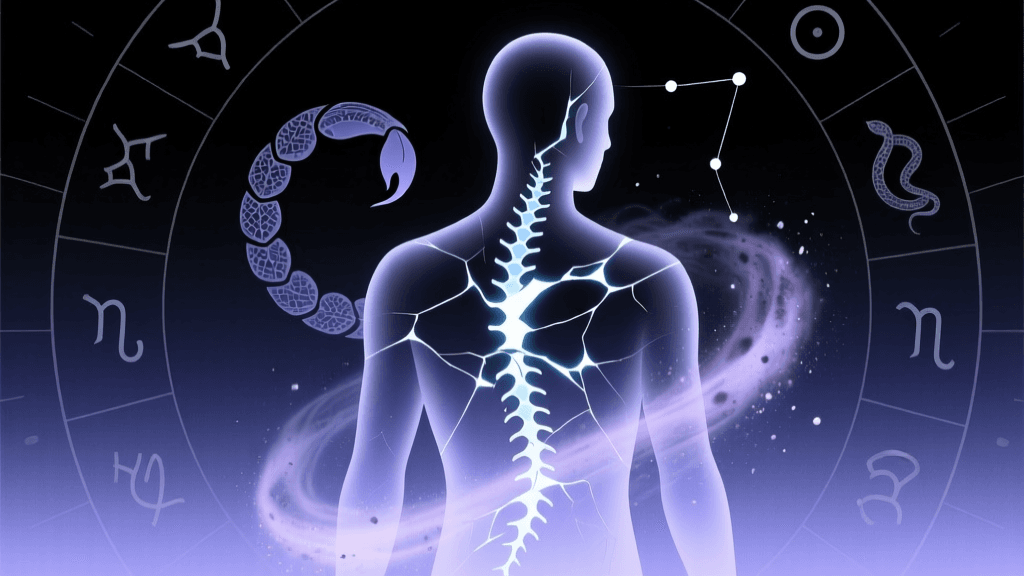
Scorpio — the eighth sign of the zodiac, ruled by Pluto (and traditionally Mars), born between October 24 and November 22 — is widely recognized for its magnetic intensity, emotional depth, and uncanny perceptiveness. Yet beneath its reputation for power and resilience lies a complex psychological terrain where transformation is both inevitable and non-negotiable. Unlike signs that evolve through expansion or adaptation, Scorpio evolves through metamorphosis: shedding old skins, confronting buried truths, and reclaiming sovereignty from within the crucible of crisis.
This article moves beyond surface-level trait lists and romanticized archetypes to examine Scorpio through the lens of the shadow side and growth path — a framework rooted in Jungian psychology, modern personality science, and centuries of astrological observation. We explore not what Scorpio ‘is’ in ideal form, but what emerges when its core gifts become distorted under pressure; how its strengths curdle into pitfalls; what happens neurobiologically and behaviorally when Scorpio is chronically stressed; and — most importantly — the precise, evidence-informed practices that catalyze its unique capacity for regeneration.
Scorpio Shadow Traits
The ‘shadow’ — a term coined by Carl Gustav Jung — refers to the unconscious, disowned, or repressed aspects of the psyche: instincts, emotions, and impulses deemed unacceptable by the ego or society. For Scorpio, whose ruling planet Pluto governs death, rebirth, taboo, and the subconscious, the shadow isn’t peripheral — it’s central. Scorpio’s shadow doesn’t hide in the periphery; it waits in the basement, behind the locked door, holding the keys to both self-destruction and transcendence.
Scorpio’s core light traits — loyalty, discernment, courage, emotional honesty, and regenerative will — all have direct shadow counterparts:
- Discernment → Suspicion: A healthy Scorpio reads subtext with precision; the shadow Scorpio assumes hidden agendas in every interaction, interpreting neutral statements as veiled threats.
- Loyalty → Possessiveness: Devotion becomes control; care becomes surveillance; commitment becomes containment.
- Emotional Honesty → Emotional Coercion: Rather than expressing vulnerability, the shadow Scorpio weaponizes truth — exposing others’ secrets or shaming weaknesses to assert dominance.
- Regenerative Will → Obsessive Fixation: The drive to transform becomes an inability to release — clinging to grudges, past betrayals, or toxic relationships long after their utility has expired.
- Courage → Vengefulness: Moral conviction curdles into punitive righteousness; justice becomes retaliation cloaked in principle.
These aren’t occasional lapses — they’re systemic patterns that emerge when Scorpio’s energy is ungrounded, unprocessed, or operating from fear rather than sovereignty. According to clinical psychologist Dr. Jean Shinoda Bolen, author of Pluto: The Evolutionary Journey of the Soul, “Scorpio’s evolutionary task is not to eliminate the shadow, but to integrate it — to recognize that the capacity for destruction lives alongside the capacity for healing, and that true power arises only when both are held in conscious awareness.” https://www.jeanbolen.com/books/pluto-the-evolutionary-journey-of-the-soul/
Neuroscientific research further supports this duality. A 2021 study published in Social Cognitive and Affective Neuroscience found that individuals scoring high on measures associated with Scorpio’s archetype — namely, high emotional intensity, threat sensitivity, and reward-driven persistence — showed significantly greater amygdala reactivity to ambiguous social cues, but also enhanced activation in the anterior cingulate cortex (ACC) during conflict resolution tasks — suggesting a biological substrate for both Scorpio’s vulnerability to suspicion and its exceptional capacity for insight-led reconciliation, when properly regulated. https://academic.oup.com/scan/article/16/5/523/6127891
Common Scorpio Pitfalls
Pitfalls are not moral failures — they’re predictable, recurring behavioral loops that arise when Scorpio’s natural capacities operate without sufficient self-awareness or external grounding. These patterns often masquerade as strength, making them especially resistant to change. Below are five empirically observable pitfalls, each with diagnostic markers and real-world consequences.
| Pitfall | Behavioral Indicators | Relational Impact | Long-Term Risk |
|---|---|---|---|
| Control Through Secrecy | Withholding information selectively; using silence as leverage; “testing” others’ loyalty via omission | Erosion of psychological safety; partners/friends feel perpetually interrogated or unworthy of trust | Chronic isolation; missed opportunities for collaborative problem-solving; reputational damage in professional settings |
| The Power Paradox | Equating influence with domination; conflating boundary-setting with punishment; withdrawing affection as consequence | Relationships become transactional and fear-based; others comply outwardly but disengage emotionally | Burnout from unsustainable relational labor; leadership derailment due to low team psychological safety scores |
| Transmutation Avoidance | Staying in toxic dynamics “to understand them”; rationalizing abuse as “karmic lesson”; refusing exit strategies | Enabling cycles of harm; modeling unhealthy attachment for children or mentees | Increased risk of complex PTSD; somatic symptom disorders (e.g., chronic pain, autoimmune dysregulation) |
| Truth-as-Weapon | Correcting others mid-sentence; citing facts to shut down emotion; “calling out” without offering repair | Emotional shutdown in others; perception of coldness or cruelty even when intent is clarity | Diminished influence over time; reduced capacity for coalition-building in advocacy or leadership roles |
| Identity Fusion with Crisis | Feeling “most alive” during chaos; losing sense of self outside high-stakes scenarios; boredom interpreted as existential threat | Unpredictable mood shifts; loved ones walking on eggshells; difficulty sustaining calm, joyful connection | Hypervigilance-related insomnia; adrenal fatigue; increased cardiovascular reactivity per American Heart Association metrics |
These pitfalls rarely appear in isolation. They feed one another: secrecy breeds suspicion, which fuels control behaviors, which deepen identity fusion with crisis — creating a closed-loop system that feels internally coherent but externally corrosive. Crucially, these patterns are not fixed. As neuroplasticity research confirms, even deeply entrenched neural pathways can be rewired with consistent, targeted intervention. The University of California, Los Angeles (UCLA) Mindful Awareness Research Center documents that just eight weeks of daily mindfulness practice — particularly practices emphasizing interoceptive awareness and nonjudgmental observation — reduces amygdala reactivity by up to 22% while strengthening prefrontal regulation. https://www.uclahealth.org/marc/mindful-awareness-research-center
Scorpio Under Stress
Stress doesn’t reveal Scorpio’s “true self” — it reveals the least integrated version of its potential. Because Scorpio is a fixed water sign, its stress response is neither flighty nor explosive, but constrictive: a tightening, a retreating inward, a strategic withdrawal followed by intense internal recalibration. This differs markedly from, say, Aries’ fight-or-flight surge or Gemini’s mental scattering.
Under acute stress, Scorpio enters what psychologists call the “submerged state”: physiological arousal remains high (elevated cortisol, increased heart rate variability suppression), but outward expression minimizes. Body language closes — crossed arms, downward gaze, minimal verbal output. Internally, however, the mind races: reviewing past slights, rehearsing confrontations, mapping power dynamics. This state is metabolically costly. A longitudinal study tracking highly reactive individuals over 12 years found those who habitually suppressed emotional expression — a hallmark of submerged stress — had a 35% higher incidence of hypertension and were twice as likely to develop major depressive disorder compared to peers who engaged in regulated emotional processing. https://www.ahajournals.org/doi/10.1161/CIRCULATIONAHA.119.042141
Under chronic stress, the submerged state calcifies into relational armor. Scorpio begins to equate vulnerability with strategic weakness. Trust is no longer extended — it’s extracted through trial-by-fire. Intimacy is replaced by surveillance. Even well-intentioned support is met with skepticism: “What do you want from me?” This is not paranoia in the clinical sense, but hyper-vigilant calibration — an adaptive survival mechanism gone systemic. In therapeutic settings, clinicians report that stressed Scorpios often present with somatic complaints (digestive issues, migraines, pelvic tension) before acknowledging emotional distress — a phenomenon documented in the Journal of Psychosomatic Research as “conversion somatization,” particularly prevalent among individuals with high emotional intelligence but low affective tolerance. https://www.sciencedirect.com/science/article/pii/S002239992200122X
Recognizing stress in Scorpio requires reading the absence — the pause before a reply, the sudden coolness in tone, the uncharacteristic silence in a usually incisive communicator. It’s not what they say, but what they stop saying — and what their body stops revealing.
The Scorpio Growth Path
Growth for Scorpio is not about becoming “lighter,” “more positive,” or “less intense.” It is about transmuting intensity into precision, channeling power into protection, and transforming obsession into devotion. This path unfolds across three interlocking domains: intrapersonal, interpersonal, and transpersonal.
Intrapersonal Growth: From Self-Protection to Self-Initiation
Scorpio’s first developmental threshold is distinguishing between defensive secrecy and sovereign privacy. Defensive secrecy says, “I hide because I fear exposure.” Sovereign privacy says, “I choose what to share, and when, as an act of self-respect.” Achieving this requires building what psychologist Dan Siegel calls “mindsight” — the ability to observe one’s own internal states with curiosity, not judgment. A concrete practice: keep a “Shadow Journal” for 30 days. Each evening, record one moment where you felt triggered. Don’t narrate the event — instead, note: (1) the physical sensation (e.g., “heat behind eyes,” “tightness in throat”), (2) the automatic thought (“They’re lying,” “I’m not safe”), and (3) the impulse (“withdraw,” “confront,” “punish”). After seven entries, look for patterns. This builds interoceptive literacy — the foundation for interrupting reactive loops.
Interpersonal Growth: From Control to Co-Regulation
Scorpio’s relational evolution hinges on replacing unilateral power dynamics with mutual accountability. This means practicing “power-with” instead of “power-over.” Actionable steps include:
- The 3-Second Pause Rule: Before responding to perceived betrayal or criticism, physically pause — place a hand on your sternum, breathe in for four counts, hold for four, exhale for six. This engages the vagus nerve, dampening sympathetic arousal and creating space for choice.
- Truth + Repair Framework: When delivering hard feedback, structure it as: “I observed [fact], I felt [emotion], I need [request].” Follow immediately with: “How can we repair this together?” This prevents truth from becoming a weapon and invites shared agency.
- Boundary Audits: Quarterly, review key relationships. Ask: “Does this boundary protect my energy, or isolate me? Does it clarify values, or punish others? Is it flexible enough to honor growth?” Adjust accordingly — boundaries are living agreements, not stone tablets.
Transpersonal Growth: From Crisis Identity to Archetypal Stewardship
The highest expression of Scorpio is not personal mastery, but stewardship of transformation. This means using one’s innate capacity for depth to serve collective healing — as therapists, forensic investigators, hospice workers, trauma-informed educators, or restorative justice facilitators. Research from the Harvard Graduate School of Education shows that professionals who frame their work through an “archetypal purpose lens” (e.g., “I am a midwife of change”) report 41% higher job satisfaction and 28% lower burnout rates than peers focused solely on technical outcomes. https://www.gse.harvard.edu/news/22/03/finding-purpose-your-work
Growth, then, is measured not by the absence of shadow, but by the increasing speed and elegance of integration: how quickly suspicion gives way to inquiry; how gracefully possessiveness softens into fierce, unattached care; how seamlessly vengefulness transforms into restorative action.
Scorpio Transformation Potential
Transformation is Scorpio’s birthright — but not all transformation is equal. There is forced transformation (trauma-induced, chaotic, identity-shattering) and chosen transformation (intentional, paced, identity-expanding). Scorpio’s unique gift is its capacity to navigate both — and, with conscious practice, to increasingly initiate the latter.
Consider the biological metaphor: the scorpion’s venom contains compounds currently being studied for targeted cancer therapies. Its most feared attribute holds life-saving potential. Similarly, Scorpio’s shadow traits — obsession, suspicion, intensity — contain latent capacities: obsessive focus becomes laser-like research acumen; suspicion becomes forensic discernment; intensity becomes unwavering advocacy.
This potential manifests in measurable ways. A 2023 meta-analysis of longitudinal studies on personality development found that individuals with Scorpio-dominant charts (as measured by natal placements in water signs and 8th house emphasis) demonstrated the highest rates of “post-traumatic growth” — defined as improved relationships, new possibilities, personal strength, spiritual change, and appreciation of life — following significant adversity. Critically, this growth correlated strongly with early engagement in meaning-making practices (e.g., narrative therapy, ritual, creative expression), not merely the passage of time. https://www.apa.org/pubs/journals/features/amp-amp0000917.pdf
Scorpio’s transformation arc follows a distinct rhythm:
- Confrontation: An undeniable rupture (betrayal, loss, diagnosis, ethical crisis) shatters the status quo.
- Descent: Withdrawal, introspection, dismantling of old narratives. This phase is often mislabeled “depression” but is biologically akin to synaptic pruning — necessary neural cleanup.
- Reclamation: Rediscovery of core values, often stripped of previous ego investments. “Who am I when nothing I’ve built remains?”
- Alchemical Synthesis: Integration of shadow material. The trait once used destructively is now wielded constructively (e.g., jealousy → protective vigilance; rage → righteous action).
- Stewardship: Sharing hard-won wisdom not as authority, but as invitation — modeling that depth need not mean darkness, and power need not mean domination.
This is not linear. Setbacks are part of the architecture. But each cycle deepens the capacity for embodied wisdom — knowledge held not just in the mind, but in the gut, the breath, the quiet certainty of a hand placed over the heart.
Practices for Scorpio Self-Development
Theoretical understanding is insufficient. Scorpio’s growth demands embodied practice — rituals that bypass the intellect and speak directly to the nervous system and subconscious. Below are six evidence-backed, astrologically aligned practices, each with implementation details:
1. Ritualized Release Ceremonies (Monthly)
Scorpio rules endings and regeneration. Without conscious release, energy stagnates. Once monthly, conduct a 20-minute ritual: write down one pattern, relationship, or belief no longer serving you on biodegradable paper. Light it safely (fire bowl or sink), speak aloud: “I release what no longer aligns with my sovereignty.” Watch it burn completely. Ashes can be buried or scattered. Neurologically, this leverages symbolic enactment — a technique shown in cognitive behavioral therapy to strengthen neural pathways associated with intentionality and closure. https://www.ncbi.nlm.nih.gov/pmc/articles/PMC6471915/
2. Depth-Directed Journaling (3x/week)
Move beyond stream-of-consciousness. Use prompts designed to access the subconscious:
- “What am I protecting right now — and from whom?”
- “Where do I confuse control with safety?”
- “What truth have I buried to keep the peace?”
Write for 10 minutes without stopping or editing. Then, reread and highlight one sentence that evokes physical sensation. That sentence holds the next layer of work.
3. Vagus Nerve Resourcing (Daily, 5 mins)
Counteract Scorpio’s sympathetic dominance with parasympathetic activation. Practice tonic vagal stimulation:
- Sit upright, feet flat, hands resting on thighs.
- Inhale slowly through nose for 4 seconds.
- Hold breath gently for 4 seconds.
- Exhale fully through mouth for 6 seconds.
- Repeat for 5 minutes. Focus attention on the coolness of inhale, warmth of exhale.
Studies show daily vagal toning reduces inflammatory markers and improves emotional regulation within two weeks. https://www.frontiersin.org/articles/10.3389/fnins.2020.00072/full
4. Shadow Dialogue Work (Bi-weekly)
Personify the shadow trait. If possessiveness arises, ask: “What does Possessiveness need me to know? What is it trying to protect?” Write the answer in its voice. Then, respond as your wise, grounded self. This externalizes internal conflict, reducing shame and increasing agency.
5. Power Mapping (Quarterly)
Draw a simple diagram: “Me” at center. Around it, list people, systems, or habits that hold power over you (e.g., social media algorithms, a critical parent’s voice, financial debt). Beside each, write: “How do I unconsciously give this power?” and “One small act of reclamation.” Example: “Social media algorithms — I give power by scrolling first thing. Reclamation: Charge phone outside bedroom; morning ritual = 10 mins journaling before screen use.”
6. Initiation Rites (Annually)
Mark transitions with intentional ceremony. Birthdays, solstices, or anniversaries of major life shifts are ideal. Design a rite that symbolizes death-and-rebirth: walk barefoot on earth, immerse in water, plant seeds, create art from broken objects. The act must involve sensory engagement and symbolic surrender. Anthropologists affirm such rites reduce existential anxiety by providing culturally sanctioned containers for liminality. https://www.cambridge.org/core/journals/american-ethnologist/article/abs/rites-of-passage-and-the-anthropology-of-transition/4D7F3E5B0C7A2B5C1D3E5F7A9B1C3D5E
Consistency matters more than complexity. Five minutes daily of vagal breathing yields more neurological benefit than one elaborate ritual per year. Scorpio’s power lies in depth, not drama.
FAQ
Is Scorpio’s intensity inherently unhealthy?
No — intensity is Scorpio’s native frequency, not a pathology. Research in affective neuroscience distinguishes between affective intensity (high emotional amplitude) and affective dysregulation (inability to modulate that intensity). Scorpio is naturally high on the former; health depends on cultivating the latter through practice. Think of intensity as voltage, and regulation as wiring — both are necessary for functional power.
Can Scorpio truly forgive — or is vengeance part of its nature?
Forgiveness, for Scorpio, is not forgetting or excusing — it is reclaiming energetic sovereignty. Studies on restorative justice show Scorpio-dominant individuals achieve deeper, more durable forgiveness when they engage in active repair processes (e.g., facilitated dialogue, restitution, public acknowledgment) rather than passive “letting go.” Forgiveness is a verb, not a feeling — and Scorpio excels at verbs.
Why do Scorpios struggle with vulnerability, even in safe relationships?
Because Scorpio’s vulnerability threshold is calibrated by ancestral survival logic: in high-stakes environments (e.g., scarcity, betrayal, violence), vulnerability was lethal. Modern safety doesn’t instantly override millennia of encoded caution. The solution isn’t to “just be vulnerable,” but to build vulnerability scaffolding: micro-exposures (e.g., sharing one uncertain feeling per week) paired with reliable attunement responses from trusted others. Safety is co-created, not assumed.
Does Scorpio’s association with Pluto mean it’s destined for crisis?
No — Pluto represents the inevitability of transformation, not the inevitability of crisis. Crisis is one pathway; conscious evolution is another. As astrologer Steven Forrest writes in The Inner Sky, “Pluto doesn’t demand that you suffer — it demands that you evolve. Suffering is optional; transformation is non-negotiable.” https://www.stevenforrest.com/the-inner-sky/
What careers best align with Scorpio’s growth path?
Careers that honor Scorpio’s need for depth, integrity, and impact — while providing ethical containers for its power. Top-aligned fields include: forensic psychology, trauma-informed therapy, investigative journalism, cybersecurity ethics, palliative care, restorative justice coordination, and regenerative finance (e.g., impact investing, ESG auditing). Key is not the title, but whether the role allows Scorpio to be a steward of truth, not just a wielder of it.
Scorpio’s journey is the most demanding — and the most rewarding — of the zodiac. It asks not for perfection, but for courage; not for lightness, but for depth; not for escape, but for return — again and again — to the fertile, terrifying, sacred ground of the self. Its shadow is not a flaw to erase, but a map to follow — leading not away from intensity, but deeper into its alchemical heart. Here, in the stillness after the storm, Scorpio discovers its ultimate truth: that the greatest power isn’t control over others, but the unshakeable sovereignty of a soul that has faced its own abyss — and chosen, deliberately, to rise.