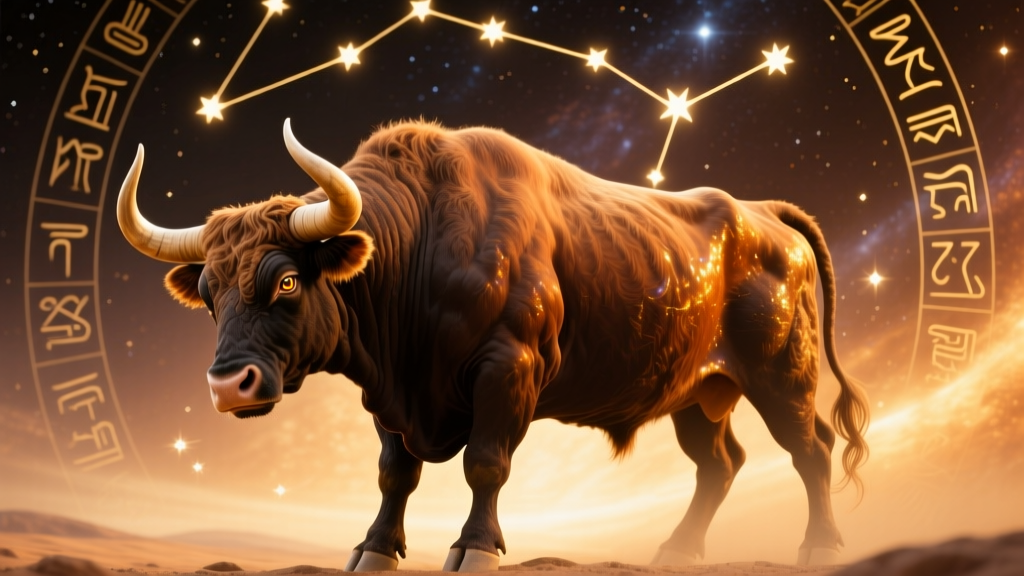
The star sign 17 May falls at the 26th and 27th degrees of Taurus, a celestial coordinate steeped in millennia of astronomical observation and mythological weight. Long before modern horoscopes reduced Taurus to simple tropes of stubbornness and materialism, the mid-May sector of the ecliptic served as a critical temporal marker for ancient civilizations. From the Bronze Age ziggurats of Mesopotamia to the Hellenistic academies of Alexandria, the stars governing this specific window of time were associated with divine wrath, agricultural genesis, and cosmic endurance. Understanding the origin story of this zodiacal sector requires tracing the precession of the equinoxes and the evolution of astrological decans.
The Age of Taurus and the Vernal Equinox
To comprehend the historical gravity of the mid-May ecliptic, one must examine the precession of the equinoxes. Due to the Earth's axial wobble, the position of the Sun against the backdrop of the constellations shifts approximately one degree every 72 years. Between 4000 BCE and 2000 BCE, the Sun rose in the constellation of Taurus during the spring equinox. This era, known in archaeoastronomy as the Age of Taurus, established the bull as the supreme symbol of generative power and solar authority across the ancient Near East.
While the Sun occupies the tropical sign of Taurus from April 20 to May 20 in the modern Western system, the sidereal reality of the mid-May sky places the Sun in close proximity to the Hyades star cluster and the brilliant red giant, Aldebaran. In ancient Sumer, the heliacal rising of these specific stars signaled the impending flooding of the Tigris and Euphrates rivers, dictating the agricultural cycle. The stars governing the 17th of May were not merely decorative; they were the celestial clockwork of early human survival.
Babylonian Roots: GU4.AN.NA and the Epic of Gilgamesh
The foundational blueprint for the star sign 17 May originates in ancient Babylon. The Babylonian star catalog, known as the MUL.APIN, compiled around 1000 BCE, divides the ecliptic into specific constellations and tracks the path of the Moon and Sun. The sector we now associate with mid-May was part of GU4.AN.NA, translating directly to 'The Bull of Heaven.' This catalog was not just an astronomical text; it was an omen manual that tied celestial movements to the fate of the empire and the yield of the harvest.
The Mythology of Gugalanna
The Bull of Heaven is most famously depicted in the Epic of Gilgamesh, one of the oldest surviving works of literature. In the myth, the goddess Ishtar unleashes the Bull of Heaven (Gugalanna) upon the earth to punish Gilgamesh for rejecting her advances. The Bull's snort is said to open massive chasms in the earth, swallowing hundreds of men, and its arrival brings seven years of famine. This mythological origin imbues the mid-May Taurus archetype with a latent, destructive power that contrasts sharply with its modern reputation for docility. The native born under this historical sector inherits the archetype of the earth-shaker—a force of nature that builds civilizations but possesses the seismic capacity to dismantle them when provoked.
Decoding the Star Sign 17 May: Hellenistic Decans and Degrees
As Babylonian astronomy merged with Egyptian star lore and Greek philosophy during the Hellenistic period (circa 1st century BCE to 2nd century CE), the zodiac was mathematically formalized. Astrologers divided each 30-degree sign into three 10-degree 'decans,' each governed by a specific planetary ruler to add nuance to natal chart interpretations.
May 17 typically corresponds to the 26th and 27th degrees of Taurus. This places it squarely in the third decan of Taurus, which is traditionally ruled by Saturn in the Chaldean system. While Venus rules the overarching sign of Taurus, the Saturnine sub-rulership of the third decan fundamentally alters the expression of this star sign.
- Venusian Taurus (Base Sign): Seeks harmony, aesthetic beauty, sensory comfort, and resource accumulation.
- Saturnine Decan (May 17 Sector): Imposes structure, discipline, delayed gratification, and an obsession with legacy, boundaries, and permanence.
This Saturnine overlay explains why individuals born on May 17 often exhibit a more stoic, ambitious, and historically-minded temperament than those born in the first decan of Taurus. They are the architects and conservators of the zodiac, driven by a subconscious awareness of time's passage and the necessity of building structures that outlast their own mortal lives.
Historical Evolution of the May 17 Zodiac Sector
The interpretation of this specific celestial coordinate has mutated across epochs, reflecting the shifting priorities of human civilization from agrarian survival to material alchemy.
| Era | Civilization | Designation | Primary Significance |
|---|---|---|---|
| 4000–2000 BCE | Sumerian / Early Bronze | Age of Taurus Marker | Vernal Equinox, supreme solar deity, agricultural genesis. |
| 1000 BCE | Babylonian | GU4.AN.NA (Bull of Heaven) | Divine wrath, seismic earth power, celestial judgment and omen. |
| 150 CE | Hellenistic / Ptolemaic | Taurus (3rd Decan) | Saturnine endurance, structural legacy, melancholy and discipline. |
| 1500 CE | Renaissance Europe | The Fixed Earth Sign | Material alchemy, banking, architectural permanence and wealth. |
The Pleiades, The Hyades, and Ancient Navigation
Astronomically, the mid-May sky is dominated by the presence of the Pleiades and the Hyades star clusters, which form the shoulder and face of the Taurus constellation, respectively. In ancient Greece, the heliacal rising and setting of the Pleiades were the ultimate markers for maritime navigation and agricultural labor. The Hyades, whose name translates to 'the rainy ones,' were intrinsically linked to the onset of the wet seasons.
The poet Hesiod, in his 8th-century BCE work Works and Days, explicitly warned sailors to avoid the seas when the Pleiades set in the autumn and to begin plowing when they rose. For the May 17 native, this ancient astronomical function translates into a psychological profile oriented toward risk assessment, seasonal planning, and the stewardship of resources. The historical imperative to 'read the stars' for survival manifests today as an innate ability to forecast economic or environmental trends and prepare accordingly.
Minoan Bull Cults and the Labyrinthine Mind
The geographical epicenter of the Taurus archetype during the Bronze Age was the Minoan civilization of Crete (circa 2700–1450 BCE). The Minoans did not merely observe the bull; they ritualized it through bull-leaping (taurokathapsia) and the myth of the Minotaur. The bull was a conduit for divine ecstasy and a symbol of the untamed, labyrinthine forces of nature that had to be navigated rather than conquered.
The origin story of the mid-May star sign is inextricably linked to this Minoan duality: the tension between the structured, labyrinthine architecture of the palace (Saturn/Earth) and the wild, leaping force of the bull (Venus/Desire). Individuals born on May 17 often navigate an internal labyrinth, balancing a profound desire for sensual and emotional freedom against an equally powerful need to build secure, impenetrable structures in their external lives.
Synthesis: Applying Historical Archetypes to the Modern Native
Analyzing the star sign 17 May through the lens of historical origin strips away superficial pop-astrology tropes and reveals a complex, multi-layered archetype. The modern native born on this date operates as a synthesis of the Babylonian earth-shaker, the Hellenistic Saturnine architect, and the Minoan steward of the labyrinth.
To leverage this historical blueprint, the May 17 individual should focus on endeavors that require long-term structural integrity and resource conservation. The ancient mandate of this zodiacal sector is not mere accumulation, but the creation of enduring systems—whether in finance, architecture, ecological conservation, or institutional leadership. By aligning with the Saturnine decan's demand for permanence and the Babylonian Bull's generative force, the native fulfills the original cosmic mandate established by the earliest astronomers who looked to the mid-May sky to understand the mechanics of survival and creation.