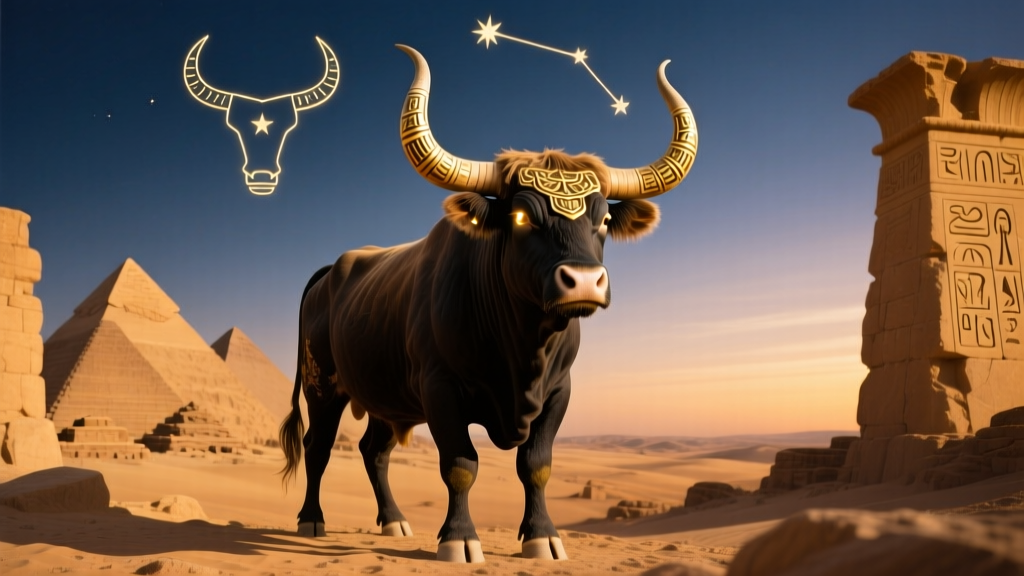
Decoding the Star Sign 17th May: The 27th Degree of Taurus
Individuals researching the star sign 17th May are examining the 27th degree of Taurus, a celestial coordinate deeply embedded in ancient agrarian mythologies and early observational astronomy. Falling squarely within the third decan of the zodiacal bull, this specific placement merges the foundational earthy stability of Venus-ruled Taurus with the structural discipline of its Saturnian sub-ruler. To understand the psychological, spiritual, and historical blueprint of this birth date, we must bypass modern pop-astrology and excavate the original Mesopotamian, Egyptian, and Hellenistic frameworks that defined the Bull of Heaven. The origins of this specific zodiacal sector reveal a profound connection to ancient navigation, agricultural cycles, and the concept of divine sovereignty on Earth.
The Sumerian Blueprint: GU4.AN.NA and the MUL.APIN
The astrological identity of Taurus predates Hellenistic astrology by millennia, originating in the cradle of civilization. In ancient Sumerian and Babylonian astronomy, the constellation was known as GU4.AN.NA, or 'The Bull of Heaven.' This was not merely a mythological beast but a critical temporal marker. According to the MUL.APIN, a comprehensive Babylonian astronomical compendium compiled around 1000 BCE, the heliacal rising of the Bull marked the spring equinox and the commencement of the agricultural year during the Age of Taurus (circa 4000 BCE to 2000 BCE).
The mythological weight of this constellation is most famously recorded in the Epic of Gilgamesh. In the epic, the goddess Ishtar unleashes the Bull of Heaven to punish Gilgamesh for rejecting her advances. The Bull's snorts cause massive fissures in the earth, swallowing hundreds of men. This narrative is an allegorical representation of the destructive power of unregulated natural forces and the seismic volatility of the earth—traits that echo in the stubborn, immovable nature of the modern Taurean archetype when provoked. For those born on May 17, the underlying mythological imperative is the mastery and channeling of immense terrestrial power rather than its reckless deployment.
The Pleiades and the Mid-May Heliacal Rising
The specific degree of the star sign 17th May holds a unique astronomical significance related to the Pleiades star cluster. In Babylonian astronomy, the Pleiades were known as MUL.MUL (The Stars) and were located on the shoulder or neck of the Bull. In antiquity, the heliacal rising of the Pleiades occurred in mid-May, precisely aligning with the solar transit through the late degrees of Taurus. This celestial event was a vital navigational and agricultural marker across the Mediterranean and Near East, signaling the end of the stormy season and the beginning of safe maritime travel and summer harvests. Consequently, individuals born under this specific coordinate inherit an archetypal association with guidance, navigation, and the transition from chaotic potential to structured yield.
The Chaldean Decan System: Saturn’s Grip on the 27th Degree
To understand the nuanced personality mechanics of May 17, we must apply the Chaldean decan system, which divides each 30-degree zodiacal sign into three 10-degree sectors, each ruled by a different planetary archetype. May 17 falls in the third decan of Taurus (20° to 30°), which is traditionally sub-ruled by Saturn. This Saturnian influence drastically alters the expression of the Venus-ruled bull, introducing themes of endurance, legacy, architectural permanence, and karmic responsibility.
| Decan | Dates | Degree | Planetary Rulership | Archetypal Focus |
|---|---|---|---|---|
| First Decan | Apr 20 - Apr 29 | 0° - 9° | Venus / Moon | Conception, raw earth, sensory immersion |
| Second Decan | Apr 30 - May 9 | 10° - 19° | Venus / Mercury | Cultivation, intellect applied to matter, commerce |
| Third Decan | May 10 - May 20 | 20° - 29° | Venus / Saturn | Harvest, structural permanence, enduring legacy |
While the first decan Taurean seeks immediate sensory comfort and the second decan focuses on the mechanics of resource accumulation, the third decan Taurean (May 17) is driven by the desire to build structures that outlast their own lifetime. The Saturnian sub-influence demands that material wealth and physical comforts be justified by their longevity and utility.
Egyptian and Minoan Bull Cults: Sovereignty and Earth
The historical veneration of the bull extended far beyond Mesopotamia, deeply influencing the esoteric underpinnings of the Taurus archetype. In ancient Egypt, the Apis Bull of Memphis was considered the living manifestation of the god Ptah, the divine architect and creator of the material universe. The Apis bull was housed in a lavish temple, and upon its death, it was mummified and interred in the Serapeum at Saqqara in massive granite sarcophagi weighing up to 80 tons. This immense investment of labor and resources underscores the ancient association of the bull with the materialization of the divine will into physical reality.
Similarly, in Minoan Crete, the bull was central to the religious and civic life of Knossos, as evidenced by the famous bull-leaping frescoes. The Minoan bull was not merely a beast of burden but a symbol of the untamed, seismic forces of nature (often linked to the earthquake-prone geography of Crete). The ritual of bull-leaping represented the human mastery over these chaotic earthly forces through agility, courage, and grace. For the May 17 native, this historical context suggests a life path that involves confronting volatile material or financial situations and mastering them through calculated, deliberate action rather than brute force.
Hellenistic Synthesis: Ptolemy and the Fixed Earth Sign
The transition of the Bull from a constellation of myth to a component of systematic psychological astrology occurred during the Hellenistic period. In his foundational text, Ptolemy's Tetrabiblos, Claudius Ptolemy categorized Taurus as a 'Fixed' and 'Earthy' sign. Ptolemy noted that the fixed signs represent the stabilization of the seasons; Taurus solidifies the spring, locking in the warmth and moisture necessary for the earth to bear fruit.
Ptolemy also detailed the 'triplicity' rulerships, assigning Venus as the primary ruler of the Taurus triplicity by day and night. However, later Hellenistic astrologers like Vettius Valens introduced the concept of 'bounds' or 'terms,' which further subdivided the signs. The 27th degree of Taurus historically fell under the bound of Saturn or Mars, depending on the specific tradition (Egyptian vs. Ptolemaic), reinforcing the theme of friction, heavy labor, and the eventual crystallization of effort into tangible assets. This historical synthesis explains why late-degree Taureans often experience significant delays or heavy responsibilities in their early lives, which ultimately forge an unbreakable resilience and immense material competence in their later years.
Practical Application: Harnessing the Ancient Taurus Archetype
Understanding the historical and mythological origins of the star sign 17th May provides a distinct advantage in personal and professional development. By aligning with the ancient archetypes of the Bull of Heaven and the Apis, individuals born on this date can optimize their natural tendencies. Here is an actionable framework based on the historical data:
- Long-Horizon Asset Architecture: The Saturnian third decan is ill-suited for high-frequency trading or speculative ventures. Align with the Apis archetype by investing in tangible, historically resilient assets—real estate, land, precious metals, or infrastructure. Your psychological blueprint rewards patience and penalizes impatience.
- Seismic Emotional Regulation: Drawing from the Minoan and Sumerian myths, recognize that your suppressed frustrations can manifest as 'earthquakes' in your personal life. Implement routine physical exertion (heavy resistance training, landscaping, or martial arts) to safely discharge the Bull's kinetic energy before it fractures your interpersonal relationships.
- Legacy and Archival Work: The heliacal rising of the Pleiades on this date connects you to navigation and historical preservation. You possess a unique capacity for archival thinking. Apply this by documenting your family history, building institutional knowledge within your career, or creating physical art and structures designed to endure for centuries.
The history of the Taurus bull is not merely a collection of ancient myths; it is a highly sophisticated, millennia-old behavioral algorithm. By embracing the Saturnian gravity and the sovereign power of the 27th degree, the May 17 native transforms from a passive participant in the material world into its master architect.