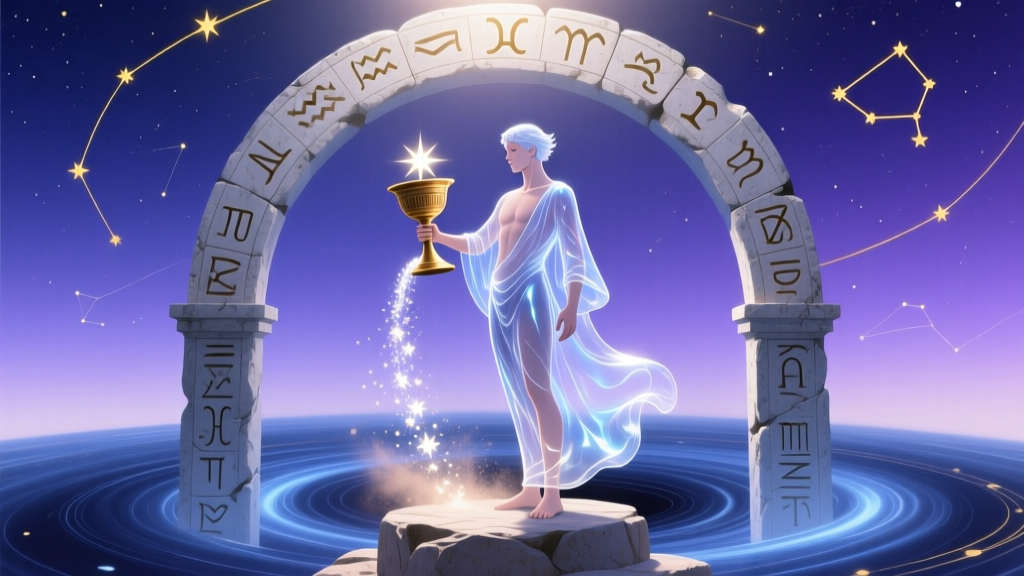
Individuals researching the star sign for 29 January are looking at the domain of Aquarius, the eleventh astrological sign of the zodiac. While modern pop culture often reduces this fixed air sign to mere quirks and rebellious stereotypes, the historical and mythological origins of the Water Bearer reveal a profoundly complex archetype. To understand the true astrological weight of being born on this date, we must bypass contemporary horoscopes and examine the ancient Mesopotamian, Egyptian, and Hellenistic records that forged the Aquarian identity over three millennia ago.
Decoding the Star Sign for 29 January: The Aquarian Archetype
Aquarius is paradoxically classified as a fixed air sign, despite its moniker as the 'Water Bearer.' This elemental classification was solidified during the Hellenistic period, but the imagery of water remains central to its historical identity. The water associated with Aquarius is not the emotional, turbulent water of the Cancer or Scorpio archetypes; rather, it represents the water of life, intellectual nourishment, and the universal ether. Those born on January 29 inherit a lineage that bridges ancient divine wisdom with futuristic collective evolution.
Babylonian Origins: GU.LA and the God Enki
The earliest recorded origins of the Aquarius constellation trace back to ancient Mesopotamia, specifically documented in the MUL.APIN, a comprehensive Babylonian astronomical compendium compiled around 1000 BCE. In this catalog, the constellation was identified as GU.LA, meaning 'The Great One.' This figure was a direct celestial representation of Enki (later known as Ea in Akkadian), the Sumerian god of water, knowledge, mischief, crafts, and creation.
Enki was believed to reside in the Abzu, the primeval subterranean ocean of fresh water. Iconography from this era frequently depicts him with two streams of water flowing from his shoulders into vases, symbolizing the life-giving inundation of the Tigris and Euphrates rivers. For individuals born under the star sign for 29 January, this Babylonian root signifies an innate capacity for deep, subterranean wisdom and the ability to channel life-sustaining ideas to the collective. The 'water' poured by GU.LA was synonymous with civilization-building knowledge, agriculture, and the arts of civilization.
The Egyptian Influence: Hapi and the Nile Inundation
As astrological and astronomical knowledge migrated across the ancient Mediterranean, the Egyptians adapted the Water Bearer archetype to fit their own ecological and theological framework. They associated the constellation with Hapi, the god of the annual inundation of the Nile. Hapi was typically depicted as a man with a pseudo-feminine belly, symbolizing fertility and abundance, pouring water from two vases.
The dual vases held profound geographical and spiritual significance, representing the unification of Upper and Lower Egypt, as well as the dual sources of the Nile. The flooding of the Nile was not a destructive event but a highly predictable, necessary phenomenon that deposited nutrient-rich silt across the floodplains, ensuring the survival of the Egyptian empire. This historical layer adds a pragmatic, systemic dimension to the January 29 personality: the ability to initiate necessary, large-scale renewals that sustain entire communities.
Hellenistic Adaptation: Ganymede and the Divine Cupbearer
When the Greeks synthesized Babylonian and Egyptian astronomical data, they overlaid their own mythological narratives onto the constellations. According to traditional astrology resources like Skyscript's historical analysis of Aquarius, the Greeks initially referred to the constellation as Hydreus (the Water Bearer). However, by the classical period, the myth of Ganymede became inextricably linked to the stars.
Ganymede was a Trojan prince of unparalleled beauty. Zeus, captivated by the youth, transformed into an eagle (represented by the adjacent constellation Aquila) and abducted Ganymede to Mount Olympus. There, Ganymede was installed as the cupbearer to the gods, replacing Hebe. His role was to pour the nectar and ambrosia that granted the Olympians their immortality. This Hellenistic shift transformed the Aquarian archetype from a sovereign creator god (Enki) into an elevated servant of the divine collective (Ganymede). It highlights the Aquarian theme of serving a higher, universal ideal rather than personal ambition.
Chronological Evolution of Aquarian Symbolism
| Era | Culture | Name / Deity | Core Symbolism & Function |
|---|---|---|---|
| c. 1000 BCE | Babylonian | GU.LA (Enki / Ea) | Subterranean waters, civilization-building wisdom, creation. |
| c. 2500 BCE | Egyptian | Hapi | The Nile inundation, systemic fertility, unification of dualities. |
| c. 400 BCE | Hellenistic | Hydreus / Ganymede | Divine cupbearer, nectar of immortality, service to the pantheon. |
| c. 150 CE | Roman (Ptolemy) | Aquarius | Fixed Air, Saturn-ruled, structured humanitarianism. |
| 1781 CE | Modern Astrology | Aquarius (Uranus) | Electrical ether, technological innovation, collective consciousness. |
The Esoteric Glyph: From Water to Ether
The astrological glyph for Aquarius (♒) consists of two parallel, wavy lines. Exoterically, this is interpreted as the ripples of water flowing from the Water Bearer's vase. However, esoteric and modern astrological traditions offer a more nuanced interpretation that aligns with the sign's 'Air' classification.
In the late 19th and early 20th centuries, esotericists and theosophists, drawing upon ancient hermetic texts, began to interpret the dual zigzag lines as the flow of electrical energy, or the 'ether.' This interpretation gained traction following the discovery of the planet Uranus in 1781 and the subsequent advent of the electrical age. The glyph thus represents high-frequency thought, the transmission of data, and the invisible currents that connect the collective unconscious. For the January 29 native, this signifies a mind wired for systemic networking, technological intuition, and the rapid transmission of paradigm-shifting ideas.
Actionable Framework: Applying Ancient Aquarian History
Understanding the historical lineage of your zodiac sign provides a robust framework for personal and professional development. Rather than relying on generic daily horoscopes, individuals born on January 29 can leverage these ancient archetypes through the following actionable strategies:
- Channeling Enki’s Subterranean Wisdom: Enki ruled the Abzu, the deep, hidden waters. Translate this into modern practice by dedicating time to 'deep work' and specialized research. Your greatest innovations will not come from surface-level trend watching, but from mastering niche, foundational knowledge that others overlook.
- Emulating Hapi’s Systemic Renewal: Hapi’s flooding was predictable and nourishing. Apply this by building automated systems, routines, or community frameworks that provide consistent value to your network. Focus on creating sustainable infrastructures rather than relying on sporadic bursts of inspiration.
- Adopting Ganymede’s Elevated Service: Ganymede served the collective pantheon. In your career, seek roles that act as a conduit between high-level strategy (the 'gods') and the broader team or public. You excel in positions that require translating complex, visionary directives into accessible, actionable resources for the collective.
- Harnessing the Etheric Glyph: Recognize your capacity for high-frequency data processing. Mitigate burnout by strictly managing your information intake. Implement digital minimalism protocols to ensure your nervous system can effectively process the 'electrical' currents of modern life without short-circuiting.
By anchoring your self-understanding in the rich, three-thousand-year history of the Water Bearer, you move beyond superficial astrological tropes and step into the profound, civilization-building potential inherent in the star sign for 29 January.