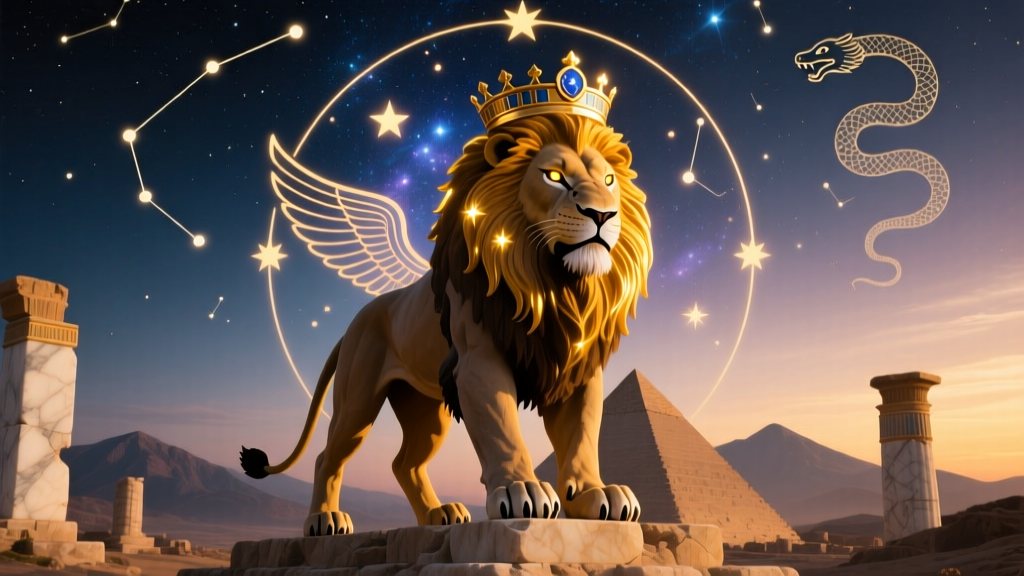
The Star Sign for August 5th: Identifying the Celestial Lion
Individuals researching the star sign for august 5th are investigating a date situated at the absolute zenith of the tropical summer. In the Western astrological tradition, this date falls squarely within the domain of Leo, the celestial Lion, spanning from July 23 to August 22. However, to understand the true depth of this placement, one must look beyond modern sun-sign columns. The historical origins of the Leo archetype reveal a complex tapestry woven from Mesopotamian star catalogs, Egyptian agricultural cycles, and Hellenistic mythology. By examining the ancient lineage of this fixed fire sign, we uncover the precise esoteric mechanics and historical precedents that govern the psychological profile of those born on this specific mid-summer date.
Babylonian Roots: Urgulu and the MUL.APIN Catalog
The earliest recorded origins of the Lion constellation do not begin in Greece, but in ancient Mesopotamia. Babylonian astronomers, whose meticulous observations formed the bedrock of Western astrology, documented the constellation in the MUL.APIN, a comprehensive star catalog compiled around 1000 BCE. In this text, the constellation was known as UR.GU.LA (Urgulu), which translates directly to the Great Dog or the Lion. Babylonian astrologers associated Urgulu with the scorching heat of late summer, a period when the sun's intensity was most unforgiving. The star we now call Regulus was designated as the King Star, cementing the constellation's enduring association with royalty, sovereignty, and divine right. This Mesopotamian foundation established the core Leo archetype: a radiant, commanding force intrinsically linked to leadership and the zenith of solar power.
Egyptian Influence: The Inundation and Sekhmet
As astrological knowledge migrated westward to Egypt, the Lion archetype absorbed new environmental and theological significance, as documented in The Metropolitan Museum of Art's archives on Egyptian astronomy. In ancient Egypt, the sun's transit through this sector of the ecliptic coincided with the annual inundation of the Nile River. During the peak of the summer heat, lions would often descend from the desert to the riverbanks to drink and escape the arid conditions. Consequently, the lion became a symbol of the life-giving, yet fiercely destructive, waters of the Nile. Furthermore, the Egyptians associated this period with Sekhmet, the lion-headed goddess of war, healing, and the scorching desert wind. Sekhmet’s dual nature—capable of both devastating plagues and profound healing—perfectly mirrors the modern psychological understanding of the Leo shadow and light. Those born under this sign possess a historical precedent for wielding immense, transformative power that must be carefully tempered by wisdom and compassion.
The Myth of the Nemean Lion in Hellenistic Astrology
When the Greeks synthesized Babylonian and Egyptian astrological traditions, they mapped their own mythological pantheon onto the stars. The constellation Leo became permanently linked to the Nemean Lion, the invulnerable beast slain by Heracles as the first of his Twelve Labors. According to the myth, the Nemean Lion possessed a golden hide that no mortal weapon could pierce; Heracles was ultimately forced to defeat the creature by wrestling it with his bare hands. In Hellenistic astrology, as later codified in Ptolemy's Tetrabiblos via the Perseus Digital Library, this myth encoded the concept of invulnerability through sheer vital force. The Nemean Lion represents the Leonian ego and the heart-centered courage that cannot be defeated by external, intellectual, or conventional means. For individuals born on August 5th, this mythological lineage suggests a psychological constitution that requires direct, passionate engagement with life's challenges, rather than indirect or purely analytical approaches.
Decan Astrology: The Specific Energetics of August 5th
To achieve absolute astrological precision, historians and traditional astrologers divide each 30-degree zodiac sign into three 10-degree segments known as decans or faces. August 5th typically falls at 12 to 13 degrees of Leo, placing it firmly in the second decan of Leo. In the ancient Chaldean system of planetary rulerships, the first decan of Leo is ruled by the Sun, the second by Jupiter, and the third by Mars.
Because August 5th falls in the Jupiter-ruled decan (associated with the sub-sign of Sagittarius), the pure, unadulterated solar ego of Leo is expanded by Jupiterian philosophy, optimism, and a drive for higher meaning. This historical sub-rulership explains why individuals born on this specific date often exhibit a more philosophical, generous, and intellectually curious disposition compared to those born in the first or third decans of Leo. They are not merely concerned with personal authority; they are driven by a historical and psychological need to align their personal power with a broader ethical or spiritual framework.
| Era / System | Name / Symbol | Ruling Deity / Planet | Key Historical Significance |
|---|---|---|---|
| Babylonian (MUL.APIN) | UR.GU.LA (The Lion) | Shamash (Sun God) | Established the archetype of the King Star and sovereign authority. |
| Ancient Egyptian | Lion of the Nile | Sekhmet / Ra | Linked to the life-giving but destructive inundation of the Nile. |
| Hellenistic Greek | Leo (Nemean Lion) | Helios / Apollo | Encoded the myth of invulnerability and heart-centered courage. |
| Chaldean Decan (Aug 5) | Second Face of Leo | Jupiter (Sagittarius) | Infuses solar ego with philosophical expansion and ethical leadership. |
Fixed Fire and the Royal Star Regulus: Historical Significance
In traditional astrology, Leo is classified as a Fixed Fire sign. The fixed modality represents stabilization, endurance, and the sustaining of energy, while the fire element dictates inspiration, spirit, and identity. Historically, this combination was deemed the most resilient in the zodiac. This endurance is astronomically anchored by Regulus, the brightest star in the Leo constellation, known as the Heart of the Lion. Regulus is one of the four Royal Stars of ancient Persia, serving as the Watcher of the North. Persian astronomers utilized Regulus to mark the summer solstice and to navigate agricultural cycles, with astronomical data confirmed by Encyclopedia Britannica's astronomical entry on Leo. Its historical placement near the ecliptic meant that the sun, moon, and planets frequently passed near it, an event ancient astrologers interpreted as a harbinger of significant shifts in political power and royal succession. For the August 5th native, the influence of Regulus underscores a historical mandate to lead with integrity, as the Heart of the Lion demands that power be exercised with nobility rather than tyranny.
Actionable Insights: Applying Historical Leo Traits Today
Understanding the ancient origins of the star sign for august 5th provides a practical framework for personal and professional development. By leveraging the historical archetypes associated with this date, individuals can optimize their innate strengths:
- Channel the Nemean Invulnerability: When facing career stagnation or creative blocks, avoid overly analytical or indirect strategies. The Nemean myth dictates that success comes from direct, passionate, and courageous engagement with the core problem. Tackle your most intimidating project head-on.
- Utilize the Jupiterian Decan: Because your specific degree is sub-ruled by Jupiter, you possess a natural aptitude for mentorship and ethical leadership. Seek roles that allow you to teach, publish, or guide others. Your authority is historically validated when it serves a broader philosophical or educational purpose.
- Balance the Sekhmet Duality: The Egyptian association with Sekhmet warns against the destructive potential of unchecked ego and anger. Implement strict boundaries and daily grounding practices, such as morning meditation or rigorous physical exercise, to transmute raw solar energy into sustained, healing leadership rather than reactive burnout.
- Emulate Regulus: The Royal Star demands nobility. In negotiations and conflicts, maintain a reputation for absolute fairness and transparency. Your long-term influence relies on the historical perception of your character, not just your immediate victories.
The historical lineage of Leo is not merely a collection of ancient myths; it is a precise psychological blueprint. By recognizing the Babylonian sovereignty, Egyptian duality, Greek courage, and Chaldean philosophy embedded in the August 5th placement, individuals can step into their historical inheritance with clarity and purpose.