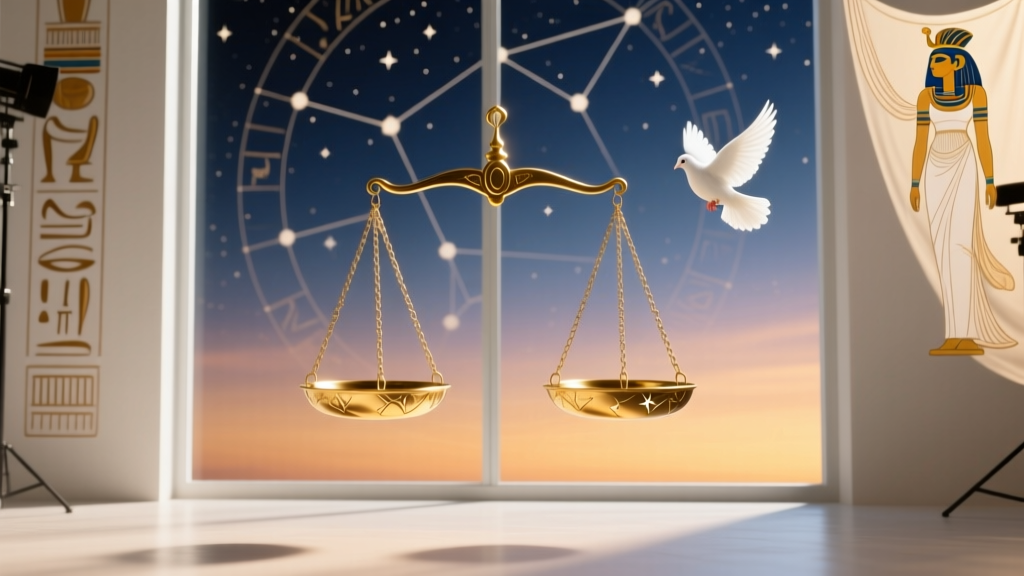
Individuals researching the star sign for October 2nd are investigating the astrological profile of Libra. Spanning from September 23 to October 22, this cardinal air sign is universally symbolized by the scales of justice. While contemporary horoscopes often reduce Libran traits to mere indecisiveness or a love of aesthetics, the historical and mythological origins of this constellation reveal a profound archetype rooted in cosmic law, agricultural cycles, and divine equilibrium. Understanding the ancient lineage of the scales provides a highly accurate framework for navigating the psychological complexities of the October 2nd personality.
The Astronomical Origins: From Scorpion Claws to Independent Scales
The celestial region we now identify as Libra was not always recognized as an independent constellation. In early Babylonian astronomy, specifically documented in the MUL.APIN compendium (compiled around 1000 BCE), these stars were known as MUL Zibanu (the scales) but were simultaneously referred to as the claws of the scorpion. This dual identity reflects the agrarian society's reliance on the autumn equinox, a period when the sun entered this sector of the zodiac, signaling the time to weigh and measure the harvested crops for winter storage.
When Hellenistic astronomers adopted the Babylonian zodiac, they initially retained the scorpion association, calling the constellation Chelae (the claws). It was not until the Roman era that Libra was firmly elevated to an independent sign representing justice and balance. The Romans, deeply invested in legal codification and imperial order, aligned the constellation with their societal values. According to Encyclopædia Britannica, the formal separation of Libra from Scorpius in Western astrology was largely solidified during the Julian calendar reforms, permanently cementing the scales as a distinct astrological entity governing the autumn equinox.
Mythological Roots: Ma'at, Themis, and Astraea
The psychological blueprint of the October 2nd native is heavily influenced by the mythological figures associated with the scales across different ancient cultures. These deities were not merely symbols of legal justice; they represented the fundamental cosmic order required to prevent the universe from descending into chaos.
The Egyptian Hall of Two Truths
In ancient Egyptian cosmology, the concept of cosmic balance was personified by Ma'at, the goddess of truth, justice, and universal order. The World History Encyclopedia notes that the ultimate test of a soul's worthiness in the afterlife was the "Weighing of the Heart" ceremony. The deceased's heart was placed on a scale opposite the feather of Ma'at. For an October 2nd individual, this mythological origin manifests as an innate, often subconscious, drive to weigh all sides of a conflict and a deep psychological discomfort when moral equilibrium is disrupted.
The Greek Exodus of Astraea
Greek mythology attributes the scales to Themis, the Titaness of divine law, who passed them to her daughter, Astraea (the star maiden). Astraea lived among humans during the Golden Age, dispensing fairness and wisdom. As humanity degraded through the Silver, Bronze, and Iron Ages, becoming increasingly corrupt and violent, Astraea fled to the heavens, becoming the constellation Virgo, while her scales were placed adjacent to her as Libra. This myth explains the Libran tendency toward idealism and the profound disappointment they experience when human behavior fails to meet their internalized standards of fairness.
Decoding the Star Sign for October 2nd Through Classical Texts
The transition of Libra from a mythological concept to a structured astrological science occurred during the Hellenistic period. The most authoritative text on this evolution is Claudius Ptolemy’s Tetrabiblos, written in the 2nd century CE. Ptolemy's foundational astrological treatise formally assigns Venus as the planetary ruler of Libra, introducing the tension between the cold, analytical nature of the air element and the warm, relational desires of Venus.
Furthermore, classical astrologers designated Saturn as being "exalted" in Libra. This is a crucial historical data point for understanding the October 2nd personality. While Venus grants the desire for harmony, Saturn’s exaltation provides the structural discipline, endurance, and objective detachment required to actually enforce justice. This historical synthesis explains why mature Librans are not merely people-pleasers, but formidable arbitrators capable of making difficult, objective decisions.
Chronological Evolution of Libran Archetypes
| Era / Civilization | Astronomical / Astrological Designation | Core Archetypal Focus |
|---|---|---|
| Babylonian (c. 1000 BCE) | MUL Zibanu / Scorpion Claws | Agricultural measurement, harvest equilibrium, seasonal transition. |
| Hellenistic Greece | Chelae (The Claws) | Association with Scorpius; focus on the tension between life and death. |
| Classical Rome | Libra (The Scales) | Codified law, civic justice, imperial administration, and societal balance. |
| Medieval / Renaissance | Venus-ruled Air Sign | Diplomacy, aesthetic refinement, marriage contracts, and alliance building. |
| Modern Psychological | Cardinal Air / The Archetype of the Mediator | Interpersonal dynamics, shadow integration, cognitive dissonance resolution. |
Applying Ancient Libran Frameworks to Modern Decision-Making
Understanding the historical origins of the star sign for October 2nd provides actionable frameworks for overcoming the sign's most notorious modern affliction: analysis paralysis. By looking to the ancient archetypes, October 2nd natives can develop concrete strategies for decisive action.
The Ma'at Framework for High-Stakes Decisions
When faced with a complex career or relationship choice, October 2nd individuals often stall by endlessly gathering data to ensure a "perfectly fair" outcome. To counter this, apply the Ma'at protocol. Instead of weighing every external variable, isolate the single "feather of truth"—your core non-negotiable value in this specific scenario. If a decision compromises that singular foundational value, it is inherently unbalanced, regardless of the external benefits. This historical method drastically reduces the variables required to make a choice.
The Saturnine Exaltation Strategy for Conflict Resolution
Librans frequently avoid conflict to preserve superficial harmony (a Venusian shadow trait). To activate the historical "exaltation of Saturn" within your chart, you must reframe conflict not as a disruption of peace, but as the necessary mechanism for establishing structural justice. Before entering a negotiation, write down the objective, systemic rules governing the situation, removing emotional attachments to the individuals involved. Presenting solutions based on structural precedent rather than personal feelings allows the October 2nd native to mediate effectively without absorbing the emotional fallout of the disputing parties.