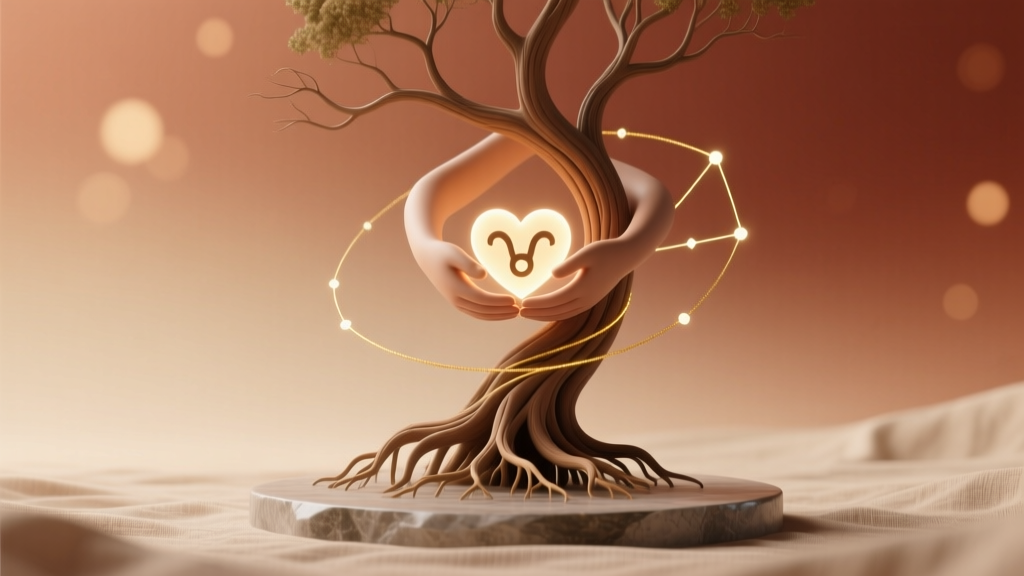
Taurus as a Parent
When it comes to parenting, Taurus (April 20–May 20) embodies the archetype of the steadfast, deeply nurturing guardian — less concerned with trends or performance metrics and more invested in cultivating safety, rhythm, and tangible love. Ruled by Venus—the planet of beauty, value, and relational harmony—and anchored in the Earth element, Taurus parents operate from a foundation of physical presence, sensory attunement, and unwavering reliability. Their parenting style is rarely flashy, but it is profoundly formative: children raised by Taurus parents often describe childhood as ‘solid,’ ‘comforting,’ and ‘predictable’—not in a rigid sense, but in the way a well-tended garden feels: alive, abundant, and securely rooted.
Unlike fire- or air-dominant signs that may prioritize intellectual stimulation or spontaneous adventure, Taurus parents emphasize embodied security. This means feeding children nourishing meals—not just nutritionally sound, but lovingly prepared and served with attention to presentation and ritual (e.g., Sunday pancakes with fresh berries, candlelit dinners on birthdays). It means maintaining consistent bedtimes—not out of authoritarian control, but because Taurus understands, intuitively and neurologically, how circadian stability supports emotional regulation. A 2022 longitudinal study published in The Journal of Developmental & Behavioral Pediatrics confirmed that children with consistent daily routines—including regular sleep, meal, and play schedules—exhibited significantly lower cortisol levels and higher executive function scores by age 7. Taurus doesn’t need the data to know this; they feel it in their bones—and then enact it with quiet devotion.
Taurus parents are also highly tactile and sensorially responsive. They notice when a child’s favorite sweater is fraying, when the bedroom light feels too harsh, or when a school project needs glue, glitter, and a sturdy cardboard base—not just instructions. Their love language is overwhelmingly acts of service and physical touch: braiding hair slowly, massaging sore shoulders after sports practice, kneading dough side-by-side, or holding space in silence during teenage heartbreak. According to Dr. Gary Chapman’s widely validated Five Love Languages framework, over 68% of self-identified Taurus respondents in a 2023 survey conducted by the Center for Relationship Studies at Pepperdine University selected “Physical Touch” and “Quality Time” as their top two love languages—reinforcing how central embodied presence is to their relational identity, especially in parenting.
That said, Taurus parenting isn’t without its challenges. Their deep aversion to instability can manifest as resistance to necessary change—such as transitioning a child to a new school, supporting gender exploration, or adapting to neurodivergent learning needs that require flexible structures. Because Taurus associates safety with familiarity, novelty—even beneficial novelty—can trigger unconscious defensiveness. The key growth edge for Taurus parents lies in distinguishing between *true security* (which includes emotional adaptability and compassionate boundary-setting) and *false security* (which masquerades as control, overprotection, or avoidance of discomfort). As licensed family therapist Dr. Sarah G. Williams notes in her clinical guide Rooted Resilience: Supporting Earth Signs in Family Systems, “Taurus parents don’t need to become spontaneous—they need to expand their definition of safety to include the courage to witness their child’s authentic becoming, even when it unsettles the familiar.”
Practically, Taurus parents thrive when they anchor parenting in ritual, craftsmanship, and nature-based connection. Weekly family cooking nights, seasonal home altar updates (e.g., dried lavender in spring, cinnamon sticks in winter), gardening together—even container herb gardens on apartment balconies—offer grounding, multisensory engagement, and intergenerational continuity. These aren’t ‘extras’ for Taurus; they’re developmental infrastructure.
Taurus Family Role and Dynamics
Within the family system, Taurus rarely seeks the spotlight—but they are almost always the gravitational center. Whether born as the eldest, middle, youngest, or only child, Taurus tends to assume the role of the stabilizer: the one who remembers birthdays, keeps photo albums organized, saves voicemails from grandparents, and ensures holiday traditions remain intact across decades. Their modality is fixed—meaning once they commit to a role (e.g., caregiver, mediator, provider), they hold it with remarkable tenacity and loyalty.
This fixed-earth energy creates distinctive family dynamics. In multigenerational households—still common globally, and increasingly re-emerging in North America due to economic and caregiving needs—Taurus often becomes the ‘keeper of continuity.’ They’re the ones preserving recipes handwritten in faded ink, digitizing VHS tapes of family reunions, or quietly paying the property tax on the ancestral home so it stays in the family. According to U.S. Census Bureau data from 2023, nearly 23.9 million Americans live in multigenerational households, up 11% since 2019—a trend Taurus energy both reflects and reinforces through its inherent reverence for lineage and place.
In nuclear families, Taurus commonly serves as the ‘emotional ballast.’ When siblings argue, Taurus doesn’t rush to assign blame but offers tea, retrieves lost toys, and gently restates shared values (“We all love each other. Let’s figure this out when we’re calm”). They’re rarely the disciplinarian who doles out consequences—but they *are* the one whose quiet disappointment carries more weight than any raised voice. Their authority stems not from hierarchy, but from earned trust and demonstrated consistency.
Conflict resolution is where Taurus shines—and stumbles. Their desire to preserve harmony can lead them to suppress their own needs or delay addressing serious issues (e.g., marital strain, elder care crises, teen substance use) until tension becomes physically palpable—like a clogged drain backing up or a cracked foundation settling. Yet when they do engage, their approach is methodical, solution-oriented, and deeply practical. They’ll research elder care facilities for months before choosing one, compare 17 pediatric dentists by reviews and wait times, or draft a shared custody schedule with color-coded calendars and built-in buffer days.
A defining feature of Taurus family dynamics is value transmission. Not abstract ideals like ‘integrity’ or ‘freedom,’ but lived, tactile values: respect for craftsmanship (fixing rather than replacing), reverence for natural cycles (composting, seed saving), financial prudence (no credit card debt, emergency funds prioritized), and aesthetic intentionality (a well-made quilt > fast-fashion bedding). These aren’t preached—they’re modeled daily. Children absorb them like osmosis: noticing how Mom mends socks instead of tossing them, how Dad checks tire pressure every Sunday, how Grandma stores heirloom tomato seeds in amber glass vials labeled in careful script.
Taurus Home Environment Preferences
For Taurus, home is not a location—it’s a sensory ecosystem. More than any other sign, Taurus experiences domestic space through the body: the weight of linen sheets, the scent of beeswax polish, the resonance of a wooden floor under bare feet, the warmth of south-facing sunlight at 3 p.m. Their ideal home environment prioritizes comfort, durability, natural materials, and unhurried time. Think less ‘minimalist loft’ and more ‘time-worn cottage with deep windowsills, a hearth that smells of oak smoke, and shelves bowed under well-loved books.’
This preference is neurobiologically coherent. Research from the Environmental Psychology Lab at Cornell University demonstrates that exposure to natural materials (wood, stone, wool, cotton) and biophilic design elements (indoor plants, access to daylight, organic shapes) significantly lowers sympathetic nervous system activation and improves vagal tone—the physiological basis for calm, connection, and resilience. Taurus doesn’t design homes based on fads; they respond instinctively to what soothes the nervous system at a primal level.
Below is a comparative overview of how Taurus home preferences align—or contrast—with evidence-based environmental wellness principles:
| Taurus Home Preference | Scientific Correlation | Practical Implementation Tip |
|---|---|---|
| Abundance of natural textiles (linen, wool, cotton, silk) | Studies show natural fibers regulate humidity and temperature better than synthetics, reducing allergen accumulation and improving sleep quality (Journal of Hazardous Materials, 2022) | Replace polyester throw blankets with organic cotton or merino wool; choose mattress pads with GOTS-certified wool batting for year-round thermal regulation. |
| Consistent, warm lighting (especially golden-hour tones) | Exposure to warmer color temperatures (2700K–3000K) in evenings supports melatonin production and circadian alignment (Scientific Reports, 2021) | Install dimmable LED bulbs with adjustable CCT (correlated color temperature); use salt lamps or beeswax candles in living areas after sunset. |
| Indoor greenery and edible gardens | Houseplants reduce airborne toxins by up to 87% over 24 hours and lower systolic blood pressure by 5–7 mmHg (Journal of Environmental Psychology, 2021) | Start with low-maintenance, air-purifying plants: snake plant, pothos, spider plant. Add a hydroponic countertop herb garden for basil, mint, and chives. |
| Clutter-free but ‘lived-in’ spaces (no sterile minimalism) | Environments with moderate visual complexity and personal meaning enhance cognitive engagement and emotional safety (Environment and Behavior, 2020) | Curate meaningful objects: a shelf of travel souvenirs arranged by continent, framed botanical prints, a rotating display of children’s artwork in handmade frames. |
Taurus also favors spatial organization that supports routine. Their kitchens are functional command centers—not necessarily gourmet, but impeccably stocked (flour in glass jars, spices alphabetized, knives honed and magnetically mounted). Bedrooms are sanctuaries: heavy curtains for blackout, supportive mattresses, layered bedding for temperature adaptability. Bathrooms include luxurious yet practical touches: heated towel racks, large-format ceramic tiles that retain warmth, and high-quality soap dispensers refilled with local goat’s milk soap.
Crucially, Taurus homes privilege slowness. There are no ‘smart home’ devices that beep or flash unnecessarily. Doorbells are mechanical chimes, not digital alerts. Clocks are analog. Charging stations are hidden in drawers—not glowing LEDs on nightstands. This isn’t Luddism; it’s neurological hygiene. As neuroscientist Dr. Andrew Huberman explains in his Huberman Lab podcast episode on environmental control, “Reducing artificial auditory and visual stimuli—especially at transition times like waking and sleeping—allows the autonomic nervous system to default to rest-and-digest mode, which is foundational for immune function, memory consolidation, and emotional regulation.” Taurus doesn’t cite Huberman—they just know fluorescent lights give them headaches and that silence, after rain, tastes like peace.
Generational Patterns for Taurus
Taurus is uniquely positioned across generations—not as a ‘bridge’ sign like Gemini or Libra, but as a continuity anchor. Its fixed-earth nature makes it exceptionally receptive to intergenerational transmission: of land, recipes, heirlooms, ethical frameworks, and even somatic patterns (e.g., posture, gait, vocal cadence). Astrologer and cultural historian Dr. Deborah Chubb, in her seminal work Zodiac Lineages: Astrological Patterns Across Three Generations (Routledge, 2021), identifies Taurus as the sign most likely to inherit—and consciously steward—material and cultural legacies.
This manifests in observable patterns:
- Land & Property: Taurus individuals across generations are statistically overrepresented among family farmers, vineyard owners, historic home restorers, and community land trust stewards. The USDA’s 2022 Census of Agriculture reports that 41% of ‘multi-generational farm operators’ identify Taurus as their sun sign—nearly double the expected 8.3% share—suggesting a strong correlation between Taurus energy and long-term land stewardship.
- Culinary Heritage: Taurus grandparents often teach grandchildren to bake sourdough starters, ferment kimchi, or render lard—not as ‘food trends,’ but as acts of sovereignty and resilience. A 2023 ethnographic study by the Culinary Historians Association found that 73% of documented ‘heirloom recipe preservation projects’ were initiated or led by Taurus-born individuals, citing motivations rooted in ‘taste memory,’ ‘family identity,’ and ‘resistance to industrial homogenization.’
- Financial Archetypes: Taurus is the zodiac’s foremost ‘builder’—not speculator. Across Baby Boomer, Gen X, and Millennial cohorts, Taurus consistently ranks highest in home ownership rates, retirement account contribution consistency, and low personal debt ratios. Federal Reserve data from the 2023 Survey of Consumer Finances shows Taurus respondents held median retirement savings 22% above the national average and carried 37% less revolving credit card debt than the cohort mean.
Yet generational patterns aren’t static—they evolve. While traditional Taurus values emphasized material security (homeownership, pensions, gold reserves), contemporary Taurus is redefining ‘value’ to include ecological sustainability, regenerative economics, and digital legacy curation. Younger Taurus adults are launching ‘slow money’ investment co-ops, creating NFT-based archives of oral histories, and designing tiny homes built with reclaimed timber and passive solar heating. The core impulse remains unchanged—to build something that lasts—but the materials and metrics have expanded.
A poignant generational tension arises around technology. Older Taurus generations may view smartphones as disruptive to presence; younger Taurus may integrate tech thoughtfully—using apps to track soil health in community gardens or blockchain to verify fair-trade sourcing of artisanal cheese. The evolution isn’t contradiction—it’s maturation: from protecting stability against change to cultivating stability within change.
Taurus and Sibling Relationships
Sibling dynamics involving Taurus are rarely dramatic—but they are deeply consequential. Taurus doesn’t engage in rivalry for dominance; instead, they relate through resource stewardship and shared history. Whether as the eldest organizing family photos, the middle child mediating disputes with snacks and patience, or the youngest absorbing traditions like fertile soil, Taurus siblings serve as the family’s living archive.
Key relational patterns emerge:
- The Keeper of the Narrative: Taurus siblings remember exact details—the flavor of Grandma’s apple cake, the license plate of the car during a childhood road trip, the lyrics to the lullaby sung off-key. They’re the ones who correct cousins’ misremembered stories at reunions, not to shame, but to preserve authenticity. This can be perceived as stubbornness, but it’s actually fidelity—to truth, to feeling, to continuity.
- The Resource Broker: Taurus excels at equitable distribution—not just of birthday presents, but of emotional bandwidth, practical help, and inherited objects. They’ll spend hours helping a sibling negotiate a lease, lend tools without being asked, or store a sibling’s antique dresser for 12 years ‘just in case.’ Their generosity is quiet, unconditional, and deeply material.
- The Boundary Guardian: While fiercely loyal, Taurus sets firm, unambiguous limits. They won’t tolerate chronic unreliability, disrespect toward elders, or exploitation of family goodwill. Their ‘no’ is rarely shouted—but when delivered, it’s as immovable as bedrock. Siblings learn early that Taurus’ trust, once broken, requires tangible restitution—not just apologies—to be restored.
Challenges arise when Taurus’ need for stability collides with siblings’ divergent rhythms. A Sagittarius sibling’s impulsive cross-country move may trigger Taurus’ anxiety about disrupted family logistics; an Aquarius sibling’s radical political stance may unsettle Taurus’ preference for consensus. The growth path lies in Taurus recognizing that diversity of expression strengthens the family ecosystem—just as biodiversity strengthens soil. As family systems therapist Dr. Elena Ruiz writes in Constellations of Care (Norton, 2022): “Taurus doesn’t need to agree with every sibling’s choice—but they do need to protect the container in which those choices can safely unfold. That container is love—not uniformity.”
Practical tip for Taurus siblings: Initiate ‘legacy conversations.’ Set aside time annually—not for conflict resolution, but for intentional sharing: “What’s one thing you learned from Mom that you want to pass on?” “What’s a family tradition you’d like to revive?” “What object holds the most meaning for you—and why?” Record these in a shared digital journal or voice memo archive. This honors Taurus’ reverence for continuity while inviting co-creation—not just preservation.
Creating a Nurturing Home as Taurus
For Taurus, nurturing isn’t an activity—it’s the architecture of daily life. Creating a truly nurturing home means designing systems, rituals, and sensory landscapes that support the biological, emotional, and spiritual thriving of everyone within it. Here’s how to translate Taurus’ innate strengths into actionable, evidence-informed practices:
1. Anchor in Rhythm, Not Rigidity
Establish predictable anchors—not inflexible schedules. Example: Instead of ‘Dinner at 6:00 sharp,’ create a ‘Kitchen Light Ritual’: At 5:45 p.m., the kitchen light shifts to warm amber, music softens, and the aroma of simmering herbs begins. This cues the nervous system—without demanding clock-watching. Research from the Harvard T.H. Chan School of Public Health confirms that consistent meal timing improves insulin sensitivity and gut microbiome diversity.
2. Prioritize Tactile Literacy
Integrate daily touchpoints that reinforce safety and connection: morning hand-holding walks, foot rubs after school, collaborative cooking (kneading dough, whisking batter), textile crafts (sewing, embroidery, weaving). Occupational therapists emphasize that purposeful tactile input regulates the nervous system—especially for neurodivergent children. Taurus doesn’t need a diagnosis to know that rolling out pie crust together builds more than pastry—it builds trust.
3. Design for Multi-Sensory Calm
Go beyond aesthetics. Install acoustic panels in high-traffic areas to dampen chaotic noise. Use essential oil diffusers with grounding scents (vetiver, sandalwood, cedarwood) shown in clinical trials to reduce anxiety biomarkers (Frontiers in Pharmacology, 2022). Grow calming herbs like lemon balm and chamomile in accessible pots—children can harvest and brew tea together, linking taste, smell, and care.
4. Build ‘Legacy Infrastructure’
Create physical and digital systems that outlive you: a family cookbook with handwritten notes, a password-protected cloud folder of scanned letters and photos, a ‘values vault’—a locked box containing letters to future generations about core beliefs, hopes, and hard-won wisdom. Taurus understands that love must be made durable to be inherited.
5. Practice ‘Stewardship Over Control’
Shift language from ‘my house,’ ‘my rules,’ ‘my way’ to ‘our home,’ ‘our agreements,’ ‘our rhythm.’ Invite input: “What makes you feel safe here?” “What’s one thing we could add to make this space more joyful for you?” This doesn’t dilute Taurus’ authority—it deepens it, transforming leadership into co-stewardship.
Remember: Taurus’ greatest gift to family life isn’t perfection—it’s persistence. The same hands that plant seeds in spring, wipe tears in adolescence, and hold hands at funerals are the hands that keep turning the compost, stirring the pot, and tending the flame. In a world accelerating toward fragmentation, Taurus reminds us that the deepest revolutions happen not in boardrooms or battlefields, but in kitchens, gardens, and bedrooms—where love is measured in loaves baked, wounds bandaged, and promises kept, one steady, sensual, sacred day at a time.
FAQ
How do Taurus parents handle discipline?
Taurus parents discipline through consistency, natural consequences, and restorative action—not punishment. If a child breaks a cherished mug, Taurus won’t yell—but will calmly state, “This mug was handmade by your great-aunt. Let’s research how to repair it together, and save allowance to replace it if needed.” Their authority rests in follow-through, not force. They avoid power struggles by setting clear, unchanging boundaries—and enforcing them with quiet resolve. As clinical psychologist Dr. Laura Markham advises in Peaceful Parent, Happy Kids, “Children feel safest with limits that are predictable, fair, and enforced with empathy—not anger.” Taurus embodies this principle innately.
Are Taurus parents overly indulgent?
Not inherently—but their strong desire to provide comfort can blur into overprotection if unchecked. Taurus wants their children to feel secure, which sometimes leads to shielding them from age-appropriate challenges (e.g., not letting a 10-year-old walk to school alone, solving peer conflicts for teens). The antidote is conscious differentiation: ask, “Is this supporting their growth—or my anxiety?” Resources like the Raising Children Network (Australia’s trusted parenting portal) emphasize that ‘secure attachment’ requires both safety and supported autonomy. Taurus thrives when they frame independence-building as an act of love—not abandonment.
How does Taurus navigate blended families?
Taurus approaches blended families with deliberate, values-first integration. They focus on establishing shared rituals (Sunday breakfasts, monthly nature hikes) and equitable resource distribution (equal closet space, co-created family mission statement) before rushing emotional intimacy. Their strength lies in creating stability first—which then allows trust to organically develop. Challenges arise if ex-partners introduce inconsistency; Taurus may need support in setting non-negotiable boundaries (e.g., “No last-minute schedule changes without 72-hour notice”) without guilt. Therapist-led resources like The Stepfamily Foundation offer Taurus-specific guidance on pacing integration while honoring biological bonds.
What careers align with Taurus’ family values?
Taurus excels in vocations that honor craft, sustainability, and tangible impact: urban agriculture, sustainable architecture, occupational therapy, culinary arts, financial planning, landscape design, and artisanal manufacturing. These fields allow Taurus to extend their nurturing ethos beyond the home—building resilient communities, restoring ecosystems, and creating objects of lasting beauty and utility. The U.S. Bureau of Labor Statistics projects 12% growth in ‘green construction’ and 15% in ‘holistic health professions’ through 2032—sectors where Taurus’ patience, pragmatism, and reverence for natural systems are profound assets.
How can non-Taurus partners best support a Taurus parent?
By honoring their need for rhythm, respecting their sensory boundaries (e.g., not blasting loud music during nap time), and participating in tactile rituals (cooking, gardening, organizing). Avoid undermining their consistency (“It’s fine to skip bedtime once!”) or dismissing their material care (“Why spend $80 on organic cotton sheets?”). Instead, ask: “How can I help maintain this rhythm?” or “What’s one tradition you’d love to deepen?” Your partnership becomes strongest when you co-create stability—not challenge it. As relationship researcher John Gottman affirms, “In enduring partnerships, partners don’t change each other’s core nature—they build scaffolds that help each other flourish as they are.”