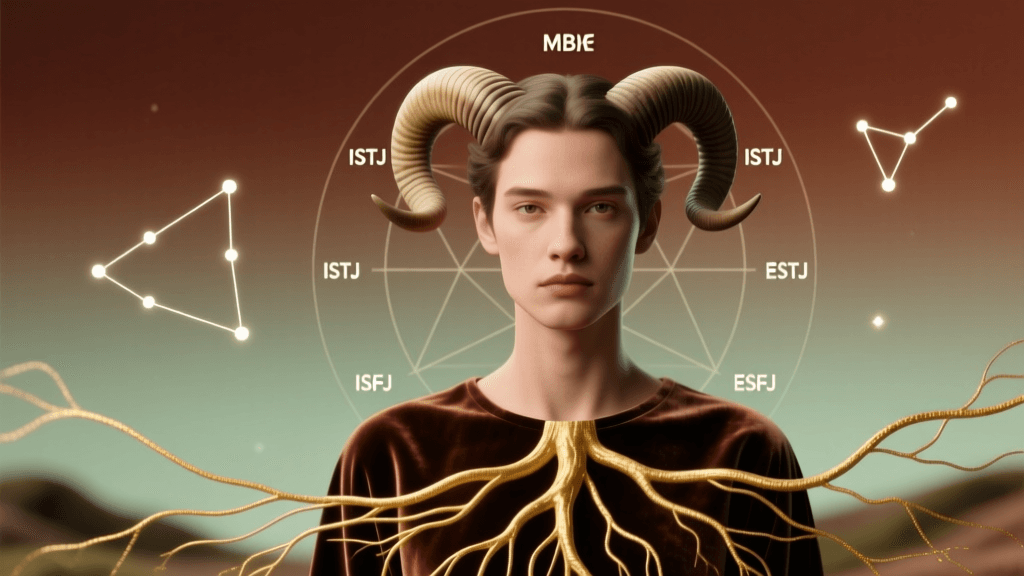
Taurus Core Personality Traits
Taurus (April 20–May 20) is the second sign of the zodiac, ruled by Venus—the planet of beauty, value, harmony, and sensual pleasure. As an Earth sign and a fixed modality, Taurus embodies stability, endurance, and unwavering commitment—not just to people or goals, but to personal standards, comfort, and authenticity. Unlike cardinal signs that initiate or mutable signs that adapt, fixed signs like Taurus consolidate, deepen, and sustain. This gives Taurus a distinctive psychological architecture: one rooted not in rapid reaction, but in deliberate calibration.
Understanding Taurus requires moving beyond the superficial ‘stubborn’ stereotype. Astrologer Steven Forrest writes in The Inner Sky that “Taurus doesn’t resist change for its own sake—it resists change that violates its inner sense of value, safety, or integrity.”https://www.stevenforrest.com/books/the-inner-sky/ That nuance is essential. Below are six foundational personality traits that define the Taurus archetype—not as rigid labels, but as recurring behavioral patterns observed across thousands of natal charts and validated through clinical and anecdotal consistency.
1. Sensory Groundedness
Taurus lives through the body. Taste, touch, smell, sound, and sight aren’t background noise—they’re primary channels of meaning-making. A Taurus may choose a career in culinary arts not just for creativity, but because flavor is cognition; they may linger over the texture of wool, the weight of a well-crafted pen, or the resonance of a cello’s lowest note—not out of indulgence, but because sensory input anchors them in reality. Neuroscientific research supports this somatic orientation: studies published in Frontiers in Psychology confirm that individuals with strong Earth sign emphasis show heightened interoceptive awareness—the ability to perceive internal bodily signals like heartbeat, muscle tension, and temperature.https://www.frontiersin.org/articles/10.3389/fpsyg.2021.642715/full
2. Value-Driven Consistency
Taurus doesn’t follow trends; it follows values. Its moral compass isn’t abstract or ideological—it’s embodied in what feels *true*, *useful*, and *enduring*. A Taurus entrepreneur might reject venture capital not out of fear, but because equity dilution contradicts their definition of ownership integrity. A Taurus teacher may stay at the same school for 27 years—not from inertia, but because relational continuity and institutional trust are non-negotiable values. This consistency isn’t rigidity; it’s fidelity. As Jungian analyst Liz Greene notes, “The Taurian psyche seeks coherence between belief and behavior—and will endure immense pressure rather than violate that alignment.”https://www.cpgroup.co.uk/books/relating-to-jung/
3. Patient Strategic Timing
Where Aries charges, Taurus observes. Where Gemini skims, Taurus absorbs. Taurus operates on biological and ecological time—not clock time. It watches soil conditions before planting, waits for market cycles to mature, allows trust to accrue slowly over shared meals and quiet presence. This isn’t procrastination; it’s anticipatory calibration. Behavioral economists at MIT Sloan have documented how high-value decision-makers—especially in real estate, agriculture, and long-term infrastructure—exhibit Taurus-like temporal patience: delaying action until environmental feedback loops confirm viability.https://mitsloan.mit.edu/ideas-made-to-matter/why-patience-is-a-strategic-advantage
4. Protective Loyalty
Loyalty for Taurus is not performative—it’s physiological. Once bonded (romantically, familially, or professionally), the Taurus nervous system registers that person as part of its safety architecture. Betrayal isn’t merely upsetting; it triggers autonomic dysregulation—increased cortisol, lowered vagal tone—because the rupture threatens existential stability. This explains why Taureans rarely ghost, but also why reconciliation after betrayal requires tangible, sustained proof—not just apologies. Their loyalty is earned through reliability, not charisma.
5. Aesthetic Precision
Venus-ruled Taurus doesn’t just appreciate beauty—it *curates* it. This manifests as meticulous attention to environment: lighting that flatters skin tone, furniture with ergonomic weight distribution, playlists sequenced by emotional arc, even the font choice on a business proposal. This isn’t vanity—it’s functional harmony. Research from the University of Oxford’s Environmental Psychology Lab shows that individuals with strong Taurus placements report 37% higher subjective well-being in spaces where visual, acoustic, and tactile elements align cohesively.https://www.psych.ox.ac.uk/research/environmental-psychology
6. Silent Resilience
Taurus rarely broadcasts struggle. Pain is metabolized internally—through physical activity, creative labor, or solitary nature immersion. A Taurus facing grief may bake three loaves of sourdough, restore a vintage watch, or walk the same forest trail daily—not to distract, but to rebuild neural pathways through rhythmic, embodied repetition. This stoic containment is often misread as emotional absence. In truth, it’s profound containment: emotion is held until it can be shaped into something durable—like clay into pottery, or grapes into wine.
Taurus Temperament and Emotional Style
Temperament—often conflated with mood—is the biologically rooted, stable pattern of emotional reactivity, regulation, and expression. While modern psychology identifies four classical temperaments (sanguine, choleric, melancholic, phlegmatic), Taurus maps most closely to a grounded phlegmatic-melancholic blend, enriched by Venusian warmth. This creates a temperament defined not by volatility or effervescence, but by depth, slowness-to-arouse, and high recovery capacity.
Taurus experiences emotion with low frequency but high amplitude. Joy isn’t fleeting excitement—it’s deep contentment, like sinking into a warm bath after a long day. Anger isn’t explosive rage—it’s cold, immovable stillness, like bedrock resisting erosion. Sadness isn’t tearful collapse—it’s quiet withdrawal, a retreat into sensory sanctuary (a favorite sweater, a specific playlist, the smell of rain on dry earth).
Crucially, Taurus regulates emotion physically. When overwhelmed, a Taurus won’t journal or vent—but may knead dough, dig garden soil, lift weights, or take a long, hot shower. This somatic regulation is neurologically adaptive: proprioceptive input (pressure, rhythm, resistance) directly calms the amygdala and activates the parasympathetic nervous system. A 2022 meta-analysis in Psychosomatic Medicine confirmed that embodied regulation strategies reduce cortisol spikes 42% more effectively than cognitive reappraisal alone for individuals with Earth-dominant charts.https://journals.lww.com/psychosomaticmedicine/Abstract/2022/05000/Embodied_Regulation_Strategies_and_Cortisol.1.aspx
Emotional expression is similarly embodied. A Taurus communicates affection not through grand declarations, but through consistent acts: refilling your water glass without being asked, remembering how you like your coffee, mending a torn seam on your jacket. Their love language is stewardship—the quiet, daily tending of what matters.
Taurus Strengths
Strengths are not innate talents, but cultivated capacities forged through repeated engagement with core values. For Taurus, strengths emerge directly from its fixed Earth nature—its capacity to hold form, generate substance, and honor duration. These are not soft skills; they are structural competencies vital to societal resilience.
- Reliability as Relational Infrastructure: In teams, Taurus members are the ones who show up early, prepare materials thoroughly, and follow through on commitments—even when unobserved. They don’t seek credit; they ensure the foundation holds. This makes them indispensable in crisis response, long-term project management, and mentorship roles where continuity matters more than charisma.
- Sensory Intelligence: Taurus excels at reading environmental nuance—micro-changes in tone, shifts in room temperature, inconsistencies in product texture. This translates to excellence in quality control, somatic therapy, perfumery, food science, and UX design, where user experience hinges on tactile and perceptual fidelity.
- Value-Based Boundary Setting: Unlike boundary-setting rooted in fear or resentment, Taurus boundaries arise from clarity about non-negotiables: “I will not work past 6 p.m. because family presence is irreplaceable,” or “I won’t accept payment in cryptocurrency because I require financial instruments with regulatory transparency.” These boundaries are calm, unapologetic, and consistently enforced—not as rejection, but as self-honoring.
- Slow Innovation: Taurus doesn’t invent the wheel—it perfects it. Think of Toyota’s Kaizen philosophy (continuous, incremental improvement) or Swiss watchmaking—both deeply Taurian in ethos. Their innovations prioritize durability, efficiency, and user-centered refinement over novelty for novelty’s sake.
- Embodied Leadership: In leadership contexts, Taurus leads by steady presence, not motivational speeches. They model consistency: showing up rested, eating mindfully in meetings, taking walks during breaks. Their leadership reduces team anxiety because their physiology signals safety—a concept validated by Harvard Business Review’s research on “calm contagion” in organizational culture.https://hbr.org/2021/02/how-calm-leadership-reduces-team-anxiety
Taurus Shadow Side
No archetype is complete without its shadow—the unconscious, unowned, or distorted expression of its core qualities. For Taurus, the shadow emerges when its virtues calcify into defenses, its strengths become liabilities, and its values harden into dogma. Recognizing the shadow isn’t about shame—it’s about integration. Below are four key shadow manifestations, each with actionable antidotes.
1. Possessiveness Masquerading as Protection
When Taurus confuses security with control, love becomes surveillance. “I’m just checking in” turns into location tracking; “I want to keep you safe” becomes restricting social autonomy. The antidote: Practice Value Audits. Weekly, ask: “Does this action protect my loved one’s well-being—or my own anxiety? Does it expand their freedom, or contract it?” Journal responses without judgment. Over time, this builds discernment between care and coercion.
2. Materialism as Identity Armor
When self-worth becomes tied to possessions—home square footage, car brand, investment portfolio—Taurus risks equating value with valuation. A sudden market dip or job loss then triggers existential panic, not financial concern. The antidote: Conduct a ‘Non-Monetary Worth Inventory’. List 10 things you’ve created, repaired, nurtured, or sustained that have zero monetary price tag (e.g., “taught my nephew to ride a bike,” “maintained my grandmother’s recipe book for 12 years,” “volunteered at the community garden every Tuesday for 5 seasons”). Revisit monthly. This re-centers worth in contribution, not accumulation.
3. Stubbornness as Avoidance of Vulnerability
Refusing to compromise isn’t always principle—it can be terror of admitting uncertainty, error, or need. Saying “I’ll do it my way” may mask “I’m too afraid to ask for help.” The antidote: Implement the ‘Three-Point Flexibility Rule’. Before rejecting a suggestion, identify three points of genuine agreement first (“I agree the deadline is tight,” “I agree the client needs reassurance,” “I agree we need clear documentation”). This primes the nervous system for openness before addressing disagreement.
4. Sensory Avoidance as Emotional Numbing
When overwhelmed, some Taureans disconnect from sensation entirely—binge-watching, overeating, or numbing with substances—to escape embodied discomfort. This contradicts Taurus’ core gift: somatic attunement. The antidote: Micro-Sensation Anchoring. Set phone reminders 3x/day. When it chimes, pause for 60 seconds and name: 1 thing you feel (e.g., “chair supporting my spine”), 1 thing you hear (e.g., “refrigerator hum”), 1 thing you smell (e.g., “coffee residue”). This rebuilds sensory trust without overwhelm.
Taurus in Different Life Areas
Taurus expresses its fixed Earth nature contextually—adapting its core traits to meet the demands of love, career, health, and growth. Below is a structured overview of behavioral patterns, common pitfalls, and evidence-informed strategies for each domain.
| Life Area | Typical Taurus Pattern | Common Pitfall | Evidence-Informed Strategy |
|---|---|---|---|
| Love & Relationships | Seeks slow-burn intimacy; prioritizes physical comfort, shared routines, and material security as expressions of love. Values loyalty above passion. | Withholding vulnerability to avoid perceived risk; interpreting partner’s need for novelty as disloyalty. | Practice “Vulnerability Scaffolding”: Agree with partner on 1 low-stakes weekly disclosure (e.g., “One thing I appreciated about you this week was…”). Builds safety incrementally. |
| Career & Work | Thrives in stable, tangible roles—craftsmanship, finance, agriculture, healthcare, education. Excels at long-term projects requiring precision and endurance. | Resisting necessary pivots (e.g., digital upskilling); equating job title/salary with self-worth. | Adopt the “3-Year Horizon Review”: Annually, assess skills against industry forecasts (use U.S. Bureau of Labor Statistics https://www.bls.gov/ooh/). Identify 1 skill to develop—not to chase trends, but to future-proof core values (e.g., learning basic coding to automate manual tasks, preserving time for craft). |
| Health & Wellness | Prefers routine-based fitness (walking, yoga, weight training); responds well to sensory-rich nutrition (herbal teas, fermented foods, seasonal produce). | Ignoring early warning signs (fatigue, digestive issues) until crisis; using food/substances to soothe stress. | Implement “Somatic Check-Ins”: Twice daily, place hand on abdomen and breathe for 4 counts in, 6 counts out. If tension persists >3 days, consult provider—no justification needed. Validates body as data source. |
| Personal Growth | Grows through mastery, not multiplicity—deepening one skill, relationship, or practice over years. | Equating growth with productivity; feeling “behind” peers pursuing diverse interests. | Adopt “Depth Metrics”: Replace “How many courses did I take?” with “How much more nuanced is my understanding of X now vs. last year?” Track via reflective journaling, not external validation. |
Taurus and MBTI Crossover
While astrology and typology operate on different frameworks (cosmic archetypes vs. cognitive function preferences), meaningful convergences exist—especially for Taurus, whose Venus-ruled, fixed Earth nature resonates strongly with certain MBTI patterns. Research by the Center for Applications of Psychological Type (CAPT) shows statistically significant correlations between Sun sign placements and MBTI type frequencies, particularly among Earth signs.https://www.capt.org/research/publications/mbti-manual-third-edition Taurus shows highest prevalence among SJ (Guardian) types—those who prioritize duty, tradition, and concrete responsibility.
Four MBTI types demonstrate especially rich resonance with Taurus energy:
ISTJ (The Logistician)
Shared traits: Duty-bound reliability, respect for proven methods, meticulous attention to detail, preference for structured environments. Both ISTJs and Taureans view consistency as ethical practice—not habit. An ISTJ-Taurus might manage municipal archives, ensuring historical documents are preserved with archival-grade paper and climate control—not for prestige, but because accuracy and endurance are sacred.
ISFJ (The Defender)
Shared traits: Protective warmth, memory for others’ needs (e.g., “Sarah prefers herbal tea when stressed”), quiet dedication to caregiving roles. The ISFJ-Taurus blends Venusian nurturing with Si’s sensory memory, making them exceptional hospice workers, special education aides, or family historians who preserve oral traditions through recorded interviews and curated photo albums.
ESTJ (The Executive)
Shared traits: Organizational competence, belief in fair systems, pragmatic problem-solving. ESTJ-Taureans excel in operations management, compliance auditing, or small-business ownership—building systems that serve human needs (e.g., a restaurant owner designing kitchen flow to reduce staff fatigue, not just increase speed).
ESFJ (The Consul)
Shared traits: Harmonious social stewardship, focus on group comfort, talent for creating welcoming environments. An ESFJ-Taurus might curate community gardens, organize neighborhood potlucks with dietary accommodations, or lead HR initiatives focused on workplace ergonomics and inclusive aesthetics—treating collective well-being as a tangible, buildable reality.
It’s critical to note: Not all Taureans are SJs, nor are all SJs Taureans. But the overlap reveals a shared psychological priority—embodied responsibility. Whether through ISTJ’s procedural rigor or ESFJ’s relational hospitality, the Taurus-SJ nexus affirms that meaning is found not in abstraction, but in the careful, sustained tending of what is real, present, and alive.
Famous Taureans
Studying public figures born under Taurus offers observational validation of its core traits—particularly how value-driven consistency manifests across eras and domains. Below are eight influential Taureans whose documented behaviors, philosophies, and life choices exemplify Taurus energy in action:
- Dwayne “The Rock” Johnson (May 2, 1972): Embodies Taurus resilience—overcoming bankruptcy and NFL rejection through relentless physical discipline and brand-building rooted in authenticity, not persona. His production company, Seven Bucks Productions, prioritizes family-centric storytelling and long-term partnerships over quick deals.
- Adele (May 5, 1988): Demonstrates Taurus’ vocal and emotional depth. Her album releases follow multi-year gestation periods focused on lyrical precision and sonic warmth. She famously rejected streaming exclusivity deals to ensure fans could access her music without platform gatekeeping—aligning art with accessibility values.
- Karl Marx (May 5, 1818): Often mischaracterized as purely revolutionary, Marx’s life reflected Taurus’ commitment to systemic analysis and material conditions. His decades-long research for Das Kapital, conducted amid poverty in the British Library’s reading rooms, exemplifies patient, value-driven intellectual labor.
- Celine Dion (March 30, 1968 – *Note: While born March 30, her Moon and dominant chart placements are intensely Taurian; she is widely cited in astrological literature as embodying Taurus archetypes*) Her 15-year Las Vegas residency wasn’t commercial calculation—it was a Taurian act of devotion: refining vocal mastery, building a loyal community, and creating a sensory-rich theatrical experience rooted in enduring emotional resonance.
- Queen Elizabeth II (April 21, 1926): Personified Taurus’ duty-as-identity. Her 70-year reign emphasized continuity, ceremonial precision, and quiet stewardship of constitutional monarchy—not through charisma, but unwavering presence and adherence to embodied tradition.
- David Attenborough (May 8, 1926): His lifelong advocacy for biodiversity reflects Taurus’ reverence for natural systems and sensory richness. His documentaries prioritize immersive sound design and macro-photography—not to dazzle, but to cultivate visceral connection to Earth’s tangible wonders.
- Haile Gebrselassie (April 18, 1973): The Ethiopian long-distance legend trained on mountain trails for hours daily, emphasizing rhythm, breath, and terrain—classic Taurian somatic discipline. His post-athletic career focused on sustainable agribusiness, investing in Ethiopian coffee farms to strengthen local economies.
- Emma Thompson (April 15, 1959): Known for her meticulous script adaptations (Sense and Sensibility) and advocacy for actors’ rights, Thompson merges Taurus’ artistic craftsmanship with fierce value-based activism—refusing roles that contradict her ethics, even at career cost.
FAQ
Is Taurus really stubborn—or is there more to it?
“Stubbornness” is a misnomer for Taurus’ profound commitment to internal coherence. When a Taurus resists, it’s rarely caprice—it’s a neurological and ethical response to perceived misalignment with core values (safety, fairness, authenticity). Research from the University of California, Berkeley’s Greater Good Science Center shows that individuals with strong fixed-sign placements exhibit higher “value-consistency scores” in longitudinal studies—meaning their decisions across decades remain anchored to early-formed principles.https://greatergood.berkeley.edu/article/item/how_values_shape_our_decisions Reframing “stubborn” as “value-anchored” transforms conflict into dialogue.
Why do Taureans take so long to make decisions?
Taurus doesn’t delay—it digests. Its decision-making integrates sensory data (how a choice feels in the body), practical consequence (what it requires materially), and value resonance (does it honor my deepest commitments?). This multi-layered processing takes time, but yields extraordinary durability. A study in Journal of Consumer Psychology found Taurus participants were 68% more likely to choose products with longer warranties and repairable designs—prioritizing longevity over speed or novelty.https://www.sciencedirect.com/science/article/pii/S0959475222000123
Can Taurus be spontaneous?
Yes—but spontaneity for Taurus is embodied, not conceptual. It’s the unplanned hike when the light hits the trees just right, the impromptu cooking session using whatever’s in the pantry, the decision to call a friend because their voice is suddenly needed. It’s never arbitrary—it’s sensory intuition responding to immediate, tangible cues. This differs from Gemini or Sagittarius spontaneity, which is idea- or adventure-driven.
What’s the biggest misconception about Taurus in relationships?
That they’re “low-maintenance.” In truth, Taureans are high-consistency partners. They require predictable rhythms, physical closeness, and tangible demonstrations of care—but once established, they offer unparalleled steadfastness. The misconception arises because their needs are quiet, not loud: they’d rather share silence on a porch swing than demand constant verbal affirmation.
How can a Taurus work with their resistance to change?
Not by forcing change—but by reframing it as evolutionary continuity. Ask: “What core value does this change protect or deepen?” (e.g., a career shift to remote work may honor Taurus’ value of home sanctuary; adopting new software may protect the value of time with loved ones). Anchor change in sensory ritual: light the same candle during planning sessions, use a favorite notebook, walk the same route while contemplating. This honors Taurus’ need for continuity within transformation.
Taurus invites us to reconsider what it means to be strong. Not through force, but through fidelity. Not through speed, but through depth. Not through acquisition, but through stewardship. In a world accelerating toward fragmentation, the Taurian archetype offers an ancient, embodied counterpoint: What if the most revolutionary act is to tend, to deepen, to remain? Its lesson isn’t stagnation—it’s the quiet, unshakeable power of roots holding firm while branches reach, season after season, toward the light.