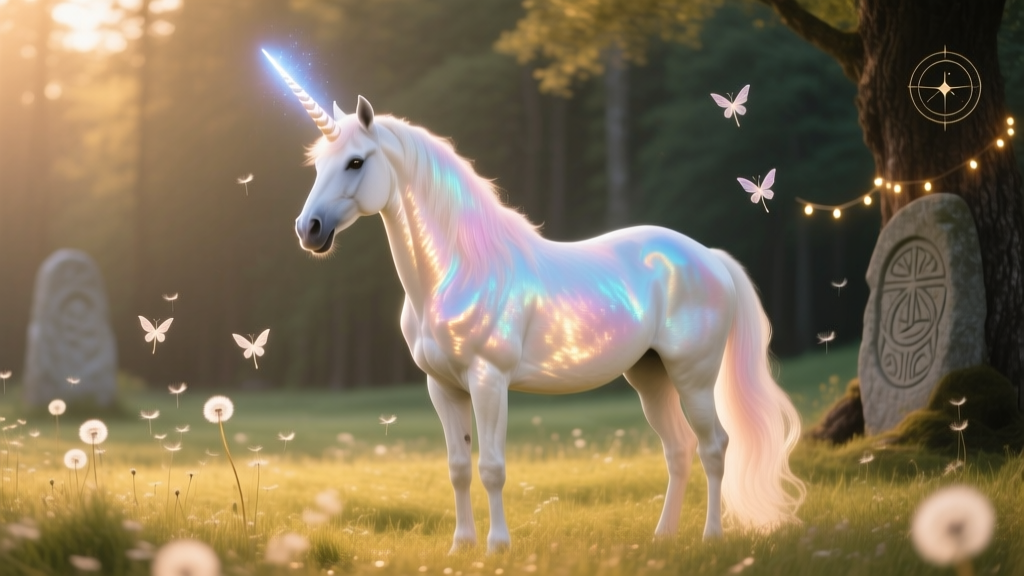
The cultural and spiritual landscape surrounding unicorns has undergone a radical transformation. Once relegated to the margins of medieval bestiaries and children's fantasy, this mythological archetype is experiencing a profound esoteric revival. Modern practitioners of mythology, alchemy, and energy work are reclaiming the unicorn not as a mere pop-culture mascot, but as a potent symbol of divine purity, alchemical transmutation, and third-eye awakening. To understand the current landscape of unicorns in spiritual and mythological circles, we must examine the trajectory from ancient natural history to contemporary high-vibrational ritual practices.
The Historical Baseline: Ctesias and the Indus Valley
Before analyzing current trends, it is necessary to establish the historical baseline of the archetype. The earliest known depictions of unicorn-like creatures appear on steatite seals from the Indus Valley Civilization (circa 2500 BCE). According to the World History Encyclopedia, these Harappan seals depict a powerful, bull-like beast with a single curved horn, representing lunar authority and untamed natural power.
The Western conception of the unicorn, however, stems largely from Ctesias of Cnidus, a Greek physician who served in the Persian court around 400 BCE. Ctesias described the monokeros (single-horned) as a fierce, swift, and untamable wild ass of India with a multi-colored horn possessing antitoxic properties. This foundational text established the core esoteric attribute that persists to this day: the unicorn's horn (the alicorn) as a supreme purifier and neutralizer of poisons, both physical and spiritual.
Alchemical and Medieval Transmutation
During the Middle Ages, the Physiologus and subsequent bestiaries morphed the fierce monokeros into the goat-like, elusive beast that could only be tamed by a pure maiden. This narrative became a profound allegory for the Incarnation and the taming of the base ego by the pure soul. The Metropolitan Museum of Art's famous Unicorn Tapestries highlight this era, where the beast represents both the hunted Christ and the elusive nature of divine truth, as detailed by The Metropolitan Museum of Art.
In Renaissance alchemy, the unicorn took on a highly specific technical meaning. Alchemical texts frequently depicted the Lion and the Unicorn. The lion represented sulfur (the solar, masculine, fixed principle), while the unicorn represented mercury (the lunar, feminine, volatile principle). The legendary battle and eventual union of these two creatures symbolized the coniunctio oppositorum—the alchemical marriage required to produce the Philosopher's Stone. Therefore, historically, the unicorn was never merely a symbol of passive innocence; it was an active, volatile force of spiritual mercury required for ultimate transmutation.
Unicorns in Contemporary Esoteric Frameworks
The current landscape of unicorn symbolism is defined by a sharp bifurcation: the lingering effects of hyper-commodified pop culture versus a rigorous, underground esoteric revival.
The Shift from Pastel Commodification to Shadow Integration
Throughout the 2010s, the 'unicorn trend' was heavily commodified, characterized by pastel aesthetics, hyper-femininity, and consumerism. In spiritual circles, this led to a superficial association with 'light and love' bypassing. However, the current decade has seen a corrective trend among serious mythologists and energy workers. Practitioners are reclaiming the unicorn's shadow aspects—its fierce untamability, its association with the wild forests (the subconscious mind), and its alchemical volatility. Modern esotericists view the unicorn not as a fragile creature of the light, but as a fierce guardian of the threshold between the material and astral planes.
The Alicorn and Pineal Gland Activation
In contemporary bio-spiritual and energy work frameworks, the alicorn is widely interpreted as a metaphysical representation of the pineal gland and the activation of the Third Eye (Ajna chakra). The spiral structure of the horn is mapped to the sacred geometry of the Fibonacci sequence and the energetic vortex of the crown chakra (Sahasrara). Meditative practices involving the unicorn archetype currently focus on drawing high-frequency cosmic energy down through the 'horn' and into the central nervous system, a practice known in certain New Age circles as 'Alicorn Grounding.'
Data Table: The Evolution of Unicorn Symbolism
To contextualize the current landscape, the following table maps the evolution of the unicorn archetype across major historical and spiritual epochs.
| Era | Cultural Context | Esoteric Function | Dominant Archetype |
|---|---|---|---|
| Bronze Age (Indus Valley) | Agrarian & Lunar Worship | Channeling lunar cycles and raw earth power | The Lunar Bull |
| Classical Antiquity | Greek Natural History | Antitoxin, physical purification, untamed speed | The Monokeros |
| Middle Ages | Christian Bestiaries | Incarnation, ego-death, divine grace | The Tamed Beast |
| Renaissance | Hermetic Alchemy | Spiritus Mercurius, volatile spiritual principle | The Alchemical Unicorn |
| Late 20th Century | New Age & Pop Culture | Innocence, magic, childhood wonder | The Pastel Mascot |
| Current Decade | Modern Esoteric Revival | Pineal activation, shadow integration, threshold guarding | The Astral Guardian |
The Commodification vs. Esoteric Revival Trend
According to Encyclopedia Britannica, the unicorn has always been a malleable symbol, adapting to the psychological needs of the era. The current trend in spiritual communities is a deliberate rejection of the 'frappuccino unicorn' era. Modern practitioners are returning to primary sources, studying the Physiologus and Paracelsian alchemy to integrate the unicorn into serious shadow work. The modern trend emphasizes that true purity (the unicorn's domain) is not the absence of darkness, but the ability to traverse the dark woods (the subconscious shadow) without being corrupted by it. This aligns with the broader psychological and spiritual trend of 'shadow integration' championed by modern Jungian analysts.
Actionable Protocols: Working with Unicorn Archetypes
For practitioners looking to integrate the unicorn archetype into their current spiritual or psychological routines, the following protocols utilize the esoteric properties of the alicorn and the mercurial nature of the beast.
- The Clear Quartz Alicorn Grid: Construct a crystal grid using a single, terminated Clear Quartz point (representing the alicorn) surrounded by six pieces of Selenite (representing lunar purity and the mercurial principle). Place this grid in your meditation space to facilitate high-vibrational download and crown chakra alignment. The quartz lattice acts as an energetic amplifier for the 'purifying' intent of the archetype.
- Mercurial Breathwork: To invoke the alchemical volatility of the unicorn, practice alternating nostril breathing (Nadi Shodhana). This balances the solar (lion) and lunar (unicorn) hemispheres of the brain and the body's energetic channels (Ida and Pingala), preparing the nervous system for deep trance work.
- Threshold Visualization: When engaging in shadow work or confronting subconscious fears, visualize the unicorn not as a white horse, but as a silver, luminescent entity standing at the edge of a dark forest. Use the image of the spiral horn piercing the darkness as a focal point to maintain your core purity and energetic boundaries while exploring repressed psychological material.
Understanding the current landscape of unicorns requires moving past the superficial merchandising of the last decade. By returning to the creature's roots as a symbol of alchemical mercury, lunar power, and fierce spiritual purity, modern practitioners can harness the unicorn as a formidable tool for psychological integration and energetic transmutation.