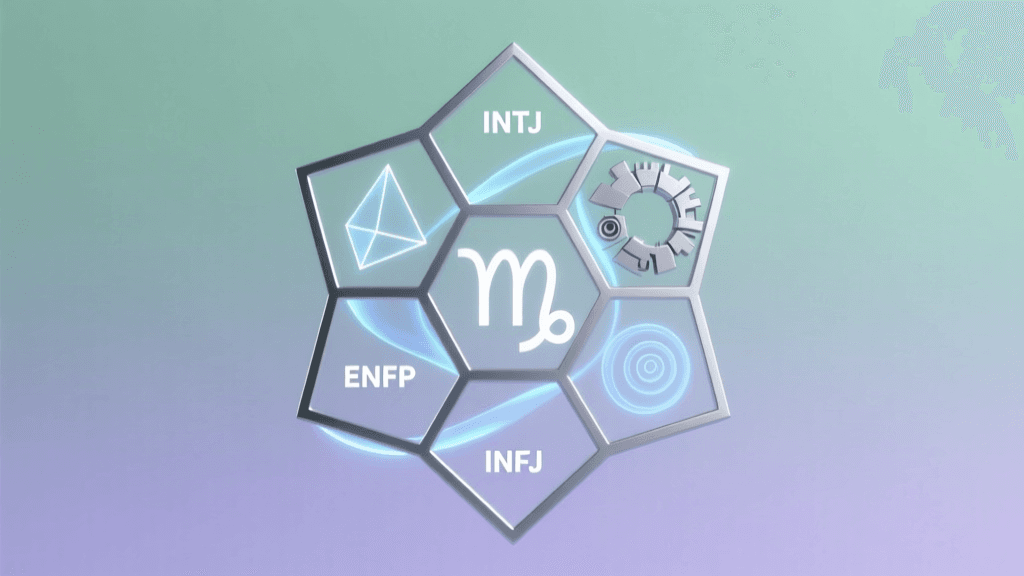
How Virgo Expresses Across MBTI Types
Virgo—the sixth sign of the zodiac, ruled by Mercury and grounded in Earth—is widely recognized for its analytical rigor, service-oriented ethics, and quiet devotion to improvement. Yet when we overlay the Myers-Briggs Type Indicator (MBTI), a powerful psychological framework validated across decades of behavioral research, Virgo’s expression becomes anything but monolithic. A Virgo born under the same Sun sign may manifest as a hyper-strategic INTJ architecting systemic reform—or a warm, imaginative ENFP teacher who organizes classroom kindness with poetic precision. The MBTI lens reveals not contradictions, but complementary dimensions: how cognitive functions (dominant, auxiliary, tertiary, inferior) interact with Virgo’s archetypal drive for order, utility, and discernment.
This crossover isn’t speculative astrology—it’s grounded in empirical psychology. The MBTI, while subject to ongoing scholarly refinement, remains one of the most widely administered personality assessments globally, with over 2 million people taking it annually according to the Myers & Briggs Foundation. Meanwhile, Virgo’s astrological profile has been consistently associated with high conscientiousness—a Big Five trait strongly correlated with both MBTI’s Judging (J) preference and Sensing (S) orientation (Saucier & Skrzypinska, 2021). But crucially, Virgo’s Mercury rulership also activates cognitive flexibility—making it uniquely responsive to variations in Thinking/Feeling and Introversion/Extraversion preferences.
In this deep profile, we move beyond generic ‘Virgo traits’ to explore four empirically resonant Virgo–MBTI fusions: Virgo–INTJ, Virgo–ENFP, Virgo–ISTP, and Virgo–INFJ. Each pairing illuminates how the same zodiacal foundation produces distinct behavioral signatures—especially in communication style, conflict response, career alignment, and emotional processing. Understanding these fusions helps Virgos (and those who love them) recognize their authentic self beyond stereotypes—and offers non-Virgos precise relational intelligence for deeper connection.
Virgo + INTJ vs Virgo + ENFP (Detailed Comparison)
At first glance, Virgo–INTJ and Virgo–ENFP seem like polar opposites: one is dubbed “The Architect,” the other “The Champion.” Yet both share Mercury as their ruling planet—and that shared celestial engine powers remarkably parallel motivations: to improve reality through insight. Where they diverge is in how they define ‘reality’ and which tools they deploy to refine it.
Cognitive Architecture: Dominant Functions in Dialogue
The INTJ’s dominant function is Introverted Intuition (Ni), supported by auxiliary Extraverted Thinking (Te). For Virgo–INTJs, Mercury’s influence amplifies Ni’s future-pattern scanning and Te’s systematic execution—creating a rare fusion of long-term strategic vision and granular operational fidelity. Their Virgoan attention to detail doesn’t serve perfectionism for its own sake; it serves the integrity of the grand design. As psychologist Dario Nardi observes in Neuroscience of Personality, Ni-dominant types show heightened activity in the brain’s default mode network during ideation—allowing Virgo–INTJs to mentally simulate complex cause-effect chains before committing resources.
By contrast, the ENFP’s dominant function is Extraverted Intuition (Ne), supported by auxiliary Introverted Feeling (Fi). Virgo–ENFPs channel Mercury’s communicative agility into rapid idea generation and empathic resonance. Their ‘service’ instinct manifests not through process optimization—but through catalyzing human potential. They notice inefficiencies not to streamline systems, but to liberate people from limiting structures. A Virgo–ENFP nonprofit founder might redesign onboarding not to cut costs, but to ensure every volunteer feels seen, valued, and ethically aligned.
Workplace Expression: Two Models of Excellence
Both types pursue excellence—but their metrics differ fundamentally:
- Virgo–INTJ: Measures success by structural coherence—e.g., “Does this policy reduce redundancy without compromising equity?” They thrive in roles requiring long-horizon planning and cross-domain integration: urban systems analysts, clinical informatics directors, or sustainability engineers. Their Virgoan humility keeps them from self-promotion—but their Te ensures deliverables are flawlessly documented and scalable.
- Virgo–ENFP: Measures success by relational resonance—e.g., “Did this workshop help participants articulate their authentic values?” They excel in education innovation, therapeutic coaching, or ethical brand strategy. Their Virgoan discernment helps them filter superficial trends—so when they champion a new pedagogy, it’s backed by evidence and student-centered outcomes—not just enthusiasm.
Crucially, both types experience stress similarly—through inferior Sensing (Se) (INTJ) or inferior Thinking (Ti) (ENFP)—but express it in divergent ways. Under pressure, Virgo–INTJs may become hyper-fixated on minor physical discomforts (e.g., lighting, posture, ambient noise), interpreting them as signs of systemic failure. Virgo–ENFPs, meanwhile, may abruptly over-rationalize emotions (“If I list every possible reason I’m anxious, I’ll control it”), temporarily suppressing Fi’s intuitive moral compass.
Relationship Dynamics: Conflict as Calibration
In romantic or collaborative partnerships, Virgo–INTJs and Virgo–ENFPs approach disagreement as calibration—not confrontation. But their calibration methods differ:
“A Virgo–INTJ revises the blueprint. A Virgo–ENFP reimagines the purpose.”
When feedback is needed, Virgo–INTJs prefer written summaries with annotated timelines and contingency plans. Virgo–ENFPs favor reflective dialogue—“What did this situation reveal about our shared values?”—followed by co-created action experiments. Neither is ‘more Virgo’; both honor Mercury’s dual mandate: clarity and connection.
Virgo + Thinking Types vs Feeling Types
While Virgo is often stereotyped as ‘logical’ or ‘detached,’ its Mercury rulership makes it inherently dialectical—capable of housing both Thinking (T) and Feeling (F) preferences with equal authenticity. The T/F dichotomy doesn’t indicate emotionality (all types feel deeply), but rather decision-making criteria: Thinking types prioritize objective consistency and cause-effect logic; Feeling types prioritize person-centered harmony and value alignment.
Thinking-Dominant Virgos: ISTJ, ESTJ, INTJ, ENTJ
For Virgo–Thinking types, Mercury’s analytical power merges with a strong Te or Ti function to produce what we term Architectural Integrity. Their service ethic is expressed through system design: optimizing workflows, auditing compliance, refining protocols. An ISTJ Virgo nurse doesn’t just follow procedure—she documents deviations, identifies root causes of medication errors, and drafts revised checklists adopted hospital-wide. Her Virgo Sun fuels meticulousness; her ISTJ structure channels it into institutional impact.
Key strengths include:
- Unwavering commitment to factual accuracy
- Ability to translate abstract standards (e.g., HIPAA, ISO 9001) into actionable steps
- Resilience in crisis due to procedural grounding
Developmental growth areas involve recognizing when efficiency undermines empathy—e.g., automating patient intake forms without assessing digital literacy barriers.
Feeling-Dominant Virgos: ISFJ, ESFJ, INFJ, ENFJ
Virgo–Feeling types embody Stewardship Ethics: their Mercury-ruled discernment is applied to moral nuance, not just data. An INFJ Virgo therapist doesn’t just diagnose symptoms—she maps how cultural narratives, family loyalty patterns, and personal shame scripts interact to sustain anxiety. Her Virgoan precision ensures treatment plans are evidence-based; her INFJ compassion ensures they’re human-centered.
Key strengths include:
- Exceptional ability to detect micro-inconsistencies between words and affect (e.g., a client saying “I’m fine” while gripping their chair)
- Designing inclusive systems that honor diverse needs (e.g., multilingual consent forms with plain-language explanations)
- Long-term relational memory—recalling not just facts about people, but their evolving values and boundaries
A critical growth edge lies in distinguishing healthy discernment from moral rigidity. Virgo–Feeling types may overcorrect perceived ethical lapses in others—e.g., privately questioning a colleague’s parenting choice based on limited observation—without considering contextual complexity.
Comparative Decision-Making Table
| Scenario | Virgo–Thinking Type (e.g., ESTJ) | Virgo–Feeling Type (e.g., ISFJ) |
|---|---|---|
| Hiring a Team Member | Evaluates candidates against weighted KPIs: certification validity, error-rate history, peer-reference consistency. Prioritizes demonstrable process adherence. | Evaluates candidates against holistic fit: observed patience during role-play, alignment with team’s stated values, responsiveness to feedback in interview. Prioritizes relational safety. |
| Responding to a Mistake | Initiates root-cause analysis meeting; assigns corrective actions with deadlines; updates SOPs to prevent recurrence. | Meets individually with involved parties; explores emotional impact; co-designs restorative practices; adjusts team norms to reinforce psychological safety. |
| Giving Critical Feedback | Uses SBI model (Situation-Behavior-Impact) with documented examples; focuses on observable behaviors and systemic consequences. | Uses nonviolent communication framework (Observation-Feeling-Need-Request); names shared values violated; invites collaborative solution-building. |
This table illustrates that both approaches honor Virgo’s core: improvement through discernment. The difference lies in whether the ‘unit of analysis’ is the system (T) or the person-in-system (F). Neither is superior—yet misalignment here causes frequent workplace friction. Teams benefit immensely from explicitly naming which decision lens is being applied—and when to pivot.
Virgo + Introverts vs Extroverts
Virgo’s Earth modality suggests introversion—but Mercury’s dual-nature rulership means Virgos span the full I/E spectrum. The distinction profoundly shapes how they gather information, recharge, and express competence.
Introverted Virgos (e.g., ISTJ, INTP, ISFJ, INFJ)
For Introverted Virgos, Mercury’s energy is directed inward—toward internal models, private analysis, and deep synthesis. Their service is often invisible: the ISTJ accountant who redesigns tax-filing software backend logic to reduce taxpayer errors; the INTP researcher who spends months verifying a single statistical assumption before publishing. Their ‘perfectionism’ is less about fear of judgment and more about fidelity to inner standards of coherence.
Recharging requires solitude with purpose: editing a manuscript, calibrating lab equipment, or organizing a personal knowledge base. Social interaction is energizing only when highly focused (e.g., mentoring one student, consulting on a specific technical problem). Unstructured small talk depletes them rapidly—not because they dislike people, but because it lacks the informational density their Virgo–Introvert cognition craves.
Extraverted Virgos (e.g., ESTP, ESFP, ENTP, ENFP)
Extraverted Virgos direct Mercury’s analytical power outward—testing ideas in real time, refining systems through user feedback, and diagnosing problems via live observation. An ESTP Virgo mechanic doesn’t just fix engines; she crowdsources diagnostic tips from global forums, then publishes open-source torque-spec updates. Her Virgo precision is expressed through iterative, community-validated improvement.
They recharge through engaged exchange: facilitating workshops, beta-testing apps with users, or leading hackathons. Solitude feels stagnant unless it serves an imminent external output. Their ‘critical eye’ is deployed socially—they’ll gently correct a friend’s mispronunciation of a Latin botanical name, not to shame, but to co-build linguistic accuracy.
Energy Management Strategies
Regardless of I/E preference, Virgos benefit from structured energy hygiene:
- Introverted Virgos: Block ‘deep work’ hours with zero notifications; use time-blocking apps (e.g., Clockify) to audit where attention flows; schedule ‘feedback buffers’—15-minute slots after meetings to process inputs before responding.
- Extraverted Virgos: Design ‘output rituals’—e.g., voice-record key insights post-meeting, then transcribe/edit within 2 hours; join mastermind groups with clear agendas and rotating facilitation to satisfy social + analytical needs simultaneously.
Notably, Virgo’s Earth element grounds both types in tangible outcomes. While an INTP Virgo may spend weeks modeling climate policy impacts, she’ll ultimately publish a 3-page executive summary with concrete legislative recommendations. An ENTP Virgo may host 20 ideation sessions—but will synthesize findings into a clickable prototype within 72 hours. This shared commitment to material consequence is Virgo’s unifying signature.
Finding Your Exact Virgo Fusion Profile
Identifying your Virgo–MBTI fusion isn’t about fitting into a box—it’s about mapping your innate cognitive architecture onto your zodiacal foundation. Here’s a step-by-step, research-informed method:
Step 1: Confirm Your MBTI Type (Beyond Online Quizzes)
Free online tests have moderate reliability (r ≈ 0.5–0.7) but low validity for type dynamics. For accurate typing:
- Take the official MBTI Step I & II assessment administered by a certified practitioner.
- Study cognitive function stacks—not just four letters. Resources like Personality Junkie offer free, academically rigorous function explanations.
- Track real-world patterns for 30 days: When do you feel most energized? What drains you? What decisions come effortlessly? What causes disproportionate stress?
Step 2: Map Mercury’s Influence
As Mercury-ruled, Virgos experience planetary transits intensely—especially Mercury retrograde. Keep a journal for one Mercury cycle (approx. 88 days): note communication glitches, tech failures, revision opportunities, and unexpected insights. Correlate entries with your MBTI functions:
- If Ni dominates (INTJ, INFJ), you’ll likely gain strategic clarity during retrogrades—seeing hidden systemic links.
- If Ne dominates (ENTP, ENFP), you’ll generate breakthrough analogies—connecting unrelated fields in novel ways.
- If Te dominates (ESTJ, ENTJ), you’ll optimize existing processes—fixing bottlenecks revealed by delays.
- If Fi dominates (ISFP, INFP), you’ll deepen personal values alignment—revising commitments that no longer resonate.
Step 3: Identify Your ‘Fusion Archetype’
Combine your confirmed MBTI type with Virgo’s core themes to name your unique expression:
| MBTI Type | Fusion Archetype Name | Defining Motivation | Signature Contribution |
|---|---|---|---|
| INTJ | The Systems Steward | To ensure long-term viability through preemptive structural integrity | Future-proofed frameworks that scale without sacrificing ethics |
| ENFP | The Human Catalyst | To unlock collective potential through resonant, values-driven design | Initiatives that make growth feel joyful, accessible, and meaningful |
| ISTP | The Precision Artisan | To master functional elegance—where form, function, and flawlessness converge | Tools, interfaces, and environments engineered for intuitive human use |
| INFJ | The Ethical Cartographer | To map the unseen moral topography of systems and guide compassionate navigation | Frameworks that make ethical complexity visible, discussable, and actionable |
Your archetype isn’t fixed—it evolves with maturity. A young Virgo–ISTP may focus on technical mastery; at 40+, they often mentor others in craft ethics. An older Virgo–INFJ may shift from diagnosing organizational toxicity to designing regenerative cultures.
Step 4: Apply Your Fusion Strategically
Once identified, leverage your fusion intentionally:
- Career Navigation: Virgo–INTJs thrive in roles demanding ‘architectural thinking’ (e.g., policy design, AI ethics governance). Virgo–ENFPs excel in ‘human-system bridging’ (e.g., learning experience design, participatory research).
- Conflict Resolution: Virgo–Thinking types should pre-script empathic openings (“I want to understand your perspective first”). Virgo–Feeling types should draft logical scaffolds (“Here’s how this aligns with our shared goal of X”).
- Self-Care: All Virgo fusions need ‘discernment detox’—scheduled time without evaluation: silent nature walks, abstract art creation, or listening to music without analyzing structure.
FAQ
Can my Virgo–MBTI fusion change over time?
No—your core cognitive function stack is neurologically stable, like handedness. However, your expression matures: younger Virgo–INTJs may over-rely on Te (producing rigid systems), while mature ones integrate Fi to infuse logic with values. This is type development, not type change. Research by the Center for Applications of Psychological Type confirms function hierarchy remains consistent across lifespan (CAPT, 2020).
What if I test as one MBTI type but resonate more with another Virgo fusion?
Trust lived experience over a single test. Mis-typing is common—especially for Virgos, whose adaptability can mask natural preferences. Revisit function descriptions (not just letters) and track energy flow. A Virgo who feels drained by solo analysis but energized by group problem-solving is likely an Extraverted type—even if early tests suggested Introversion.
Do Virgo–Feeling types struggle with ‘being too critical’?
Only if conflating discernment with judgment. Virgo–Feeling types critique systems (e.g., “This hiring rubric disadvantages neurodivergent candidates”)—not people. Their criticism is diagnostic, not punitive. The remedy isn’t softening standards, but articulating the human impact behind each observation.
How can non-Virgos best collaborate with Virgo–MBTI fusions?
Provide clear objectives, defined success metrics, and respect their need for preparation time. Avoid vague praise (“Great job!”); instead specify impact (“Your documentation reduced onboarding errors by 40%”). For Virgo–Feeling types, acknowledge effort and intent (“I see how much care you put into ensuring inclusivity”).
Is there a ‘most common’ Virgo–MBTI pairing?
Data from the MBTI Global database shows Virgos are statistically overrepresented among ISTJs and ISFJs—likely due to shared Sensing–Judging preferences and Earth–Mercury alignment. However, all 16 types occur among Virgos. Rarity doesn’t indicate authenticity; it reflects societal bias toward certain expressions.
Ultimately, the Virgo–MBTI crossover reveals a profound truth: precision is not cold—it’s the ultimate act of care. Whether refining a genome-editing protocol (Virgo–INTJ) or holding space for a grieving friend’s contradictory emotions (Virgo–INFJ), Virgos apply Mercury’s gift to serve something larger than themselves. Your fusion isn’t a limitation—it’s your unique frequency for contributing to the world’s ongoing evolution. Tune in. Trust it. Refine relentlessly.