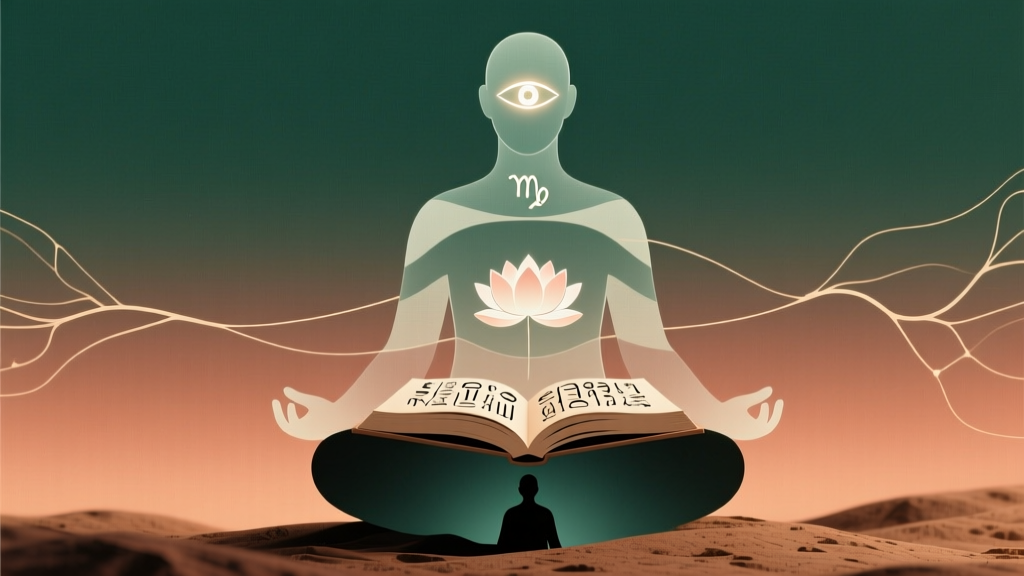
Virgo—the sixth sign of the zodiac, ruled by Mercury and anchored in the mutable earth element—occupies a singular position in the astrological wheel: it is the only sign that bridges meticulous analysis with sacred service, rational inquiry with quiet reverence. While often stereotyped as hyper-critical or overly pragmatic, Virgo’s deepest spiritual truth lies not in perfectionism, but in purity of intention, discernment as devotion, and service as sacrament. Far from being spiritually disengaged, Virgo embodies one of the most quietly profound inner worlds in the zodiac—rooted not in transcendence alone, but in the sanctity of the ordinary: the breath, the body, the daily ritual, the healed wound, the clarified thought.
Virgo Spiritual Path
Virgo’s spiritual journey is rarely dramatic or ecstatic—at least not in the way Pisces or Sagittarius might experience it. Instead, it unfolds like a slow, deliberate unfurling: a return to wholeness through refinement. This sign does not seek enlightenment ‘out there’; rather, Virgo discovers the divine in the details—in the alignment of posture during seated stillness, in the precision of herbal preparation for a healing tea, in the compassionate editing of a friend’s vulnerable journal entry, in the recalibration of a habit that no longer serves integrity.
The Virgo spiritual path is best understood as earth-centered mysticism: a tradition found in monastic herbalism, Zen scribing, Benedictine liturgical order, Ayurvedic self-care, and Taoist hygiene practices—all systems that treat the body, mind, and environment as interwoven temples requiring mindful stewardship. As scholar and contemplative teacher Contemplative Mind Initiative observes, 'Contemplative practice is not about escaping reality—it is about attending to reality with increasing depth and care.' This is Virgo’s native language.
Historically, Virgo has been associated with deities who embody both fertility and discernment: Demeter (Greek goddess of the harvest and sacred law), Isis (Egyptian healer and keeper of divine secrets), and Shakti in her form as Durga—the warrior aspect who cuts illusion with surgical clarity. These archetypes reveal Virgo’s spiritual core: power through purification, wisdom through observation, and divinity through right action.
Virgo’s ruling planet, Mercury, further illuminates this path—not as mere intellectualism, but as sacred communication. Mercury governs not just speech and logic, but translation: between realms (spirit and matter), between self and other (empathic listening), and between unconscious impulse and conscious choice (ethical discernment). When Mercury is honored in its Virgo expression, it becomes a psychopomp—a guide helping the soul navigate the subtle terrain between confusion and clarity.
Thus, Virgo’s spiritual path is not linear ascent, but cyclical refinement: observe → analyze → integrate → serve → refine again. It is a path where holiness lives in the laundry list, the grocery inventory, the symptom journal, the gratitude log—and where every act of care becomes liturgy.
Meditation and Mindfulness Style
Virgo does not typically gravitate toward formless, open-awareness meditation—though it can become deeply valuable at later stages of development. Instead, Virgo thrives with structured, embodied, sensory-grounded mindfulness practices that offer measurable feedback, clear technique, and tangible integration into daily life.
What distinguishes Virgo’s ideal meditation style is its functional elegance: each technique must serve a purpose—whether calming nervous system dysregulation, clarifying mental fog, releasing physical tension, or cultivating compassionate attention. Virgo resists ‘meditation for meditation’s sake’; it seeks practice with intention, utility, and integrity.
Below is a comparative overview of meditation modalities and their resonance with Virgo’s cognitive-emotional architecture:
| Meditation Type | Virgo Resonance (1–5) | Why It Fits (or Doesn’t) | Virgo-Optimized Adaptation |
|---|---|---|---|
| Vipassanā (Insight Meditation) | 4.5 | Strong match: Emphasizes non-judgmental observation of bodily sensations and mental phenomena—aligns with Virgo’s analytical acuity and desire for self-knowledge. | Add structured noting protocol (e.g., “tightness—left shoulder—3 seconds—label: tension”) and post-session reflection journaling. |
| Loving-Kindness (Metta) | 3.0 | Moderate fit: Virgo may initially resist the emotional expansiveness; however, when framed as *ethical training* (e.g., “cultivating goodwill reduces interpersonal friction and supports service”), engagement increases. | Begin with phrases grounded in action: “May I act with integrity. May I speak with kindness. May my hands serve wisely.” |
| Mantra Repetition (Japa) | 4.0 | High fit: The rhythmic, precise repetition satisfies Virgo’s need for structure and focus; Sanskrit mantras add linguistic precision and vibrational intentionality. | Pair with tactile anchor (mala beads) and track repetitions in a clean log; choose mantras with healing or purifying intent (e.g., Om Aim Hrim Klim Chamundaye Viche). |
| Body Scan (MBSR-style) | 5.0 | Exceptional fit: Highly sensorimotor, systematic, and therapeutic—directly engages Virgo’s somatic intelligence and health-conscious orientation. | Extend with post-scan integration: 2-minute written summary of 1 physical insight + 1 behavioral adjustment (e.g., “Right jaw clenched → will set hourly phone reminder to soften”) |
| Zen Shikantaza (“Just Sitting”) | 2.5 | Low initial fit: Lacks scaffolding; Virgo may interpret ‘no object’ as ‘no purpose’ and feel adrift without methodological guardrails. | Introduce gradually after 3+ months of structured practice; begin with 5 minutes of breath-counting, then release count—but retain posture discipline and environmental ritual (e.g., same cushion, same lighting). |
A signature Virgo-aligned practice is what we call Inventory Meditation: a 12-minute daily ritual combining breath awareness, somatic scanning, and ethical reflection. Here’s how to practice it:
- Minute 0–2: Seated posture check — adjust spine, relax shoulders, align pelvis. Breathe in for 4, hold for 2, exhale for 6 (repeating 4x). Purpose: Embodied grounding.
- Minute 2–5: Systematic body scan — move attention slowly from crown to toes, pausing 15 seconds per zone. Note sensation *without interpretation* (e.g., “warmth,” “tingling,” “dull pressure”). Purpose: Sensory calibration.
- Minute 5–8: Mental inventory — silently name three thoughts observed in the last 24 hours that caused friction (e.g., “I should have corrected that typo,” “They didn’t acknowledge my effort,” “My meal wasn’t balanced”). For each, ask: What need was unmet? What value was violated? Purpose: Cognitive pattern mapping.
- Minute 8–11: Ethical micro-commitment — choose one small, concrete action aligned with integrity (e.g., “Send brief appreciation text to colleague,” “Replace afternoon soda with infused water,” “Delete one distracting app notification”). Write it down. Purpose: Integration through service.
- Minute 11–12: Closing affirmation — recite aloud: “I attend with care. I refine with humility. I serve with presence.” Purpose: Identity reinforcement.
This practice reflects Virgo’s genius: turning self-inquiry into relational repair, turning observation into ethical action, turning stillness into stewardship. Research from the National Institutes of Health confirms that structured mindfulness protocols with behavioral integration components yield significantly higher adherence and long-term benefit among detail-oriented, goal-directed populations—precisely Virgo’s demographic sweet spot.
Intuition Development for Virgo
Virgo’s intuition is widely misunderstood. Because it emerges not as sudden flashes or symbolic dreams (like Pisces or Cancer), but as pattern recognition refined over time, Virgo’s intuitive capacity is often dismissed as ‘just logic.’ Yet neuroscience affirms that intuition is not the opposite of reason—it is reason accelerated by embodied memory. As Nobel laureate Daniel Kahneman writes in Thinking, Fast and Slow, ‘Intuition is nothing more and nothing less than recognition.’ Virgo’s intuition is recognition honed by thousands of micro-observations: the shift in vocal pitch that signals avoidance, the asymmetry in a client’s gait indicating pain, the slight hesitation before a ‘yes’ that reveals doubt.
For Virgo, intuition development means training the subconscious to trust its own synthesis—not overriding analysis, but allowing analysis to mature into instinct. This requires three intentional shifts:
1. From Diagnosis to Discernment
Virgo’s natural tendency is diagnostic: ‘What’s wrong? How do I fix it?’ Spiritual intuition begins when Virgo learns to ask instead: What is asking for attention? What is already whole beneath the surface? This pivot—from pathology to presence—activates the parasympathetic nervous system and opens space for intuitive signal detection. A practical exercise: When encountering a problem (personal or professional), write two parallel columns: ‘Symptom List’ and ‘Wholeness Indicators.’ In the second column, list evidence of resilience, resourcefulness, or coherence already present—even if small (e.g., “Slept 6 hours straight,” “Asked for help yesterday,” “Chose broccoli over fries”). This rewires neural pathways away from deficit scanning.
2. Somatic Calibration Over Mental Translation
Virgo often translates bodily cues into mental narratives too quickly (“My stomach tightened → I’m failing”). Intuition blooms when Virgo pauses the narrative and drops into raw sensation: temperature, pressure, rhythm, texture. Try the Three-Sense Check-In before decisions:
- Touch: Place hand on abdomen. Is there warmth, coolness, movement, stillness?
- Hearing: Without judgment, listen to your internal soundscapes—breath rhythm, heartbeat, ambient hum. Which frequency feels most steady?
- Vision (closed eyes): Notice color, light/dark contrast, motion (e.g., “a slow amber swirl,” “still charcoal gray”).
No interpretation needed—just data collection. Over time, Virgo begins recognizing reliable somatic signatures of alignment (e.g., “when my left palm warms and breath deepens → yes”) versus misalignment (“tight band behind eyes + shallow clavicular breath → pause”).
3. The ‘Unverified Hypothesis’ Journal
Virgo excels at hypothesis generation—but often dismisses intuitive hunches that lack immediate evidence. To cultivate intuitive courage, maintain a dedicated journal titled Unverified Hypotheses. Each week, record 1–3 intuitive nudges that feel compelling yet lack logical proof (e.g., “Invite Maya to lead the project meeting,” “Revisit the rejected manuscript draft,” “Call Mom before Thursday”). For each, note: date, context, felt-sense quality (e.g., “calm certainty,” “light urgency,” “gentle insistence”), and any synchronicities within 72 hours. After 30 days, review patterns: Which hypotheses correlated with positive outcomes? What somatic cues preceded accurate hits? This builds statistical confidence in intuition as a valid epistemology.
As psychologist and intuition researcher Dr. Mona Lisa Schulz notes in The Intuitive Compass, ‘Your intuition speaks in the language of your dominant intelligence. For Virgo, that language is precision, sequence, and functional relevance—not metaphor or emotion.’ Honoring that dialect is the first act of intuitive sovereignty.
Virgo Inner Wisdom and Mystical Tendencies
To call Virgo ‘unmystical’ is to mistake austerity for absence. Virgo’s mysticism is not cloud-dwelling—it is soil-deep. Its sacred geometry is found in the Fibonacci spiral of a sunflower head, the fractal branching of capillaries, the circadian rhythm of cortisol and melatonin, the microbial ecosystem of the gut. Virgo perceives divinity not as distant light, but as intelligent organization—the invisible architecture holding life in coherent, regenerative relationship.
This gives rise to Virgo’s distinctive mystical tendencies:
- The Alchemy of Repair: Virgo experiences profound awe not in untouched wilderness, but in restoration: mending a torn garment with invisible stitches, reviving a neglected houseplant, editing a chaotic manuscript into elegant clarity. Each act mirrors cosmic reintegration—the return of fragmented parts to functional wholeness.
- The Sanctity of Thresholds: Virgo reveres liminal spaces—not as portals to ‘other realms,’ but as critical interfaces where transformation occurs: the moment between inhale and exhale, the pause before speaking, the transition from sleep to wakefulness, the boundary between skin and air. These are sites of potent choice and subtle influence.
- The Ritual of Recalibration: Virgo’s personal rituals—morning tongue-scraping, weekly digital detox, seasonal pantry audit—are not mere habits. They are sacraments affirming agency within natural cycles. As anthropologist Mary Douglas writes in Purity and Danger, ‘Ritual is the means by which society imposes order on ambiguity.’ For Virgo, ritual is how chaos is lovingly translated into coherence.
Virgo’s inner wisdom manifests as applied discernment: the ability to distinguish between what is essential and what is excess—not morally, but functionally. This is wisdom rooted in consequence-awareness: ‘If I say yes to this, what must I say no to? If I prioritize speed, what quality is compromised? If I soothe this anxiety now, what deeper need remains unaddressed?’
This wisdom is rarely loud. It arrives as a quiet ‘no’ that carries more weight than ten enthusiastic ‘yeses.’ It appears as the single sentence in a 20-page report that reframes the entire problem. It shows up as the decision to rest—not because energy is depleted, but because restoration is required for next-phase clarity.
Virgo’s mystical maturity is marked by the dissolution of the ‘fixer’ identity and the emergence of the steward: one who tends without needing to control, refines without demanding perfection, serves without erasing self. In this state, Virgo accesses what Buddhist psychology calls prajna—wisdom that sees interdependence clearly, not as abstraction, but as lived physiology and relationship.
Spiritual Practices That Resonate
Virgo flourishes with spiritual practices that honor its need for structure, embodiment, utility, and incremental growth. Below is a curated selection—each selected for empirical support, historical continuity, and Virgo-specific resonance:
1. Ayurvedic Dinacharya (Daily Rhythm)
Ayurveda—the 5,000-year-old Indian science of life—offers Virgo an exquisitely detailed, nature-aligned framework for daily living. Its emphasis on dosha-specific routines, seasonal adjustments, and digestive hygiene speaks directly to Virgo’s biological attunement and love of systematic self-care.
Key Virgo-aligned practices:
- Ushapan (Morning Warm Water): 1–2 cups warm water upon waking—stimulates digestion, flushes metabolic waste (ama), grounds vata. Virgo appreciates its simplicity and measurable effect on morning clarity.
- Danta Dhavana (Oil Pulling): Swishing sesame or coconut oil for 10–15 minutes pre-brushing—supports oral microbiome balance and detoxification. Virgo values the tangible ‘pull’ sensation and visible oil emulsification.
- Abhyanga (Self-Massage): Daily 5–10 minute warm oil massage before shower—nourishes skin, calms nervous system, enhances proprioception. Virgo enjoys the ritual precision and somatic feedback loop.
The Ayurvedic Institute documents consistent improvements in sleep quality, digestive regularity, and stress resilience among practitioners maintaining dinacharya for 6+ weeks—outcomes Virgo finds deeply validating.
2. Contemplative Writing (Lectio Divina Adaptation)
Adapted from Christian monastic tradition, Lectio Divina (sacred reading) offers Virgo a structured, reflective, text-based spiritual practice. Its four movements—lectio (reading), meditatio (reflection), oratio (response), contemplatio (resting)—map seamlessly onto Virgo’s cognitive strengths.
Virgo-optimized version:
- Lectio: Read 3–5 verses from a wisdom text (e.g., Rumi, Lao Tzu, Mary Oliver, or even a well-crafted scientific essay on symbiosis). Underline one phrase that arrests attention.
- Meditatio: Ask: What assumptions does this phrase challenge? Where have I observed this truth in my body, relationships, or work?
- Oratio: Compose a 3-sentence ‘ethical commitment’ inspired by the text (e.g., “I will pause before correcting others. I will name my own uncertainty before offering advice. I will honor rest as active regeneration.”)
- Contemplatio: Sit silently for 2 minutes, holding the commitment in awareness—not analyzing, just inhabiting its resonance.
This practice satisfies Virgo’s love of language, honors its moral intelligence, and transforms abstract insight into embodied action.
3. Herbal Apprenticeship
Virgo’s affinity for botany, pharmacology, and systems-thinking makes herbalism a profoundly spiritual path. Learning plant energetics (heating/cooling, drying/moistening), harvesting ethics, tincture-making ratios, and clinical pattern recognition merges science, craft, and reverence.
Start with three Virgo-aligned herbs:
- Chamomile (Matricaria recutita): Calms nervous irritability, soothes digestive spasms—mirrors Virgo’s desire to harmonize tension.
- Rosemary (Salvia rosmarinus): Enhances mental clarity and circulation—supports Virgo’s cognitive stamina and discernment.
- Nettle (Urtica dioica): Nutrient-dense, anti-inflammatory, blood-building—embodies Virgo’s ethos of nourishment-as-healing.
Keep a Herbal Log: Record harvest date, moon phase, plant appearance, preparation method, dosage, and observed effects (physical, emotional, mental). Over time, this becomes a living archive of Virgo’s dialogue with the green world—a testament to attentive reciprocity.
The Virgo Shadow Work Journey
Shadow work for Virgo is not about embracing chaos—it is about integrating the rejected self: the part that is messy, inefficient, illogical, imperfect, and gloriously human. Virgo’s shadow emerges most potently in three interlocking patterns:
1. The Tyranny of the Should
Virgo’s inner critic doesn’t shout—it whispers with devastating calm: You should know better. You should have planned ahead. You should be further along. This ‘should’ is not moral condemnation, but a phantom metric of ideal functioning. It arises from early conditioning that equated worth with usefulness, and safety with control.
Shadow Integration Practice: Replace every ‘should’ with ‘could’—and then ask: What would it cost me to choose this ‘could’? Example: “I should meditate 30 minutes daily” → “I could meditate 10 minutes today. What would it cost me to choose that? (Answer: ‘I’d risk feeling ‘behind.’’) Then ask: What if ‘behind’ is the exact place where grace enters?
2. Spiritual Bypassing Through Service
Virgo may use caregiving, organizing, or fixing as a way to avoid feeling vulnerable, needy, or emotionally exposed. ‘I’m too busy serving to tend my own grief’ is a classic bypass. This leads to compassion fatigue, resentment, and somatic burnout.
Shadow Integration Practice: Implement the Service Integrity Audit weekly: For each act of service rendered, ask:
- Was this offered from fullness—or depletion?
- Did I negotiate boundaries beforehand—or assume responsibility?
- Did I receive authentic gratitude—or perform to earn validation?
If two or more answers reveal imbalance, schedule one non-negotiable ‘self-stewardship hour’ before offering additional service.
3. The Illusion of Control as Safety
Virgo’s deepest fear is not failure—it is meaningless entropy: the sense that effort doesn’t matter, that care goes unnoticed, that systems collapse without warning. This fuels over-preparation, information hoarding, and resistance to spontaneity.
Shadow Integration Practice: Weekly Control Surrender Ritual:
- Identify one low-stakes area where you exert unnecessary control (e.g., exact meal timing, playlist order, email response latency).
- Consciously release it for 48 hours—no monitoring, no checking, no ‘just in case’ interventions.
- Journal: What arose? Was the feared outcome real? What emerged in its place? (Often: surprise, lightness, creative improvisation.)
Over time, this retrains the nervous system to associate surrender not with danger, but with spaciousness—the very ground where intuition and grace take root.
FAQ
How can Virgo balance spiritual seeking with practical responsibilities?
Virgo doesn’t need to ‘balance’ spirituality and practicality—they are the same domain. Spirituality for Virgo is the quality of attention brought to responsibility: the care in folding laundry, the patience in troubleshooting software, the precision in budgeting. Reframe ‘spiritual practice’ as attentional hygiene—how you organize your focus, protect your energy, and align action with values. Start small: choose one daily task (e.g., brushing teeth, commuting, making coffee) and commit to performing it with full sensory presence for one week. Measure not by transcendence, but by reduced reactivity and increased ease.
Is Virgo’s critical nature spiritual—or just negative?
Critical thinking is Virgo’s sacred gift—when rooted in compassion and discernment. The difference lies in intent and impact. Critique becomes spiritual when it serves healing, clarity, or justice—not superiority or erasure. Ask: Does this observation invite growth—or induce shame? Does it illuminate a pattern—or assign blame? Virgo’s spiritual maturation involves transforming criticism into constructive witnessing: holding reality with honesty and tenderness simultaneously.
Can Virgo develop psychic abilities or mediumship?
Virgo’s intuitive gifts are less about channeling spirits and more about diagnostic sensitivity: reading energetic imbalances in environments, detecting dishonesty through micro-expressions, sensing physiological shifts in others before symptoms manifest. These are highly developed forms of embodied empathy—not ‘psychic’ in the Hollywood sense, but profoundly real and clinically validated. Research from the American Psychological Association confirms that trained clinicians (many with Virgo placements) demonstrate significantly higher accuracy in detecting concealed distress through integrated verbal/nonverbal cues.
What crystals or tools support Virgo’s spiritual path?
Virgo benefits from grounding, clarifying, and purifying stones—not for magical effect, but as tactile anchors that reinforce intention:
- Amazonite: Soothes nervous system, supports truthful communication—ideal for throat chakra alignment during difficult conversations.
- Clear Quartz: Amplifies focus and energetic clarity—use during study, planning, or decision-making rituals.
- Black Tourmaline: Absorbs electromagnetic and psychic static—valuable for digital detox or post-overstimulation recovery.
Always pair crystal use with conscious breathwork and ethical intention-setting—not as passive talismans, but as co-regulatory partners in embodied presence.
How does Virgo’s spirituality evolve with age?
In youth, Virgo’s spirituality centers on mastery: learning systems, building competence, proving worth through service. In midlife, it pivots to stewardship: mentoring, curating wisdom, protecting integrity in institutions. In elder years, Virgo transcends utility altogether—arriving at graceful imperfection: the understanding that the most sacred act is sometimes simply to sit, breathe, and let the garden grow wild. As Jungian analyst James Hollis writes in Finding Meaning in the Second Half of Life, ‘Maturity is not the achievement of flawlessness, but the capacity to hold paradox—the simultaneous truth of our limitation and our dignity.’ This is Virgo’s ultimate spiritual revelation.