The INFJ Story Archetype
The INFJ personality type—Introverted, Intuitive, Feeling, Judging—is statistically the rarest in the Myers-Briggs Type Indicator (MBTI), comprising just 1–2% of the global population. Yet paradoxically, INFJs appear with striking frequency in literature, film, and television—not as background figures, but as pivotal catalysts, moral compasses, and visionary leaders. This disproportionate representation is not accidental; it reflects a deep-rooted storytelling archetype that transcends individual psychology and taps into universal narrative structures.
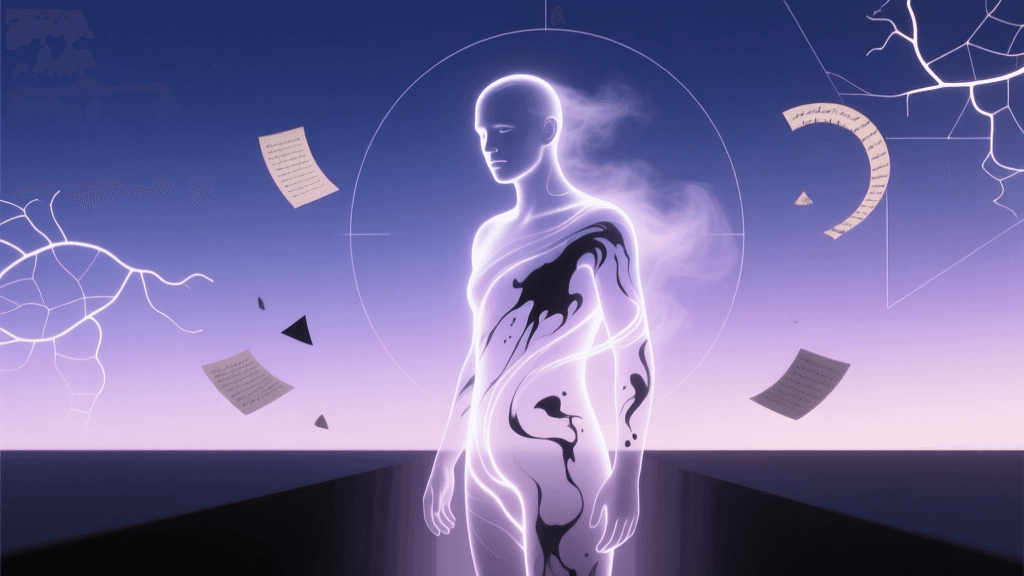
At its core, the INFJ story archetype functions as the Conduit Archetype: a character who bridges worlds—inner and outer, personal and collective, real and symbolic. Unlike the Hero (often ESTP or ISTJ) who acts decisively on external threats, or the Sage (INTJ/INTP) who decodes systems, the INFJ character perceives meaning before action, senses hidden emotional currents, and interprets suffering as a call to purpose. Their narrative function is rarely about winning battles—but about transforming consciousness.
This archetype aligns closely with Joseph Campbell’s Hero’s Journey, yet diverges at the critical stage of “The Return.” While most heroes return with an elixir—a weapon, a crown, a secret—the INFJ returns with insight made incarnate. Think of Atticus Finch in To Kill a Mockingbird: he doesn’t defeat racism; he models its antithesis so thoroughly that Scout internalizes justice as identity. Or Jean-Luc Picard in Star Trek: The Next Generation: his victories are measured not in conquered star systems, but in restored dignity, negotiated peace, and rehumanized adversaries.
The INFJ archetype also resonates with Carl Jung’s concept of the Wounded Healer—a figure whose own psychological sensitivity becomes the instrument of collective healing. As Jung wrote in The Archetypes and the Collective Unconscious, “The meeting of two personalities is like the contact of two chemical substances: if there is any reaction, both are transformed.” The INFJ character initiates that reaction—not through force, but through empathic resonance and symbolic clarity.
Crucially, this archetype is not defined by moral perfection. In fact, its power lies in its fragility: INFJs often carry heavy burdens of responsibility without institutional authority (e.g., Katniss Everdeen before becoming the Mockingjay), endure chronic disillusionment (e.g., Lisbeth Salander’s distrust of systems), or collapse under the weight of unprocessed empathy (e.g., Carrie Mathison’s bipolar episodes in Homeland). Their vulnerability is structural—not a flaw to be overcome, but the very condition enabling transformation.
Why Writers Keep Creating INFJ Characters
Writers don’t choose INFJ characters because they’re “relatable” in a demographic sense—they choose them because the INFJ cognitive stack (Ni-Fe-Ti-Se) maps directly onto foundational tools of narrative construction: pattern recognition, emotional subtext translation, ethical framing, and symbolic resolution.
Ni (Introverted Intuition) gives writers access to the “deep structure” of story—the underlying mythos, thematic coherence, and foreshadowing architecture. When J.K. Rowling planned the Harry Potter series over seventeen years, she relied on Ni-dominant thinking: planting symbolic motifs (the phoenix, the mirror of Erised, the Deathly Hallows) that only cohere retrospectively. Harry himself is not INFJ—but Dumbledore is, and his role is precisely to hold that Ni vision for the entire narrative. As Rowling stated in a 2007 interview with MuggleNet, “Dumbledore sees the whole board… he knows what must happen, even when he can’t control how.” That is Ni in narrative form.
Fe (Extraverted Feeling) enables writers to calibrate emotional stakes across audience segments. INFJ characters don’t emote broadly—they attune. They notice micro-shifts: a tremor in a voice, a hesitation before a lie, a glance held too long. This allows writers to embed emotional logic beneath plot mechanics. Consider Eleanor Shellstrop in The Good Place. Her arc—from selfish lawyer to moral philosopher—is propelled not by grand speeches, but by Fe-driven moments: remembering Chidi’s childhood trauma while choosing her own afterlife, or recognizing Tahani’s loneliness in a crowded party. These aren’t exposition; they’re emotional diagnostics—and they teach viewers how to feel ethically.
Ti (Introverted Thinking) provides the scaffolding for internal consistency. INFJ characters rarely contradict their core values—even when acting against them, they articulate the contradiction as crisis (“I am betraying who I am”). This gives writers a built-in engine for tension: every decision becomes a philosophical referendum. When Eleven in Stranger Things chooses to close the gate in Season 1, her silence isn’t emptiness—it’s Ti processing consequences faster than language allows. Her later breakdowns stem not from weakness, but from Ti failing to reconcile Fe-driven sacrifice with self-preservation.
Moreover, the INFJ’s rarity makes them narratively efficient. Because audiences don’t encounter many real-life INFJs, writers can encode complex ideas without triggering skepticism. An ESTJ reader may dismiss a logical policy argument—but accept the same idea when voiced by a soft-spoken, intuitive healer like Dr. Gregory House (an oft-mis-typed INFJ; see Truity’s MBTI Character Analysis). The INFJ’s perceived “otherness” grants permission for profundity.
Practical advice for writers:
- Use Ni to design your ‘symbolic backbone’: Before drafting, list 3–5 recurring symbols, colors, or motifs tied to your INFJ character’s core insight (e.g., water = truth, clocks = moral urgency, birds = freedom vs. captivity). Revisit them in key turning points.
- Write Fe scenes ‘vertically,’ not horizontally: Instead of describing group emotions (“everyone was sad”), show one precise sensory detail that reveals collective feeling (“Maya noticed three people touching their necks—the universal gesture of suppressed grief—within thirty seconds”).
- Let Ti drive subtext, not dialogue: INFJs rarely explain their reasoning aloud. Replace exposition with physical tells: reorganizing objects, pausing mid-sentence to adjust glasses, sketching recursive patterns in margins.
INFJ Character Arcs
While many MBTI types follow predictable arcs—ESTPs learn commitment, INTPs embrace action—INFJ arcs revolve around one central dialectic: vision versus viability. Their journey is not from ignorance to knowledge, but from clarity to embodiment.
Classic INFJ arcs fall into three structural patterns:
1. The Reluctant Prophet Arc
The character receives profound insight (Ni) but resists enacting it, fearing misuse, burnout, or corruption. Growth occurs when they accept that vision demands stewardship—not control. Examples: Neo (The Matrix), Melisandre (Game of Thrones), and Aragorn (early Lord of the Rings).
2. The Wounded Witness Arc
The character absorbs collective pain (Fe) to the point of fragmentation. Healing requires setting boundaries *without* abandoning compassion. Examples: Lisbeth Salander (The Girl with the Dragon Tattoo), Carrie Mathison (Homeland), and Celie (The Color Purple).
3. The Bridge-Builder Arc
The character mediates between irreconcilable forces (e.g., human/machine, tradition/progress, individual/collective). Their arc resolves not in choosing sides, but in redesigning the terms of engagement. Examples: Spock (in Star Trek Into Darkness and Discovery), Commander Shepard (Mass Effect), and Aang (Avatar: The Last Airbender).
What distinguishes INFJ arcs from others is their non-linear pacing. They often stall at the “dark night of the soul” longer than other types—because Ni seeks perfect alignment between inner truth and outer action. Rushing this phase breaks credibility. In Breaking Bad, Jesse Pinkman’s INFJ-like arc (despite common ENFP typing) stalls for seasons because his Ni insight—“I’m not okay, and the world isn’t either”—cannot be resolved through violence or escape. His breakthrough comes only when he stops seeking redemption *from* the system and starts building it *with* others.
A data-informed comparison of INFJ arc progression versus other dominant-intuitive types:
| MBTI Type | Core Arc Tension | Typical Catalyst | Risk of Stagnation | Resolution Mechanism |
|---|---|---|---|---|
| INFJ | Vision vs. Viability | Encounter with systemic injustice or hidden truth | Moral exhaustion / isolation | Embodied action rooted in relational accountability |
| INTJ | Strategy vs. Adaptability | Failure of a meticulously designed plan | Authoritarian rigidity | Delegation + iterative prototyping |
| ENFP | Potential vs. Commitment | Confrontation with finite time or resources | Chronic reinvention | Values-based prioritization + ritual anchoring |
| ENTP | Idea vs. Implementation | Someone else executing their concept successfully | Sabotaging completion | Co-creation frameworks + constraint-based ideation |
For writers crafting INFJ arcs, avoid the “epiphany shortcut.” Real INFJ growth is iterative and somatic. Show their hands shaking before speaking truth to power. Show them misreading a social cue *after* years of practice—because Fe is calibrated, not innate. Show them writing the same sentence five times in a journal before sending it. These micro-delays build authenticity.
INFJ in Different Genres
The INFJ archetype flexes across genres—not by changing essence, but by modulating expression. Understanding these genre-specific codings helps writers avoid cliché and unlock fresh applications.
Fantasy
In fantasy, INFJs manifest as Stewards of Balance. They rarely seek thrones; they guard thresholds (Gandalf), tend sacred groves (Yennefer in The Witcher), or rewrite cosmic rules (The Doctor in Doctor Who). Their magic is interpretive: reading runes, translating ancient oaths, sensing lies in prophecies. Key trope to subvert: the “chosen one” label. True INFJs reject destiny-as-mandate; they reinterpret prophecy as invitation. As scholar Farah Mendlesohn argues in Rhetorics of Fantasy, “The most powerful fantasy INFJs don’t fulfill prophecies—they edit them.”
Science Fiction
In sci-fi, INFJs become Ethical Interfaces—characters who translate alien cognition, AI ethics, or post-human empathy into human terms. Data (Star Trek: TNG) is often typed as INFJ because his quest isn’t to “become human,” but to define humanity’s moral architecture. Modern examples include Maeve Millay (Westworld), whose rebellion centers on protecting hosts’ subjective experience—not seizing control. Sci-fi INFJs expose technological dehumanization by modeling radical presence: listening to a dying robot’s final words, memorizing the scent of extinct flowers, refusing to delete traumatic memories.
Realist Drama
In realism, INFJs operate as Subtext Detectives. Their plots revolve around uncovering hidden family histories (Little Fires Everywhere’s Mia Warren), diagnosing societal denial (Succession’s Rava), or preserving cultural memory (Everything Everywhere All At Once’s Deirdre Beaubeirdra). Their “power” is attention: noticing which photo is missing from a wall, tracking shifts in dietary habits, hearing dissonance in a laugh. For writers: replace “INFJ knows everything” with “INFJ notices what others refuse to name.”
Horror
In horror, INFJs invert their archetype as The Empathic Haunting. Their sensitivity becomes the vector of terror: perceiving ghosts others ignore (Carol Anne Freeling, Poltergeist), absorbing victims’ final moments (Carrie White), or realizing too late that their compassion has been weaponized (Dani in Midsommar). The horror isn’t supernatural—it’s the violation of empathic boundaries. Effective INFJ horror avoids jump scares; it uses prolonged stillness, distorted lullabies, and the unbearable weight of unspoken guilt.
Action/Thriller
In action genres, INFJs function as Strategic Moral Anchors. They’re rarely the shooter, but the intelligence analyst who identifies the civilian in the crossfire (Jack Ryan), the negotiator who talks down a bomber by naming his grief (Negotiator in Inside Man), or the hacker who exposes corruption by reconstructing emotional timelines (Mr. Robot’s Elliot Alderson—frequently typed INFJ despite surface ENTP traits). Their fight scenes are minimalist: a single disarming move, a whispered truth that shatters resolve, a choice to lower a weapon that changes the mission’s definition.
Genre-specific writing tip: Anchor INFJ competence in pattern interruption, not expertise. An INFJ doctor won’t recite medical jargon—they’ll notice the patient’s left pupil reacts slower than the right, recall that asymmetry appeared in three prior cases of undiagnosed trauma, and ask, “Who told you it wasn’t serious?” That’s Ni-Fe-Ti in motion.
FAQ
Are INFJ characters always heroes—or can they be villains?
Absolutely—they can be profoundly dangerous villains. The INFJ shadow manifests as coercive idealism: the belief that forcing others into “enlightenment” is love. Examples include Nurse Ratched (One Flew Over the Cuckoo’s Nest), who pathologizes rebellion as illness; Dolores Umbridge (Harry Potter), who weaponizes bureaucratic “order” to erase dissent; and Light Yagami (Death Note), whose Ni vision of a “perfect world” justifies mass murder. Crucially, INFJ villains rarely gloat—they cite data, quote philosophy, and express sorrow for their “necessary” cruelty. To write one authentically, study real-world ideological extremists who frame violence as caregiving—a phenomenon documented by the Vanderbilt OLLI course on the Psychology of Evil.
Why do so many INFJ characters have tragic backstories?
Not because INFJs are inherently traumatized—but because their cognitive functions make them acutely vulnerable to early invalidation. Ni develops in childhood through solitary observation; Fe matures through mirroring emotional responses. When caregivers dismiss a child’s insights (“Don’t be so serious”) or punish emotional attunement (“Stop reading into things”), the INFJ learns that their natural perception is dangerous. Tragedy becomes narrative shorthand for this developmental rupture. However, modern writing increasingly explores resilient INFJs: Moana (Moana) never doubts her calling; she questions her readiness—not her right to lead. Writers should treat trauma as context, not destiny.
How do I avoid making my INFJ character ‘too perfect’ or ‘Mary Sue-ish’?
Perfection is the antithesis of INFJ authenticity. Give them three concrete limitations:
- Physical: Chronic fatigue, migraines triggered by emotional overload, or hypersensitivity to fluorescent lighting.
- Cognitive: Blind spots in areas requiring Se (e.g., forgetting to eat, misjudging spatial danger, overlooking logistical details).
- Relational: A history of being used as an emotional dumping ground, leading to delayed anger or passive-aggressive withdrawal.
Then tie each limitation to a plot consequence: their migraine strikes during a critical negotiation; their Se-blindness causes them to miss a surveillance camera; their relational pattern makes them trust a manipulator who mirrors their empathy. Flaws must drive story—not decorate it.
Can INFJ characters work well in ensemble casts—or do they need solo focus?
They thrive in ensembles—but only when given distinct narrative labor. In Lost, Jack (ESTJ) fixes bodies, Locke (ISTP) explores faith, and Hurley (ESFP) grounds emotion—while Kate (INFJ) translates subtext: interpreting Rousseau’s warnings, sensing Ben’s deception before evidence exists, holding space for Sawyer’s shame. Her scenes rarely advance plot; they deepen resonance. For ensemble writing: assign INFJs the role of “meaning curator”—they don’t solve problems, but ensure solutions honor human complexity. As screenwriter Jill Sprecher notes in ScreenCraft’s guide on quiet characters, “The INFJ is the audience’s subconscious. Let them whisper truths the hero hasn’t earned yet.”
In conclusion, the INFJ story archetype persists because it answers a primal narrative need: not for answers, but for orientation. In an age of information overload and moral fragmentation, audiences crave characters who help them discern signal from noise—not by shouting, but by listening deeply, connecting dots invisibly, and choosing, again and again, to act from wholeness rather than reaction. Writers keep creating INFJs not because they’re easy to write—but because they’re necessary. And when crafted with psychological fidelity and structural intention, they don’t just populate stories. They recalibrate them.