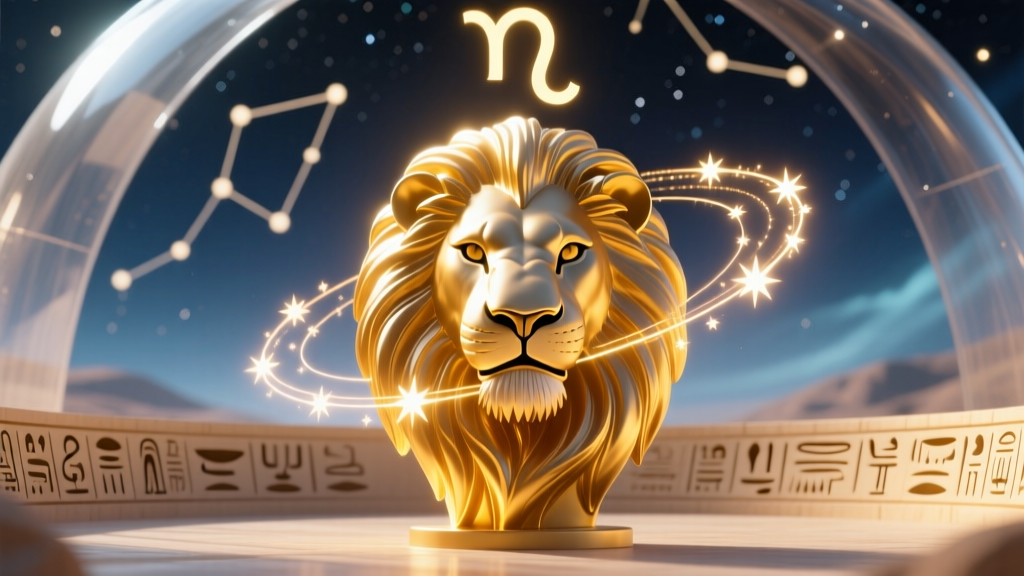
Individuals born on the twelfth degree of Leo occupy a unique intersection of mythological weight and seasonal transition. When analyzing the zodiac 4 august, we must look beyond modern newspaper horoscopes and examine the ancient agrarian, Babylonian, and Hellenistic frameworks that originally defined this mid-summer placement. Historically, early August marked the heliacal rising of Sirius in ancient Egypt and the peak of the sun’s ferocity in the Mediterranean basin. This specific coordinate in the ecliptic carries the historical imprint of the 'Fixed Fire' archetype, demanding a rigorous exploration of its origins to understand its modern psychological manifestation and strategic utility.
The Babylonian and Egyptian Roots of the Mid-Summer Lion
The conceptual foundation of the Leo constellation predates Hellenistic astrology by millennia, originating in the astronomical observations of ancient Mesopotamia. Babylonian astronomers cataloged this region of the sky as UR.GU.LA, the 'Great Lion.' This was not merely an animalistic representation but a celestial avatar of sovereign authority, intimately tied to the goddess Inanna (later Ishtar) and the scorching, unforgiving heat of late summer. According to the Encyclopedia Britannica, the Babylonian lion was a symbol of royal power and the divine right to rule, establishing the foundational archetype of leadership associated with this sign.
In ancient Egypt, the historical context of early August was entirely dictated by the Nile. This period coincided with the annual inundation, triggered by the heliacal rising of the star Sirius (Sopdet). The lion was sacred to Sekhmet, the warrior goddess of healing, the sun's destructive power, and the protector of the pharaohs. The historical duality of the lion—representing both the destructive, scorching heat of the sun and the life-giving, generative floodwaters of the Nile—creates the core paradox of the August 4 personality. This ancient dichotomy manifests in the modern native as an individual capable of immense destruction of systemic obstacles, yet deeply protective, healing, and generative toward their immediate community.
Mythological Origins: The Nemean Lion and the Archetype of Invulnerability
The Greek mythological framework assigned to Leo centers on the Nemean Lion, a monstrous moirai-born beast whose golden hide was impervious to all mortal weapons. As the first of his twelve labors, Heracles was tasked with slaying this beast. Discovering that his arrows and club were useless against the lion's skin, Heracles was forced to grapple with the creature and strangle it with his bare hands. The Theoi Project details how Heracles subsequently skinned the lion using its own razor-sharp claws, wearing the invulnerable pelt as armor for the remainder of his journeys.
This myth is not merely a story; it is a precise psychological algorithm for the August 4 native. The archetype dictates that conventional tools, standard operating procedures, and external validations (represented by Heracles' arrows) will fail when this individual faces their most significant life challenges. The mythological origin demands that they rely on internal, visceral force and direct confrontation to overcome insurmountable odds. Furthermore, the act of skinning the beast with its own claws symbolizes the historical necessity for the August 4 individual to weaponize their critics' arguments and use the very nature of their obstacles to forge their enduring armor.
Astrological Anatomy: The Second Decan and Chaldean Rulership
To understand the specific nuances of August 4, we must apply the Hellenistic system of decans, which divides each 30-degree zodiac sign into three 10-degree sectors. August 4 falls at approximately 12 degrees Leo, placing it firmly in the Second Decan of Leo. According to the Chaldean decan system, extensively documented by historians and astrologers at Skyscript, the second decan of Leo is co-ruled by Jupiter.
This Jupiterian sub-rulership significantly alters the expression of the solar Leo archetype. While the first decan of Leo is pure, unadulterated solar ego and Martian aggression, the Jupiterian influence of the second decan introduces themes of philosophical expansion, magnanimity, and institutional building. Historically, astrologers noted that individuals born in this decan were less concerned with personal vanity and more driven by a desire to establish legacy, codify laws, and act as benefactors to their society. This creates a personality profile that is inherently pedagogical; the August 4 native does not merely seek to lead, but seeks to elevate and educate those they lead.
| Era/Culture | Constellation Name | Primary Deity/Association | Core Archetypal Trait |
|---|---|---|---|
| Babylonian | UR.GU.LA (Great Lion) | Inanna/Ishtar | Sovereign Authority |
| Egyptian | Leo (Sekhmet Association) | Sekhmet/Ra | Destructive/Healing Duality |
| Hellenistic | Leon (The Lion) | Heracles/Zeus | Heroic Invulnerability |
| Traditional | Leo (Second Decan) | Sun/Jupiter | Expansive Leadership |
The Fixed Fire Paradigm: Translating Ancient Archetypes to Modern Strategy
Ancient astrologers categorized the elements not just by their nature, but by their modality. Leo is 'Fixed Fire.' Unlike Cardinal Fire (Aries), which is the initial spark that ignites a forest, or Mutable Fire (Sagittarius), which is the spreading, adaptable wildfire, Fixed Fire is the hearth, the forge, and the kiln. It is fire that has been contained, directed, and sustained for a specific, long-term purpose.
Historically, the hearth was the center of the community, providing continuous warmth, a place for cooking, and the forge for crafting tools. Translating this ancient paradigm into modern strategic frameworks, the August 4 individual excels in long-term project sustainability, institutional building, and maintaining organizational morale during protracted crises. They are not designed for rapid pivots, initial startup sparks, or chaotic adaptability. Their historical function is to take an existing spark and engineer a system that keeps it burning indefinitely.
The transition of astrological interpretation from Babylonian omen-based astronomy to Hellenistic psychological profiling occurred roughly between the 3rd and 1st centuries BCE. During this synthesis, the raw, agricultural observations of the Great Lion were merged with Greek philosophical concepts of the soul (psyche). The Stoic philosophers, who heavily influenced Hellenistic astrology, viewed the fixed signs as the 'sustainers' of the cosmic order. For the August 4 native, this historical synthesis means their personality is not merely a collection of traits, but a structural pillar in their social or professional ecosystem. They are historically engineered to bear weight and maintain structural integrity when external conditions become volatile.
Decoding the Zodiac 4 August Blueprint
To operationalize the historical and mythological data of the zodiac 4 august, individuals born on this date must implement specific behavioral frameworks that align with their ancient archetype while mitigating its inherent shadow traits.
- Leveraging the Jupiterian Decan: Integrate philosophical and ethical framing into all leadership communications. The historical success of this decan relies on the perception of magnanimity. When proposing structural changes, anchor the rationale in long-term societal or organizational benefit rather than immediate metrics.
- Managing the Sekhmet Shadow: The Egyptian association with Sekhmet warns of the 'scorching earth' syndrome—burning out oneself and one's team through relentless, unyielding pressure. Implement mandatory, ritualistic cooling periods. Schedule deliberate intervals of complete detachment from leadership responsibilities to prevent the fixed fire from consuming its own fuel source.
- The Heraclean Problem-Solving Method: When encountering systemic resistance or bureaucratic immovability, abandon conventional tools and standard industry practices. The Nemean Lion myth dictates that standard weapons will bounce off. Apply direct, systemic pressure and use the opponent's own rigid structures against them to force a resolution.