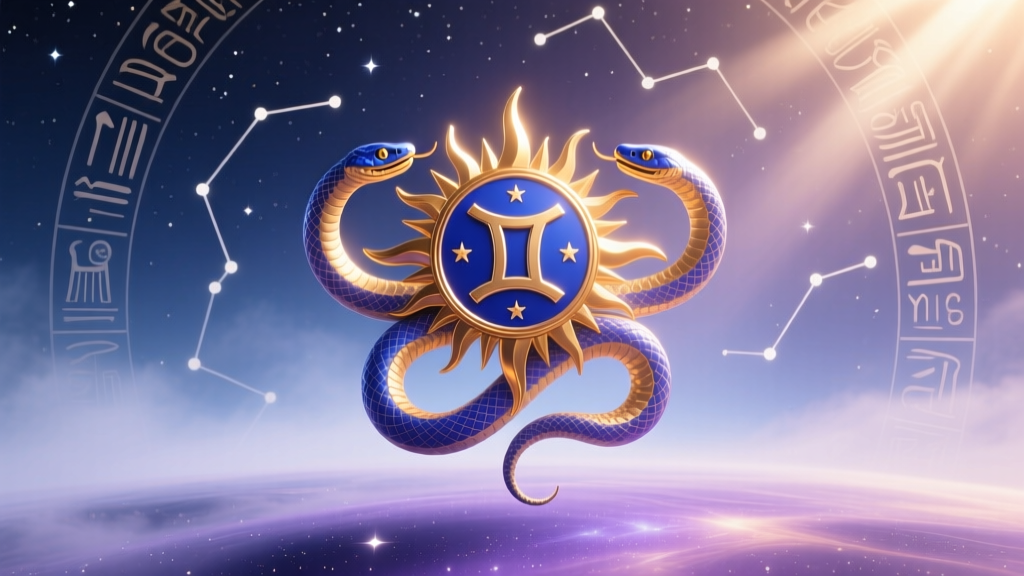
The zodiac of june 21 occupies a unique threshold in both astronomical history and esoteric tradition. Falling on or around the Summer Solstice in the Northern Hemisphere, this date marks the precise celestial boundary where the Sun transitions from the mutable air sign of Gemini into the cardinal water sign of Cancer. Unlike arbitrary calendar dates, the origin of this zodiacal cusp is rooted in ancient Babylonian star catalogs and Hellenistic solstice geometry. Understanding the historical mechanics of the June 21 boundary reveals why ancient astrologers considered this specific degree of the ecliptic to be a literal gateway for human souls, blending rigorous observational astronomy with profound mythological weight.
Defining the Zodiac of June 21: Astronomical Mechanics
To understand the historical origins of this date, we must first separate the calendar date from the astronomical event. The Sun's ingress into 0 degrees of Cancer (the Tropical zodiac) defines the Summer Solstice. However, because the Earth's orbit is elliptical and our Gregorian calendar requires leap years to stay synchronized with the solar year, the exact moment of the solstice fluctuates between June 20 and June 22. Therefore, the zodiac of June 21 is not a static monolith; it is a dynamic mathematical threshold. Individuals born on this date are often referred to as being on the "cusp" of Gemini and Cancer, though in strict astrological practice, the Sun is in one sign or the other based on the exact minute of birth and the precise ephemeris data for that specific year.
The historical fixation on this boundary stems from its status as a cardinal turning point. In the Northern Hemisphere, 0° Cancer represents the northernmost declination of the Sun, resulting in the longest day of the year. Ancient skywatchers recognized this peak of solar power not merely as a seasonal shift, but as a profound cosmological pivot point that demanded mythological explanation and rigorous mathematical tracking.
Babylonian Origins: The Great Twins and the Crab
The earliest documented origins of the zodiac signs surrounding June 21 trace back to ancient Mesopotamia, specifically the MUL.APIN, a comprehensive Babylonian star catalog compiled around 1000 BCE. The Babylonians did not initially divide the ecliptic into the equal 30-degree segments we use today. Instead, they tracked specific constellations that rose heliacally or marked vital seasonal shifts. The region of the sky we now associate with late Gemini and early Cancer was dominated by two distinct Babylonian figures: MAŠ.TAB.BA.GAL.GAL (The Great Twins) and AL.LUL (The Crab).
The Great Twins were associated with the gods Lugal-irra and Meslamta-ea, representing the waning, mutable energy of the spring harvest. The Crab, however, held a specialized function. In Babylonian astronomy, the Crab was closely tied to the goddess Ninsianna (the Venus star) and marked the approximate region of the summer solstice. When the Hellenistic Greeks later synthesized Babylonian observational data with their own geometric models, they formalized the Crab into the constellation of Cancer, cementing its role as the anchor of the solstice point.
The Gate of Men: Hellenistic Astrology and the Solstice
The most significant esoteric origin story for the zodiac of June 21 emerged during the Hellenistic period, heavily influenced by Neoplatonic philosophy. Astrologers and philosophers such as Macrobius and Porphyry developed the doctrine of the "Gates of the Gods." According to this framework, the solstice points were not just seasonal markers; they were literal portals for the transmigration of souls.
Macrobius, in his Commentary on the Dream of Scipio, explicitly identified 0° Cancer—the exact degree the Sun hits on the June 21 solstice—as the "Gate of Men." It was believed that souls descended from the Milky Way into the material world through this watery portal, taking on physical bodies as the Sun began its downward, waning trajectory toward the winter darkness. Conversely, 0° Capricorn was the "Gate of the Gods," where souls ascended back to the divine realm. This philosophical overlay transformed the Gemini-Cancer cusp from a mere astronomical coordinate into a profound spiritual mechanism, a belief that persisted through the Renaissance and into modern esoteric astrology.
The Precession Shift: Why the Constellations Moved
A critical component of the history of the June 21 zodiac boundary is the phenomenon of axial precession. Discovered by the Greek astronomer Hipparchus of Nicaea around 127 BCE, precession is the slow, top-like wobble of the Earth's rotational axis. This wobble causes the equinoxes and solstices to drift backward through the background constellations at a rate of approximately one degree every 72 years.
Because Western astrology utilizes the Tropical Zodiac—which is anchored to the seasons and the equinoxes rather than the physical constellations—the Sun is always considered to enter 0° Cancer at the June solstice, regardless of the background stars. However, the actual physical constellation behind the Sun on June 21 has shifted dramatically over millennia. The table below illustrates this historical drift, demonstrating the divergence between the Tropical zodiac used by Western astrologers and the Sidereal constellations observed by ancient astronomers.
| Historical Era | Tropical Zodiac Position (June 21) | Background Sidereal Constellation | Historical Context |
|---|---|---|---|
| ~2000 BCE | 0° Cancer (Solstice Point) | Taurus / Gemini Border | Early Babylonian observations; physical constellation aligned closely with the tropical sign. |
| 150 BCE | 0° Cancer (Tropical) | Gemini (Sidereal) | Hipparchus documents precession; the physical Crab has shifted westward. |
| 2024 CE | 0° Cancer (Tropical) | Early Gemini (Sidereal) | Modern Western Tropical Astrology; the Sun physically resides in the Twins on the solstice. |
This divergence is a frequent source of confusion for modern enthusiasts who look to the night sky and find the Sun in the physical constellation of Gemini on June 21. Understanding this historical split is vital for accurately interpreting ancient texts versus modern astrological practice.
Cultural Traditions of the June 21 Boundary
The historical weight of the June 21 solstice cusp extended far beyond academic astrology, deeply influencing European folk traditions and agrarian calendars. The transition from the airy, intellectual domain of the Twins to the watery, nurturing domain of the Crab was mirrored in ancient solstice festivals.
- Litha and the Bonfires: In pre-Christian Germanic and Celtic traditions, the Summer Solstice was celebrated with massive bonfires. The fire represented the peak of the Sun's power (the end of Gemini's solar ascent), while the subsequent rolling of flaming wheels down hills into rivers symbolized the Sun's descent into the watery, emotional realm of Cancer.
- St. John's Eve: As Christianity absorbed pagan solstice rites, June 21 became intertwined with the Feast of St. John the Baptist (celebrated on June 24). The gathering of water-associated herbs, such as St. John's Wort and ferns, reflected the impending shift into the water sign of Cancer.
- The Waning Light: Ancient agrarian societies recognized that while the crops were growing, the days were now shortening. The June 21 boundary was historically viewed as a time of beautiful melancholy, marking the exact moment the year began its slow march toward winter.
Actionable Guide: Navigating the Gemini-Cancer Cusp Today
For modern practitioners and individuals born on the zodiac of June 21, determining the exact astrological placement requires moving past generalized "cusp" horoscopes and applying rigorous chart calculation. According to data from Astrodienst's research on astrological cusps, the Sun spends only a few hours crossing the exact mathematical boundary. If you or a client was born on this date, follow this precise framework to determine the true natal placement:
1. Secure the Exact Birth Time and Location
Because the Sun moves approximately one degree per day, a birth at 8:00 AM might place the Sun at 29° Gemini, while a birth at 11:00 PM the same day might place it at 0° 30' Cancer. Geographic coordinates are required to calculate the exact time zone offset and historical daylight saving time rules for the birth year.
2. Consult a Historical Ephemeris
Do not rely on generalized "cusp dates" found in pop-astrology magazines. The solstice ingress time shifts by roughly six hours each year, jumping back by 18 hours during leap years. Use a Swiss Ephemeris to find the exact minute the Sun crossed 0° Cancer in the specific year of birth.
3. Analyze the Ruling Planets
If the birth chart reveals a Sun at 29° Gemini, the individual is fundamentally shaped by Mercury (the ruler of Gemini), prioritizing intellect, adaptability, and communication. If the Sun is at 0° Cancer, the Moon (ruler of Cancer) becomes the dominant solar dispositor, emphasizing emotional depth, security, and intuition. Recognizing this stark planetary shift is far more actionable than attempting to blend the two signs into a vague "cusp personality."
By understanding the deep historical, astronomical, and esoteric origins of the zodiac of June 21, we move beyond superficial sun-sign columns. We uncover a profound legacy of human observation, where the exact geometry of the solstice served as the ancient world's ultimate marker of time, life, and the descent of the soul into the material realm.