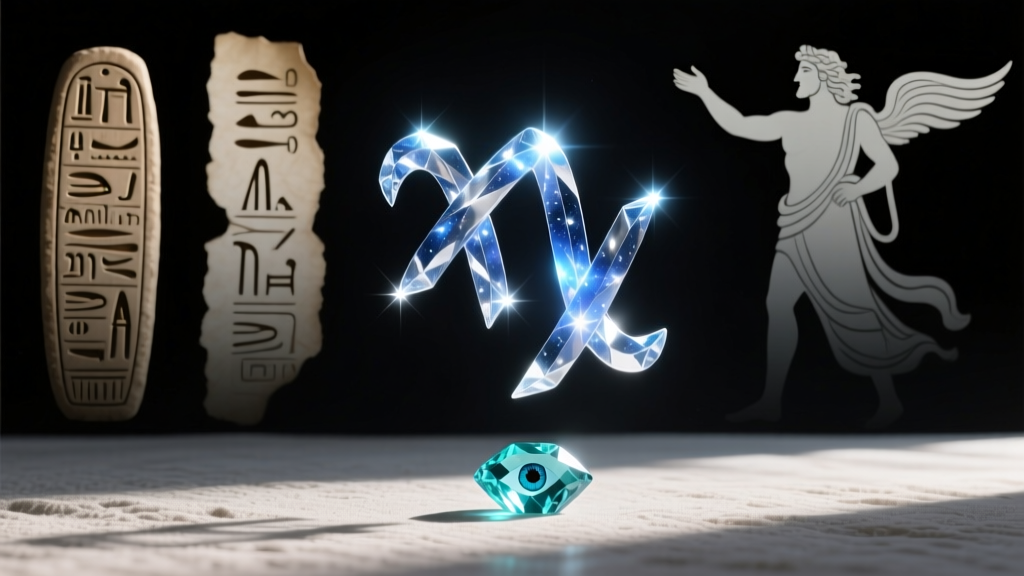
Individuals researching the zodiac sign for Jan 30 are investigating the heart of Aquarius, a constellation steeped in millennia of astronomical observation and mythological allegory. Born between January 20 and February 18, those with a January 30 birth date fall under the second decan of Aquarius. To understand this specific astrological placement requires moving beyond modern pop-astrology tropes and examining the cuneiform tablets of ancient Mesopotamia, the celestial cataloging of the Hellenistic Greeks, and the rigorous mathematical frameworks established by early astrologers. The historical evolution of the Water Bearer reveals a complex archetype rooted in agricultural survival, divine intellect, and societal architecture.
The Babylonian Genesis: GU.LA and the Great One
The origins of the Aquarian archetype predate Western astrology by over a millennium, tracing back to the Sumerian and Babylonian civilizations of the Fertile Crescent. According to The Metropolitan Museum of Art's historical records on Mesopotamian astronomy, the constellation was documented in the MUL.APIN, a comprehensive Babylonian astronomical compendium compiled around 1000 BCE. In this catalog, the region of the sky we now call Aquarius was designated as GU.LA, meaning 'The Great One.'
GU.LA represented the god Ea (also known as Enki), the Sumerian deity of water, wisdom, magic, and creation. Crucially, the 'water' associated with Ea was not a metaphor for emotional depth, as modern astrology often misinterprets the Water Bearer. Instead, it represented the life-giving, literal waters of the Tigris and Euphrates rivers. Ea was depicted holding an overflowing vase that poured water onto the earth, ensuring the annual floods necessary for agricultural survival in an otherwise arid landscape. Therefore, the foundational energy of the zodiac sign governing January 30 is not emotional volatility, but rather the dispensing of vital knowledge, resources, and structural life-force to the collective.
| Era | Culture | Designation | Astrological & Cultural Significance |
|---|---|---|---|
| c. 1000 BCE | Babylonian | GU.LA (The Great One) | God Ea; bringer of agricultural water, wisdom, and civilization-building. |
| c. 400 BCE | Greek | Hydrochoos (Water-Pourer) | Associated with Ganymede; linked to the celestial flooding of the Nile. |
| 150 CE | Hellenistic | Hydōr (Water) | Ptolemy categorizes it as a fixed, masculine, airy sign of intellect. |
| 1781 CE | Modern | Uranus Discovery | Shift from sole Saturnine rulership to Uranian themes of rebellion and technology. |
Hellenistic Astrology and the Myth of Ganymede
As Greek culture absorbed Babylonian astronomical data during the Hellenistic period, the imagery of GU.LA was adapted to fit the Olympian pantheon. The Greeks renamed the constellation Hydrochoos (The Water-Pourer) and intertwined its mythology with the story of Ganymede. Ganymede was a Trojan prince of unparalleled beauty, abducted by Zeus—who had transformed into a giant eagle—and carried to Mount Olympus to serve as the cupbearer to the gods.
This mythological shift fundamentally altered the astrological interpretation of the sign. The archetype transitioned from a creator god of the earth to a divine servant elevated above mortal concerns. This narrative established the core Aquarian themes of detachment, intellectual elevation, and the role of serving a higher, universal order rather than personal or familial attachments. For those born on January 30, this Ganymedian influence often manifests as a psychological detachment from mundane drama, preferring instead to observe and analyze human behavior from an elevated, objective vantage point.
The Zodiac Sign for Jan 30 in Ptolemaic Tradition
The technical parameters of Western astrology were codified by Claudius Ptolemy in his seminal 2nd-century text, the Tetrabiblos. Ptolemy classified Aquarius as a fixed, masculine, and airy sign. The specific degrees relevant to January 30 (roughly 10° to 12° Aquarius, depending on the epoch and ayanamsa calculations) fall under specific planetary bounds. According to the Egyptian terms (bounds) utilized by Hellenistic astrologers and documented in The Astrophysics Data System (ADS), these degrees are ruled by Mercury.
This Mercurial influence within an airy, fixed sign provides a highly specific cognitive framework. It explains the sharp intellect, communicative prowess, and analytical detachment frequently observed in January 30 natives. Unlike the emotional water signs (Cancer, Scorpio, Pisces), the 'air' element of Aquarius processes information through logic, systemic analysis, and conceptual networking, a trait heavily fortified by the localized Mercurial rulership of this specific decan.
Astrological Dignities and Historical Rulerships
Understanding the historical rulerships of Aquarius is essential for analyzing the underlying drives of a January 30 birth chart. For over a millennium, the astrological paradigm was strictly geocentric and limited to the seven visible celestial bodies. In this traditional framework, Saturn was the sole domicile ruler of Aquarius.
- Traditional Ruler (Saturn): Governs societal structures, long-term planning, stoic endurance, and the architectural frameworks of civilization. Saturn demands discipline and a focus on collective responsibility.
- Modern Ruler (Uranus): Following William Herschel's discovery of Uranus in 1781, modern astrologers assigned it as the co-ruler of Aquarius. This injected themes of sudden upheaval, technological innovation, and paradigm-shifting rebellion into the sign's interpretation.
- Exaltation (Debated): Historically, no planet is exalted in Aquarius in the traditional Hellenistic system, though certain esoteric and modern astrological traditions argue for Neptune or Pluto based on higher-octave vibrations.
- Detriment (Sun): The Sun's ego-driven, individualistic nature is considered in detriment here, as it clashes with the egalitarian, collective, and decentralized focus of the Aquarian archetype.
The tension between Saturn (structure) and Uranus (disruption) creates the internal paradox of the January 30 native: a deep desire to build lasting societal systems, coupled with an innate urge to dismantle outdated traditions that no longer serve the collective progress.
Chaldean Decans and the Mercurial Influence
The zodiac is further subdivided into decans, or ten-degree segments, each carrying its own nuanced sub-rulership. January 30 falls squarely within the second decan of Aquarius (10° to 20°). In the Chaldean system, later preserved in medieval astrological grimoires like the Picatrix and Heinrich Cornelius Agrippa's Three Books of Occult Philosophy, this decan is ruled by Mercury.
The historical imagery associated with this specific decan is that of a woman weaving or a scribe meticulously recording data. This symbolism is profoundly relevant to the psychological profile of the January 30 individual. It signifies the meticulous construction of societal frameworks, intellectual networking, and the weaving together of disparate ideas into a cohesive, progressive ideology. It is a placement that favors researchers, systemic thinkers, and those who communicate complex, futuristic concepts to the masses.
Fixed Stars: Sadalsuud and the Architecture of Fortune
In ancient and medieval astrology, the fixed stars embedded within a constellation held immense predictive power, often overriding the influence of the wandering planets. The constellation of Aquarius contains several prominent fixed stars, most notably the 'Sa'd' (Luck) asterisms. Britannica's astronomical archives note that the stars Sadalsuud (Beta Aquarii) and Sadalmelik (Alpha Aquarii) were historically vital for agricultural timing.
Sadalsuud translates from Arabic as 'the luck of lucks' or 'the fortune of fortunes.' In ancient paradigms, this star was associated with the overflowing of the Nile, the cessation of winter's harshness, and the promise of agricultural bounty. When analyzing the historical astrology of January 30, the proximity of the Sun to these fixed stars (accounting for the precession of the equinoxes over millennia) grounds the Aquarian reputation for 'lucky' or fortunate societal contributions in ancient stellar lore. The native is historically viewed as a harbinger of intellectual and societal renewal, bringing the 'waters' of innovation to a parched cultural landscape.
The historical trajectory of Aquarius—from the life-sustaining floods of Ea in Babylon to the intellectual detachment of Ganymede in Greece, and finally to the structural mastery of Ptolemaic astrology—provides a rigorous framework for understanding the January 30 birth profile. It is an archetype defined not by erratic rebellion, but by the disciplined, calculated distribution of vital knowledge required to advance human civilization.