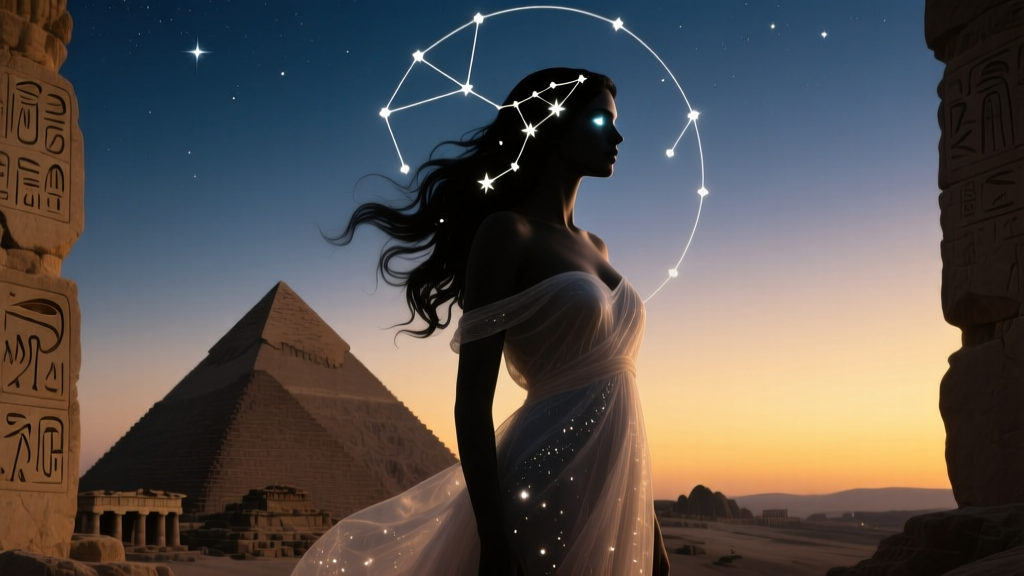
Discover the zodiac sign for Sep 9. Explore Virgo's ancient Babylonian roots, Greek mythology, and the historical evolution of the Maiden archetype.
Individuals researching the zodiac sign for Sep 9 are investigating Virgo, the sixth astrological sign of the zodiac, universally symbolized by the Maiden. Far beyond modern syndicated horoscope columns, the genesis of this sign traces back over three millennia to ancient Mesopotamia and the Fertile Crescent. The September 9 birthdate falls precisely within the second decan of Virgo, a specific astrological sector imbued with unique historical, mythological, and astronomical weight. Understanding the true origin story of Virgo requires examining cuneiform clay tablets, Hellenistic syncretism, and the celestial prominence of the star Spica.
The Astronomical Foundation: Virgo and the Star Spica
To understand the historical origin of Virgo, one must first look to the sky. Virgo is the second-largest constellation in the night sky, and its historical identity is inextricably linked to its brightest star, Spica (Alpha Virginis). Spica is a binary star system located approximately 250 light-years from Earth. In ancient astronomical traditions, Spica represented the ear of wheat held by the Maiden.
The historical significance of Spica lies in its relationship to the ecliptic—the apparent path of the Sun across the celestial sphere. Due to the precession of the equinoxes, Spica once marked the exact position of the autumn equinox. For early agrarian societies, the heliacal rising and setting of Spica served as a critical celestial clock, signaling the precise moments for sowing and reaping. This astronomical utility formed the bedrock upon which the mythological archetype of the zodiac sign for Sep 9 was built.
Babylonian Roots: The Furrow and the Goddess Shala
The earliest recorded origins of Virgo do not feature a maiden, but rather an agricultural implement. In the
ancient Mesopotamian traditions of astrology, as documented in the MUL.APIN clay tablets (compiled around 1000 BCE), the constellation we now call Virgo was known as AB.SIN, which translates to "The Furrow."
The Furrow was deeply associated with Shala, a Babylonian goddess of grain and compassion, often depicted holding a stalk of barley. The Babylonians divided the zodiac into pathways for the Moon and planets. When the Sun traversed the sector of AB.SIN during the late summer and early autumn, it coincided with the critical harvest period in the Tigris-Euphrates river system.
The conceptual leap from "The Furrow" to "The Maiden" occurred through linguistic and iconographic evolution. Shala’s association with the harvest and her depiction with grain eventually merged with later mythological figures, transforming the agricultural trench into a divine female figure holding the fruits of the earth. This transition highlights how early astrology was fundamentally an agricultural almanac before it became a tool for psychological or fatalistic divination.
Hellenistic Syncretism: Demeter, Persephone, and Astraea
When Babylonian astrology was absorbed by the Greeks during the Hellenistic period (roughly 300 BCE to 30 BCE), the sign underwent significant mythological syncretism. The Greeks mapped their own pantheon onto the Mesopotamian star lore. AB.SIN was Hellenized into Parthenos (The Virgin or Maiden).
Three primary Greek mythological figures became associated with this constellation:
- Demeter: The goddess of the harvest and agriculture. The ear of wheat (Spica) was seen as the grain she gifted to humanity, symbolizing sustenance and the cyclical nature of life and death.
- Persephone: Demeter’s daughter, whose abduction by Hades dictated the changing of the seasons. Her return to the surface world aligned with the agricultural rebirth associated with the Virgo sector.
- Astraea: The goddess of justice and innocence. According to Ovid’s Metamorphoses, Astraea was the last of the immortals to leave the Earth during the corrupt Iron Age, ascending to the heavens to become the constellation Virgo, positioned directly adjacent to Libra (the Scales of Justice).
Evolution of the Maiden Archetype Across Antiquity
| Era / Culture |
Name / Designation |
Primary Symbolism |
Key Celestial Marker |
| Babylonian (c. 1000 BCE) |
AB.SIN (The Furrow) |
Agriculture, Shala, Harvest |
Spica (Ear of Grain) |
| Hellenistic Greek (c. 200 BCE) |
Parthenos (The Maiden) |
Demeter, Astraea, Justice |
Proximity to Libra (Scales) |
| Roman (c. 100 CE) |
Virgo |
Ceres, Iustitia, Civic Duty |
Autumn Equinox Alignment |
Ptolemy’s Tetrabiblos and the Tropical Standardization
The definitive codification of Virgo as we understand it in Western astrology occurred in the 2nd century CE with Claudius Ptolemy. In his foundational text, the
Tetrabiblos, Ptolemy standardized the tropical zodiac, decoupling the astrological signs from the shifting background constellations and anchoring them instead to the seasons.
Ptolemy categorized Virgo as a negative (receptive), feminine, and mutable earth sign. He assigned its rulership to Mercury, due to the sign’s association with analytical thought, categorization, and the meticulous sorting of the harvest. This Mercurial influence is crucial for understanding the psychological profile of those born under this sign, prioritizing logic, systemic organization, and practical service over raw emotional expression.
Why the Zodiac Sign for Sep 9 Aligns with the Second Decan
To achieve maximum astrological precision, historical astrologers divided each 30-degree sign into three 10-degree sectors known as decans or faces. September 9 typically falls around 16 to 17 degrees of Virgo, placing it squarely in the second decan of the sign.
In the Chaldean decan system, which heavily influenced later Renaissance occultists like
Heinrich Cornelius Agrippa, the second decan of Virgo was traditionally sub-ruled by Venus. This creates a fascinating historical paradox: a meticulous, analytical earth sign (Virgo) is infused with the aesthetic, harmonizing, and material sensibilities of Venus (the ruler of Taurus, its trine aspect).
Historically, the imagery associated with this specific decan depicted a figure focused on the accumulation and careful management of material resources. It represents the phase of the harvest where the grain is not just cut, but meticulously sorted, stored, and accounted for. This explains the pronounced September 9 traits of resource management, financial prudence, and an innate drive to create tangible, organized systems out of chaos.
Actionable Historical Frameworks for September 9 Natives
Understanding the deep historical roots of your astrological placement provides a practical framework for personal and professional development. By leveraging the ancient archetypes of Shala, Astraea, and the Venusian second decan, individuals born on September 9 can optimize their natural inclinations.
- Implement the "Shala" Resource Audit: Channel the Babylonian goddess of the furrow by conducting a quarterly audit of your personal and professional resources. Do not merely track expenses; evaluate the "yield" of your time and energy investments. Eliminate tasks that do not produce a tangible harvest.
- Apply Astraea’s Justice to Boundaries: Astraea fled a corrupt world to maintain her purity and sense of justice. Use this archetype to establish rigid, unapologetic boundaries in your workspace. Your Mercurial analytical skills are best utilized when protected from the chaotic demands of others.
- Leverage the Venusian Decan for Systemic Aesthetics: The Venus sub-rulership of your birth decan suggests you thrive when your environment is both highly organized and aesthetically pleasing. Invest in ergonomic, visually harmonious workspaces. Your productivity is directly correlated to the visual order and physical comfort of your immediate surroundings.
- Focus on Mutable Earth Adaptation: As a mutable sign, your historical function was to prepare for the coming winter (Scorpio/Sagittarius). In a modern context, this means you are naturally suited for transitional project management. Position yourself in roles that require taking a raw, chaotic prototype and refining it into a polished, sustainable final product.
The history of the zodiac sign for Sep 9 is not merely a collection of ancient myths; it is a sophisticated, millennia-old system of agricultural, astronomical, and psychological observation. By aligning with the meticulous energy of the Furrow and the systemic justice of the Maiden, September 9 natives can harness their historical blueprint for profound modern efficacy.