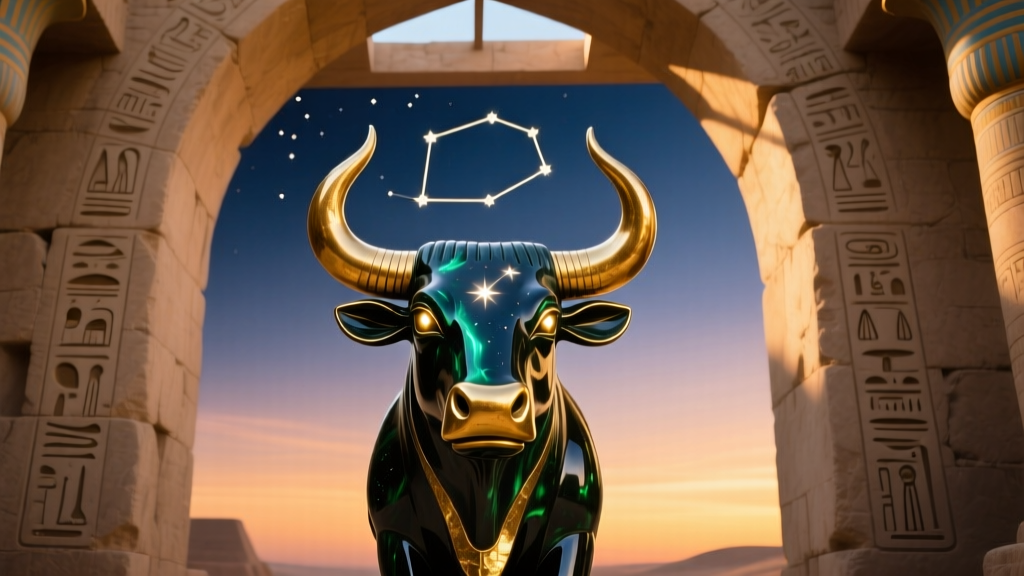
The Ancient Roots of the Zodiac Signs for May 13
When analyzing the astrological profile of individuals born in mid-May, researchers and enthusiasts often search for the zodiac signs for May 13 to understand their foundational mythological and historical roots. While modern Western pop astrology assigns a single sun sign to this date, the historical reality is far more complex. The designation of May 13 within the zodiacal belt is the result of millennia of astronomical observation, agricultural calendar development, and cross-cultural syncretism. To truly understand the celestial markers of this specific date, we must examine the Babylonian star catalogs, Hellenistic geometric divisions, and the astronomical phenomenon of axial precession that causes the plural "signs" associated with this single calendar date to diverge across different global traditions.
Babylonian Origins: The Heavenly Bull and the Agrarian Calendar
The conceptual foundation of the zodiacal sector governing May 13 originates in ancient Mesopotamia. Long before the Greeks formalized the 12-sign zodiac, Babylonian astronomers compiled the MUL.APIN, a comprehensive star catalog dating back to roughly 1000 BCE. According to historical archives on Mesopotamian astronomy, the ecliptic path was divided among 17 or 18 constellations, not 12. The region of the sky that the Sun occupies around mid-May was dominated by the constellation GU4.AN.NA, known as the "Bull of Heaven."
For the Babylonians, the stars occupying this sector were intrinsically linked to the agrarian calendar. The Pleiades star cluster (known as MUL.MUL), which resides within the boundaries of the modern Taurus constellation, was of paramount importance. The heliacal rising of the Pleiades in the spring sky signaled the critical period for the barley harvest. May 13 historically aligned with the period where the Sun's position relative to these stars dictated the culmination of spring planting and the beginning of the harvest season. The Bull was not merely a mythological beast; it was an agricultural timekeeper representing the physical manifestation of the earth's fertility and the heavy, deliberate labor required to cultivate it.
The Mythology of Gugalanna and the Epic of Gilgamesh
The mythological weight of this celestial sector is heavily documented in the Epic of Gilgamesh. The Bull of Heaven, Gugalanna, was unleashed by the goddess Ishtar to punish Gilgamesh. As detailed by the World History Encyclopedia, Gugalanna's footprints created massive craters that swallowed hundreds of men, symbolizing the destructive, untamed power of nature and earthquakes—themes that later became associated with the fixed earth sign of Taurus. When Gilgamesh and Enkidu slayed the bull, they committed a cosmic transgression, forever linking this sector of the zodiac to themes of mortal defiance against divine, earthly forces.
Hellenistic Astrology and the Myth of Zeus and Europa
As Babylonian astrology migrated westward, it was synthesized with Egyptian and Greek traditions during the Hellenistic period. It was here that the 12-sign zodiac of exactly 30 degrees each was mathematically formalized. Claudius Ptolemy, in his foundational 2nd-century CE text Tetrabiblos, anchored the zodiac to the equinoxes rather than the visible constellations. This created the Tropical Zodiac, permanently locking the dates of April 20 through May 20 into the sign of Taurus.
The Greeks overlaid their own mythology onto the Babylonian Bull. The primary myth associated with this sector became the abduction of Europa. Zeus, captivated by the Phoenician princess, transformed himself into a magnificent, docile white bull to approach her. Once Europa climbed onto his back, he carried her across the sea to Crete. This myth shifted the astrological archetype of mid-May from the destructive, earthquake-inducing Babylonian bull to a symbol of sensual pursuit, material comfort, and the generative power of the earth. The fixed modality of Taurus, governing May 13, was thus cemented as a period of stability, accumulation, and physical endurance.
Tropical vs. Sidereal: Why Multiple Signs Apply to May 13
A critical point of information gain for those researching the zodiac signs for May 13 is understanding why the plural "signs" is technically accurate when comparing global astrological systems. Due to the precession of the equinoxes—a slow wobble of the Earth's rotational axis discovered by Hipparchus in the 2nd century BCE—the Tropical Zodiac (used in Western astrology) and the Sidereal Zodiac (used in Vedic/Jyotish astrology) have drifted apart by approximately 24 degrees, a gap known as the ayanamsa.
Consequently, an individual born on May 13 does not possess the same Sun sign across all traditions. In the Western Tropical system, the Sun is in the 22nd or 23rd degree of Taurus. However, in the Sidereal system, which aligns with the actual, observable constellations in the sky, the Sun on May 13 is still positioned in the late degrees of Aries (Mesha). It is not until roughly May 14 or 15 that the Sidereal Sun crosses into Taurus. Therefore, the "signs" for May 13 are historically bifurcated based on the mathematical framework applied.
| Astrological System | Zodiac Sign for May 13 | Approximate Degree | Historical Origin & Framework |
|---|---|---|---|
| Tropical (Western) | Taurus | 22° - 23° Taurus | Hellenistic (Ptolemy's Tetrabiblos, 2nd Century CE) |
| Sidereal (Lahiri/Vedic) | Aries | 28° - 29° Aries | Ancient Indian (Surya Siddhanta, Observable Constellations) |
| Constellational (IAU) | Aries / Taurus Border | Irregular Boundaries | International Astronomical Union (1930 Borders) |
Egyptian Influences: The Apis Bull and the Nile Inundation
Before the Hellenistic synthesis, Egyptian astronomy also heavily influenced the interpretation of the stars governing mid-May. The Egyptians revered the Apis Bull, a sacred animal believed to be the living embodiment of Ptah and later associated with Osiris (as Serapis). The bull was a symbol of the pharaoh's strength and the predictable, life-giving inundation of the Nile.
While the Egyptian calendar was solar and based on the heliacal rising of Sirius (Sopdet), the underlying archetype of the sacred bull permeated the Mediterranean understanding of the Taurus sector. The fixed, unyielding nature of the earth, the patience required for the floodwaters to recede, and the subsequent explosion of agricultural wealth all mirror the psychological profile assigned to those born on May 13. The historical cross-pollination between the Egyptian Apis cult and the Greek/Roman mystery religions ensured that the mid-May zodiacal sector retained its association with sacred materialism and earthly endurance.
Decanate History: The Specific Astrological Rulers of May 13
To achieve true granularity regarding the zodiac signs for May 13, one must examine the historical use of decans—10-degree subdivisions of the zodiac that originated in Hellenistic Egypt. May 13 falls squarely within the third decan of Taurus (spanning 20° to 30° of the sign).
In the traditional Chaldean decan system, the first decan of a sign is ruled by the sign's natural ruler (Venus for Taurus), the second by the next planet in the sequence (Mercury), and the third by the subsequent planet (the Moon). However, in the later, widely utilized triplicity and planetary joy systems adopted by medieval astrologers, the third decan of Taurus is governed by Saturn (the ruler of Capricorn, the final earth sign). This introduces a profound layer of historical complexity: while the overarching sign of Taurus is ruled by Venus (representing beauty, luxury, and ease), the specific degrees governing May 13 carry the Saturnian undertones of discipline, structural labor, and the slow, methodical mastery of the material world.
Historical Texts and the Third Decan
According to Britannica's historical records on astrological magic, medieval grimoires like the 11th-century Picatrix (originally the Arabic Ghayat al-Hakim) assigned specific talismanic images to the decans. The image for the third decan of Taurus is described as a man holding a wooden yoke or plowing a field, accompanied by a woman sowing seeds. This esoteric historical data perfectly encapsulates the May 13 archetype: it is not merely about the passive enjoyment of Venusian luxuries, but about the Saturnian necessity of physical labor, structural planning, and the deliberate cultivation of resources to sustain that luxury over time. Understanding this decanate history provides a vastly superior, historically grounded framework for interpreting the personality traits associated with this specific birth date.