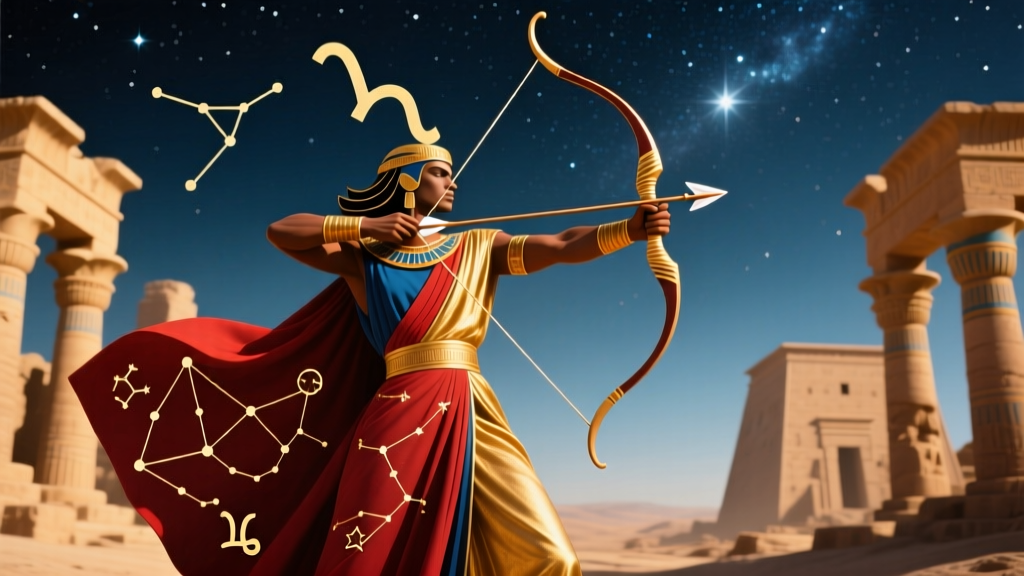
When analyzing the historical and mythological foundations of zodiac signs nov 25, we are looking directly at the earliest iterations of the Sagittarius archetype. Individuals born on this date fall under the first decan of Sagittarius, a fire sign traditionally governed by Jupiter. However, the modern interpretation of this placement is merely the surface of an astrological lineage that extends back over three millennia into Mesopotamian astronomy and Hellenistic myth-making. To understand the psychological and spiritual blueprint of a November 25 native, one must examine the ancient, complex history of the Archer.
The transition of the zodiac from a localized agricultural calendar to a universal system of personality archetypes was not instantaneous. It required centuries of cross-cultural synthesis, primarily between Babylonian astronomers and Greek philosophers. The specific mythology attached to the late November sky reveals a profound duality—a tension between feral instinct and philosophical wisdom—that perfectly encapsulates the internal landscape of those born on this date.
The Babylonian Pabilsag: The Original Archer
Long before the Greeks mapped the constellations to their pantheon, the Babylonians cataloged the ecliptic in the MUL.APIN compendium (circa 1000 BCE). According to the World History Encyclopedia's overview of Babylonian science, the constellation we now call Sagittarius was originally identified as Pabilsag.
Pabilsag was a complex Sumerian deity, the tutelary god of the city of Larak and a manifestation of the war and agriculture god Ninurta. In early Mesopotamian boundary stones (kudurrus), Pabilsag was not depicted as a simple centaur. He was a composite chimera: possessing a human head, a lion's body, a scorpion's tail, and the wings of an eagle. He was shown drawing a bow, symbolizing the protective and destructive power of the storm and the hunt.
For the November 25 native, the Pabilsag lineage indicates a foundational drive toward protection, boundary-setting, and the synthesis of disparate skills. The chimera nature of the original Babylonian archer reflects the modern Sagittarian ability to adapt to varied environments, combining intellectual prowess (the human head) with fierce, instinctual action (the lion and scorpion). This historical root explains why November 25 individuals often possess a startling blend of academic curiosity and aggressive, competitive drive.
Hellenistic Astrology: Chiron, Crotus, and the Centaur Dichotomy
When Hellenistic astronomers like Eudoxus and later Claudius Ptolemy formalized the zodiac in texts like the Tetrabiblos, they mapped Greek mythology onto the Babylonian framework. This resulted in a centuries-long mythological debate regarding the true identity of the Archer. As noted in Encyclopedia Britannica's entry on Sagittarius, the constellation is most commonly associated with Chiron, but classical texts offer a competing narrative involving Crotus.
Chiron, the son of Cronus and the nymph Philyra, was an immortal centaur renowned for his intellect, mastery of medicine, and role as a tutor to heroes like Achilles, Jason, and Asclepius. Unlike the feral, wine-crazed centaurs of Greek myth, Chiron represented the sublimation of animalistic urges into higher wisdom and mentorship. His mythological arc ends in tragedy: accidentally poisoned by a Hydra-tainted arrow, he surrendered his immortality to free Prometheus, ultimately being placed in the stars by Zeus.
Conversely, the poet Eratosthenes argued the constellation represented Crotus, a satyr (not a centaur) who lived among the Muses. Crotus was credited with inventing archery and the rhythmic clapping used in musical worship. Zeus placed him in the stars to honor his artistic and martial contributions, cementing a link between the sign and the performing arts.
| Mythological Figure | Origin / Species | Core Archetypal Traits | Relevance to Nov 25 Natives |
|---|---|---|---|
| Pabilsag | Babylonian Chimera | Protection, storm, synthesis | Drive to defend ideals; multi-disciplinary skills |
| Chiron | Greek Centaur (Immortal) | Mentorship, healing, sacrifice | The "wounded healer"; academic and spiritual teaching |
| Crotus | Greek Satyr | Invention, performance, rhythm | Theatricality, boisterous social energy, artistic innovation |
How Mythological Origins Shape Zodiac Signs Nov 25 Personalities
The friction between the Chiron and Crotus archetypes provides a highly accurate diagnostic tool for understanding the behavioral patterns of those born on November 25. This date sits precisely at the intersection of the scholar (Chiron) and the performer (Crotus). Britannica's mythological profile of Chiron highlights his role as a bridge between the divine and mortal realms, a trait deeply embedded in the November 25 psyche.
November 25 individuals often experience a lifelong oscillation between the desire for isolated, deep academic or spiritual study, and the urge to perform, entertain, and engage in boisterous social environments. Recognizing this historical dichotomy allows natives to stop viewing their shifting social batteries as a flaw. Instead, they can leverage them as complementary phases of their creative and intellectual cycles. The Chiron phase gathers the wisdom; the Crotus phase shares it with the crowd.
The First Decan and Double Jupiter Influence
In the Chaldean decan system, the 360-degree zodiac is divided into 36 ten-degree segments. November 25 falls squarely within the first decan of Sagittarius (0 to 10 degrees). This specific decan is ruled by Jupiter. Because Jupiter is also the domicile ruler of Sagittarius, individuals born on this date possess a "double Jupiter" signature.
This planetary amplification manifests as an intense drive for expansion, a deeply ingrained optimism, and a profound need to construct overarching philosophical frameworks. However, the shadow side of this double influence is dogmatism, overextension, and the "savior complex." The historical archetype of Chiron—the master healer who could not heal his own wound—serves as a vital warning for November 25 natives to avoid the hubris of believing their personal philosophy or advice is universally applicable or infallible.
Actionable Framework for the November 25 Archetype
To harness the historical power of the Sagittarian lineage, individuals born on November 25 should implement the following structural habits:
- Institute the Chiron-Crotus Cycle: Schedule alternating weeks of deep, isolated research (Chiron) and public speaking, socializing, or creative performance (Crotus). Do not attempt to sustain both simultaneously, as this leads to rapid neurological burnout.
- Establish Epistemic Humility: Counteract the double-Jupiter tendency toward dogmatism by actively studying philosophies that directly contradict your own. The true mark of the Sagittarian archer is the willingness to aim at new intellectual targets, not just defend old ones.
- Leverage the Pabilsag Chimera: When facing career stagnation, combine two seemingly unrelated disciplines (e.g., data science and mythology, or finance and physical fitness). The original Babylonian archer drew power from the synthesis of disparate forms.
- Unstring the Bow: The physical bow of the archer loses its tension and breaks if left strung when not in use. Implement strict, non-negotiable periods of unstructured rest where no goals, philosophies, or optimizations are pursued.
The Evolution of the Sagittarius Glyph
The modern astrological glyph for Sagittarius (♐)—an arrow crossed with a line—is a direct descendant of the Babylonian and Hellenistic focus on the archer's weapon. The arrow represents the directional, forward-momentum energy of the sign, while the cross-bar signifies the grounding of that energy into material reality, or the intersection of the divine and the earthly. It is a symbol of targeted intent rather than chaotic warfare.
For the November 25 native, mastering the "arrow" means learning the mechanics of release. Just as a physical bow must be unstrung to maintain its elasticity, the psychological bow of the Sagittarian requires deliberate periods of rest. The historical legacy of the Archer is not merely about constant, exhausting forward motion; it is about the precision, timing, and historical wisdom required to know exactly when to let the arrow fly.