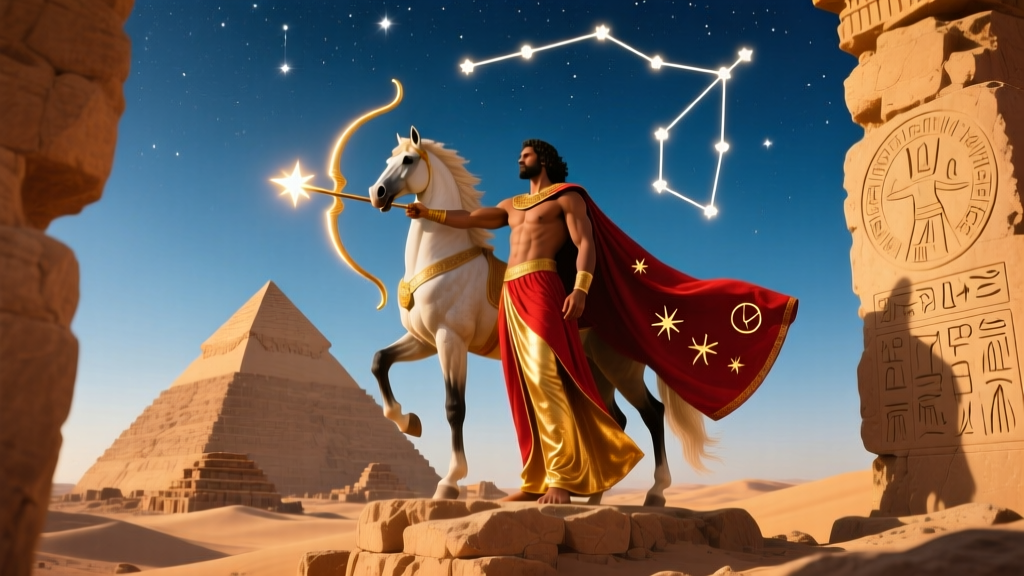
When analyzing the historical lineage of zodiac signs nov 29, researchers uncover a complex tapestry of Babylonian astronomy and Hellenistic mythology. Individuals born on this date fall under the traditional sun sign of Sagittarius, specifically occupying the first decan. However, the origin story of this astrological placement is deeply rooted in the ancient Mesopotamian deity Pabilsag and the Greek centaur Chiron. Furthermore, November 29 sits precisely at the center of the modern Ophiuchus debate, challenging the 12-sign zodiac established by Claudius Ptolemy. Understanding these ancient roots provides profound context for the philosophical and restless nature associated with this specific birth date. This historical framework reveals why these individuals possess such an innate drive for truth, healing, and geographical expansion.
The Babylonian Roots: Pabilsag and the First Archer
Long before the Greeks mapped the heavens, the Babylonians codified the constellations in the MUL.APIN, an astronomical compendium compiled around 1000 BCE. In this ancient text, the region of the sky we now associate with Sagittarius was identified as Pabilsag (PA.BIL.SAG). According to the Cuneiform Digital Library Initiative (CDLI), Pabilsag was the patron deity of the ancient Sumerian city of Isin.
Unlike the modern depiction of a simple half-man, half-horse archer, Pabilsag was a complex chimera. He was depicted with the head and torso of a man, the body of a winged centaur, and the tail of a scorpion. This multi-layered iconography symbolized the convergence of earthly instincts (the animalistic lower half), intellectual elevation (the wings), and defensive precision (the scorpion tail and bow). For those born on November 29, this Babylonian origin explains the inherent psychological duality: a constant tension between primal, restless impulses and a higher philosophical calling. The bow and arrow were not merely weapons of war in this context; they represented the projection of divine will and the targeting of cosmic truths.
The Hellenistic Evolution: Chiron vs. Crotus
As astrological knowledge transferred from Babylon to the Hellenistic world, the Greeks reinterpreted the constellation through their own mythological lens. The Theoi Greek Mythology Project documents two distinct origin stories for the Sagittarius archetype, both of which heavily influence the personality profile of a November 29 birth.
The Chiron Archetype: The Wounded Healer
While most centaurs in Greek myth were depicted as savage and drunken, Chiron was an exception. Born of the Titan Cronus and the nymph Philyra, Chiron was immortal, profoundly wise, and served as the mentor to heroes like Achilles and Asclepius. Chiron’s defining myth involves his accidental wounding by a poisoned arrow—an injury he could not heal due to his immortality, leading him to trade his life to save Prometheus. This 'wounded healer' archetype is central to the psychological makeup of those born on November 29, who often develop deep empathy and philosophical insight through their own unresolvable personal struggles.
The Crotus Archetype: The Inventor of Archery
Alternatively, the Roman mythographer Hyginus attributed the constellation to Crotus, a satyr (not a centaur) who lived on Mount Helicon. Crotus was the inventor of archery and a passionate patron of the Muses. His inclusion in the stars was a reward for his artistic devotion and his ability to hunt with precision. This narrative highlights the creative, artistic, and communicative talents often observed in late November births, emphasizing the 'aim' required to achieve mastery in the arts or academia.
The Ophiuchus Debate: Are Zodiac Signs Nov 29 Actually the 13th Sign?
No discussion regarding the history of zodiac signs nov 29 is complete without addressing the Ophiuchus controversy. Astronomically, the Sun does not enter the traditional constellation of Sagittarius until mid-December. From November 29 to December 17, the Sun actually transits through Ophiuchus, the Serpent Bearer.
The exclusion of Ophiuchus from the astrological zodiac was a deliberate mathematical choice made by Claudius Ptolemy in his foundational 2nd-century CE text, the Tetrabiblos. Ptolemy aligned the zodiac with the 12 lunar cycles of the year and the four seasons, dividing the 360-degree ecliptic into 12 equal 30-degree segments. Because Ophiuchus crossed the ecliptic, it was intentionally omitted to preserve the geometric perfection of the 12-sign system.
However, Ophiuchus has deep historical roots, often associated with Imhotep, the ancient Egyptian architect and physician, or Asclepius, the Greek god of medicine. The Serpent Bearer represents the mastery over life, death, and healing. Individuals born on November 29 sit exactly on the cusp of this astronomical reality, often exhibiting the intense, transformative, and healing-oriented traits of Ophiuchus rather than the purely jovial traits of traditional Sagittarius.
Comparative Analysis: Traditional Sagittarius vs. Ophiuchus Influence
| Trait Category | Traditional Sagittarius (Nov 29) | Ophiuchus Influence (Astronomical) |
|---|---|---|
| Core Motivation | Expansion, truth-seeking, freedom | Healing, transformation, esoteric knowledge |
| Historical Archetype | The Archer / The Centaur | The Serpent Bearer / The Physician |
| Shadow Expression | Recklessness, dogmatism, restlessness | Manipulation, savior complex, secrecy |
| Ruling Planet/Body | Jupiter (Expansion and Luck) | Pluto/Saturn (Underworld and Structure) |
Decan Rulership: Jupiter’s Historical Influence
In the Chaldean decan system, which originated in Hellenistic Egypt, the 360-degree zodiac is divided into 36 decans of 10 degrees each. November 29 falls at approximately 6 to 7 degrees of Sagittarius, placing it firmly in the First Decan of Sagittarius.
This decan is ruled by Jupiter, the planet of expansion, higher learning, and theological inquiry. Historically, Jupiter was syncretized with the Babylonian Marduk and the Greek Zeus, representing the supreme organizing principle of the cosmos. The double-Jupiter influence (as Sagittarius is also traditionally ruled by Jupiter) amplifies the November 29 native's drive for macro-level understanding. These individuals are historically predisposed to roles in academia, theology, law, and global exploration. The Jupiterian influence demands that they look beyond the immediate and local, seeking universal principles that govern human existence.
Actionable Framework: Harnessing the Ancient Archer Energy
Understanding the historical and mythological origins of your astrological placement is only valuable if translated into practical application. For those born on November 29, integrating the dual histories of the Centaur and the Serpent Bearer requires a structured approach to personal development.
1. The Chironic Healing Protocol
Because November 29 natives carry the 'wounded healer' archetype, they must formalize their healing processes. Instead of passively enduring psychological friction, engage in structured shadow work. Identify the 'unhealable wound' (a recurring life obstacle) and pivot from trying to cure it to using it as a teaching tool for others. Mentorship, writing, or counseling are the most effective historical outlets for this specific energy.
2. Intellectual Archery (Targeted Mastery)
The Babylonian Pabilsag and the Greek Crotus both utilized the bow as an instrument of extreme precision, not scattered firing. November 29 individuals often suffer from 'shiny object syndrome,' starting multiple philosophical or educational pursuits without finishing them. Implement a 90-day 'single target' rule: dedicate your intellectual expansion to one specific subject, language, or certification until mastery is achieved before drawing the bow again.
3. Integrating the Serpent Bearer
To honor the astronomical reality of the Ophiuchus transit on this date, incorporate esoteric or alternative healing modalities into your routine. The Serpent Bearer represents the shedding of old skin. Annually, on or near November 29, conduct a 'venom extraction' audit: systematically identify and remove one toxic relationship, one draining financial commitment, and one limiting belief system that is preventing your psychological regeneration.