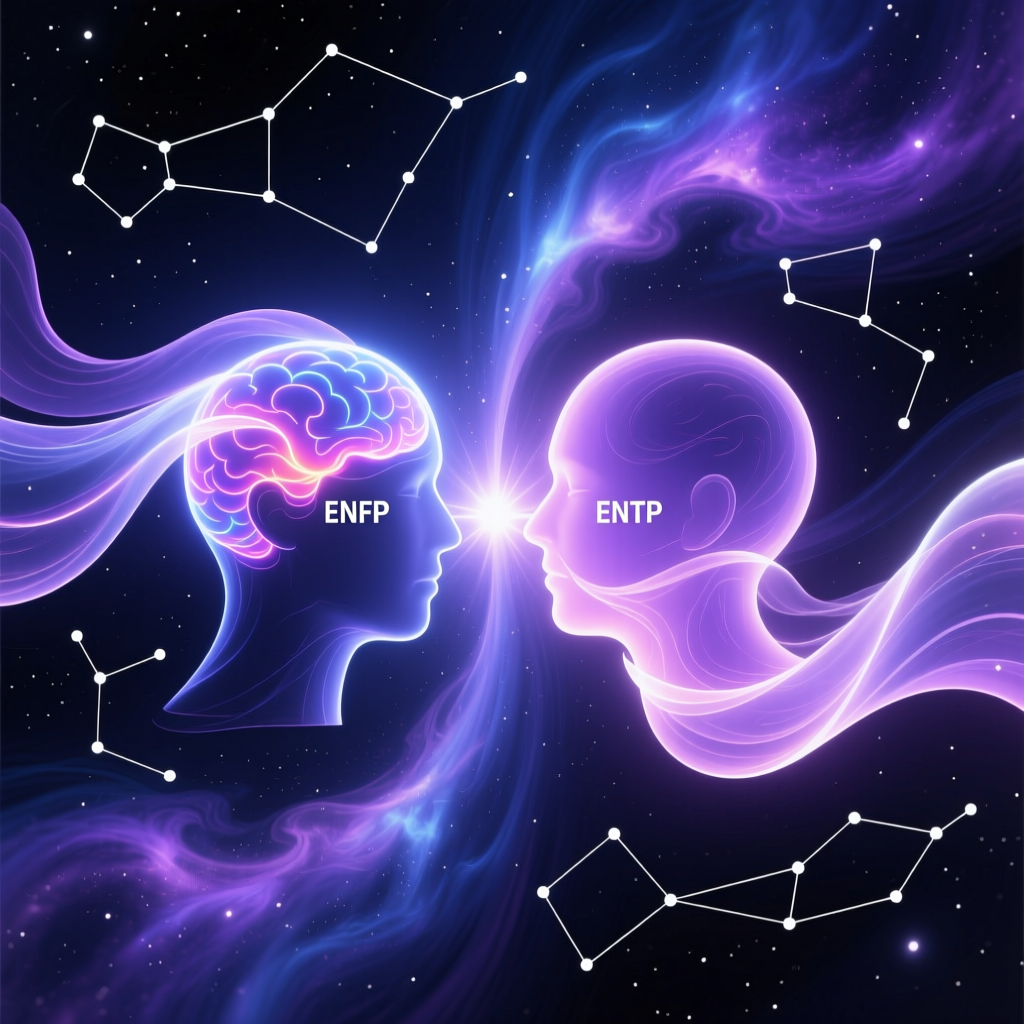
ENFJ and ENTP Compatibility: The Magnetic Pull of Energy and Intellect
When an ENFJ and an ENTP enter the same room, the shift in atmospheric pressure is palpable. Both types possess a natural, radiant charisma that draws people in, but their magnetism operates on entirely different frequencies. The ENFJ, known as the Protagonist, leads with a warm, empathetic, and deeply human-centric energy. The ENTP, the quintessential Debater, commands attention through sharp wit, intellectual agility, and a relentless curiosity for the unconventional. When these two extroverted intuitives collide, the result is a dynamic, high-voltage connection that is as intellectually stimulating as it is emotionally profound.
The concept of "energy magnetism" in MBTI compatibility goes far beyond simple shared interests. It is about how two personality types energize, challenge, and ultimately elevate one another. For the ENFJ and ENTP, this magnetism is rooted in their shared extroverted intuition and feeling-thinking axes, which create a bridge between boundless ideation and deep interpersonal connection. They are both future-oriented visionaries who refuse to settle for the status quo, making them a formidable duo in romance, friendship, and the workplace.
In this comprehensive deep-dive, we will explore the intricate layers of the ENFJ and ENTP relationship. From the fascinating interplay of their Jungian cognitive functions to the practical realities of their daily interactions, this guide will illuminate why this pairing is often described as an unstoppable force of nature. If you are navigating this dynamic or simply curious about the sparks that fly between these two types, our comprehensive MBTI compatibility guide offers even more insights into how different personalities align.
The Cognitive Function Interplay: Fe, Ne, and the Spark of Connection
To truly understand the magnetic pull between the ENFJ and ENTP, we must look beneath the surface behavior and examine their cognitive function stacks. The ENFJ operates using Extroverted Feeling (Fe), Introverted Intuition (Ni), Extroverted Sensing (Se), and Introverted Thinking (Ti). The ENTP stack consists of Extroverted Intuition (Ne), Introverted Thinking (Ti), Extroverted Feeling (Fe), and Introverted Sensing (Si). While their dominant functions differ, they share the exact same judging axis (Fe and Ti) and perceiving axis (Ne and Ni), albeit in different orders. This shared psychological DNA is the secret to their profound mutual understanding.
The most striking point of connection is the Fe-Ti axis. The ENFJ leads with Extroverted Feeling (Fe), making them highly attuned to the emotional atmosphere, social harmony, and the needs of others. The ENTP has Fe in their tertiary position. While ENTPs are often stereotyped as purely logical or argumentative, their tertiary Fe gives them a hidden depth of social charm and a genuine desire to connect with others. The ENFJ's dominant Fe acts as a warm invitation, drawing out the ENTP's softer, more empathetic side and helping them develop their emotional intelligence. In return, the ENTP's auxiliary Introverted Thinking (Ti) helps the ENFJ, who possesses inferior Ti, to establish logical boundaries, analyze situations objectively, and avoid burning out from emotional over-involvement.
On the perceiving side, the ENTP's dominant Extroverted Intuition (Ne) is a fireworks display of possibilities, brainstorming, and "what-if" scenarios. The ENFJ's auxiliary Introverted Intuition (Ni) acts as a focusing lens. Where the ENTP sees a hundred different paths, the ENFJ can synthesize those ideas into a singular, meaningful vision. This Ne-Ni interplay means that the ENTP provides the raw, creative fuel, while the ENFJ builds the engine that turns those ideas into reality. For a deeper understanding of how these mental processes work, explore our guide on cognitive functions explained.
Furthermore, their inferior functions create a unique space for mutual growth. The ENFJ's inferior Ti can lead to self-doubt regarding their logical competence, a space where the ENTP excels and can offer reassuring, objective analysis. Conversely, the ENTP's inferior Si (Introverted Sensing) makes them prone to neglecting routine, physical health, and past lessons. The ENFJ, with their auxiliary Ni and tertiary Se, can gently guide the ENTP toward grounding practices, helping them maintain the physical and structural stability required to see their grand visions through.
Romantic Dynamics: Passion, Playfulness, and Intellectual Intimacy
In the realm of romance, the ENFJ and ENTP pairing is nothing short of electric. The initial attraction is often immediate and intense. The ENFJ is captivated by the ENTP's quick mind, rebellious streak, and effortless charm. The ENTP, in turn, is mesmerized by the ENFJ's emotional depth, unwavering confidence, and ability to make them feel truly seen and understood. This mutual fascination creates a honeymoon phase characterized by deep conversations, spontaneous adventures, and a shared sense of invincibility.
As the relationship matures, the romantic dynamic evolves into a powerful partnership of growth. The ENFJ brings a level of intentionality and emotional nurturing that the ENTP deeply craves but rarely knows how to ask for. The ENFJ plans thoughtful dates, remembers crucial emotional milestones, and creates a safe harbor where the ENTP can drop their intellectual armor. In return, the ENTP keeps the relationship fresh, exciting, and free from stagnation. They introduce the ENFJ to new hobbies, challenge their deeply held beliefs in a playful manner, and inject a sense of humor that lightens the ENFJ's occasional tendency toward emotional heaviness.
However, the romantic magnetism also requires navigating distinct differences in how they express love. The ENFJ typically shows love through acts of service, verbal affirmation, and deep emotional attunement. They want to merge souls and build a unified vision for the future. The ENTP shows love through intellectual engagement, sharing novel ideas, and playful banter. To the ENFJ, the ENTP's desire to debate might initially feel like a lack of emotional intimacy. To the ENTP, the ENFJ's need for deep emotional processing might feel overwhelming. Bridging this gap requires the ENFJ to understand that for the ENTP, intellectual sparring is a profound form of intimacy, and the ENTP must learn to pause the debate to offer simple, unconditional emotional validation.
Physical intimacy and shared experiences (Se) also play a vital role in their romantic bond. Both types are extroverted and generally enjoy engaging with the physical world, whether that means traveling to unfamiliar destinations, attending lively social events, or simply exploring a new part of their city. The ENFJ's tertiary Se and the ENTP's Ne combine to make them an adventurous couple who are always looking for the next great experience to share, ensuring that their romantic life rarely falls into a predictable rut.
Friendship Patterns: The Ultimate Brainstorming and Social Duo
As friends, the ENFJ and ENTP are the undisputed life of the party. When they walk into a social gathering, they operate as a highly effective, albeit informal, team. The ENFJ reads the room, identifies who feels left out, and works the crowd to ensure everyone feels included with their dominant Fe. The ENTP provides the entertainment, telling captivating stories, making sharp observations, and keeping the energy high with their Ne. Together, they create an inclusive, vibrant, and unforgettable atmosphere.
Beyond their social prowess, their one-on-one friendship is built on a foundation of relentless intellectual curiosity. They are the friends who will meet for a quick coffee and end up talking for six hours about philosophy, the future of technology, societal structures, and the universe. The ENTP loves to play devil's advocate, throwing out wild, sometimes controversial theories just to see how they hold up. The ENFJ, rather than being offended, is usually fascinated by the ENTP's mental gymnastics and will engage deeply, adding human-centric and ethical dimensions to the ENTP's logical frameworks.
This friendship thrives on mutual encouragement. The ENFJ is the ultimate cheerleader, constantly pushing the ENTP to pursue their brilliant ideas and reminding them of their potential when they fall into a cynical or scattered mindset. The ENTP is the ultimate reality-checker, helping the ENFJ step back from their emotional investments, see their own blind spots, and prioritize their own needs over the needs of others. They balance each other perfectly: the ENFJ provides the emotional anchor, and the ENTP provides the intellectual wind in the sails. For more on how these types bond, check out our ENTP relationship guide.
Workplace Synergy: Visionaries in Action
In a professional setting, the ENFJ and ENTP are a powerhouse of innovation and execution. They are both natural leaders, but their leadership styles are complementary rather than competitive. The ENFJ excels in roles that require team building, stakeholder management, and inspiring a shared vision. They are the glue that holds a project together, ensuring that morale remains high and that every team member feels valued. The ENTP thrives in roles that require disruptive thinking, complex problem-solving, and strategic foresight. They are the ones who identify inefficient systems and design brilliant, unconventional workarounds.
When collaborating on a project, the ENFJ and ENTP cover each other's blind spots beautifully. The ENTP might generate a highly innovative but risky business strategy. The ENFJ will immediately step in to analyze how this strategy will impact the company culture, the clients, and the team's well-being, refining the idea into something both brilliant and palatable. Conversely, when the ENFJ is overly concerned with maintaining harmony and avoiding necessary but difficult decisions, the ENTP can step in with objective, Ti-driven logic to make the tough call.
Their shared extroverted energy means they thrive in dynamic, fast-paced environments. They are the colleagues who will stay late not because they are forced to, but because they are passionately brainstorming a new initiative. However, they must be mindful of scope creep. The ENTP's Ne can lead to chasing too many shiny new ideas, while the ENFJ's Fe can lead to taking on too many responsibilities to please others. By setting clear boundaries and relying on the ENFJ's judging (J) preference for structure, they can turn their massive potential into tangible, successful outcomes.
Communication Styles: Banter, Depth, and the Art of Debate
Communication between an ENFJ and an ENTP is fast-paced, layered, and rarely superficial. Both types prefer to discuss abstract concepts, future possibilities, and the human experience; they rarely get bogged down in the mundane details of daily life. Their conversations are characterized by a rapid exchange of ideas, where one thought seamlessly triggers another. Their shared extroverted intuition means they often finish each other's sentences or go off on passionate tangents that only the two of them understand.
The primary difference in their communication lies in their ultimate goal. The ENFJ communicates to build consensus, foster harmony, and understand the emotional truth of a situation. They use language to connect, persuade, and uplift, often employing a warm and encouraging tone. The ENTP communicates to explore, test boundaries, and uncover the objective truth. They use language as a tool for dissection and analysis, often employing a blunt, challenging, or sarcastic tone. The ENTP's love for debate is not meant to be hurtful; it is simply how they process information and show intellectual respect.
For this dynamic to work, the ENFJ must learn to separate their personal feelings from the ENTP's intellectual arguments. When the ENTP challenges an idea, they are challenging the concept, not the ENFJ's worth or character. The ENTP, in turn, must learn to read the emotional subtext of the ENFJ's words. The ENFJ is a master of reading emotional subtext, while the ENTP is a master of reading logical inconsistencies. When they learn to value and translate each other's communication style, they become an unstoppable intellectual force.
Conflict Resolution: Navigating the Emotional and Logical Divide
The way the ENFJ and ENTP approach conflict resolution is often the most significant hurdle in their relationship. When a disagreement arises, the ENFJ's instinct is to address the emotional impact, seek harmony, and ensure that both parties feel heard and valued. They are highly sensitive to tone, atmosphere, and perceived slights. The ENTP's instinct is to address the logical facts, debate the core issue, and find the most objective solution, often completely missing the emotional undercurrents of the argument.
This can lead to a frustrating cycle. The ENFJ may feel that the ENTP is being cold, dismissive, or overly argumentative during a vulnerable moment. The ENTP may feel that the ENFJ is being overly sensitive, illogical, or avoiding the core issue by focusing on feelings. If left unchecked, the ENFJ may withdraw to protect their feelings, while the ENTP may become frustrated and push harder for a logical resolution, only widening the gap between them.
Successful conflict resolution for this pair requires conscious effort and mutual adaptation. The ENTP must learn to "read the room" of their partner's heart. Before launching into a logical debate, the ENTP needs to validate the ENFJ's feelings, offer physical or verbal reassurance, and acknowledge the emotional weight of the situation. The ENFJ, on the other hand, must learn to communicate their needs with direct, objective clarity. Instead of expecting the ENTP to intuitively sense their emotional distress, the ENFJ should state their feelings as clearly as they would state a fact: "I feel hurt when you debate me on this topic because it makes me feel like my emotions are being dismissed."
When they master this give & take, their conflict resolution becomes a profound tool for growth. The ENFJ learns to view conflicts as opportunities for objective problem-solving rather than threats to the relationship's harmony. The ENTP learns that emotional validation is not a concession of logic, but a necessary component of human connection. This mutual evolution is what transforms their initial magnetic attraction into a lasting, unbreakable bond. For more insights on managing personality clashes, visit our ENFJ relationship dynamics page.
Practical Tips for Cultivating the ENFJ-ENTP Magnetism
To ensure that the high-voltage energy between an ENFJ and ENTP remains a source of light rather than a cause for burnout, both partners must actively nurture their unique dynamic. Here are several practical tips to help this pairing thrive in any context:
- Schedule 'No-Debate' Zones: The ENTP loves to argue for sport, but the ENFJ sometimes just needs to vent without having their feelings cross-examined. Establish times where the ENTP agrees to simply listen and offer emotional support without playing devil's advocate.
- Embrace Spontaneous Adventures: Both types can get trapped in their own heads. Use your shared extroverted energy to break out of routines. Take spontaneous road trips, try a bizarre new hobby, or attend a lecture on a topic neither of you knows anything about.
- Divide and Conquer Life Admin: The ENTP's inferior Si means they often despise mundane details, paperwork, and routine maintenance. The ENFJ, with their judging (J) preference, is usually better equipped to handle these tasks. However, the ENFJ must not become a martyr; they should delegate specific, gamified tasks to the ENTP to ensure the mental load is shared.
- Celebrate the Differences: The ENFJ should actively praise the ENTP's logical brilliance and innovative problem-solving. The ENTP should regularly vocalize their appreciation for the ENFJ's emotional intelligence, warmth, and ability to navigate complex social landscapes.
- Align on the Grand Vision: Both types are future-oriented. Regularly sit down and discuss your long-term goals, whether that involves building a business, traveling the world, or creating a unique family dynamic. Aligning your Ne and Ni visions ensures you are pulling in the same direction.
Frequently Asked Questions
Are ENFJ and ENTP considered a 'golden pair' in MBTI compatibility?
While the term "golden pair" is subjective and often debated within the MBTI community, the ENFJ and ENTP are widely considered a highly compatible and dynamic match. They do not share the exact same cognitive functions in the same order (which is often the criteria for traditional "golden" pairings like ENFJ and INFP), but their shared Fe-Ti and Ne-Ni axes create a relationship of immense growth, mutual fascination, and complementary strengths. They challenge each other to develop their weaker functions, making it a profoundly transformative partnership.
How do ENFJs and ENTPs handle financial management and daily routines?
This is an area that requires conscious teamwork. The ENTP, driven by Ne, may be prone to impulsive spending on new interests and may neglect daily chores. The ENFJ, being a judging (J) type, generally prefers structure and may feel stressed by the ENTP's chaos. To manage this, the ENFJ should often take the role of the "CFO" or "Operations Manager" of the relationship, setting up automated systems for bills and savings. The ENTP can contribute by taking on specific, high-energy tasks or by finding innovative apps and systems that make routine management more engaging and less tedious.
Can an ENFJ and ENTP maintain a successful long-distance relationship?
Yes, but it requires leveraging their communication strengths. Both types are highly verbal and intellectually engaged, which translates well to long phone calls, video chats, and deep text conversations. The ENTP will keep the intellectual spark alive by sharing articles, memes, and novel ideas, while the ENFJ will maintain the emotional connection through intentional check-ins and virtual dates. The main challenge will be the lack of physical presence (Se), so they must plan exciting, immersive experiences for when they are finally in the same physical space.
What is the biggest risk to the ENFJ and ENTP relationship?
The biggest risk is emotional burnout and misalignment of expectations. The ENFJ gives freely of their emotional energy and may begin to feel like a caretaker rather than an equal partner, especially if the ENTP becomes overly focused on their own intellectual pursuits or fails to reciprocate emotional support. Conversely, the ENTP may feel smothered if the ENFJ becomes overly controlling or demands constant emotional reassurance. Maintaining individual hobbies, respecting the ENTP's need for autonomy, and honoring the ENFJ's need for dedicated, focused connection time is crucial for preventing resentment and keeping the magnetism alive.