ISFJ and ENTP Friendship Compatibility: Navigating the Mirror Dynamic
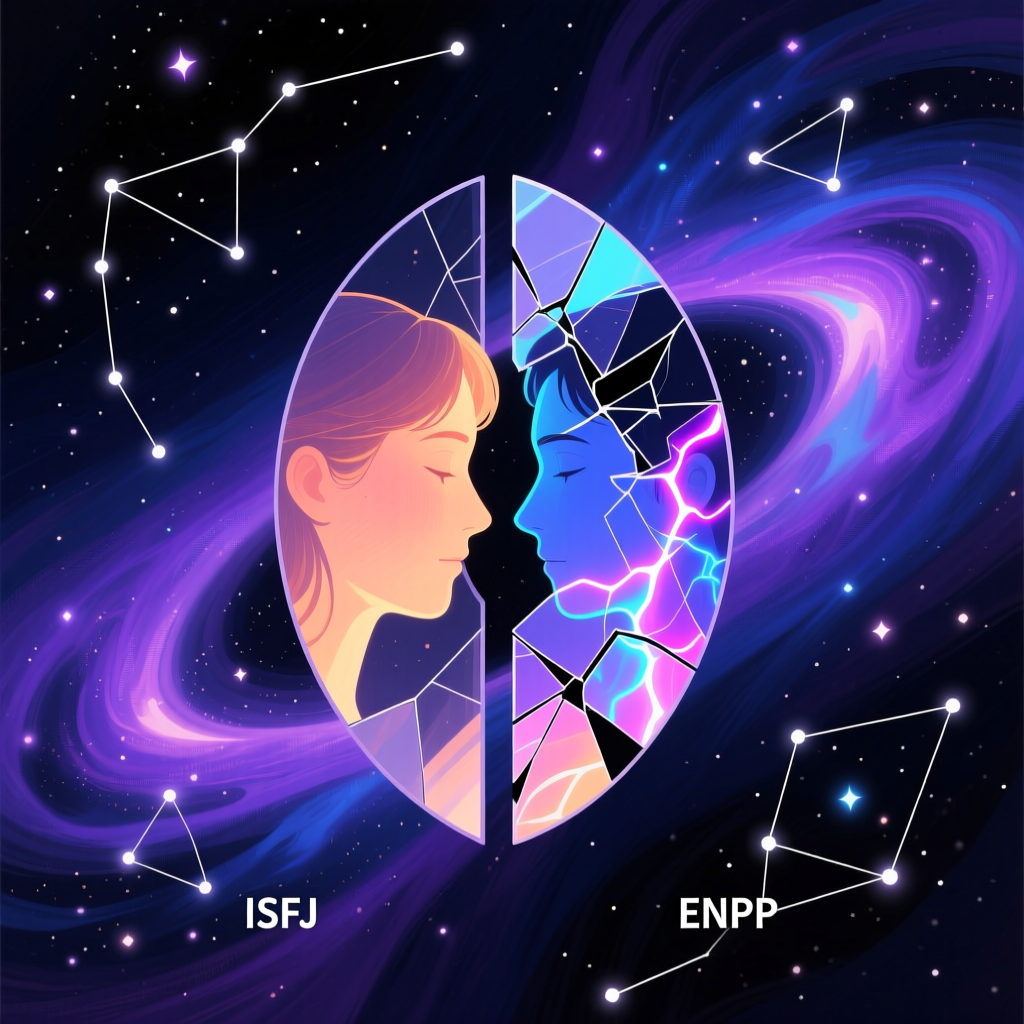
When the nurturing, detail-oriented ISFJ (The Defender) crosses paths with the spontaneous, debate-loving ENTP (The Debater), the result is a fascinating study in contrasts. At first glance, these two personality types might seem like they have very little in common. The ISFJ thrives on routine, emotional harmony, and practical care, while the ENTP lives for intellectual sparring, spontaneous adventures, and challenging the status quo. Yet, beneath the surface, this pairing shares a profound and unique psychological connection.
In the Myers-Briggs Type Indicator (MBTI), the ISFJ and ENTP share the exact same cognitive functions, but in a completely reversed order. This creates what typologists often refer to as a 'mirror' or 'shadow' dynamic. When they come together in friendship, they have the unprecedented opportunity to help each other develop their weakest traits while benefiting from the other's natural strengths. This comprehensive guide dives deep into ISFJ and ENTP friendship compatibility, exploring how these two vastly different minds can build a lasting, supportive, and deeply rewarding bond.
Cognitive Function Interplay: The Mirror Effect
To truly understand the ISFJ and ENTP friendship, we must look at their cognitive function stacks. The ISFJ operates using Introverted Sensing (Si), Extraverted Feeling (Fe), Introverted Thinking (Ti), and inferior Extraverted Intuition (Ne). Conversely, the ENTP leads with Extraverted Intuition (Ne), supported by Introverted Thinking (Ti), Extraverted Feeling (Fe), and inferior Introverted Sensing (Si).
Because they share the same four functions, they inherently understand the 'language' of the other's mind, even if they prioritize different dialects. The ENTP's dominant Ne brings a whirlwind of possibilities, abstract theories, and big-picture thinking to the table. For the ISFJ, whose Ne is their weakest function, the ENTP can act as a guide to the world of imagination, helping them break out of rigid routines and see alternative perspectives.
On the flip side, the ISFJ's dominant Si provides a grounding force. They possess an incredible memory for details, past experiences, and practical realities. The ENTP, whose Si is inferior, often struggles with follow-through, physical maintenance, and learning from past mistakes. The ISFJ friend gently anchors the ENTP, reminding them of practical obligations and helping them turn their chaotic brainstorming into tangible results. This mutual exchange of dominant and inferior functions creates a powerful synergy, allowing both friends to experience profound personal growth simply by spending time together.
Friendship Patterns: Grounding the Storm
In a platonic setting, the ISFJ and ENTP often fall into a complementary rhythm of 'the anchor and the kite.' The ENTP is the kite, soaring high with wild ideas, pulling the ISFJ out of their comfort zone to try new restaurants, attend eclectic events, or engage in late-night philosophical discussions. The ISFJ is the anchor, ensuring the kite doesn't fly away and get lost in the storm. They provide a safe, warm, and reliable harbor for the ENTP to return to when the outside world becomes overwhelming.
Their friendship patterns usually involve a delicate balance of activities. The ENTP might drag the ISFJ to an improv comedy show or a spontaneous road trip, while the ISFJ will curate cozy movie nights, cook the ENTP's favorite meals, and remember the small but meaningful details of their friend's life. The ISFJ's deep sense of loyalty and caretaking makes the ENTP feel genuinely valued, which is a rare and cherished experience for a type that is often misunderstood as purely argumentative or emotionally detached.
However, friction can occur if their social batteries and preferences clash too heavily. The ISFJ may occasionally feel exhausted by the ENTP's constant need for novelty and debate, while the ENTP might feel stifled if the ISFJ insists too heavily on rigid plans and predictable routines. Successful navigation of this friendship requires a mutual agreement to alternate who gets to 'choose the adventure' for the day.
Romantic Dynamics: When Friendship Evolves
While the core of this analysis focuses on friendship, it is worth exploring the romantic dynamics that can emerge if an ISFJ and ENTP transition from friends to partners. The 'opposites attract' magnetism is incredibly strong here. The ENTP is often captivated by the ISFJ's warmth, grace, and unwavering dedication, while the ISFJ is drawn to the ENTP's charisma, intellect, and exciting energy.
In a romantic context, the ENTP provides the spark and the vision for the couple's future, constantly dreaming up new ways to keep the relationship exciting. The ISFJ provides the hearth, building a stable, loving, and well-organized home life. The danger in this romantic evolution lies in the ENTP's tendency to neglect day-to-day responsibilities in favor of intellectual pursuits, which can lead to the ISFJ feeling overburdened and unappreciated. Conversely, the ENTP may feel emotionally smothered if the ISFJ requires constant verbal reassurance and predictable quality time.
For romance to work, the foundation of their friendship must remain intact. They must continue to respect each other's autonomy and recognize that their differing approaches to love—the ISFJ's practical acts of service versus the ENTP's intellectual engagement and playful banter—are both valid expressions of affection. For more insights on how these types pair up romantically, you can explore our broader guides on ISFJ compatibility and ENTP compatibility.
Communication Styles: Empathy Meets Debate
Communication is arguably the most complex arena for the ISFJ and ENTP friendship. The ENTP views conversation as a playground and a battlefield. They use their Ne-Ti combination to play devil's advocate, poke holes in arguments, and explore controversial topics simply to see where the logic leads. They rarely argue out of malice; rather, debate is their way of bonding and seeking truth.
The ISFJ, guided by Si-Fe, views communication as a tool for building harmony, sharing personal experiences, and offering emotional support. They can be deeply unsettled by the ENTP's habit of challenging deeply held beliefs or playing devil's advocate with sensitive topics. To the ISFJ, the ENTP's intellectual sparring can feel like a personal attack or a deliberate attempt to cause emotional distress.
To bridge this gap, the ENTP must learn to temper their intellectual bluntness and recognize when the ISFJ needs emotional validation rather than a logical teardown. The ISFJ, in turn, must learn not to take the ENTP's debates personally. Understanding that the ENTP's questioning is a sign of intellectual engagement—not a rejection of the ISFJ's values—is a massive breakthrough for this friendship. When they master this balance, their conversations become incredibly rich, blending the ISFJ's emotional intelligence with the ENTP's analytical brilliance.
Conflict Resolution: Navigating the Friction
When conflicts arise, the ISFJ and ENTP have vastly different coping mechanisms. The ISFJ tends to avoid direct confrontation, especially if they feel the relationship's harmony is at risk. They may internalize their hurt, withdraw, or resort to passive-aggressive behavior when overwhelmed. Under severe stress, the ISFJ might fall into a 'catastrophizing' grip, imagining the worst possible outcomes for the friendship.
The ENTP, on the other hand, prefers to tackle conflict head-on with logic. They want to dissect the problem, argue their point, and find a rational solution. However, their inferior Si means they are often completely blind to the historical context of the argument or the subtle emotional cues the ISFJ is projecting. The ENTP might inadvertently bulldoze the ISFJ's feelings in their rush to 'solve' the logical discrepancy.
Effective conflict resolution requires the ENTP to slow down, lower their defensive walls, and practice active empathy. They must ask the ISFJ how they feel, rather than just telling them what they think. The ISFJ must practice direct, clear communication, stating their needs and boundaries without expecting the ENTP to read between the lines. When the ENTP uses their tertiary Fe to offer genuine warmth, and the ISFJ uses their tertiary Ti to articulate their grievances logically, they can resolve disputes swiftly and fairly.
Workplace Synergy: The Planner and the Innovator
If the ISFJ and ENTP find themselves collaborating in a professional or academic setting, their synergy can be nothing short of spectacular. The ENTP is the ultimate innovator. They excel at brainstorming, identifying systemic inefficiencies, and pitching visionary ideas. However, they are notorious for losing interest once the initial thrill of the concept fades, leaving a trail of half-finished projects in their wake.
Enter the ISFJ, the ultimate executor. The ISFJ excels at project management, logistical planning, and meticulous attention to detail. They take the ENTP's grand vision and create a step-by-step roadmap to bring it to life. The ISFJ ensures that deadlines are met, resources are allocated properly, and the team's morale remains high.
The primary workplace challenge is ensuring mutual respect. The ENTP must avoid viewing the ISFJ as overly cautious or bureaucratic, recognizing that the ISFJ's risk management is what keeps their ideas from failing in the real world. The ISFJ must avoid viewing the ENTP as reckless or disorganized, appreciating that the ENTP's out-of-the-box thinking is what gives the project its competitive edge. Together, they form a complete lifecycle team: creation and execution.
Practical Tips for a Lasting Bond
Building a resilient friendship between an ISFJ and an ENTP requires intentional effort and mutual understanding. Here are several practical tips to help these two types thrive together:
- Establish 'Debate-Free' Zones: The ENTP should recognize when the ISFJ is venting about a personal issue and needs emotional support (Fe) rather than a logical critique (Ti). Agree on a signal or phrase that means 'I just need you to listen right now.'
- Schedule Spontaneity: To satisfy the ENTP's need for novelty without triggering the ISFJ's anxiety about disrupted routines, plan 'spontaneous' blocks of time. For example, block out Saturday afternoon for an adventure, but let the ENTP decide the destination on the day of.
- Appreciate the Invisible Labor: The ENTP must make a conscious effort to notice and verbally thank the ISFJ for the behind-the-scenes care they provide, whether it's remembering a birthday, organizing a group trip, or simply listening after a long day.
- Share the Intellectual Load: The ISFJ should occasionally indulge the ENTP's love for abstract theories and hypothetical scenarios. Engaging in these mental exercises helps the ISFJ develop their inferior Ne and shows the ENTP that their intellectual side is valued.
- Respect the Recharge Time: The ENTP recharges by bouncing ideas off others, while the ISFJ often needs quiet solitude to process their experiences. Respect each other's social boundaries without taking the need for space personally.
Frequently Asked Questions
Can ISFJ and ENTP be best friends?
Absolutely. While they are very different on the surface, the ISFJ and ENTP share the same cognitive functions in reverse order. This allows them to offer each other profound personal growth, balance, and perspective. The ISFJ provides a grounding, loyal, and emotionally safe environment, while the ENTP brings excitement, intellectual stimulation, and a broader perspective to the ISFJ's life. When both types respect their differences, they can form an unbreakable 'opposites attract' best friendship.
What do ISFJs appreciate most about ENTPs?
ISFJs often admire the ENTP's quick wit, confidence, and ability to think outside the box. The ISFJ, who can sometimes feel trapped by their own sense of duty, routine, or fear of the unknown, finds the ENTP's fearless approach to life incredibly liberating. Furthermore, ISFJs appreciate the ENTP's underlying charm and the genuine, albeit unconventional, ways they show they care, such as sharing fascinating articles, defending the ISFJ in a debate, or pulling them out of a creative rut.
Why do ENTPs and ISFJs sometimes clash?
The most common clashes stem from their communication styles and approach to planning. ENTPs love to debate and play devil's advocate, which can deeply hurt the harmony-seeking ISFJ. Additionally, the ENTP's spontaneous, disorganized nature can frustrate the ISFJ, who values reliability and follow-through. Conversely, the ENTP may feel stifled or micromanaged by the ISFJ's desire for structure and predictability. Recognizing these triggers is the first step toward avoiding unnecessary friction.
How can an ISFJ and ENTP improve their communication?
Improvement requires both parties to step slightly outside their comfort zones. The ENTP needs to practice emotional tact, learning to validate the ISFJ's feelings before offering a logical counter-argument. They must realize that not every conversation is a debate to be won. The ISFJ, on the other hand, needs to practice directness. Instead of withdrawing when offended, the ISFJ should clearly articulate their boundaries and explain why certain topics or tones are hurtful. Utilizing resources from our MBTI friendship guide can also provide tailored exercises for bridging communication gaps.
Ultimately, the ISFJ and ENTP friendship is a beautiful testament to the idea that we do not need to be exactly like someone to connect with them deeply. Through patience, empathy, and a willingness to learn from one another, the Defender and the Debater can forge a bond that is as intellectually stimulating as it is emotionally nourishing.