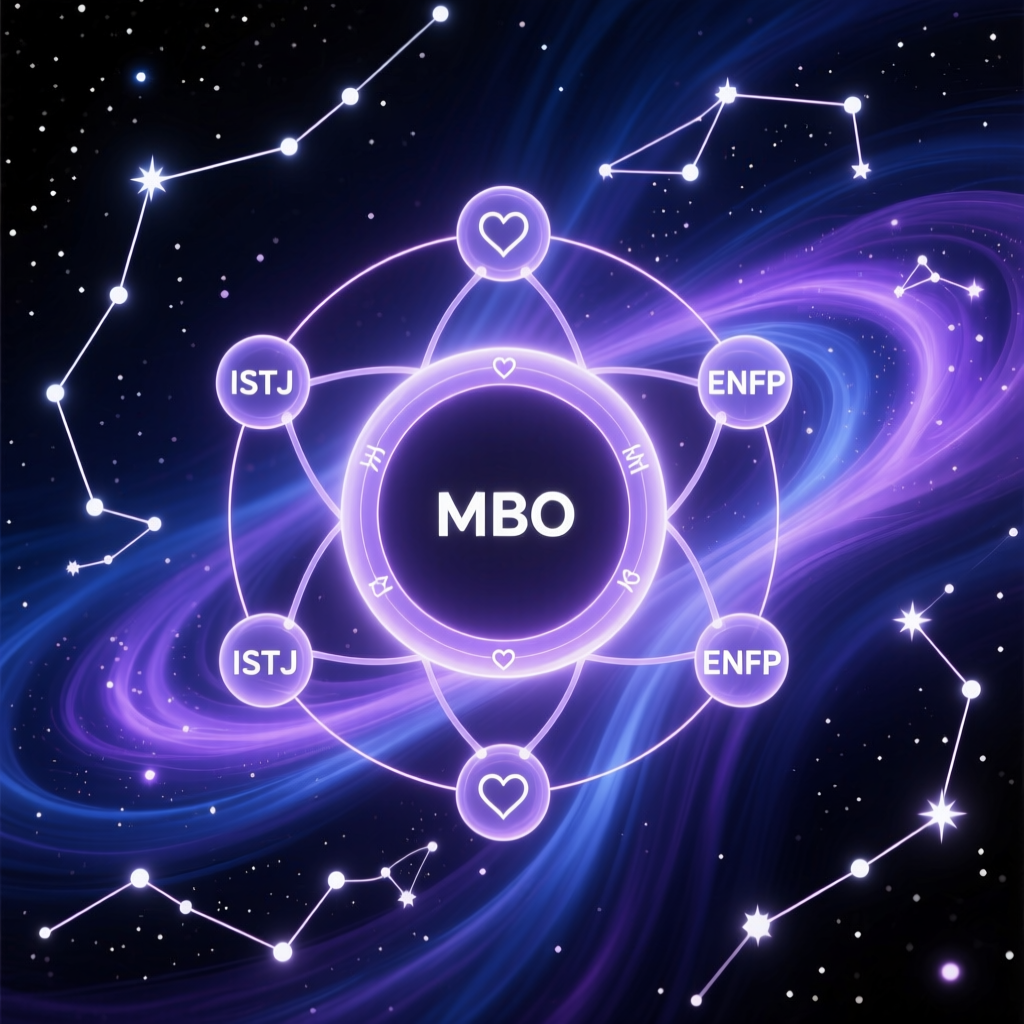
Human relationships are a complex tapestry of shared values, contrasting perspectives, and unspoken cognitive rhythms. When we seek to understand why we click instantly with some individuals while struggling to communicate with others, the Myers-Briggs Type Indicator (MBTI) offers a profound lens. However, looking at the sixteen personality types in isolation only tells half the story. To truly grasp the dynamics of human connection, we must look at how these types relate to one another spatially and cognitively. Enter the MBTI compatibility circle.
The compatibility circle is not merely a pop-psychology concept; it is a visual and theoretical framework that maps the sixteen types along a continuous spectrum. By arranging types based on their cognitive functions and temperaments, the circle reveals hidden patterns of harmony, friction, and growth. Whether you are navigating a new romance, building a corporate team, or trying to understand a family member, understanding your placement on this circle can transform your interpersonal dynamics.
In this comprehensive guide, we will explore the architecture of the MBTI compatibility circle, diving deep into romantic dynamics, friendship patterns, workplace synergy, and the cognitive function interplay that drives it all. For a broader overview of type pairings, you can also explore our complete MBTI compatibility guide.
The Architecture of the MBTI Compatibility Circle
Before we can apply the compatibility circle to our relationships, we must understand how it is constructed. Imagine a wheel divided into four primary quadrants, each representing one of the David Keirsey temperaments: the Idealists (NF), the Rationals (NT), the Guardians (SJ), and the Artisans (SP). Rather than viewing these temperaments as isolated boxes, the circle places them in a continuous loop, highlighting the gradual transition of cognitive functions from one type to the next.
Types that sit adjacent to one another on the circle share significant cognitive DNA. For example, an ENFP and an INFP sit side-by-side, sharing the same core judging and perceiving functions, merely flipped in their extraverted or introverted orientation. This proximity creates a natural bridge of understanding. They speak the same psychological language, even if their dialects differ slightly.
As you move further around the circle, the cognitive overlap decreases. You transition from shared intuition to shared sensing, or from shared feeling to shared thinking. The types sitting directly opposite your own on the circle are often your "shadow" or "opposite" types. These pairings represent the greatest degree of cognitive friction, but paradoxically, they also offer the highest potential for profound personal growth and individuation. The circle teaches us that compatibility is not just about finding someone exactly like you; it is about understanding the distance and angle between your cognitive vantage points.
Romantic Dynamics: Proximity vs. Polarity
When it comes to romance, the MBTI compatibility circle illustrates a fascinating tension between proximity (comfort) and polarity (attraction). Couples who sit close to each other on the circle often experience a deep, immediate sense of being "understood." An INFJ and an INFP, for instance, share a mutual appreciation for deep emotional resonance, abstract concepts, and meaningful connection. Their shared Introverted Intuition (Ni) and Introverted Feeling (Fi) axes allow them to navigate the emotional depths of a relationship with minimal translation required.
However, the circle also maps the phenomenon of "opposites attract," which is often observed in types that sit at specific complementary angles to one another. The famous "golden pairs" of MBTI theory, such as the INTJ and ENFP, are not adjacent on the circle, nor are they directly opposite. Instead, they sit at an angle that allows them to share the same perceiving or judging axes but in a complementary, interlocking fashion. The INTJ leads with Introverted Intuition (Ni), while the ENFP leads with Extraverted Intuition (Ne). They are looking at the exact same abstract world, but from entirely different directions. This creates a magnetic polarity that fuels long-term romantic fascination and mutual growth.
Conversely, types directly across the circle from one another in romance can face steep hurdles. An ENTP and an ISFJ, for example, have completely inverted cognitive function stacks. What one values as logical exploration, the other may view as reckless disruption. While these relationships require immense maturity and conscious effort, the circle shows us that the friction is not a sign of incompatibility, but rather a map of the exact areas where both partners must stretch beyond their natural comfort zones.
Friendship Patterns and Social Synergy
Friendships are often forged in the fires of shared interests and mutual values, making the proximity of the MBTI compatibility circle highly relevant to our social lives. When we look at friend groups, we frequently see clusters of types that sit within the same quadrant of the circle. The Artisans (SP) often bond over shared physical experiences, spontaneity, and tactical problem-solving. The Idealists (NF) gravitate toward one another for late-night philosophical discussions and emotional support.
Yet, the most resilient and dynamic friendships often occur when individuals bridge the gap across the circle's hemispheres. A friendship between an ENTJ and an ISTP might seem unlikely on paper due to their differing communication styles, but on the circle, their shared Thinking (T) preference allows them to respect each other's competence and logic. The ENTJ brings long-term strategic vision, while the ISTP provides grounded, realistic troubleshooting. They do not compete; they complement.
The circle also helps explain social fatigue. If you are an introverted type situated in the NF quadrant, spending time with highly extraverted, fast-paced types on the opposite side of the circle may drain your social battery quickly. Recognizing these spatial dynamics allows you to curate a social life that balances energizing, like-minded connections with stimulating, diverse perspectives.
Workplace Synergy and Team Building
In the professional realm, the MBTI compatibility circle is an invaluable tool for leadership, team building, and project management. A homogeneous team—composed entirely of types from a single cluster on the circle—will excel at specific tasks but will inevitably suffer from massive blind spots. A team of purely big-picture intuitive types might generate brilliant ideas but fail to execute the granular details required for launch.
Effective managers use the compatibility circle to build a "balanced wheel." By intentionally selecting team members from different quadrants, a leader ensures that every phase of a project is covered. The Guardians (SJ) provide structure, timelines, and risk management. The Rationals (NT) design the underlying architecture and solve complex systemic issues. The Artisans (SP) handle the tactical, on-the-ground execution and crisis management. Finally, the Idealists (NF) ensure team cohesion, user-centric design, and ethical alignment.
Furthermore, understanding the circle helps in conflict mediation within the workplace. When a disagreement arises between a detail-oriented ISTJ and a visionary ENTP, a manager who understands the circle recognizes that this is not a personal clash, but a collision of cognitive priorities. The ISTJ is protecting the integrity of past data and established protocols (Introverted Sensing), while the ENTP is pushing for innovative disruption (Extraverted Intuition). By validating both positions as necessary points on the organizational wheel, leaders can turn friction into innovation.
Cognitive Function Interplay Across the Circle
To truly master the MBTI compatibility circle, one must look past the four-letter acronyms and dive into the Jungian cognitive functions. The circle is essentially a map of how the eight cognitive functions (Ne, Ni, Se, Si, Te, Ti, Fe, Fi) orbit and interact with one another.
When types are adjacent on the circle, they share functions in the same orientation. For example, an ENFJ (Fe-Ni-Se-Ti) and an ESFJ (Fe-Si-Ne-Ti) both lead with Extraverted Feeling (Fe). They both prioritize external harmony, group consensus, and the emotional well-being of others. Their compatibility is rooted in a shared language of empathy and social responsibility.
As you move across the circle, you encounter types that share the same functions but in opposite orientations. An INFJ (Ni-Fe-Ti-Se) and an ENFP (Ne-Fi-Te-Si) both utilize Intuition and Feeling, but one is introverted and the other is extraverted. This creates a dynamic where one partner internalizes and synthesizes information, while the other externalizes and brainstorms. This interplay is the engine of the "golden pair" dynamic, where the circle facilitates a continuous feedback loop of ideation and refinement.
At the furthest points of the circle, we encounter the shadow functions. If your dominant function is Extraverted Thinking (Te), your direct opposite on the circle will lead with Introverted Thinking (Ti). The Te user cares about external metrics, efficiency, and what works in the real world. The Ti user cares about internal logical consistency, precision, and what makes sense fundamentally. Understanding this cognitive interplay is the key to unlocking the deepest layers of MBTI compatibility.
Conflict Resolution and Bridging the Gap
Conflict is inevitable in any relationship, but the MBTI compatibility circle provides a roadmap for resolution. When friction occurs with someone on the opposite side of the circle, it is usually because your "shadow" functions are being triggered. What you perceive as stubbornness, the other person perceives as integrity. What you view as chaotic, they view as adaptable.
Bridging the gap requires conscious cognitive translation. If you are an intuitive type dealing with a sensing type across the circle, you must learn to ground your abstract theories in concrete, real-world examples. You must respect their need for historical precedent and practical application. Conversely, sensing types must learn to entertain hypothetical scenarios and appreciate the intuitive's need to look beyond the immediate horizon.
The circle teaches us that conflict with distant types is not a sign of failure; it is an invitation to develop our lower cognitive functions. An INTP who learns to appreciate the emotional intelligence and social grace of an ESFJ is not just resolving a conflict; they are actively developing their inferior Extraverted Feeling (Fe) function, leading to profound personal maturity.
Practical Tips for Navigating Your Compatibility Circle
- Map Your Inner Circle: Identify the 3-5 people you spend the most time with and map their types on the circle. Are you surrounded only by adjacent types? Challenge yourself to befriend someone from a different quadrant to expand your cognitive flexibility.
- Practice Cognitive Translation: When communicating with someone across the circle, adapt your delivery. Give data and concrete steps to Sensors; give theories and big-picture visions to Intuitives. Appeal to logic with Thinkers; appeal to values and human impact with Feelers.
- Embrace the Shadow: When you feel intense, irrational frustration toward a specific personality type, consult the circle. They likely represent your shadow. Use this frustration as a mirror to examine your own cognitive blind spots and insecurities.
- Leverage Complementary Angles: In business partnerships or creative collaborations, seek out types that share your judging or perceiving axis but in an opposite orientation. This ensures you are working toward the same goal but bringing different tools to the table.
- Avoid the Echo Chamber: While adjacent types offer comfort and validation, relying solely on them can lead to groupthink. Intentionally invite feedback from types on the opposite side of the circle to stress-test your ideas and decisions.
Frequently Asked Questions
Is the MBTI compatibility circle scientifically proven?
The MBTI compatibility circle is a theoretical framework derived from Carl Jung's original work on psychological types and later expanded by MBTI theorists and Socionics researchers. While the MBTI itself is widely used in corporate and personal development settings, it is not universally accepted in strict clinical psychology circles. However, as a heuristic model for understanding communication styles, cognitive preferences, and interpersonal dynamics, the circle remains an incredibly accurate and practical tool for millions of people worldwide.
Can opposite types on the circle have a successful marriage?
Absolutely. While types on opposite sides of the circle may face a steeper learning curve regarding communication and daily habits, these pairings often result in the most transformative marriages. The "opposite" partner acts as a catalyst for personal growth, forcing you to develop your weaker cognitive functions. Success in these marriages relies heavily on mutual respect, a willingness to compromise, and the maturity to view your differences as complementary strengths rather than personal attacks.
How do I find my exact placement on the compatibility circle?
Your placement is determined by your verified MBTI type, which is rooted in your dominant cognitive function stack. To find your exact spot, you must first ensure you have been accurately typed, moving beyond simple online quizzes to study your cognitive functions. Once you know your true type (e.g., INTP), you can locate your quadrant (NT Rationals) and identify your adjacent types (INTJ and ENTP) as well as your opposite shadow types on the continuous spectrum.
Does the compatibility circle apply to family relationships?
Yes, the compatibility circle is highly applicable to family dynamics. In fact, it is often in the family unit where the friction of opposite types is most acutely felt, as we do not choose our relatives. A Thinking parent raising a Feeling child, or a Sensing parent trying to understand an Intuitive teenager, can use the circle to decode their misunderstandings. It helps parents realize that their child's differing worldview is not a sign of rebellion or deficiency, but simply a different, equally valid placement on the cognitive wheel.