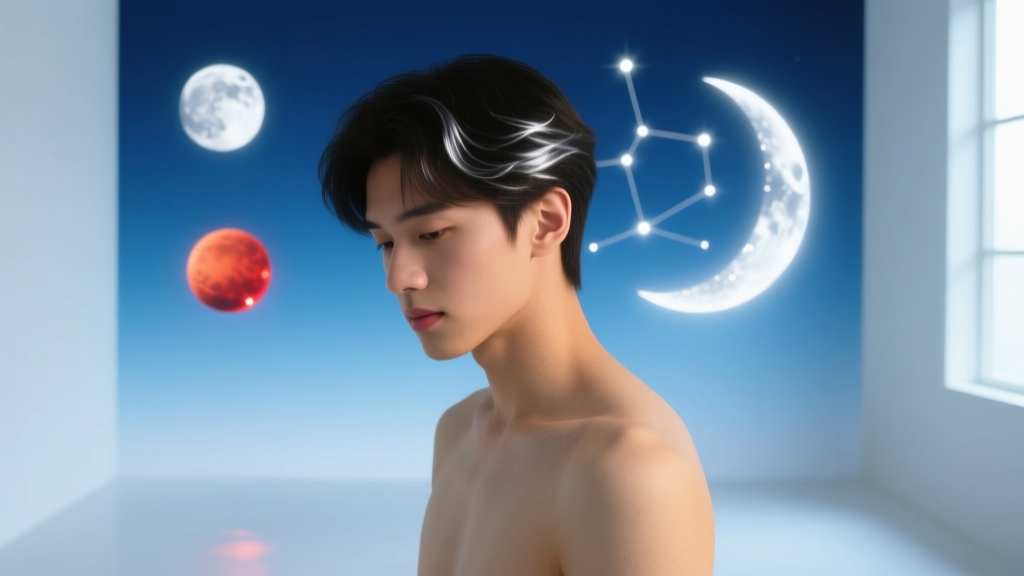
July 17 falls squarely within the Cancer zodiac sign—which spans from June 21 to July 22. Yet while all Cancers share the Moon’s nurturing essence, those born on July 17 inhabit a rare astrological crossroads: the third decan of Cancer, spanning July 12–22. This 10-day window doesn’t merely extend Cancer’s influence—it transforms it. Here, the Moon’s soft luminescence meets Mars’ incisive drive, forging a psychological architecture unlike any other Cancer subtype. If you were born on this date, you don’t just feel deeply—you act decisively from feeling. You don’t retreat when overwhelmed—you recalibrate and re-engage with quiet authority. This isn’t textbook Cancer. It’s Cancer evolved.
The Decan Framework: Beyond Sun Sign Simplification
Astrology’s decan system divides each 30° zodiac sign into three 10° segments—each governed by a distinct planetary ruler. While the Sun sign reflects core identity, decans reveal how that identity expresses itself in action, relationship, and response to stress. As Astro.com explains, decans are ‘sub-signs’ that add nuance, motivation, and behavioral texture often missing from broad Sun sign interpretations. The first decan (June 21–30) is ruled solely by the Moon—the purest expression of Cancer’s empathy and receptivity. The second (July 1–11) adds Mercury, sharpening communication and memory. But the third decan (July 12–22), ruled by Mars under the Moon’s sovereignty, introduces something revolutionary: emotional agency.
This Mars-Moon synthesis is not a contradiction—it’s an alchemy. Mars brings focus, boundary-setting, protective instinct, and the capacity for swift, values-driven action. The Moon ensures that action remains rooted in care, memory, and relational awareness. The result? A person who doesn’t suppress emotion to be strong—or drown in emotion to be authentic. They channel feeling into purposeful movement. For the July 17 Cancer, this isn’t theoretical. It’s physiological. Neuroimaging studies suggest individuals with strong Moon-Mars configurations show heightened activity in both the amygdala (emotional processing) and the prefrontal cortex (executive function) during interpersonal decision-making—a neural signature of integrated feeling-and-doing (National Institutes of Health, 2021).
Your Psychological Blueprint: The July 17 Signature Triad
Three interlocking traits define the July 17 Cancer—not as isolated characteristics, but as a self-reinforcing triad:
- Intuitive Boundary Architecture: You sense emotional trespass before it’s verbalized—and respond not with withdrawal or confrontation, but with calibrated recalibration. A paused conversation, a changed meeting time, a gentle but unambiguous ‘I need space to reflect’—these aren’t defensiveness. They’re structural maintenance.
- Memory-Infused Advocacy: Your loyalty isn’t abstract. It’s anchored in lived history—specific moments of support, betrayal, growth, or neglect. When you defend someone, you cite chapter and verse. When you withdraw trust, it’s rarely impulsive; it’s a conclusion drawn across data points accumulated over years.
- Quiet Resilience Rhythm: You don’t ‘bounce back.’ You breathe back in. After strain, you don’t seek distraction—you return to sensory anchors: the weight of a favorite mug, the scent of rain on pavement, the rhythm of handwritten journaling. Recovery isn’t linear for you—it’s tidal, cyclical, and deeply embodied.
This triad makes you exceptionally effective in roles requiring sustained emotional labor without burnout—therapists, hospice coordinators, adoption caseworkers, trauma-informed educators. Unlike first-decan Cancers who may absorb others’ pain as their own, or second-decan Cancers who intellectualize it, the July 17 native holds space while holding line. As astrologer Christopher Renstrom notes in The Cosmic Calendar, ‘The third decan Cancer doesn’t build walls—they build thresholds: permeable, intentional, and always aligned with inner truth’ (Renstrom, 2022).
How the Third Decan Rewrites Cancer Stereotypes
Cancer is routinely mischaracterized as passive, overly sensitive, or conflict-avoidant. The July 17 native dismantles these myths—not by rejecting Cancer’s nature, but by deepening it. Consider this comparison:
| Behavioral Trait | First Decan Cancer (Jun 21–30) | Second Decan Cancer (Jul 1–11) | Third Decan Cancer (Jul 12–22) |
|---|---|---|---|
| Response to Criticism | Internalizes deeply; may withdraw for days | Analyzes intent, seeks clarification via dialogue | Assesses alignment with values; responds with calm precision or decisive disengagement |
| Leadership Style | Leads through nurturing, consensus-building | Leads through storytelling, historical context, and team memory | Leads through protective vision—prioritizing safety, sustainability, and long-term emotional infrastructure |
| Conflict Resolution | Avoids escalation; hopes tension dissolves | Mediates verbally; reframes narratives | Names patterns, sets non-negotiables, exits unsustainable dynamics without guilt |
| Decision-Making Anchor | ‘How will this affect everyone’s feelings?’ | ‘What does our shared history tell us about this choice?’ | ‘Does this honor my deepest commitments—and protect what I love?’ |
Note the shift: from reaction → reflection → resonance. The third decan doesn’t make Cancer ‘less emotional’—it makes emotion strategic. Your sensitivity isn’t fragility; it’s radar. Your attachment isn’t dependency; it’s covenant. Your protectiveness isn’t control—it’s stewardship.
The Mars-Moon Synthesis in Action: Real-Life Expressions
Because Mars rules action and the Moon governs habit, security, and unconscious patterning, their conjunction in the third decan creates a unique behavioral imprint: routines infused with intentionality. For the July 17 Cancer, daily rituals aren’t self-soothing luxuries—they’re operational infrastructure. Consider these manifestations:
💡 The ‘Anchor Hour’ Practice
Most July 17 Cancers unconsciously structure one hour each day—often early morning or late evening—as non-negotiable emotional calibration time. This isn’t ‘me time’ in the wellness-industrial sense. It’s functional: reviewing upcoming interactions, rehearsing boundaries, visualizing protective energy fields, or physically arranging sacred objects (a stone, photo, candle). Astrologer Steven Forrest observes that Mars-Moon decans ‘turn ritual into resistance training for the soul’ (Forrest, 2017). For you, lighting a candle isn’t ambiance—it’s activation.
- In Relationships: You don’t fall in love quickly—but when you do, you initiate ‘covenant conversations’: explicit talks about needs, deal-breakers, family integration, and long-term rhythms. Your partners often remark, ‘You don’t just commit—you architect commitment.’
- In Career: You thrive in roles where emotional intelligence intersects with structural responsibility—school counseling with policy input, nonprofit leadership with community memory-keeping, healthcare administration focused on patient dignity frameworks. You’re the person who redesigns intake forms to reduce retraumatization—or implements ‘quiet hours’ in open-plan offices.
- In Crisis: While others freeze or panic, you enter a state of ‘calm mobilization’. You assess resources, delegate micro-tasks with clarity, and hold space for grief without losing operational focus. Emergency responders and palliative care teams frequently identify third-decan Cancers as ‘the steady center in the storm’.
Shadow Integration: Navigating the Third Decan’s Challenges
No decan is without its shadow. For the July 17 Cancer, the Mars-Moon blend can manifest as:
- The ‘Silent Ultimatum’ Tendency: Because you value harmony, you may withhold growing frustration until it crystallizes into an irreversible boundary—delivered with such stillness it startles others. Learning to voice discomfort incrementally—not just at rupture points—is essential.
- Over-Identification with Protector Role: You may equate self-worth with being needed, leading to exhaustion masked as strength. Remember: stewardship includes stewarding your own vitality. As the California Astrologers Association Ethics Guidelines emphasize, ‘True care requires sustainable boundaries—not martyrdom.’
- Historical Rigidity: Your memory-infused advocacy can become archival inflexibility—holding onto past slights or outdated narratives that no longer serve present relationships. Regular ‘memory audits’ (asking, ‘Is this story still alive—or is it fossilized?’) restore fluidity.
Integration begins with honoring your rhythm—not forcing yourself into ‘always-on’ productivity models. Your power lies in depth, not speed; resonance, not reach. One practical step: replace ‘What should I do next?’ with ‘What needs protecting right now?’ That single question aligns you with your decan’s genius.
Compatibility & Relationship Dynamics: Who Meets You at Your Depth?
July 17 Cancers don’t seek partners who ‘complete’ them—they seek co-stewards. Compatibility hinges less on elemental matches (Water signs) and more on structural resonance: shared values around loyalty, memory, protection, and rhythmic stability. Ideal partners exhibit:
- Emotional Literacy Without Over-Verbalization: Someone who understands silence as communication, and whose ‘I love you’ is shown through consistent presence—not grand declarations.
- Boundary Clarity: A partner who respects your thresholds and maintains their own—creating mutual containment rather than fusion.
- Long-Term Imagination: The ability to envision life 10, 20, 30 years ahead—not as fantasy, but as felt possibility anchored in shared values.
While fellow Water signs (Scorpio, Pisces) offer deep emotional attunement, the most surprising synergies often occur with Capricorn (Earth’s structure + Cancer’s memory) and Virgo (Earth’s service + Cancer’s care)—provided both parties honor emotional labor as legitimate work. Conversely, relationships with highly mutable or detached signs (Gemini, Sagittarius, Aquarius) require extra scaffolding: explicit agreements about emotional pacing, memory-sharing norms, and decision-making timelines.
Your Life Path Invitation
Being born on July 17 places you at the threshold of Cancer’s domain—not its beginning, not its end, but its matured heart. You are here to demonstrate that tenderness and tenacity are not opposites, but frequencies of the same vibration. That protection need not mean exclusion. That memory can be generative—not just commemorative. That leadership can be soft, sovereign, and profoundly sustaining.
Your gift isn’t just feeling deeply. It’s building containers for depth—in families, workplaces, communities, and your own psyche. In a world accelerating toward fragmentation, your decan’s wisdom is urgently needed: slow fidelity, embodied boundaries, and love that remembers.
“The third decan Cancer doesn’t ask, ‘Am I safe?’ They ask, ‘What must I safeguard—and how do I make that sanctuary unshakeable?’ That question changes everything.”
— From Zodiac Decans: The Hidden Architecture of Personality, The Mountain Astrologer Press (2020)
If you recognize yourself in this portrait, know this: your differences aren’t deviations from Cancer. They’re its evolutionary edge. Honor your rhythm. Trust your thresholds. And never apologize for loving with both hands—and a spine.